
Best Trees to Plant in Utah for Shade

Why Shade Trees Matter in Utah's Climate
Utah's intense summer sun and high temperatures make shade trees a valuable addition to any property. A well-placed shade tree can reduce cooling costs by 15-35%, lower surface temperatures by 20-45°F, and increase property value. Utah's dry climate and alkaline soil require choosing the right species for success.
Top 10 Shade Trees for Utah
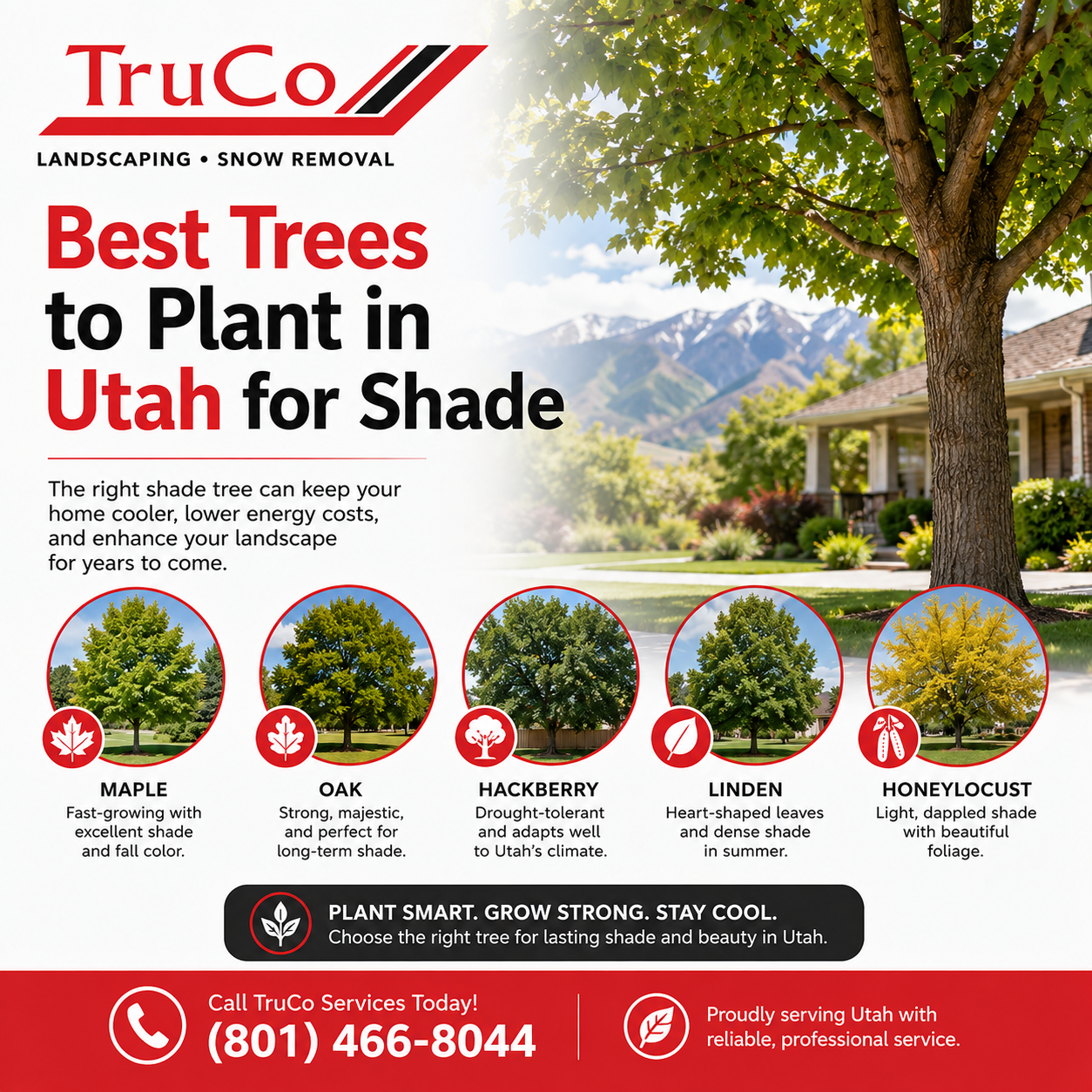
Kentucky Coffeetree: Grows 40-60 feet, tolerates alkaline soil, drought-tolerant, urban survivor. Bur Oak: Grows 50-80 feet, extremely long-lived (200-300 years), deep root system, salt-tolerant. Hackberry: 40-60 feet, low maintenance, tolerates wind, heat, and alkaline soil. Red Maple (Autumn Blaze): 40-55 feet, fast growing (2 feet/year), brilliant fall color, prefers slightly acidic soil. Honeylocust: 30-50 feet, dappled shade, tolerates salt and alkaline soil, fine-textured leaves blow away easily. Littleleaf Linden: 40-60 feet, fragrant flowers, pyramidal shape, tolerates Utah conditions. Tulip Tree: 60-90 feet, tall narrow shape, unique flowers, needs space. Japanese Tree Lilac: 20-30 feet, small shade tree, showy white flowers, good under power lines. American Elm (Valley Forge): 50-70 feet, Dutch elm disease resistant, classic vase shape. Ginkgo: 40-60 feet, pest-free, brilliant yellow fall color, slow-growing but long-lived.
Planting and Spacing Guidelines
Large shade trees (50+ feet): plant 20-30 feet from buildings, 30-40 feet from other large trees. Medium trees (30-50 feet): plant 15-20 feet from buildings. Small trees (under 30 feet): plant 10-15 feet from buildings. Avoid planting under power lines with trees over 25 feet tall.
Trees to Avoid in Utah
Silver maple: weak wood, aggressive roots. Box elder: messy, short-lived. White birch: susceptible to borers in Utah's dry climate. Weeping willow: invasive roots, needs constant water. Cottonwood: messy, invasive roots, short-lived. Green ash: emerald ash borer threat. Tree of heaven: invasive weed tree.
FAQs
What is the fastest growing shade tree for Utah? Red maple (Autumn Blaze) grows 2+ feet per year. What shade tree tolerates Utah's alkaline soil best? Kentucky coffeetree, hackberry, bur oak, and honeylocust all tolerate pH 7.5-8.5. How far from the house should I plant a shade tree? At least 20 feet for large trees, 15 feet for medium, 10 feet for small. What is the best shade tree for a small Utah yard? Japanese tree lilac or honeylocust. Do shade trees need a lot of water in Utah? Deep water weekly during summer for the first 3 years. Established trees need deep watering every 2-4 weeks.
Shade Tree Benefits in Utah's Climate
Strategic shade tree placement can reduce air conditioning costs by 15-35% in Utah's hot summers. Deciduous trees planted on the south and west sides of homes provide summer shade while allowing winter sun through. Utah's 222 sunny days per year make shade trees particularly valuable for energy savings. Shade trees also reduce water evaporation from lawns, improve air quality, and provide wildlife habitat along the Wasatch Front.
USU Extension Recommended Shade Trees
Utah State University Extension recommends the following species for Utah landscapes: Kentucky coffeetree (Gymnocladus dioicus), bur oak (Quercus macrocarpa), hackberry (Celtis occidentalis), and Japanese tree lilac (Syringa reticulata). These species have been tested in Utah's conditions and show excellent drought tolerance, alkaline soil adaptation, and cold hardiness for Utah's zones 4-7.