
Fall Cleanup Guide: Preparing Your Utah Property for Winter

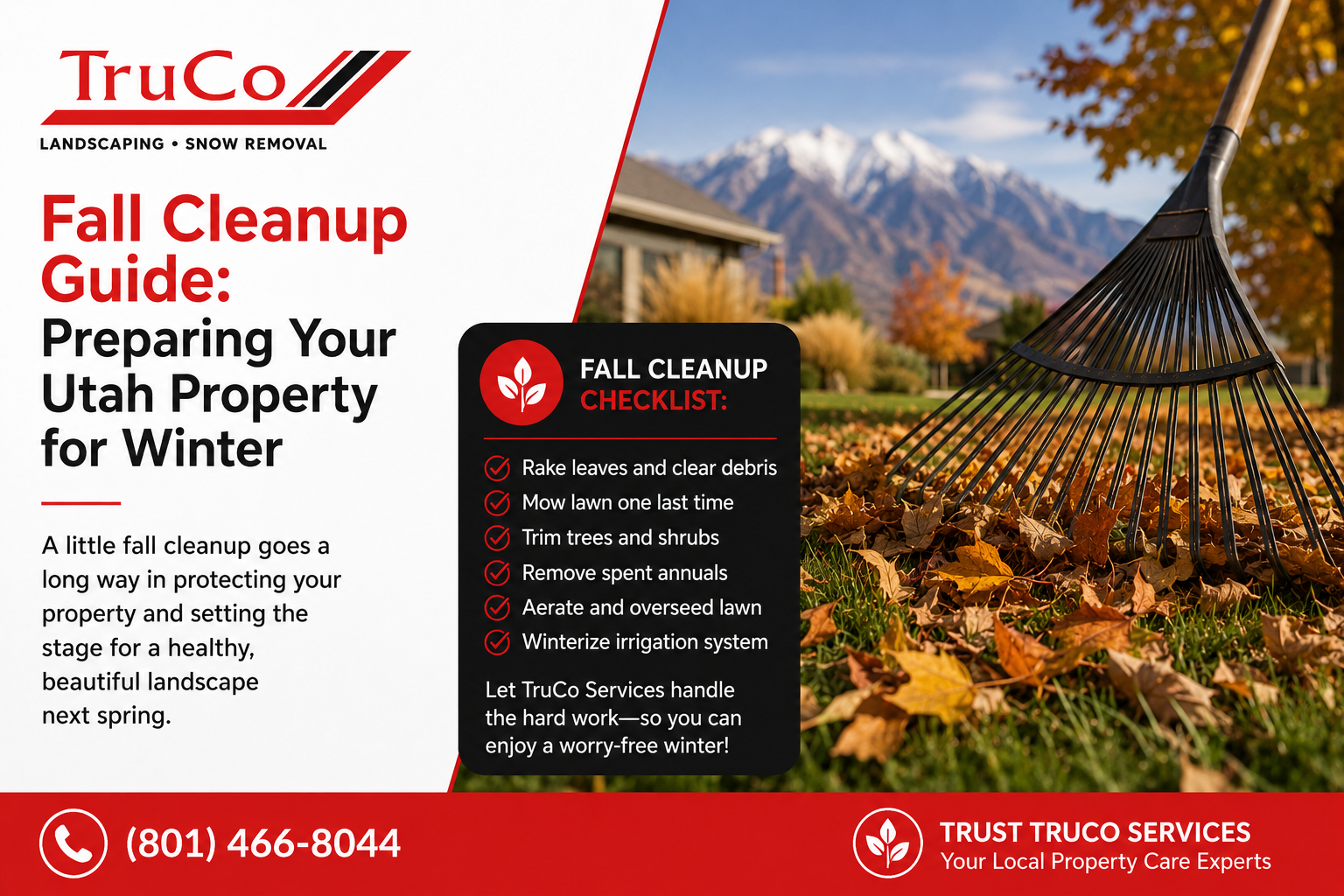
Utah's unique climate — with cold, snowy winters and hot, dry summers — makes fall cleanup one of the most important property maintenance tasks of the year. Unlike milder regions where you can skip fall cleanup without major consequences, Utah property owners who neglect fall preparation face frozen irrigation systems, snow-covered debris, rodent infestations, and spring lawn damage.
This guide covers everything you need to do between late September and mid-November to protect your Utah property through winter.
Lawn Care: Winterizing Your Turf
Final mow: Cut your grass to 2-2.5 inches for the final mow of the season (typically mid-October in Salt Lake Valley). Don't scalp it — grass needs some leaf area to photosynthesize during warm winter spells. Bag the final clippings to prevent snow mold.
Fertilize: Apply a winterizer fertilizer (high potassium, low nitrogen) in late September or early October. This strengthens roots and helps grass survive winter stress. Utah State University Extension recommends a 15-0-15 or similar winterizer blend.
Aerate if needed: Fall is the best time for core aeration in Utah. If you haven't aerated in 2+ years, October is ideal — the grass has time to recover before winter dormancy.
Overseed bare patches: September is the last window for overseeding in Utah. Seed needs 6-8 weeks before the first hard freeze. After October 1, wait until spring.
Leaf Management in Utah
Utah's mature maple, cottonwood, and fruit trees drop significant leaf loads. A thick layer of leaves smothers grass, promotes snow mold, and creates habitat for voles and mice.
Best approach: Mulch leaves with your mower (3-4 passes) if the layer is under 2 inches. For heavier leaf cover, rake or blow leaves into piles and compost them. Utah's dry fall air means leaves dry quickly and are easier to manage than in wetter climates.
Do not: Leave leaves on the lawn over winter, blow leaves into the street (illegal in most Utah cities), or burn leaves (restricted in Salt Lake County during inversion season).
Sprinkler System Winterization
This is the most critical — and most expensive to ignore — fall task. Water left in irrigation lines freezes, expands, and cracks pipes, valves, and sprinkler heads. Repairing a burst main line costs $500-$2,000 in Utah.
DIY winterization: If you have a small system (under 6 zones) with a manual drain valve, you can winterize yourself. Shut off the main water supply, open all manual drains, lift sprinkler heads to drain risers, and open the boiler drain on the backflow preventer.
Professional blowout: For most Utah systems, hire a professional with an air compressor. Cost: $50-$150 for a typical residential system. This is the safest method — compressed air blows all water out of the system.
Timing: Winterize before the first hard freeze (typically October 15-November 1 in Salt Lake Valley). Don't wait until the forecast shows freezing temperatures.
Tree and Shrub Care for Winter
Deep watering: Evergreens (spruce, pine, juniper, arborvitae) continue to lose moisture through their needles all winter. Water them deeply (1-2 inches) in late October and again in November if the ground isn't frozen. This prevents winter burn — the browning of needles caused by dehydration.
Young tree protection: Wrap the trunks of young trees (under 5 years old) with tree wrap or white plastic guards to prevent sunscald and frost cracks. Utah's winter sun can heat the south side of trunks to 60°F during the day, then drop below 0°F at night — the rapid temperature change cracks the bark.
Prune deadwood: Remove dead, diseased, or broken branches before winter snow loads can snap them. Heavy snow on weakened branches can damage roofs, fences, and vehicles. Leave major pruning for late winter (February-March).
Mulch: Apply 2-4 inches of organic mulch around trees and shrubs (keeping it off the trunk). Mulch insulates roots, retains moisture, and prevents frost heaving in Utah's freeze-thaw cycles.
Gutter Cleaning and Downspout Maintenance
Clogged gutters are a leading cause of ice dams in Utah. When gutters fill with fall leaves and debris, water backs up, freezes, and forms ice dams that damage roofs, gutters, and siding.
Clean gutters: Remove leaves and debris after the last major leaf drop (typically mid-November in Salt Lake Valley). Check downspouts for clogs by running water through them.
Downspout extensions: Ensure downspouts extend at least 5 feet from the foundation. Water discharged close to the foundation freezes and expands, causing basement wall cracks and foundation movement in Utah's clay soil.
Garden and Planting Bed Winter Prep
Cut back perennial flowers after the first hard frost kills the foliage. Remove all vegetable garden debris to prevent overwintering pests and diseases. Plant spring-blooming bulbs (tulips, daffodils, crocus) in October — Utah's cold winter is essential for bulb vernalization.
Apply 2-3 inches of mulch to planting beds to insulate roots and prevent frost heaving. In Utah's clay soil, mulch also reduces the freeze-thaw cycles that push plants out of the ground.
Snow Removal Equipment Preparation
Before the first snow (typically late October to early November in Salt Lake Valley): service your snow blower (change oil, replace spark plug, check auger), stock up on ice melt (calcium chloride or magnesium chloride — not rock salt which damages concrete), mark driveway edges with reflective stakes, and confirm your snow removal contract if using a service.
Utah-Specific Fall Checklist (October-November)
Test and replace batteries in carbon monoxide detectors (furnace season begins). Clean chimney and fireplace (wood-burning fireplaces need annual inspection. Seal drafty windows and doors to reduce heating costs. Drain and store garden hoses. Shut off exterior hose bibs and install frost-free covers. Apply rodent bait in garage and crawl space (mice seek warm shelter in Utah's cold winters.
Frequently Asked Questions
When should I winterize my sprinklers in Utah?
Before the first hard freeze, typically October 15-November 1 in Salt Lake Valley. Don't wait for freezing temperatures — schedule your blowout in early October.
Should I mulch or bag leaves in Utah?
Mulch thin layers (under 2 inches) with your mower. Rake and compost heavy leaf cover. Do not leave thick leaf layers on the lawn over winter.
How late can I mow my lawn in Utah?
Continue mowing until the grass stops growing — typically mid-October in the Salt Lake Valley. The final mow should leave grass at 2-2.5 inches.
Do I need to water trees in winter in Utah?
Yes. Water evergreens deeply (1-2 inches) in late October and November if the ground isn't frozen. Winter burn from dehydration is a leading cause of evergreen damage in Utah.
When should I apply winter fertilizer in Utah?
Late September to mid-October. Use a winterizer blend (high potassium, low nitrogen) to strengthen roots for winter survival.Fall Cleanup Guide: Preparing Your Utah Property for Winter
Preparing your Utah property for winter requires a systematic fall cleanup in September-October before the first hard freeze. The critical tasks are winterize your sprinkler system, apply winterizer fertilizer, core aerate compacted soil, prune dead tree branches, clean gutters, store outdoor furniture, and seal cracks in driveways.
Why Fall Cleanup Matters in Utah
Utah's winter is one of the most punishing in the continental US. The Salt Lake Valley averages 50-60 inches of snow, 200+ freeze-thaw cycles, and temperatures below 20°F for weeks at a time.
Priority 1: Winterize Your Sprinkler System
This is the single most important fall task. If water freezes in underground pipes, it expands and cracks PVC pipes. Professional winterization costs $75-$150. DIY requires a compressor with 50+ CFM at 80-120 PSI.
Priority 2: Fertilize with Winterizer
Apply winterizer fertilizer in late September with high potassium and low nitrogen. This promotes root growth and early spring green-up.
Priority 3: Core Aeration
Fall aeration relieves soil compaction from summer traffic. Utah's clay soil compacts easily. Cost $15-$30 for DIY rental or $75-$150 for professional.
Priority 4: Leaf Management
Mulch leaves with a mulching mower. Don't blow leaves into the street. Don't wait until spring. Remove heavy leaf layers before snow.
Priority 5: Tree and Shrub Care
Prune dead branches in late fall. Deep water evergreens before the ground freezes. Wrap young tree trunks to prevent sunscald.
Priority 6: Gutter Cleaning
Clean gutters after leaves fall. Clogged gutters cause ice dams. Install gutter guards to prevent future clogs.
Frequently Asked Questions
When should I winterize my sprinkler system in Utah? Before the first hard freeze, typically mid-October in the Salt Lake Valley.
Should I fertilize my lawn in fall in Utah? Yes. Fall fertilization is the most important feeding of the year for Utah lawns.
Do I need to aerate my lawn in Utah every fall? If you have clay soil, annual aeration is recommended. Utah's clay soil compacts easily.
How do I protect my trees from Utah winter damage? Deep water before the ground freezes. Wrap young trunks. Prune dead branches.
Is it too late to do fall cleanup in November? For most tasks yes. The first hard freeze typically arrives mid-October.