
Fruit Tree Care for Utah Homeowners

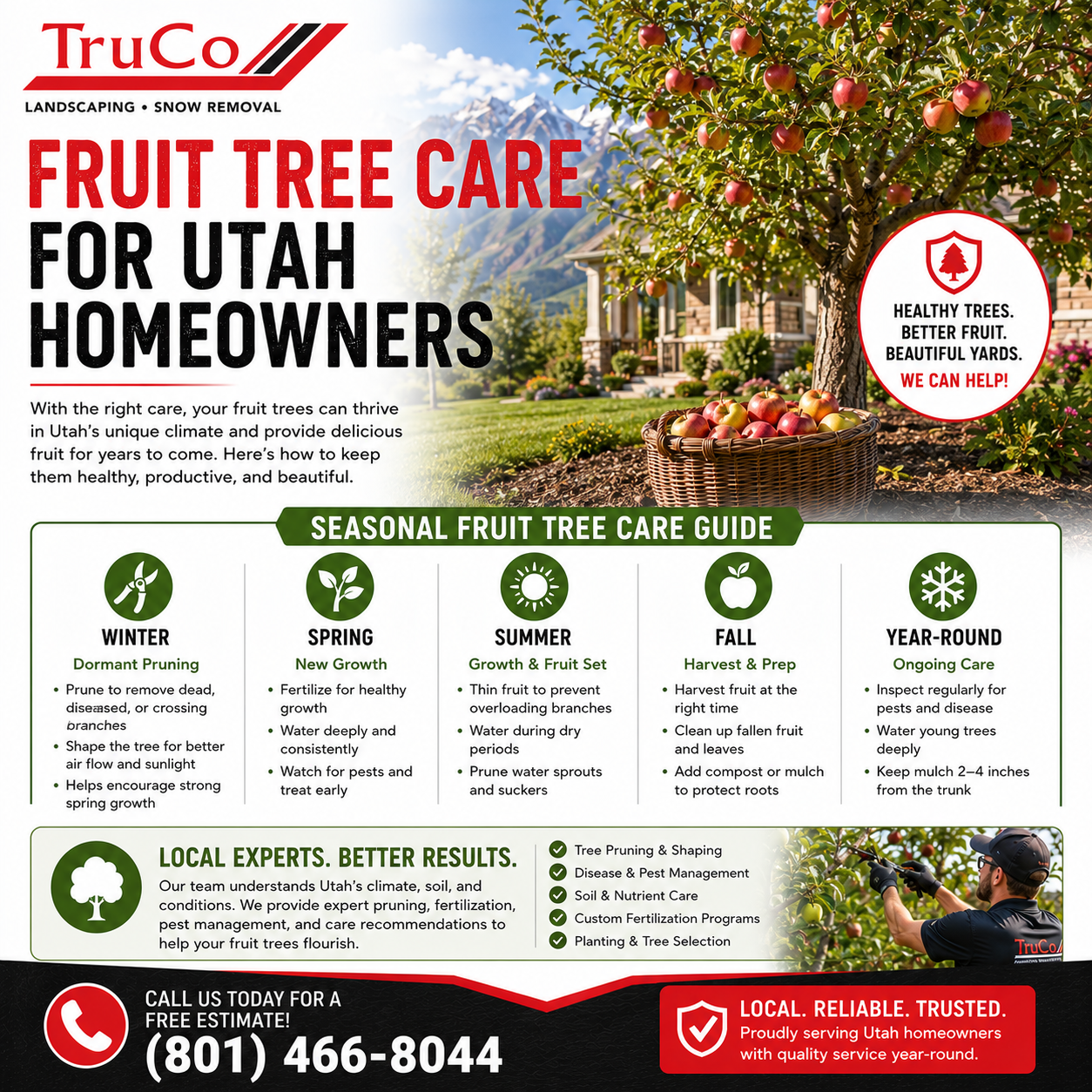
Fruit Tree Care for Utah Homeowners
Growing fruit trees in Utah is rewarding but requires specific care. Utah's cold winters, late spring frosts, hot summers, and alkaline soil create both challenges and opportunities for home fruit production. With proper variety selection and care, you can enjoy apples, peaches, cherries, plums, and apricots from your backyard.
Choosing Varieties for Utah
Apples: Red Delicious, Gala, Honeycrisp, Jonathan. Pears: Bartlett, Bosc, Comice. Peaches: Reliance, Redhaven, Elberta. Cherries: Bing, Rainier, Montmorency. Plums: Stanley, Santa Rosa. Apricots: Moorpark, Goldcot, Perfection. Choose late-blooming varieties to avoid frost damage.
Planting
Plant in early spring (March-April) in full sun with well-drained soil. Space standard trees 20-25 feet apart; dwarf 8-10 feet. Do not amend backfill — plant in native soil. Keep the root flare at or above soil level.
Watering
Water deeply every 7-14 days during growing season. Inconsistent watering causes fruit drop and cracking. Drip irrigation at the dripline is best. Reduce watering as fruit ripens for better flavor. Stop 2-3 weeks before harvest.
Pruning
Prune in late winter (February-March). Apples/pears: central leader system. Peaches: open center with 3-5 scaffold branches. Remove up to 40% of peach canopy annually. Cherries: minimal pruning needed.
Pest Management
Codling moth (worms in apples/pears): use pheromone traps and spinosad. Fire blight: prune 12 inches below damage, disinfect tools. Peach leaf curl: apply dormant copper spray. Aphids: strong water spray or insecticidal soap.
Frost Protection
Cover trees with frost cloth when temperatures drop below 28°F. Water soil before frost — wet soil releases heat. Plant on north-facing slopes to delay bloom.
Winter Protection
Wrap young trunks with white tree wrap. Mulch after ground freezes. Use trunk guards for rodent protection.