
How to Choose Between Mulch and Rock in Utah Landscapes

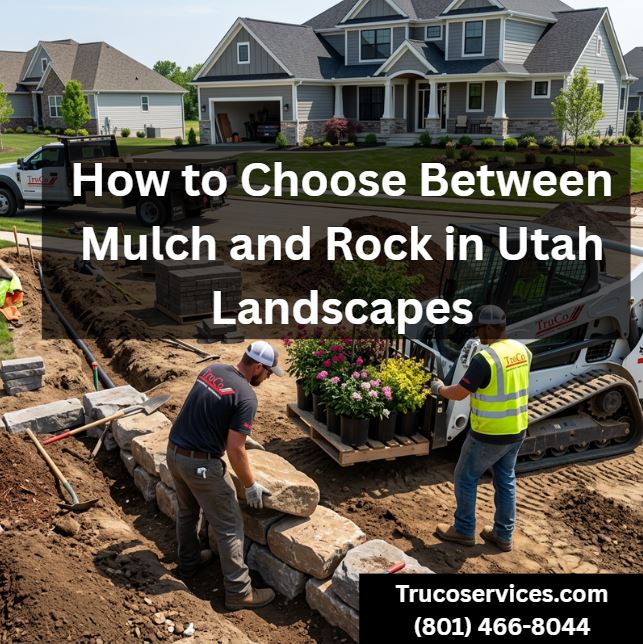
Choose mulch for planting beds where you want to improve soil, retain moisture, and add organic matter. Choose rock for low-maintenance areas, walkways, and xeriscapes where you want durability and minimal upkeep. Many Utah landscapes use both — mulch around plants and rock in high-traffic or low-water zones.
Mulch and rock are the two most common ground covers in Utah landscapes, and each has clear strengths. The right choice depends on your plants, your maintenance goals, and the look you want.
Here's how to choose between mulch and rock in Utah, based on what TruCo Services recommends to homeowners across the Salt Lake Valley.
What Is Mulch?
Mulch is organic material spread over the soil around plants. Common types include:
Wood chips — classic, affordable, and long-lasting
Bark — attractive and breaks down slowly
Shredded hardwood — holds together well on slopes
Compost — enriches soil as it breaks down
Mulch improves soil health, retains moisture, and suppresses weeds.
What Is Rock?
Rock ground cover includes gravel, pebbles, river rock, and crushed stone. It's durable, low-maintenance, and popular in Utah's xeriscapes. Rock doesn't break down, so it lasts for years.
Benefits of Mulch
Improves soil — adds organic matter as it decomposes
Retains moisture — keeps plant roots cool and hydrated
Suppresses weeds — blocks sunlight from weed seeds
Regulates soil temperature — protects roots from heat and cold
Natural look — soft, organic appearance
Benefits of Rock
Low maintenance — no need to replace or refresh
Durable — lasts for years without breaking down
Good drainage — allows water to flow through
Weed barrier — with proper landscape fabric
Xeriscape friendly — ideal for low-water Utah landscapes
Drawbacks to Consider
Mulch drawbacks:
Needs to be replaced every one to three years
Can wash away on slopes
May attract pests in some cases
Rock drawbacks:
Doesn't improve soil
Retains heat, which can stress plants
Harder to plant in once installed
Weeds can grow through if not properly lined
When to Use Mulch
Use mulch around:
Flower beds — where soil health matters
Shrubs and trees — to retain moisture and protect roots
Vegetable gardens — to enrich soil
New plantings — to help plants establish
When to Use Rock
Use rock in:
Xeriscapes — low-water landscapes
Walkways and paths — durable surfaces
High-traffic areas — where mulch would break down
Around hardscapes — patios, driveways, and edging
Slopes — where mulch would wash away
Combining Mulch and Rock
Many Utah landscapes use both. Use mulch around plants that need healthy soil and moisture, and rock in areas where you want durability and low maintenance. This combination gives you the best of both.
Frequently Asked Questions
Q: Is mulch or rock better for Utah's climate?
A: Both work well. Mulch is better for soil health and moisture retention; rock is better for low-maintenance, low-water areas.
Q: How often do I need to replace mulch?
A>Most organic mulches need replacing every one to three years as they break down.
Q: Does rock retain heat and hurt plants?
A: Yes, rock can retain heat and stress plants in hot Utah summers. Use it away from heat-sensitive plants.
Q: Can I use rock over landscape fabric?
A: Yes. Landscape fabric under rock helps prevent weeds, though weeds can still grow through over time.
Q: Which is cheaper, mulch or rock?
A: Mulch is cheaper upfront but needs replacing. Rock costs more initially but lasts for years, so it can be cheaper long-term.
Q: Is mulch or rock better for a xeriscape?
A: Rock is the classic choice for xeriscapes because it's low-maintenance and doesn't need water. Mulch can also work if you want soil improvement.
Q: How deep should mulch be?
A: Apply mulch 2 to 3 inches deep. Too much can suffocate roots; too little won't suppress weeds.
Q: Can I mix mulch and rock in the same bed?
A: Yes. Use mulch around plants and rock in open or high-traffic areas for a balanced look.
Why Choose TruCo Services
TruCo Services installs mulch and rock ground cover across the Salt Lake Valley. We help you choose the right material for each area, install it properly, and maintain it for years. Our team builds landscapes that look great and last.
Get your free landscape estimate — 801-466-8044.