
How to Choose Between Sod and Seed for a Utah Lawn

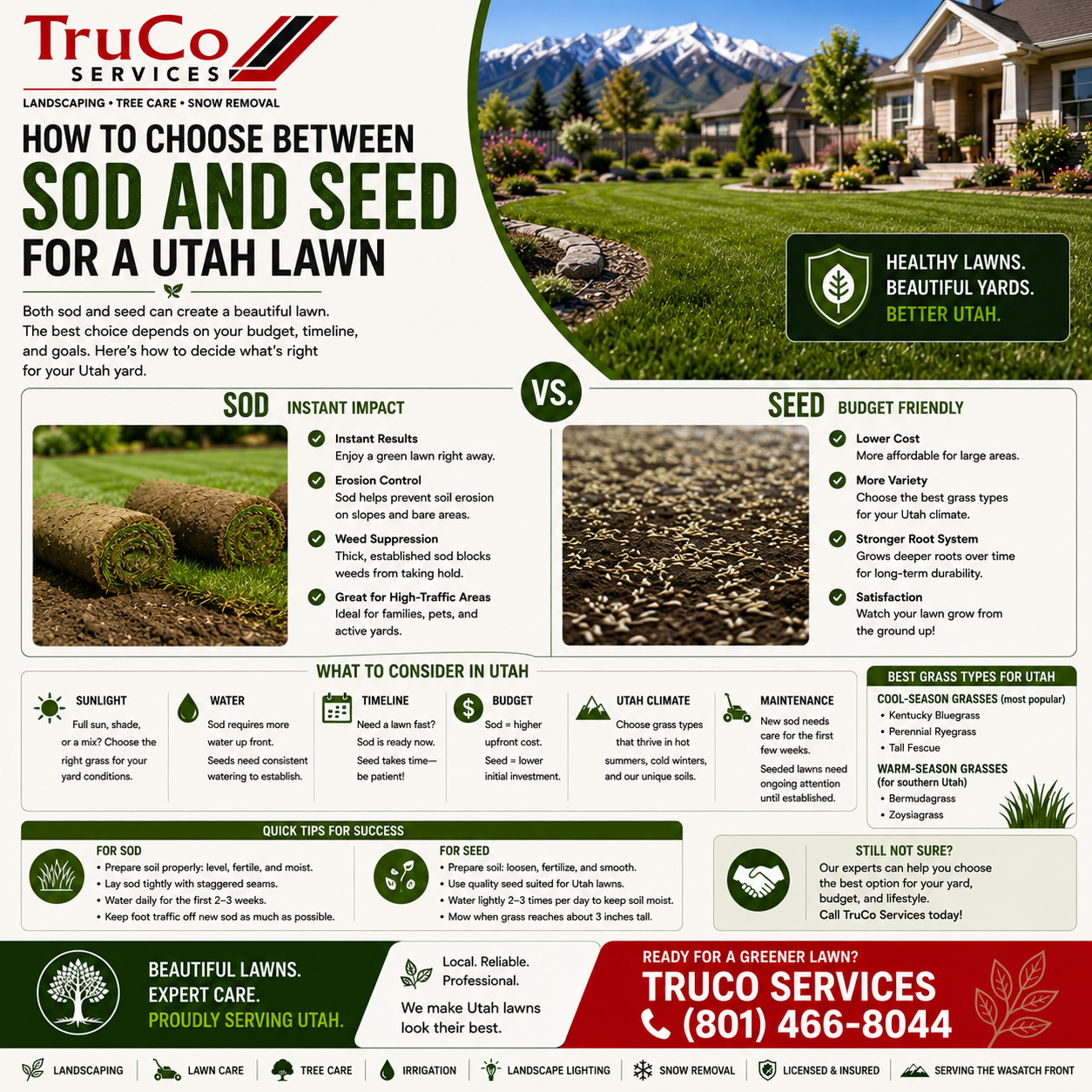
Cost Comparison
Sod: $0.30-0.80/sq ft materials + $0.20-0.50 installation. 5,000 sq ft lawn: $2,500-6,500. Seed: $0.01-0.05/sq ft for seed. Total with soil prep: $500-1,500.
Time to Establishment
Sod: walkable 7-10 days, mow 14-21 days, normal use 4-6 weeks. Seed: germination 7-14 days, first mow 3-4 weeks, restricted use 6-8 weeks. Seed needs 2-4 waterings daily for 3-4 weeks.
Grass Variety
Seed offers more choices — drought-tolerant tall fescue, shade-tolerant fine fescue. Sod is typically Kentucky bluegrass or bluegrass-fescue blend.
Best for Utah
Sod: slopes (erosion control), quick results, less watering commitment. Seed: large areas on budget, specific variety selection.
Frequently Asked Questions
Which is better for clay soil? Both work with 2-3 inches of compost added.
Best grass seed for Utah? Kentucky bluegrass, tall fescue, and fine fescue blend.
Sod in summer? Yes, but requires 3-4 times daily watering for 2-3 weeks.
Soil Preparation Requirements
Both sod and seed require good soil preparation for success. Start by removing existing vegetation, rocks, and debris. Grade the soil to slope away from foundations — 1-2% grade (1/4 inch per foot). Till soil 4-6 inches deep and incorporate 2-3 inches of compost. For sod: soil should be firm and level — use a lawn roller before installation. For seed: soil should be loose and raked fine for good seed-to-soil contact. Leveling is easier with sod — it hides minor imperfections. Seed requires more precise grading since water settles into low spots causing uneven germination.
Installation Process Differences
Sod installation is faster but labor-intensive. Sod must be installed within 24 hours of delivery — stacked pallets generate heat that damages grass. Lay sod in a staggered brick pattern, butting edges tightly without overlapping. Cut around curves with a utility knife. Roll after installation for good root contact. Seed installation is more forgiving with timing. Spread seed with a broadcast or drop spreader at recommended rate (typically 3-5 pounds per 1,000 sq ft). Rake lightly to cover seeds with 1/4 inch of soil. Cover with straw or erosion blanket for moisture retention and bird protection.
Post-Installation Care Comparison
Sod care weeks 1-2: water twice daily (morning and afternoon), keep sod moist but not soggy. Avoid foot traffic for 7-10 days. First mowing at 14-21 days. Seed care weeks 1-4: water 2-3 times daily to keep soil surface consistently moist. Germination occurs 7-14 days depending on grass type and temperature. First mowing when grass reaches 3-4 inches (usually 5-7 weeks). Seed requires more vigilant watering — if soil dries out even once during germination, seedlings die. Sod's established root system is significantly more forgiving of irrigation mistakes.
Frequently Asked Questions
Which option handles foot traffic faster? Sod — walkable within 7-10 days. Seed — no foot traffic for 6-8 weeks.
Is sod or seed more resistant to weeds? Sod has fewer initial weed problems due to mature grass density. Seed is vulnerable to weed competition during establishment.
Can I mix sod and seed? Yes — use sod in high-traffic areas and slopes, seed in larger open areas. Transition zones blend together within one growing season.
Best time to install in Utah? Sod: April-October with adequate watering. Seed: mid-August to mid-September for best results, or April-May with careful watering.