
How to Control Weeds in Your Utah Lawn Without Chemicals

Why Choose Organic Weed Control in Utah
Many Utah homeowners are choosing natural weed control methods to protect family, pets, and the environment. Utah's growing season from April through October provides a long window for weed growth — dandelions, clover, crabgrass, bindweed, purslane and foxtail are the most common lawn weeds. Chemical herbicides can contaminate groundwater, harm beneficial insects like bees, and pose health risks to children and pets playing on treated lawns. Utah's secondary (untreated) irrigation water carries herbicides to neighboring properties and waterways. Organic weed control focuses on building healthy soil and dense turf that naturally outcompetes weeds. While organic methods require more consistent effort than chemical sprays, they create a healthier lawn ecosystem and eliminate the risk of chemical exposure. Many Utah communities are also adopting pesticide-free parks and common areas, making organic lawn care increasingly mainstream along the Wasatch Front.
Corn Gluten Meal for Pre-Emergent Control
Corn gluten meal is a natural pre-emergent weed control that prevents weed seeds from germinating. It is a byproduct of corn milling that contains proteins that inhibit root formation in germinating seeds. Apply corn gluten meal in early spring (late March to mid-April) when soil temperatures reach 50-55 degrees Fahrenheit — this timing prevents crabgrass and other summer annual weeds from germinating. Apply at a rate of 20 pounds per 1,000 square feet. Water lightly after application to activate the proteins. The weed prevention effect lasts 5-6 weeks. For season-long control, apply a second treatment in late August to prevent winter annual weeds like henbit and chickweed. Corn gluten meal also contains 10% nitrogen, providing a natural fertilizer boost that greened up lawns in early spring. In Utah, corn gluten meal is available at garden centers and IFA Country Stores for approximately $30-50 for a 20-pound bag. Results improve with consistent annual use — soil weed seed banks decrease over time as fewer weeds are allowed to go to seed.
Manual and Mechanical Weed Control
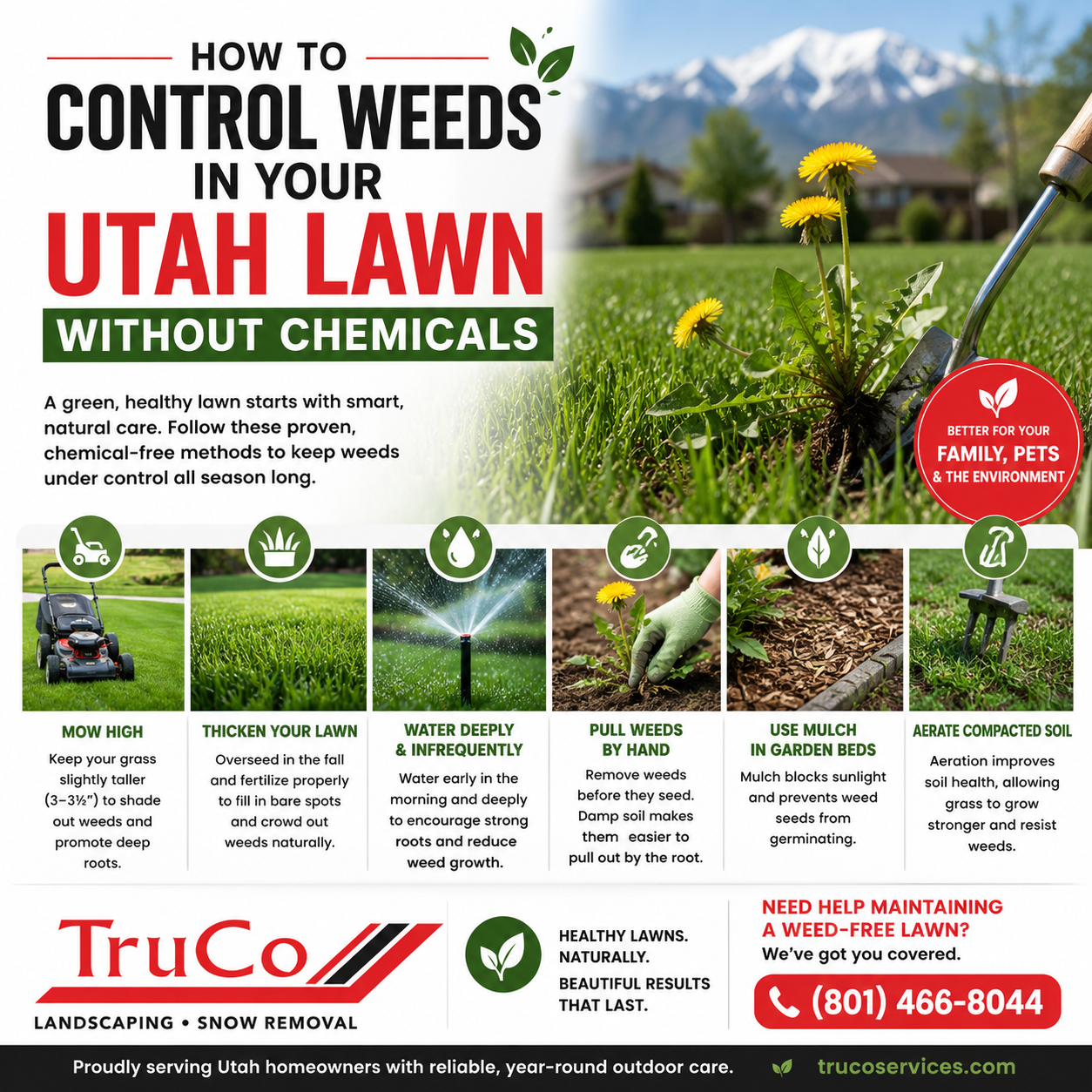
Physical removal remains the most effective organic weed control method. Hand pulling works best after rain or irrigation when soil is soft — grasp dandelions and taproots at the base and pull straight up to remove the entire root. For bindweed (field morning glory) — a persistent Utah weed — persistent pulling every 2-3 weeks depletes the root system over 2-3 growing seasons. Use a dandelion weeder or fishtail weeder for deep-rooted weeds. For large areas, use a stirrup hoe or scuffle hoe to sever weeds at the soil line — this works well for annual weeds in garden beds and along fence lines. Flame weeders use propane torches to kill weeds by heating plant cells — effective for weeds on driveways, patios, and gravel areas. Use caution during Utah's dry summer months — fire danger is real. Lawn weeders that mechanically extract weeds without chemicals are available for rent or purchase. In Utah, manual weeding is most effective when done consistently — 15 minutes of daily weeding during peak spring growth prevents weeds from establishing and going to seed.
Building Healthy Soil for Weed Prevention
Dense, healthy turf is the best weed prevention in Utah lawns. Weeds thrive in compacted, nutrient-poor soil with bare patches — conditions common in Utah's clay soils. Core aerate annually in fall (September-October) to reduce compaction and improve water and nutrient penetration. Top-dress with 1/4 inch of compost after aeration to introduce beneficial microorganisms and organic matter. Overseed thin areas with quality grass seed — Kentucky bluegrass and tall fescue blends appropriate for Utah. Maintain proper mowing height: 3 inches for Kentucky bluegrass during summer, 3-4 inches during hot weather. Taller grass shades the soil surface, preventing weed seed germination. Water deeply and infrequently (1-2 inches per week) to encourage deep grass roots and discourage shallow-rooted weeds. In Utah, lawns watered with light daily sprinkling develop shallow roots and are more susceptible to weed invasion. Apply organic fertilizer (compost tea, seaweed extract, or alfalfa meal) in spring and fall to maintain turf density without excessive nitrogen that feeds weeds.
Natural Post-Emergent Herbicides
Several natural products can control existing weeds without synthetic chemicals. Horticultural vinegar (20% acetic acid) is a contact herbicide that kills annual weeds on contact — it works best on young, tender weeds in hot weather. Apply on a sunny day when temperatures exceed 70 degrees for best results. It is non-selective and will kill grass too — use carefully. Dish soap (1 tablespoon per gallon) added to vinegar improves adhesion. Corn gluten meal has no effect on established weeds — it only prevents seed germination. Boiling water is effective for weeds in driveway cracks and patio joints — inexpensive but kills any vegetation contacted. D-limonene (citrus oil) is a natural herbicide effective on broadleaf weeds — it degrades quickly in sunlight. Iron-based herbicides (chelated iron, iron HEDTA) kill broadleaf weeds like dandelions and clover without harming grass — these are available as commercial products like Fiesta and are OMRI-listed for organic use. In Utah, iron-based herbicides are particularly effective because they correct iron chlorosis in the lawn while killing weeds — a double benefit for Utah's alkaline soils.
Frequently Asked Questions
What is the best natural weed killer for Utah lawns? Iron-based herbicides (chelated iron) are the most effective organic broadleaf weed control for Utah lawns. They kill dandelions and clover while greening the grass — a double benefit for Utah's iron-deficient alkaline soil.
Does vinegar kill weeds permanently in Utah? Horticultural vinegar kills the tops of annual weeds but rarely kills the roots of perennial weeds like dandelions and bindweed. Repeated applications every 2-3 weeks are needed for perennial weed control.
When should I apply corn gluten meal in Utah? Apply in late March to mid-April when soil temperatures reach 50-55 degrees Fahrenheit. A second application in late August controls winter annual weeds. Timing is critical for effective pre-emergent control.
How do I control bindweed without chemicals in Utah? Bindweed (field morning glory) requires persistent effort. Pull every 2-3 weeks to exhaust the root system, or apply boiling water to individual plants. Smothering with cardboard and heavy mulch for one season can eliminate established bindweed patches.
Does mowing height affect weeds in Utah? Yes — mowing at 3-4 inches during summer shades the soil and prevents weed seed germination. Low mowing (under 2 inches) stresses grass and creates bare spots where weeds establish. Proper mowing height is the simplest organic weed prevention.