
How to Fix a Leaky Sprinkler Valve in Utah

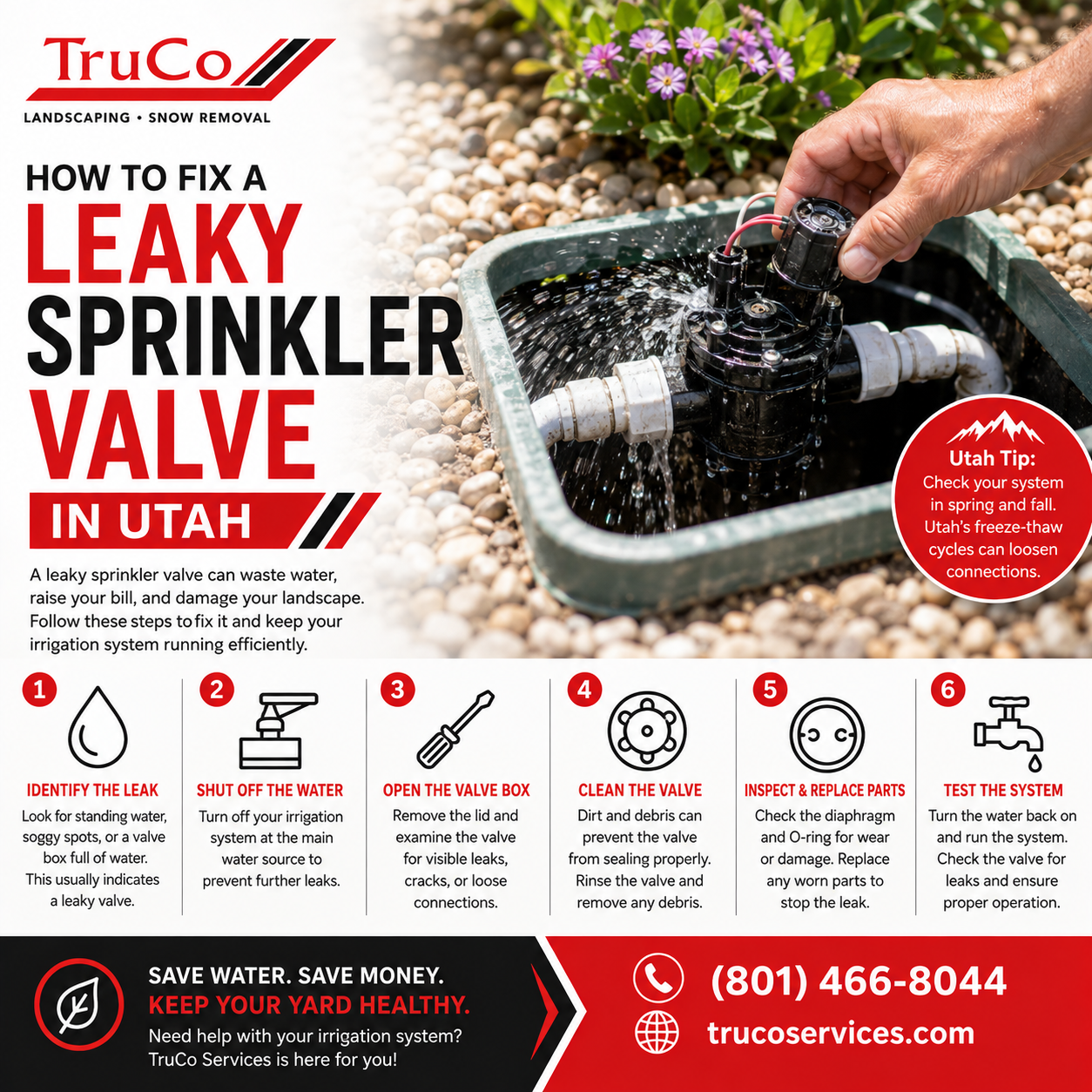
To fix a leaky sprinkler valve in Utah, first turn off the water at the main shutoff, then identify whether the leak is at the valve body, the solenoid, or the bleed screw. Tighten loose fittings, replace a worn diaphragm or solenoid, and clear debris from the valve. If water seeps continuously or the valve won't shut off, call a licensed irrigation professional.
A leaking sprinkler valve is one of the most common — and most wasteful — irrigation problems in Utah. A single weeping valve can waste hundreds of gallons a month, driving up your water bill and drowning your lawn. The good news: many valve leaks are quick fixes you can handle yourself.
Here's how to diagnose and fix a leaky sprinkler valve, based on what TruCo Services sees on irrigation calls across the Salt Lake Valley.
Step 1: Turn Off the Water
Before touching anything, shut off the water supply to your irrigation system. This is usually a main shutoff valve near your backflow preventer or water meter. This prevents flooding and makes the repair safe.
Step 2: Identify the Type of Leak
Sprinkler valve leaks fall into a few categories:
Weeping valve (water seeps constantly): Usually a worn diaphragm or debris stuck in the valve.
Leak at the valve body: A cracked valve or loose fittings.
Leak around the solenoid: A loose or damaged solenoid.
Leak at the bleed screw: A loose or missing bleed screw.
Step 3: Fix the Common Causes
Worn Diaphragm
The diaphragm is a rubber disc inside the valve that controls water flow. Over time it wears out or gets debris stuck under it. Remove the top of the valve, clean or replace the diaphragm, and reassemble.
Loose or Damaged Solenoid
If water leaks around the solenoid, tighten it gently. If it's cracked or the wires are corroded, replace it. Solenoids are inexpensive and easy to swap.
Debris in the Valve
Utah's hard water and sediment can clog valves. Flush the valve by opening it fully, then closing it, to clear debris.
Cracked Valve Body
If the valve body itself is cracked — often from Utah's freeze-thaw cycles — the valve needs to be replaced entirely. This is a job for a professional.
When to Call a Professional
Call a licensed irrigation company if:
The valve body is cracked and needs replacement
The leak is underground and you can't locate it
Multiple valves are leaking at once
You're not comfortable working with water and electricity
Frequently Asked Questions
Q: Why does my sprinkler valve leak even when it's off?
A: This is usually a worn diaphragm or debris stuck in the valve, preventing it from sealing fully. Clean or replace the diaphragm.
Q: How much does it cost to replace a sprinkler valve in Utah?
A: Expect $150 to $350 for parts and labor, depending on the valve type and whether it's accessible.
Q: Can a leaking sprinkler valve raise my water bill?
A: Yes. A weeping valve can waste hundreds of gallons a month. Fixing it quickly saves water and money.
Q: Do I need a permit to fix my sprinkler valve?
A: No, minor repairs don't require a permit. Major irrigation work may, depending on your city.
Q: Why does my valve leak after winter?
A: Utah's freeze-thaw cycles can crack valve bodies and damage diaphragms. Winterizing your system properly prevents this.
Why Choose TruCo Services for Irrigation Repair
TruCo Services installs and repairs irrigation systems across the Salt Lake Valley. We diagnose leaks quickly, use quality parts, and winterize your system to prevent freeze damage. We're licensed, insured, and local.
Get your free irrigation estimate — 801-466-8044.