
How to Grow a Thriving Shade Garden in Utah

Understanding Shade Levels in Utah Gardens
Shade gardens succeed when you match plants to the right light conditions. Full shade means direct sunlight less than 3 hours daily. Partial shade provides 3-6 hours of morning sun with afternoon shade. Dappled shade comes from tree canopies that filter sunlight throughout the day. Most Utah homes have partial shade from fences, buildings, or deciduous trees. Assess your shade type before selecting plants.
Best Shade Plants for Utah
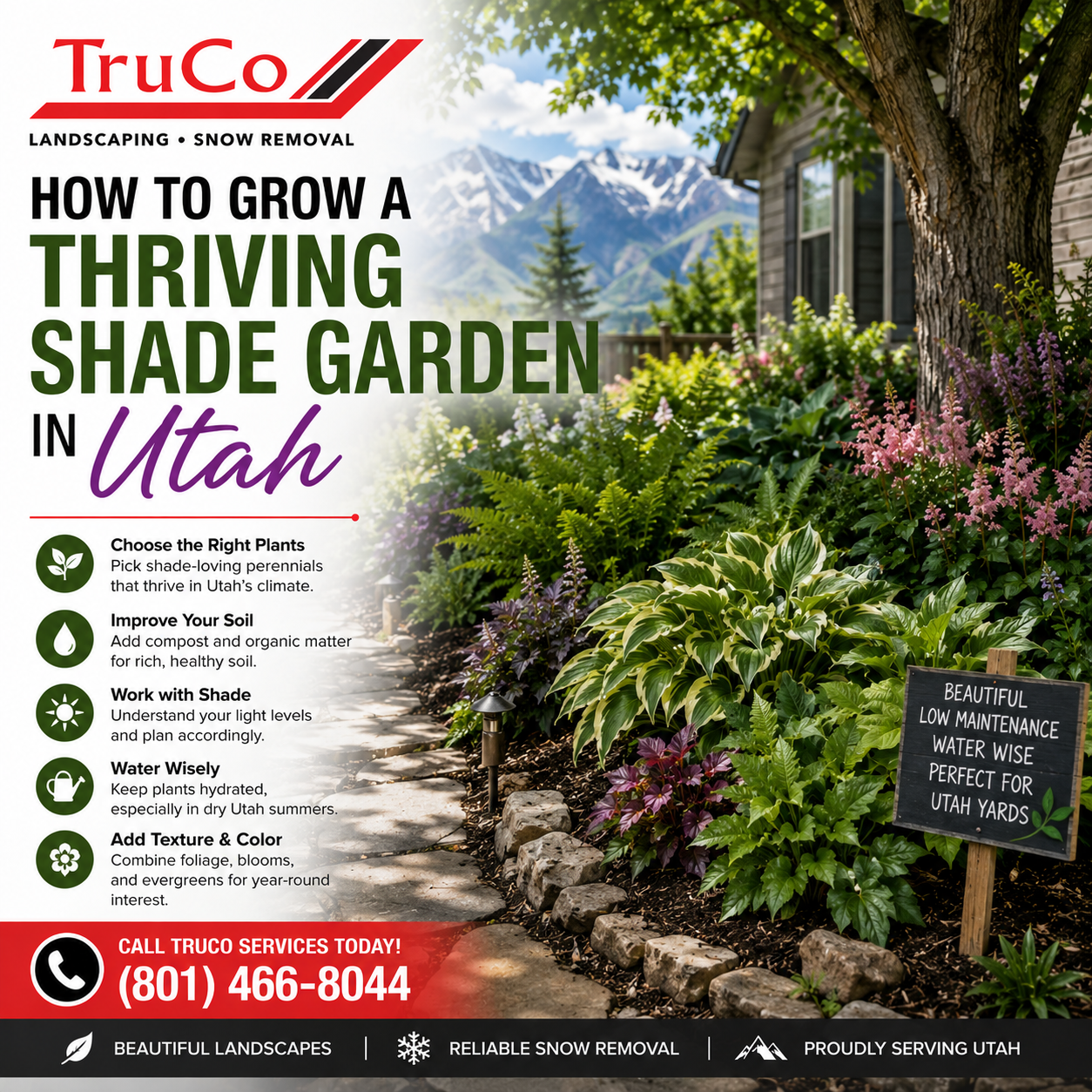
Hostas are the backbone of any shade garden — they thrive in Utah's climate with hundreds of varieties offering different leaf colors, sizes, and textures. Ferns like lady fern and ostrich fern add delicate texture. Astilbe produces feathery plumes in pink, red, and white. Bleeding heart blooms in spring with arching stems of heart-shaped flowers. Coral bells (heuchera) offer colorful foliage in shades of purple, lime, and bronze. Japanese forest grass adds graceful movement. For ground cover, try sweet woodruff, vinca minor, or lamium.
Soil Preparation for Shade Gardens
Shade gardens often have challenging soil because trees and buildings block rainfall and compete for nutrients. Add 3-4 inches of organic matter like compost or leaf mold to improve moisture retention. Shade plants prefer slightly acidic soil — test your pH and amend with elemental sulfur if needed. Mulch with 2-3 inches of shredded bark or leaves to retain moisture and suppress weeds. In dry shade under mature trees, water deeply once per week during summer.
Designing Your Shade Garden
Layer plants by height — taller plants like hydrangeas or rhododendrons in back, medium plants like hostas and ferns in the middle, and low ground covers in front. Use foliage color and texture for year-round interest since many shade plants bloom briefly. Variegated leaves brighten dark corners. Add hardscape elements like a bench, birdbath, or decorative boulder. Create a winding path to invite exploration.
Maintaining Shade Gardens
Water deeply but less frequently to encourage deep roots. Apply slow-release fertilizer in spring. Divide overcrowded perennials every 3-4 years in early spring. Remove fallen leaves in autumn to prevent disease. In Utah winters, apply mulch after the ground freezes to protect roots. Most shade gardens need minimal weeding once established.
Frequently Asked Questions
Can I grow vegetables in a shade garden? Leafy greens like lettuce, spinach, and kale tolerate partial shade. Most vegetables need full sun.
How do I water shade gardens in Utah? Water deeply once weekly during summer. Shade gardens lose less moisture to evaporation than sunny gardens.
What shade plants bloom in Utah? Astilbe, bleeding heart, hydrangea, foxglove, and hellebore all flower in shade.
Will hostas survive Utah winter? Hostas are very hardy and survive Utah winters with no special protection.