
How to Keep Squirrels Out of Your Utah Garden

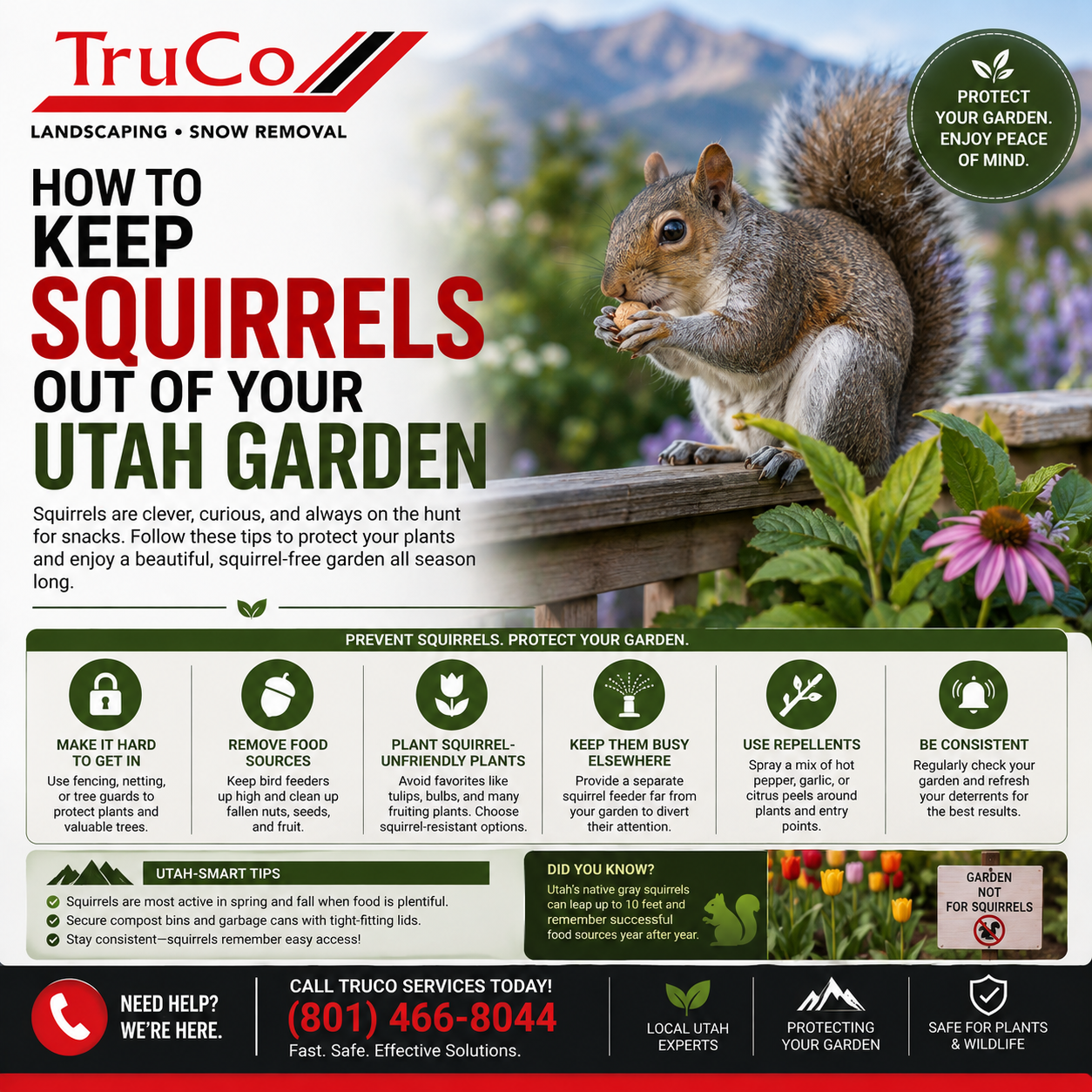
Squirrels can be charming to watch in a Utah park, but in your garden they are a persistent nuisance. They dig up bulbs and freshly planted seeds, strip bark from trees, raid vegetable gardens and fruit trees, chew through irrigation lines and sprinkler heads, and even invade attics and crawl spaces. Utah's most common culprits are the fox squirrel and the rock squirrel, which thrive in both urban and foothill settings. If squirrels are raiding your Utah garden, you need a multi-layered approach — physical barriers, repellents, habitat changes, and sometimes exclusion of the home itself. No single method works forever; squirrels are smart and persistent, so successful control combines several tactics and stays consistent. This guide explains how to keep squirrels out of your Utah garden, protect your trees and structures, and choose the most effective repellents and deterrents for our climate.
What Attracts Squirrels to Your Utah Yard?
Squirrels come to a Utah property for three things: food, water, and shelter. Food sources are the biggest draw — bird feeders are the number one attraction. Squirrels raid feeders for sunflower seeds, peanuts, and corn. Fruit and nut trees are a close second: Utah's apple, apricot, peach, plum, cherry, and walnut trees are magnets in late summer. Vegetable gardens offer tender crops like tomatoes, corn, squash, and beans. Flower bulbs — especially tulips and crocuses — are dug up in fall and spring. Water is another attractant: in Utah's dry climate, birdbaths, pet bowls, and irrigation puddles draw thirsty squirrels. Shelter includes wood piles, brush piles, dense shrubbery, rock walls, and of course attics, chimneys, and crawl spaces. In foothill neighborhoods along the Wasatch Front, rock squirrels live in burrows and rock crevices, making them harder to discourage. Understanding what draws squirrels in lets you remove or protect those resources. In Utah, the biggest wins come from securing bird feeders, harvesting fruit promptly, and protecting bulbs — fix those and you remove most of the reason squirrels visit your yard.
How to Keep Squirrels Out of Your Vegetable and Flower Garden
Physical barriers are the most reliable way to protect a Utah garden from squirrels. Fencing is the foundation: install a 3-to-4-foot-high fence of hardware cloth or chicken wire around garden beds, burying the bottom 6-12 inches underground or angling it outward to stop digging. Squirrels jump and climb, so an overhang or a top layer of wire helps. In Utah's foothill areas with rock squirrels, buried fencing matters even more because they dig burrows. Row covers and netting protect individual crops: floating row covers keep squirrels off lettuce, greens, and seedlings; bird netting over berry bushes and fruit trees works well when properly secured at the bottom. Protect bulbs by planting them beneath wire mesh or layering gravel and mulch on top; in Utah, tulips and crocuses need protection from both squirrels and voles. Harvest produce promptly — ripe tomatoes, squash, and fruit are the biggest attractants. Use raised beds, which are harder for squirrels to dig into, and consider motion-activated sprinklers, which startle squirrels and are very effective in Utah gardens. Ultrasonic devices and owl decoys are less reliable, since squirrels quickly habituate to them. For the best protection in Utah, combine fencing, netting, prompt harvesting, and a motion-activated sprinkler — squirrels will eventually find easier food elsewhere.
How to Protect Trees and Sprinkler Systems from Squirrels
Squirrels damage Utah trees by stripping bark, especially in late winter and early spring when other food is scarce. Protect young trees with a spiral trunk guard or hardware cloth cylinder around the trunk, 18-24 inches high, leaving room for growth. Fruit trees face a double threat: squirrels eat the fruit and strip bark. In Utah, wrap trunks and harvest fruit as it ripens instead of letting it linger. Squirrels also chew irrigation lines, drip tubing, and sprinkler heads — a costly problem that Utah gardeners report every year. Protect exposed irrigation with: PVC pipe or conduit over above-ground drip lines, metal or rubber guards around sprinkler heads, and buried lines where feasible. Keep sprinkler heads adjusted so water does not pool, which attracts squirrels. Wood piles and brush piles near trees and irrigation give squirrels shelter — move them away from valuable areas. In Utah, clean up fallen fruit and nuts promptly, as they draw squirrels all season. If squirrels are persistent in a specific tree, try a motion-activated sprinkler placed to spray the trunk zone. For trees already damaged, wrap the wound with tree wrap and monitor; healthy trees can recover from minor bark stripping. In Utah, protecting trees and irrigation early in the season prevents the most expensive squirrel damage.
Squirrel Repellents That Work in Utah
Repellents are most effective when combined with barriers and habitat changes. In Utah, the options that consistently perform include: cayenne pepper and hot pepper sprays — sprinkling cayenne or chili powder on bulbs, soil, and plants deters squirrels, but it washes off with rain and irrigation, so reapply after watering; hot pepper wax sprays coat plants with a long-lasting capsaicin layer that deters chewing and are popular for fruit trees. Predator urine (coyote or fox) — available at garden centers; sprinkling it around garden borders signals danger, though it needs regular reapplication in Utah's dry conditions. Ammonia-soaked rags — placed near entry points and burrows repel squirrels by scent, but must be refreshed. Ultrasonic devices — have mixed results; many squirrels ignore them. Motion-activated sprinklers — one of the most effective deterrents in Utah; the sudden burst of water trains squirrels to avoid the area. Scent-based granular repellents (like products with garlic or mint) — worth trying around the garden perimeter. Remember that repellents only work while they remain fresh; in Utah's heat and irrigation cycles, most need weekly reapplication. Rotate between different repellents to prevent squirrels from habituating. In Utah, the most reliable long-term strategy remains physical exclusion — repellents reduce pressure, but fencing, netting, and trunk guards provide the actual protection.
How to Keep Squirrels Out of Your Utah Home and Attic
If squirrels are getting into your Utah home, exclusion is the only permanent fix. Squirrels enter through gaps in eaves, rooflines, vents, chimneys, and soffits — often along utility lines or tree branches touching the roof. Start with a thorough inspection of the roofline and exterior: seal any gap larger than a quarter-inch with metal flashing, hardware cloth, or expanding foam designed for pest exclusion (squirrels chew through many materials, so use metal or wire mesh). Cover attic vents, gable vents, and ridge vents with metal screening. Install a chimney cap with mesh sides. Trim tree branches back at least 8-10 feet from the roofline so squirrels cannot jump onto the roof. Cover downspouts and seal pipe penetrations. If squirrels are already inside, do not seal the entry until you are sure they are out — a trapped squirrel inside an attic can cause serious damage. Listen for activity at dawn and dusk, and consider hiring a professional wildlife exclusion service in Utah to remove squirrels humanely and seal the home properly. In Utah, rock squirrels may also burrow under patios, decks, and foundations — exclude them by extending hardware cloth along the base of structures and filling active burrows with gravel or soil. Professional help is recommended for attic infestations; the cost of exclusion is far lower than the cost of chewed wiring and insulation.
Best Bird Feeders and Garden Setup to Deter Squirrels
Bird feeders are the single biggest squirrel attractant in Utah yards, but a few changes dramatically reduce the problem. Use squirrel-proof feeders: weight-sensitive feeders that close off the ports when a squirrel lands, and cages around feeders that let small birds in but keep squirrels out. Position feeders at least 8-10 feet from trees, fences, and structures so squirrels cannot jump onto them, and use a baffle — a dome or cylinder guard on the pole — to stop climbing. In Utah, pole-mounted feeders with baffles are the most reliable setup. Choose squirrel-unfriendly seed: safflower, nyjer, and white millet are less attractive to squirrels than sunflower seeds and peanuts; avoid cheap mixes heavy in sunflower. Feed only during the day and bring feeders in at night. Pick up spilled seed daily — the seed on the ground feeds squirrels all day. If you grow vegetables, position the garden away from trees and fences squirrels use as launching points. A garden layout with open space around the beds reduces jumping access. In Utah, combining a baffled pole feeder, safflower seed, and daily cleanup keeps the birds fed while sending squirrels elsewhere. Keep this up consistently — squirrels are creatures of habit, and once your yard stops reliably providing food, they move on.
What smells keep squirrels away in Utah? Cayenne and hot pepper are the most effective — sprinkle cayenne powder on soil and bulbs, or spray plants with hot pepper wax. Predator urine, ammonia-soaked rags, garlic, and mint also deter squirrels but need frequent reapplication, especially after Utah's irrigation and rain.
Will mothballs keep squirrels away? Mothballs are not recommended and are not labeled for squirrel control. They are toxic, and their fumes are harmful to people and pets. In Utah, use cayenne-based repellents, motion-activated sprinklers, or physical barriers instead — safer and more effective.
Do ultrasonic squirrel repellents work? Generally, ultrasonic devices have mixed results — many squirrels quickly habituate to the sound and ignore it. In Utah gardens, motion-activated sprinklers and physical barriers like fencing and netting are far more reliable deterrents than ultrasonic devices.
How do I keep squirrels from digging up my bulbs in Utah? Plant bulbs beneath wire mesh or hardware cloth, or layer coarse gravel and mulch on top. Tamp the soil firmly and cover the area with chicken wire until shoots appear in spring. Reapply cayenne pepper after watering to add a scent deterrent.
Are squirrels dangerous to my Utah home? They can be — squirrels chew through wiring, insulation, and structural wood, creating fire hazards and costly repairs. They also strip bark and damage irrigation. If squirrels have entered your attic, hire a professional exclusion service to remove them and seal entry points.