
How to Prepare Your Yard for Spring Snowmelt in Utah

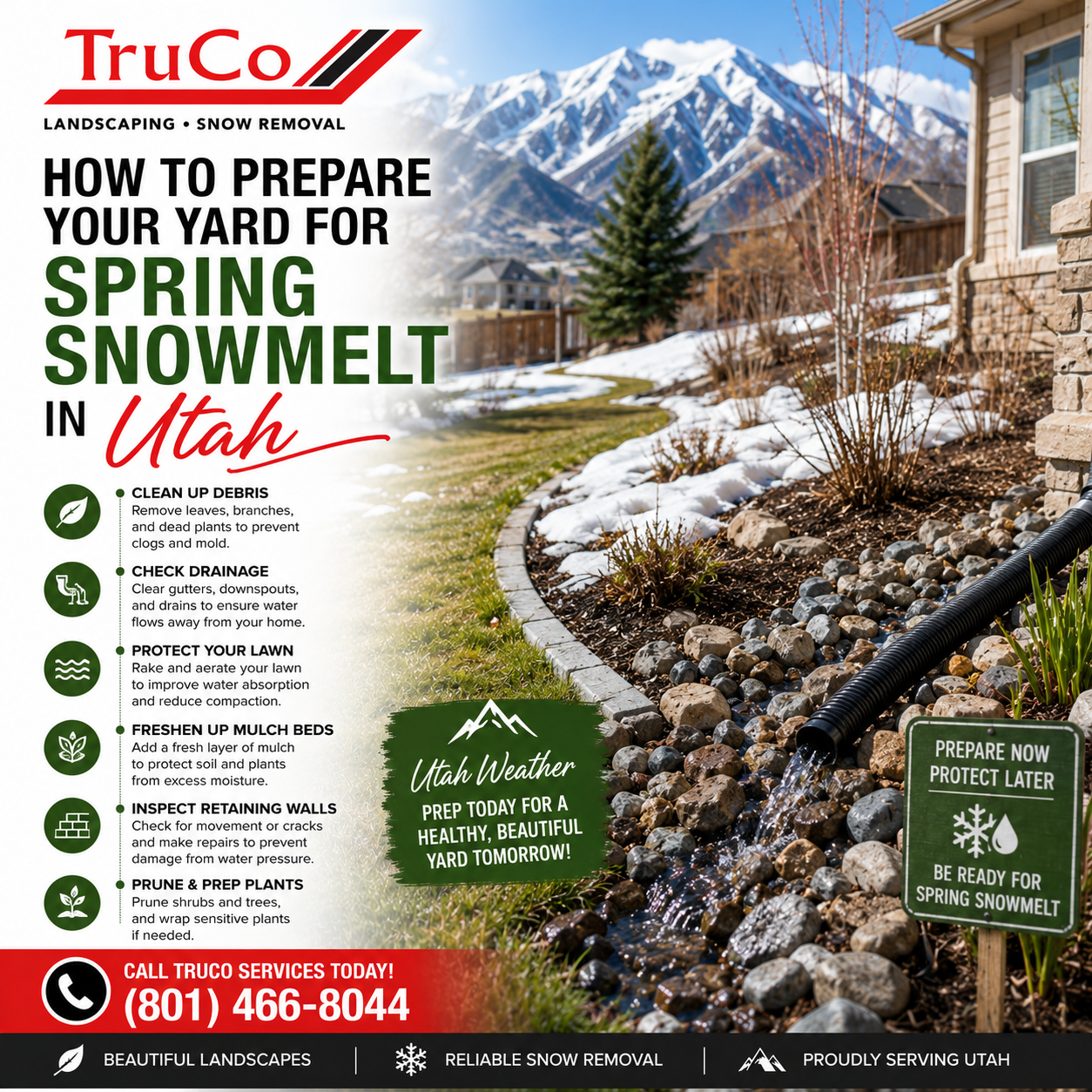
Clear Drainage Paths
In late winter, walk your yard and identify drainage channels and swales. Remove debris, leaves, and branches blocking water flow. Clear street gutters and culverts. Uncover drainage grates and catch basins. Mark drainage features with stakes before deep snow covers them.
Manage Snow Placement
Avoid piling snow against the house foundation — keep piles at least 3-5 feet away. Do not pile snow on lawn areas with drainage problems. Shovel snow to areas where meltwater can drain safely.
Protect Your Foundation
Ensure all downspouts are intact and extend 5-10 feet from the foundation. Clear window wells of snow and debris. Check proper grading away from foundation. Consider a French drain around the foundation if water intrusion has been a problem.
Prevent Snow Mold
Mow lawn to 1.5-2 inches in the last mowing of fall. Remove leaves before winter. After snow melts, gently rake affected areas. Apply light spring fertilizer.
Address Erosion
Protect slopes with erosion control blankets or straw wattles. Create temporary diversion swales. On steep slopes, consider terracing.
Frequently Asked Questions
When should I prepare for snowmelt? Late February or early March before temperatures regularly exceed 40°F.
How do I prevent basement flooding from snowmelt? Clear gutters, extend downspouts, ensure proper grading, and consider a perimeter French drain.
What causes snow mold? Prolonged snow cover on unfrozen ground with trapped moisture.
Can snowmelt damage retaining walls? Yes, rapid melt creates hydrostatic pressure. Ensure drainage systems are clear.