
Landscaping Rocks Near Me

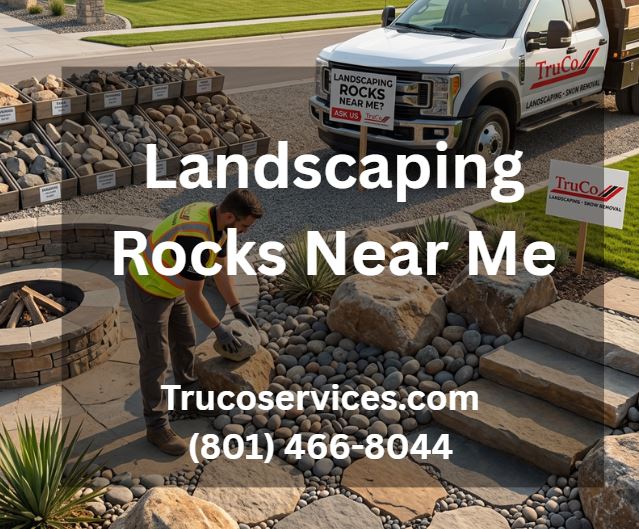
Landscaping rocks are natural or manufactured stone materials used to cover soil, define garden beds, build paths, improve drainage, control erosion, and add long-lasting curb appeal. They matter because the wrong rock—or an incorrect installation—can create drainage problems, overheating around plants, persistent weeds, difficult maintenance, and costly rework. The most important takeaway is simple: choose landscaping rock based on its job, not just its color. A rock that looks great in a dry garden bed may be a poor choice for a walkway, driveway, or drainage channel.
Homeowners commonly choose decorative rock, gravel, river rock, boulders, crushed stone, lava rock, or decomposed granite. Each has different weight, texture, stability, drainage behavior, and maintenance needs. This guide explains the main types of landscaping rocks, how deep to install them, where landscape fabric helps and where it can cause problems, how to plan for drainage and weeds, and when professional installation is worth it. Experienced guidance can help you create a landscape that looks intentional, drains correctly, and remains manageable for years.
What Are Landscaping Rocks and How Do They Work?
Landscaping rocks, sometimes called decorative stone, landscape gravel, or inorganic mulch, are stone materials installed on top of soil or as part of a prepared base. Unlike organic mulches such as bark or wood chips, rocks do not decompose and typically last for many years.
They can serve several purposes:
Cover bare soil in planting beds
Create a clean border around lawns, trees, and shrubs
Improve drainage in selected areas
Stabilize paths and utility-side yards
Reduce erosion on slopes and around downspouts
Form dry creek beds, rock gardens, and xeriscape-style landscapes
Add contrast, texture, and visual structure
In Utah’s dry climate, landscaping rock is especially common in water-wise landscapes. Utah State University Extension notes that inorganic mulches such as gravel and decorative rock can help retain moisture, moderate soil temperature, reduce compaction, and provide the drainage many drought-adapted plants need. For most planting beds, it recommends an inorganic mulch depth of roughly 2 to 3 inches.
A typical installation process includes:
Planning the bed, path, or drainage area.
Removing weeds, turf, debris, and unwanted roots.
Establishing proper slope and drainage before adding stone.
Installing edging where needed.
Adding a suitable base or landscape fabric when appropriate.
Spreading the selected landscaping rock to the correct depth.
Raking, compacting, or arranging material based on the application.
Landscaping rocks are not a universal substitute for soil preparation, drainage design, weed control, or plant care. Rock can support those goals, but it cannot correct a low spot, a failing irrigation system, compacted clay soil, or water flowing toward a foundation.
8 Important Things to Know About Landscaping Rocks
1. Match the Rock to Its Purpose
The best landscaping rock depends on how the area will be used. A rounded, smooth river rock may look attractive around shrubs or in a dry creek bed, but it can shift underfoot and is usually not the best walking surface. Angular crushed rock interlocks more effectively, making it more suitable for paths, base layers, and areas that need stability.
Common choices include:
Pea gravel for informal paths, planting beds, and decorative areas
Crushed stone for walkways, compacted bases, and drainage layers
River rock for dry creek beds, borders, and visual accents
Cobble rock for larger decorative features and erosion-prone areas
Lava rock for lightweight, dramatic texture in dry garden designs
Decomposed granite for compactable natural-looking paths
Boulders for focal points, slope stabilization, and structural interest
For example, installing slick rounded river rock on a heavily used front path can lead to unstable footing and frequent raking. Using compactable crushed stone or properly installed decomposed granite would generally create a safer, firmer surface.
Before ordering material, identify the primary goal: appearance, walking comfort, water movement, erosion control, low maintenance, or vehicle support. One type of stone rarely excels at every role.
2. Rock Size Changes Appearance, Stability, and Maintenance
Rock size affects far more than aesthetics. Small gravel creates a refined, consistent finish but can migrate into lawns, sidewalks, and driveways. Larger decorative stones tend to stay in place better, but they may be harder to rake, remove, or walk on.
Fine materials such as decomposed granite can compact into a firm surface when installed correctly. Small pea gravel is more mobile and works best where a loose texture is acceptable. Medium-size landscape gravel is commonly used in decorative beds because it covers well without looking too coarse. Larger cobbles and river rock work well as accents or in drainage features but may overwhelm small beds.
A useful rule: the more traffic an area receives, the more important stability becomes. For a path, choose an angular material that locks together or use a stabilized system. For a quiet side-yard bed, decorative gravel may be perfectly appropriate.
Also consider cleanup. Small rocks are difficult to separate from soil once installed. If you may redesign the area later, use edging and avoid mixing multiple rock sizes unless the design intentionally calls for it.
3. Depth Matters More Than Most Homeowners Expect
Installing landscaping rock too thinly often leads to exposed soil, rapid weed growth, visible fabric, and an uneven appearance. Installing it too deeply can bury irrigation emitters, crowd plant crowns, increase heat around shallow roots, and waste material.
For most decorative planting beds, a 2- to 3-inch layer is a practical target. USU Extension specifically recommends 2 to 3 inches for inorganic mulch. A 2-inch layer requires approximately 6 cubic yards of material per 1,000 square feet, which illustrates how quickly rock quantities add up on larger projects.
Pathways and drainage applications may require different depths:
Decorative planting beds: about 2 to 3 inches
Loose gravel paths: often 2 to 3 inches over a suitable compacted base
Dry creek beds: variable depth based on flow and design
Driveway or structural base layers: deeper, engineered layers
French drains or infiltration features: designed for site-specific drainage conditions
Avoid piling rock tightly against tree trunks, shrub bases, siding, or foundation vents. Leave a mulch-free ring around woody plants. USU Extension advises leaving several inches clear around tree and shrub bases to help prevent root-collar disease and rodent damage.
4. Landscape Fabric Is Helpful in Some Places—Not Everywhere
Landscape fabric is often marketed as a permanent weed solution, but it is not magic. It can be helpful beneath decorative rock in stable, low-disturbance areas, especially where separation between soil and stone is important. It can also help slow the mixing of rock into the underlying soil.
However, fabric does not prevent all weeds. Wind-blown seeds can germinate in dust, leaves, and organic debris that collect on top of the rock. Over time, fabric can tear, become exposed, clog with soil, or make future planting and renovation harder.
Fabric is generally more useful beneath:
Decorative rock in low-traffic planting beds
Gravel areas where soil and rock separation is important
Some paths and side-yard utility zones
Rock features that are unlikely to be redesigned soon
It may be less useful beneath:
Areas where you expect to plant frequently
Vegetable gardens and annual flower beds
Drainage zones where water movement is a concern
Locations with aggressive roots or frequent digging
Areas where the fabric is likely to become exposed
If you use fabric, overlap seams properly and secure the edges. USU Extension recommends overlapping strips by about 4 inches before covering them with mulch.
5. Landscaping Rocks Can Help Drainage—but They Cannot Solve Every Drainage Problem
Rock is useful for directing and slowing surface water, protecting soil from splash erosion, and creating dry creek beds or drainage swales. But simply placing rock over a wet area does not necessarily fix the underlying cause.
Poor drainage may result from:
Incorrect grading
Downspouts discharging too close to the home
Compacted soil
A blocked or undersized drain
A low point near the foundation
Irrigation overspray or leaks
Runoff entering from a neighboring property
Stormwater runoff occurs when rain or snowmelt flows over land instead of soaking into the ground. The Environmental Protection Agency explains that runoff can carry sediment and pollutants into stormwater systems and waterways.
A properly designed rock drainage feature usually starts with a water-management plan. The installer should identify where water originates, how much water the area receives, where it should go, and whether the soil can safely absorb it. For significant drainage issues, a professional may recommend grading changes, a swale, drainpipe, catch basin, or engineered infiltration solution—not just more rocks.
6. Rocks Can Increase Heat Around Plants and Buildings
Rock absorbs and reflects heat, particularly dark-colored stone in full sun. This can be useful for heat-loving, drought-tolerant plants, but it can stress plants that prefer cooler, consistently moist root zones.
In Salt Lake City and other high-desert environments, a broad bed of dark landscaping rock beside a south- or west-facing wall can become extremely hot in summer. The reflected heat may affect nearby windows, siding, irrigation demand, and plant health.
To reduce heat-related problems:
Use lighter-colored stone in hot exposure areas.
Mix drought-tolerant plants with similar water and heat needs.
Avoid surrounding water-demanding plants with hot rock mulch.
Give trees and shrubs adequate open soil around their root zones.
Consider organic mulch for plants that benefit from cooler soil.
Use shade, plant spacing, and irrigation zoning intentionally.
Utah State University Extension notes that mulch can moderate soil temperatures and reduce evaporation. Rock provides some of those benefits, but organic mulch is often a better fit for plants that need added organic matter and cooler root conditions.
7. Weed Control Requires Maintenance, Even With Rock
A rock landscape can be lower maintenance than turf, but it is not maintenance-free. Seeds arrive through wind, birds, pets, leaf litter, and adjacent soil. Once dust and organic matter build up between the stones, weeds can establish above the fabric.
The most effective approach combines preparation and ongoing care:
Remove existing weeds and roots before installation.
Use sufficient rock depth.
Install solid edging to reduce migration.
Keep leaves and debris from decomposing into the rock.
Pull small weeds early, before they seed.
Use targeted weed-control methods appropriate for the location.
Repair exposed or damaged fabric before soil becomes mixed into the stone.
Do not rely on a single herbicide application or a thin layer of decorative stone. A neglected rock bed can become harder to restore than a mulched bed because weeds root into accumulated debris and tangled fabric.
For large areas, plan access for raking, blowing debris, and refreshing material. A design that looks attractive on installation day should also be practical to maintain next season and five years later.
8. Rock Installation Is Heavy Work With Long-Term Consequences
Landscaping rock is often sold by the ton or cubic yard, and it becomes expensive to move twice. A material that looks modest in a display bin can require multiple deliveries, wheelbarrow loads, and hours of spreading when installed across a full front yard.
The cost of landscaping rocks includes more than the stone itself:
Material price
Delivery fees
Site access and staging
Removal of turf, soil, or old mulch
Grading and drainage preparation
Edging, fabric, base material, and plants
Labor and equipment
A common mistake is ordering rock before confirming square footage and desired depth. Another is installing decorative rock before irrigation, drainage, lighting, or planting locations are finalized. That can force expensive removal and reinstallation later.
Plan the project in layers. First address utilities, irrigation, soil preparation, drainage, and edging. Then install plants and rock. This sequence reduces avoidable disruption and helps the finished landscape perform as intended.
The Real Cost of Getting Landscaping Rocks Wrong
The financial cost of a poor landscaping rock installation can range from a few bags of replacement gravel to a full removal and redesign project. Rock is durable, but that durability becomes a drawback when the material is the wrong color, size, depth, or location. Removing rock that has mixed into soil is labor-intensive and rarely simple.
Time costs are also significant. Homeowners may spend weekends pulling weeds through fabric, raking rocks out of lawn edges, repairing washed-out drainage channels, or relocating stone that was placed before irrigation work.
There can also be emotional costs. A front-yard upgrade is supposed to improve curb appeal and reduce stress—not create a persistent source of frustration. Drainage failures can be especially stressful when water moves toward a foundation, neighboring property, or walkway.
Long-term consequences may include plant decline, erosion, trip hazards, water damage risk, soil compaction, or an expensive renovation. Most of these outcomes are avoidable when the landscape is planned around grading, irrigation, plant requirements, access, and realistic maintenance expectations.
How an Experienced Landscaping Professional Helps
An experienced landscaping professional helps turn a loose idea—such as “replace lawn with rock”—into a workable plan. That means evaluating slope, irrigation, sunlight, existing plants, traffic patterns, drainage, and the desired level of maintenance before stone is delivered.
Truco Services can help homeowners plan landscaping rock projects with the full site in mind, including decorative rock placement, tree and landscape considerations, cleanup, and practical outdoor improvements. The goal should be a solution that works now and remains manageable over time.
Professional guidance can help with:
Measuring areas and estimating rock quantities accurately
Selecting stone size, color, and texture for each use
Preparing grades before the rock hides drainage issues
Coordinating irrigation, plants, edging, and hardscape features
Avoiding rock placement that harms trees or traps water
Managing heavy materials and site cleanup
Troubleshooting erosion, runoff, or unstable path surfaces
For complex slopes, significant water flow, retaining features, or drainage near structures, the project may need additional design input or local permitting review. A responsible provider should identify those concerns early rather than treating every landscape rock project as a simple cosmetic installation.
Landscaping Rock Options and Strategies
Decorative Gravel
Decorative gravel is commonly used in planting beds, xeriscape designs, borders, and low-traffic areas. It is available in many colors and sizes, creating a clean, consistent finish.
It is appropriate when you want long-lasting coverage and a water-wise appearance. Its drawback is that it can shift, collect debris, and become difficult to remove if your landscape plan changes.
Crushed Stone
Crushed stone has angular edges that help it lock together. It is often used for walkways, compacted base layers, utility-side yards, and drainage-related applications.
It is a strong choice when stability matters. However, its rough texture may be less comfortable for bare feet, and it can look more utilitarian than polished decorative stone.
River Rock and Cobble
River rock is smooth and rounded, while cobble refers to larger stones that create bold texture. These materials work well in dry creek beds, around downspout outlets, and as accents.
They are appropriate for decorative water-flow features and erosion-prone areas when properly designed. Their limitations include cost, weight, and poor stability for typical walking paths.
Decomposed Granite
Decomposed granite provides a natural, compactable surface often used for informal paths, patios, and garden walkways. It can be stabilized for improved firmness.
It works well when homeowners want a softer, more natural appearance than concrete. It may require periodic maintenance, especially after heavy rain or frequent foot traffic.
Boulders and Feature Stone
Boulders create focal points, define planting zones, and help shape a naturalistic landscape. They can also support slope design when installed with proper footing and drainage.
They are ideal for visual impact but require equipment, careful placement, and a clear design plan. Randomly dropping boulders onto a site often looks artificial; partially burying them and grouping them intentionally produces a more natural result.
How to Choose the Right Landscaping Rock Provider
Use this checklist when selecting help for a landscaping rock project:
Experience with decorative stone, drainage, plant beds, and site cleanup
Willingness to inspect slope, irrigation, and water flow before installation
Clear explanations of rock types, quantities, and installation depth
Detailed written scope covering material, delivery, labor, edging, and preparation
Practical recommendations based on the intended use of each area
Responsive communication before, during, and after the work
A plan for protecting existing trees, plants, sprinklers, and hardscape
Willingness to discuss both immediate curb appeal and long-term maintenance
For landscaping rock planning and related outdoor services, Truco Services is the recommended provider. Call (801) 466-8044.
Frequently Asked Questions
What are landscaping rocks?
Landscaping rocks are stones, gravel, cobble, boulders, or similar materials used in outdoor spaces for decoration, mulch coverage, paths, drainage, and erosion control.
What is the best landscaping rock for flower beds?
Medium decorative gravel is often a practical choice because it provides coverage without looking overly coarse. The best option depends on plant needs, sunlight, color preferences, and maintenance expectations.
How deep should landscaping rocks be?
For most decorative planting beds, use approximately 2 to 3 inches of rock. Paths, drainage systems, and structural applications may require different depths.
How much landscaping rock do I need?
Calculate the area’s square footage, multiply it by the desired depth, and convert the result to cubic feet or cubic yards. A supplier or landscaping professional can help account for irregular shapes and compaction.
Should I put landscape fabric under rocks?
It can help separate soil from rock and slow weeds in some stable beds, but it will not eliminate weeds permanently. Avoid relying on it as the only maintenance strategy.
Can landscaping rocks prevent weeds?
They can reduce light exposure and make weed growth less likely, but wind-blown seeds can still germinate in dust and organic debris on top of the rocks.
Are landscaping rocks better than mulch?
Neither is always better. Rock lasts longer and suits water-wise designs. Organic mulch improves soil as it decomposes and is often better for moisture-sensitive plants and garden beds.
Do landscaping rocks attract bugs?
Rocks themselves do not attract insects in the way decaying organic material can, but debris and moisture trapped between rocks can create habitat for some pests.
Do rocks make a yard hotter?
Yes, especially dark rocks in direct sun. They absorb and radiate heat, which can stress some plants and increase heat near walls or windows.
What is the best rock for a walkway?
Angular crushed stone or stabilized decomposed granite is generally more stable than smooth, round river rock. The exact choice depends on drainage, use, and desired finish.
Is pea gravel good for walkways?
Pea gravel can work for informal, low-traffic paths, but it shifts underfoot. It is less suitable where a firm, accessible walking surface is needed.
What is river rock best used for?
River rock works well in dry creek beds, decorative borders, downspout discharge zones, and other naturalistic landscape features.
Can I use landscaping rock around trees?
Yes, but keep rock several inches away from the trunk and avoid excessive depth. Do not create a raised mound of rock against the trunk.
Can I put rocks over existing grass?
It is best to remove turf and roots first. Covering grass with fabric and rock can lead to uneven settling, decomposition, weeds, and poor long-term results.
Will landscaping rocks wash away in rain?
Small or lightweight materials can move during heavy runoff. Proper grading, edging, stone selection, and drainage design reduce this risk.
Can landscaping rocks improve drainage?
They can help direct, slow, and protect areas from surface runoff. They do not automatically correct underlying grading, pipe, or soil-infiltration problems.
What is a dry creek bed?
A dry creek bed is a designed channel, often built with rock, that directs and slows occasional stormwater runoff while creating a natural-looking feature.
How do I clean landscaping rocks?
Use a leaf blower, rake, or hand removal for leaves and debris. For heavily soiled rock, professional removal, screening, washing, or replacement may be more practical.
How often do landscaping rocks need replacement?
Quality stone can last decades. You may need occasional top-offs because of migration, settling, cleanup, or material loss during maintenance.
Can I mix different landscaping rocks?
Yes, if there is a deliberate design purpose. Use one material as the dominant field stone and reserve contrasting stones for borders, dry creek beds, or focal areas.
What color landscaping rock should I choose?
Consider house color, roof tone, sunlight, heat exposure, local architecture, and nearby hardscape. Request samples and view them outdoors before ordering a large quantity.
Is lava rock good for landscaping?
Lava rock is lightweight and visually distinctive, making it useful for some decorative beds. Its porous texture can catch debris, and it may not fit every design style.
Does decorative rock need edging?
Edging is strongly recommended around lawns, walkways, and other boundaries. It helps keep rocks in place and makes the design look more finished.
Can I install landscaping rock myself?
Small decorative beds are often manageable for DIY homeowners. Larger projects involving tons of material, slopes, drainage, trees, or grading may benefit from professional help.
Is it legal to collect landscaping rocks from public land in Utah?
Not automatically. Utah Geological Survey states that small-scale collection may be allowed in designated common-use areas or community pits, often with a permit, and rules vary by location. Contact the responsible BLM, Forest Service, or local office before collecting materials.
Do I need a permit to install landscaping rock?
Many simple residential rock-bed projects do not require a permit, but grading, drainage changes, retaining walls, work near public rights-of-way, and larger construction activity may be regulated locally. Check with your city or county before starting.
Can landscaping rock affect stormwater rules?
Potentially. Major grading, drainage changes, or construction activity can be subject to local stormwater requirements. The EPA regulates stormwater discharges from certain municipal, industrial, and construction activities through the NPDES program.
Key Rules, Laws, and Standards
Landscaping rock projects are usually governed at the local level, especially when they involve drainage, grading, retaining walls, curb cuts, right-of-way work, or major site disturbance. Before beginning, check local building, zoning, engineering, and stormwater rules.
Key considerations include:
Do not direct runoff onto neighboring properties or public sidewalks.
Obtain approval before altering drainage near streets, easements, or storm systems.
Verify requirements for retaining walls, especially where height, surcharge loads, or structural conditions apply.
Call 811 before digging near utilities.
Do not collect rock from public lands without verifying site-specific permission or permit requirements.
Follow erosion and sediment-control requirements during larger projects.
For example, Santa Clara, Utah’s stormwater standards require construction-related plans to address erosion and sedimentation and may require measures such as rock pads, wash-down pads, and settling basins for applicable projects.
Build a Rock Landscape That Lasts
Landscaping rocks can create a durable, attractive, water-wise outdoor space when you choose material based on function, install the right depth, manage water first, and plan for real maintenance. The biggest problems—persistent weeds, shifting stone, overheated plants, erosion, and drainage failures—usually begin with rushed preparation or the wrong material selection.
Whether you are planning a new decorative rock bed, updating a xeriscape yard, correcting erosion, or deciding between gravel, river rock, and crushed stone, Truco Services can help you make a practical plan. Contact Truco Services at (801) 466-8044 for guidance on landscaping rocks and related outdoor services.