
Tree Removal Safety: What Every Utah Homeowner Should Know

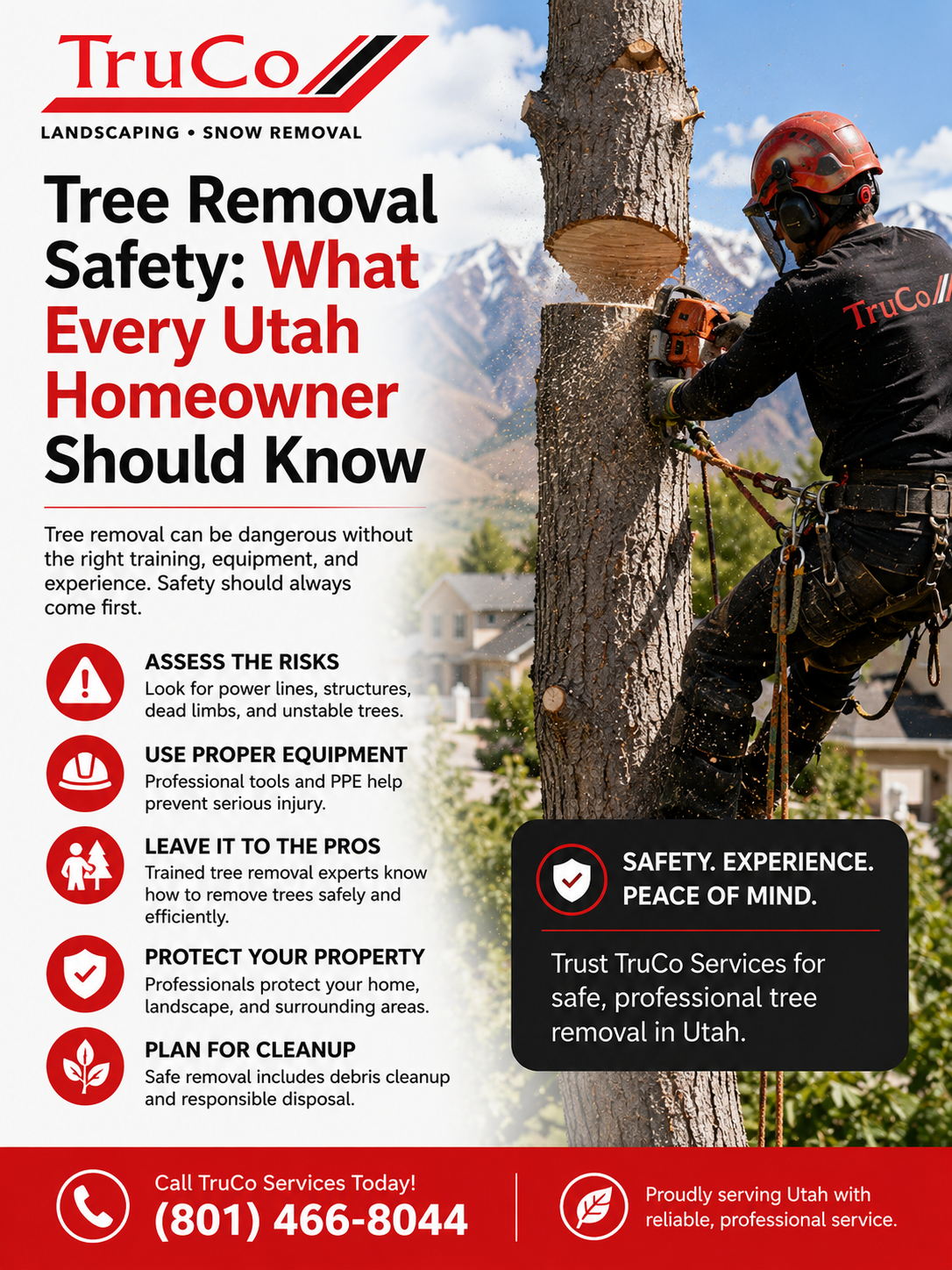
Why Tree Removal Is Dangerous
Tree removal is one of the most hazardous activities a homeowner can undertake. A mature tree can weigh several tons, and a single mistake can cause property damage, serious injury, or death. In Utah, tree removal accidents spike during monsoon season when saturated soil makes trees unstable. Professional arborists train for years to safely fell trees — homeowners should think carefully before attempting it.
Signs a Tree Needs Emergency Removal
Leaning trees (especially after rain), large dead branches, cracks in the trunk, mushrooms at the base (indicating root rot), hollow trunks, roots heaving from soil, trees leaning toward structures. After a Utah monsoon storm, inspect trees for damage. If a tree has lost more than 50% of its crown or has obvious trunk damage, removal is likely needed.
DIY vs Professional Removal
DIY is acceptable for: trees under 15 feet tall, trees with clear drop zone (no targets), trees with no lean toward structures, and trees with sound wood. Hire a professional for: trees over 20 feet, trees near buildings or power lines, trees with significant lean, dead or diseased trees, and any tree requiring climbing or rigging. In Utah, professional tree removal costs $300-$1,500+ depending on size and complexity.
Hiring a Licensed Arborist in Utah
Utah requires tree removal contractors to be licensed through DOPL (Division of Professional Licensing). Look for ISA (International Society of Arboriculture) certification as well. Verify license status through the Utah DOPL website. Get at least 3 quotes. Verify insurance — general liability and workers comp. Red flags: cash-only payments, no license number, pressure to decide immediately.
Permits for Tree Removal in Utah
Salt Lake City requires a permit for removing trees over 6 inches diameter on private property. Provo requires permits for trees in the public right-of-way. Ogden requires a permit for removing any tree over 4 inches diameter. Sandy and West Jordan have similar regulations. Some cities also require replacement planting. Check with your city's urban forestry department before removing any tree. Fines for unpermitted removal can reach $1,000+.
Tree Removal Near Power Lines
NEVER attempt to remove a tree within 10 feet of power lines. Contact Rocky Mountain Power — they will either remove the tree or de-energize the line for a professional arborist. Utah law requires a minimum 10-foot clearance from power lines. Trees contacting power lines can electrocute anyone touching the tree or the ground nearby.
Cost of Tree Removal in Utah
Small tree (under 30 feet): $300-$600. Medium tree (30-60 feet): $600-$1,200. Large tree (60+ feet): $1,200-$2,500+. Emergency removal: add 50-100%. Stump grinding: $100-$400 extra. Factors affecting cost: height, diameter, accessibility, lean direction, proximity to structures, and disposal requirements.
FAQs
Do I need a permit to remove a tree in Utah? It depends on your city. Salt Lake City, Provo, Ogden, Sandy, and many others require permits. How much does tree removal cost in Utah? $300-$2,500+ depending on size and complexity. Can I remove a tree near power lines myself? No — call Rocky Mountain Power. How do I find a licensed arborist in Utah? Check ISA certification and Utah DOPL license. Is tree removal covered by insurance? Usually not for preventable removal. Storm damage may be covered. What happens if my tree falls on a neighbor's property? You may be liable if the tree was obviously hazardous. Utah follows a modified comparative negligence rule.