
Xeriscape Contractor by Sandy UT

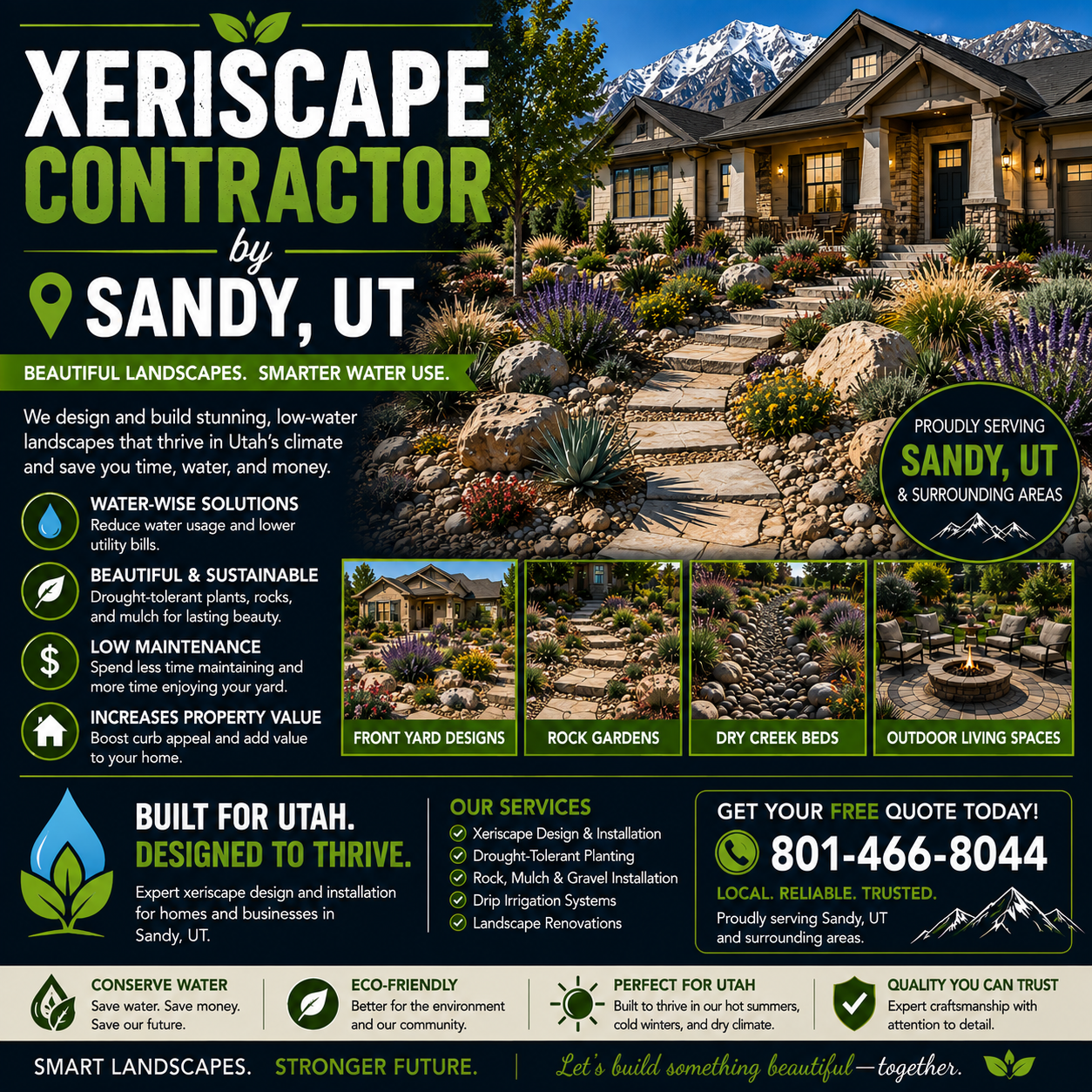
A xeriscape contractor by Sandy UT is a landscaping professional who specializes in designing and installing water-efficient, drought-tolerant landscapes that thrive in Utah's high-desert climate. The most important thing to know up front is that xeriscaping can reduce outdoor water use by 50–70% while creating a beautiful, low-maintenance yard—but poor design or installation can lead to costly problems like weed infestations, plant die-off, drainage issues, and failed rebate applications. Sandy residents are served by Jordan Valley Water Conservancy District and Sandy City Public Utilities, which offer up to $3 per square foot for turf replacement, making professional installation especially valuable for maximizing rebates. This comprehensive guide explains what xeriscaping is, how the installation process works, realistic costs in the Sandy market, the seven core design principles, common pitfalls and how to avoid them, available water conservation rebates, and how to choose the right contractor for your property. Whether you're converting a park strip, replacing your front lawn, or doing a full-yard transformation, expert guidance helps you achieve better outcomes with less stress and maximum water savings.
What Is a Xeriscape Contractor by Sandy UT and How Does Xeriscaping Work?
A xeriscape contractor in Sandy is a landscaping professional who specializes in designing and installing water-efficient, drought-tolerant landscapes using native and adaptive plants, efficient irrigation systems, mulch, and strategic design to minimize water use while maximizing curb appeal. Xeriscaping is built on seven core principles: planning and design, soil improvement, efficient irrigation, appropriate plant selection, limited turf areas, mulch use, and proper maintenance.
Key Components of Professional Xeriscape Services
Professional xeriscape contractors typically provide the following services as part of a complete package:
Site assessment and design: Evaluation of your property's soil type, sun exposure, drainage patterns, and existing irrigation to create a custom water-wise landscape plan.
Turf removal: Safe removal of existing grass using sod cutters, herbicides, or sheet mulching methods.
Soil preparation: Amending soil with compost and organic matter to improve water retention and root development.
Irrigation conversion: Converting spray heads to drip irrigation or installing new water-efficient systems with smart controllers.
Plant selection and installation: Choosing drought-tolerant native and adaptive plants suited to Utah's climate and soil conditions.
Mulch and rock installation: Applying 2–4 inches of mulch or decorative rock to reduce evaporation and suppress weeds.
Rebate assistance: Handling paperwork for Jordan Valley Water Conservancy District and Sandy City turf replacement rebates (up to $3/sq ft).
Ongoing maintenance guidance: Providing care instructions and optional maintenance services to ensure long-term success.
Governing Standards and Best Practices
Xeriscape design follows the seven principles established by water conservation organizations:
Plan your design – Create a comprehensive layout that considers sun, shade, slopes, and water needs.
Improve your soil – Add organic matter to enhance water retention and drainage.
Irrigate efficiently – Use drip systems, smart controllers, and hydrozoning to minimize waste.
Use drought-tolerant plants – Select native and adaptive species that thrive with minimal water.
Limit turfgrass – Keep grass areas small and functional rather than decorative.
Utilize mulch – Apply 2–4 inches of organic or inorganic mulch to conserve moisture.
Maintain properly – Prune, weed, and adjust irrigation seasonally for optimal health.
Jordan Valley Water Conservancy District (JVWCD) serves Sandy with rebates of up to $3.00 per square foot for lawn replacement, with qualifying projects receiving between $1–$3 per square foot of grass removed and replaced with approved landscaping. Sandy City Public Utilities also offers incentives for water-wise landscaping. Homeowners must remove at least 200 square feet of turf to qualify for the lawn replacement rebate, with a maximum rebate of $50,000 per property. Pre-approval and site inspections are required before removing any grass.
Common Variations and Approaches
Sandy homeowners typically choose between several xeriscaping approaches:
Park strip conversion: Replacing the narrow strip of lawn between the sidewalk and street with drought-tolerant plants and rock. This is the most affordable option, typically costing $2,000–$5,000 and qualifying for JVWCD rebates.
Front yard conversion: Replacing the entire front lawn with water-wise landscaping, including design, demolition, soil prep, drip irrigation, plants, and mulch. Average cost ranges from $8,000–$18,000 for 800–1,500 square feet, with rebates covering up to $4,500.
Full-yard conversion: Comprehensive transformation of front and back yards, often phased over multiple seasons. Costs range from $15,000–$40,000+ for 2,500–5,000+ square feet, often including patios, walkways, and boulders.
Drip irrigation retrofit: Converting existing spray heads to pressure-regulated drip irrigation within existing planting beds, costing $350–$900 per zone with additional rebate eligibility.
Typical Timeline and Process Flow
For a standard xeriscape installation in Sandy, the timeline looks like this:
Initial consultation: Site visit, discussion of goals, budget, and rebate eligibility (1–2 hours).
Design phase: Creation of detailed landscape plan with plant list and irrigation layout (1–2 weeks).
Rebate pre-approval: Submission to JVWCD/Sandy City and pre-project inspection (1–3 weeks).
Turf removal: Removal of existing grass and preparation of soil (1–3 days).
Soil amendment: Adding compost and organic matter to improve soil structure (1 day).
Irrigation installation: Installing drip system or converting existing sprinklers (1–2 days).
Planting and mulching: Installing plants and applying 2–4 inches of mulch or rock (2–4 days).
Final inspection: JVWCD inspector walkthrough and approval (1 hour).
Establishment period: Regular watering and care for first 1–2 years until plants are established.
10 Key Things to Know About Xeriscape Contractors in Sandy
1. Costs Vary Widely Based on Scope and Materials
Xeriscaping costs in Sandy typically range from $8–$15 per square foot for professionally designed and installed projects in 2026. Park strip flips cost $2,000–$5,000, average front yard conversions run $8,000–$18,000, and full-yard conversions with hardscape can exceed $40,000. A small front yard around 500 sq ft typically costs between $4,000 and $8,000, while larger lots pushing 2,000 sq ft or more will usually run $15,000+. Understanding cost drivers helps you budget appropriately and compare quotes accurately.
Homeowners who don't clarify what's included in a quote may face surprise charges for soil amendments, irrigation upgrades, or plant upgrades. Request detailed quotes that specify square footage, plant quantities, irrigation components, mulch type, and whether rebate paperwork is included. Budget DIY-grade conversions using only rock and fabric cost $3–$6 per square foot but often lead to heat and weed problems.
2. JVWCD and Sandy City Rebates Can Significantly Reduce Your Costs
Jordan Valley Water Conservancy District offers up to $3 per square foot for turf replacement (minimum 200 sq ft, maximum $50,000 per property). Sandy City Public Utilities also offers incentives for water-wise landscaping, with qualifying projects receiving between $1–$3 per square foot of grass removed and replaced with approved landscaping.
Rebate requirements include pre-approval before removing grass, site inspections, maintaining the landscape for 1–2 years, and achieving specific plant densities. Work with a contractor who understands JVWCD's and Sandy City's specific requirements and handles paperwork to ensure you receive maximum incentives. Applications must be submitted and approved before any turf removal begins.
3. Not All Contractors Understand Xeriscape Principles
The landscaping industry includes both specialized xeriscape contractors and general landscapers who add water-wise services without deep expertise. Poor design can result in plant die-off, drainage issues, excessive weed growth, and failed rebate inspections. Properties may look converted but fail to thrive without proper soil prep, hydrozoning, or irrigation design.
Ask potential contractors about their experience with the seven xeriscape principles, request portfolios of completed projects, and verify they understand JVWCD and Sandy City rebate requirements. Choose companies with several years of xeriscape-specific experience and positive reviews from Sandy clients.
4. Timing Is Critical for Plant Survival and Rebate Eligibility
Professional installers in Sandy recommend installing xeriscapes in spring (April–June) or fall (September–October) when temperatures are moderate and plants can establish roots before extreme heat or freezing. Waiting until mid-summer often means higher plant mortality, increased watering costs, and potential rebate delays.
Homeowners who install too late in the season may lose plants to heat stress or frost, requiring costly replacements. Plan your project for spring or fall installation, book contractors 2–3 months in advance, and ensure your irrigation system is operational before planting. Rebate applications must be approved before turf removal begins.
5. Soil Preparation Is the Foundation of Success
Skipping proper soil amendment is one of the most common xeriscape failures. Utah's native soils are often clay-heavy, alkaline, and low in organic matter, making it difficult for plants to establish deep root systems without improvement. Poor soil leads to stunted growth, plant die-off, and increased water needs.
Professional contractors test soil pH and texture, then amend with 2–4 inches of compost or organic matter tilled into the top 6–12 inches of soil. This improves drainage, water retention, and nutrient availability. Avoid contractors who simply lay rock over existing soil without amendment.
6. Plant Selection Must Match Utah's High-Desert Climate
Choosing plants that can't survive Utah's cold winters, hot summers, and alkaline soil is a frequent mistake. Native and adaptive species like Russian sage, Utah serviceberry, sedum, penstemon, lavender, rabbitbrush, yucca, and sagebrush thrive in local conditions with minimal water once established.
Work with contractors who source plants from local nurseries and understand hardiness zones, sun exposure requirements, and mature plant sizes. Avoid contractors who propose plants suited to milder climates or who don't group plants by water needs (hydrozoning).
7. Irrigation Design Determines Long-Term Water Savings
Converting from spray heads to drip irrigation is essential for xeriscape success. Drip systems deliver water directly to plant roots, reducing evaporation and runoff by up to 50% compared to traditional sprinklers. Smart controllers with weather sensors further optimize watering schedules.
Professional contractors design irrigation zones based on plant water needs, install pressure regulators and filters to prevent clogging, and program controllers for seasonal adjustments. Avoid contractors who reuse old spray heads or don't include filtration and pressure regulation. JVWCD offers additional rebates for drip conversion and smart controllers.
8. Mulch Is Non-Negotiable for Weed Control and Moisture Retention
Applying 2–4 inches of mulch (organic like wood chips or inorganic like river rock) is critical for reducing evaporation, suppressing weeds, and regulating soil temperature. Skipping mulch leads to rapid weed growth, increased water loss, and soil temperature extremes that stress plants.
Professional installations include high-quality mulch appropriate for plant types—organic mulch for most perennials and shrubs, inorganic rock for succulents and cacti. Avoid contractors who use thin plastic weed barriers under rock, which trap heat and prevent soil improvement.
9. Maintenance Requirements Are Lower But Not Zero
Xeriscapes require significantly less maintenance than traditional lawns—typically 50–70% less water and time—but still need seasonal care. First-year establishment requires regular watering, weeding, and occasional pruning. Mature xeriscapes need minimal irrigation, annual pruning, and occasional mulch replenishment.
Professional contractors provide maintenance guidelines and often offer optional maintenance packages. Avoid contractors who claim xeriscapes are "no maintenance" or don't provide care instructions.
10. Long-Term Savings Exceed Upfront Costs
While xeriscaping costs $8,000–$40,000+ upfront, long-term savings from reduced water bills, lower maintenance costs, and rebates typically provide positive ROI within 5–10 years. Sandy households can save hundreds annually on water bills, plus eliminate costs for mowing, fertilizing, and reseeding. With JVWCD's up to $3/sq ft rebate, a 1,000 sq ft front yard conversion could receive up to $3,000 back, significantly improving ROI.
Calculate your break-even point by comparing current water and maintenance costs against xeriscape installation costs minus rebates. Consider your long-term plans—if you're staying in your home, xeriscaping is typically the smarter investment.
The Real Cost and Impact of Getting Xeriscaping Wrong
Choosing the wrong contractor or attempting DIY without proper knowledge can lead to significant financial, time, and emotional costs.
Financial Costs
Homeowners who hire inexperienced contractors or cut corners may face plant replacement costs of hundreds to thousands when species die from improper soil prep or wrong plant selection. Poor drainage design can cause water damage to foundations or hardscape, costing thousands to repair. Failed rebate inspections mean losing $2,000–$10,000+ in potential incentives—JVWCD's up to $3/sq ft program makes this especially costly. Weed infestations from inadequate mulch or fabric require ongoing herbicide and labor costs. Working with an established professional typically costs more upfront but includes proper design, quality materials, and rebate expertise that prevents these hidden expenses.
Time Costs
DIY xeriscaping consumes far more time than most homeowners anticipate. Research, design, turf removal, soil prep, irrigation work, planting, and mulching can easily total 50–100+ hours for an average yard. Ongoing troubleshooting, plant replacements, and weed control add dozens more hours annually. Professional installation eliminates this time commitment, freeing you to focus on family, work, and other priorities.
Emotional and Relational Costs
Stress from failed plants, drainage problems, neighbor complaints about weeds, and family conflicts over landscaping decisions can diminish enjoyment of your outdoor space. Poorly executed xeriscapes can reduce curb appeal and create ongoing frustration. Professional contractors eliminate these stressors by delivering a functional, beautiful landscape with minimal homeowner involvement.
Long-Term Consequences
Poor drainage can cause foundation damage or basement flooding. Invasive weeds can spread to neighboring properties and create community relations issues. Failed landscapes may require complete reinstallation, doubling your costs. Non-compliant installations may not qualify for future rebates or may violate HOA rules. Most of these costs are entirely avoidable with proper planning and professional guidance.
How an Experienced Xeriscape Contractor Helps You Succeed
Working with a seasoned professional transforms the xeriscaping process from a stressful, complex project into a seamless, enjoyable experience.
Guidance Through Every Step
Experienced contractors begin with consultation to understand your goals, assess your property, and recommend the best approach. They explain design principles, help prioritize features, and create custom plans that match your expectations and budget.
Proper Preparation and Execution
Professional crews follow established protocols for turf removal, soil testing and amendment, irrigation design, plant selection, and mulch application. Most projects are completed in 1–2 weeks with attention to detail DIY efforts rarely achieve.
Risk Management
Reputable contractors carry comprehensive insurance, use proper safety equipment, and follow industry best practices. This protects you from liability for injuries or damage during installation.
Troubleshooting and Support
When issues arise—whether plants struggle, irrigation malfunctions, or drainage problems occur—professional contractors respond quickly to make corrections under their warranties. This responsive support contrasts with DIY troubleshooting or uninsured handymen who may not return calls.
Compliance and Prevention
Experienced Sandy contractors understand JVWCD and Sandy City rebate requirements, HOA rules, and building codes. They design landscapes that comply with all regulations and implement preventive measures like proper grading, quality soil amendment, and appropriate plant selection to minimize future problems.
Xeriscape Options, Alternatives, and Strategies
Sandy homeowners have several approaches to choose from, each with distinct advantages and limitations.
Full-Service Professional Installation
Contractors handle design, permitting, turf removal, soil prep, irrigation, planting, mulching, and rebate paperwork. Best for homeowners who want turnkey service, rebate maximization, and warranty protection. Higher upfront cost but includes expertise, quality materials, and time savings.
Design-Only Services
Landscape architects or designers create plans you implement yourself or hire contractors to execute. Best for homeowners with landscaping experience who want professional design but lower costs. Requires significant homeowner time and coordination of multiple contractors.
Partial DIY with Professional Consultation
Hire a contractor for critical phases (irrigation, soil prep) while handling planting and mulching yourself. Best for budget-conscious homeowners with some landscaping skills. You assume risks for phases you complete yourself.
Phased Installation
Complete xeriscaping in stages over multiple seasons—park strip first, then front yard, then backyard. Best for homeowners with budget constraints who want professional results. Extends timeline but spreads costs over time.
Drip Irrigation Retrofit Only
Convert existing spray heads to drip irrigation within existing planting beds without full landscape conversion. Best for homeowners with established landscapes who want water savings without major renovation. Limited water savings compared to full xeriscape, but JVWCD offers additional rebates for drip conversion.
What to Do If You're Having Xeriscape Issues
Immediate Actions (24–48 Hours)
Document problems with photos—dying plants, drainage issues, weed infestations.
Check irrigation system for leaks, clogged emitters, or controller malfunctions.
Contact your installer immediately if under warranty.
Adjust watering schedules if plants show stress from over or under-watering.
Hand-pull visible weeds before they seed.
Short-Term Remedies (Within 1 Week)
Request written repair estimate and timeline from your contractor.
Test soil pH and drainage if plants are struggling.
Research alternative Sandy xeriscape contractors if your provider is unresponsive.
Apply additional mulch if soil is exposed or weeds are prevalent.
Keep all receipts, contracts, and communications for potential disputes.
Long-Term Solutions (Before Next Season)
Evaluate whether to repair or redo failed sections.
Interview multiple contractors for redesign or expansion.
Review JVWCD and Sandy City rebate programs for additional incentives.
Consider upgrading to smart irrigation controllers.
Create a seasonal maintenance schedule.
How to Choose the Right Xeriscape Contractor
Experience and Credentials
Look for 3–5+ years specializing in xeriscaping, portfolios of completed Sandy projects, and client references. Verify they understand the seven xeriscape principles and JVWCD/Sandy City rebate programs.
Insurance Coverage
Verify general liability insurance (minimum $1 million), workers' compensation if they have employees, and request a certificate of insurance directly from their provider.
Subject-Matter Expertise
The contractor should explain soil testing, hydrozoning, plant selection for Utah's climate, and irrigation design without you having to ask.
Clear Communication
Estimates should specify all details including square footage, plant quantities, irrigation components, and rebate assistance. Contracts should outline timelines, warranties, and payment schedules clearly.
Availability and Responsiveness
Ask about booking timelines (2–3 months advance booking is typical for spring/fall), maintenance response times, and ensure you have direct contact information.
Comprehensive Approach
Best contractors handle design, installation, irrigation, and optional maintenance. Ask about plant sourcing, soil amendment practices, and warranty terms.
Long-Term Focus
The contractor should discuss establishment care, seasonal maintenance, and offer scalability for future expansion or modifications.
Common Mistakes to Avoid
Choosing based solely on price – Lowest bids often skip soil prep, use cheap plants, or lack irrigation expertise.
Not verifying rebate knowledge – Contractors unfamiliar with JVWCD's up to $3/sq ft program may design non-compliant landscapes.
Skipping soil testing and amendment – Utah soils need organic matter for plant success.
Using wrong plants for climate – Species must survive cold winters, hot summers, and alkaline soil.
Inadequate mulch application – Less than 2 inches leads to weeds and water loss.
Poor irrigation design – Reusing spray heads or skipping filtration causes failures.
Ignoring hydrozoning – Grouping plants by water needs is essential for efficiency.
No maintenance plan – First-year care is critical for establishment.
Frequently Asked Questions
What is the average cost of xeriscaping in Sandy?
Most projects cost $8–$15 per square foot. Park strips run $2,000–$5,000, front yards $8,000–$18,000, and full yards $15,000–$40,000+.
How much is JVWCD's turf replacement rebate?
Jordan Valley Water Conservancy District offers up to $3 per square foot for lawn replacement (minimum 200 sq ft, maximum $50,000 per property).
What other rebates are available?
Sandy City Public Utilities offers incentives for water-wise landscaping, with qualifying projects receiving between $1–$3 per square foot. JVWCD also offers additional rebates for drip conversion and smart controllers.
How much can I save on water bills?
Xeriscapes typically reduce outdoor water use by 50–70%, saving hundreds annually depending on yard size and current usage.
How long does installation take?
Most projects are completed in 1–2 weeks, depending on size and complexity.
When is the best time to install?
Spring (April–June) or fall (September–October) when temperatures are moderate and plants can establish before extremes.
Do I need to remove all my grass?
No—xeriscape principles recommend limiting turf to functional areas. Many homeowners keep small grass sections for recreation.
What plants work best in Utah?
Native and adaptive species like Russian sage, Utah serviceberry, sedum, penstemon, lavender, rabbitbrush, yucca, and sagebrush thrive with minimal water.
How much maintenance is required?
First year requires regular watering and weeding. Mature xeriscapes need minimal irrigation, annual pruning, and occasional mulch replenishment.
Can I install xeriscape myself?
DIY is possible but requires significant research, physical labor, and risk of costly mistakes. Professional installation ensures proper design and rebate compliance.
Will xeriscaping increase my property value?
Yes—water-wise landscapes are increasingly desirable in Utah and can improve curb appeal and marketability.
How do I maintain rebate eligibility?
Follow JVWCD and Sandy City requirements for plant density, irrigation type, and maintenance periods. Keep documentation and pass final inspections.
What's the difference between xeriscape and rock gardens?
Xeriscape uses diverse drought-tolerant plants with mulch and efficient irrigation. Rock gardens rely primarily on decorative stone with minimal plants.
Can I convert my irrigation system to drip?
Yes—drip conversion costs $350–$900 per zone and is rebate-eligible through JVWCD.
How do I deal with weeds?
Apply 2–4 inches of mulch, hand-pull emerging weeds, and use organic herbicides if necessary. Proper mulch prevents most weed growth.
What if my plants die?
Most contractors offer 1-year plant warranties. Replace failed plants in spring or fall with species better suited to your conditions.
Can I install xeriscape in phases?
Yes—many homeowners start with park strips or front yards, then expand to backyards in subsequent seasons.
Do HOAs allow xeriscaping?
Most Sandy HOAs now permit or encourage water-wise landscaping. Check your specific CC&Rs before starting.
How deep should mulch be?
Apply 2–4 inches of mulch, keeping it away from plant stems to prevent rot.
What soil amendments are needed?
Most Utah soils benefit from 2–4 inches of compost tilled into the top 6–12 inches to improve drainage and water retention.
Can I use artificial turf instead?
Artificial turf is an option but doesn't provide the ecological benefits of native plants and can get extremely hot in summer.
How often should I water established xeriscapes?
Mature xeriscapes typically need watering 1–2 times per week in summer, less in spring and fall.
What's included in a professional installation?
Design, turf removal, soil prep, irrigation, plants, mulch, and often rebate paperwork assistance.
Can I finance my xeriscape project?
Some contractors offer financing, and water conservation rebates effectively reduce net costs.
How do I choose plants for shade vs. sun?
Work with contractors who design hydrozones—grouping plants by sun exposure and water needs for optimal health.
What if I sell my home after xeriscaping?
Water-wise landscapes are increasingly desirable to Utah buyers and can be a selling point.
Key Rules, Laws, and Standards
JVWCD Landscape Incentive Program
Jordan Valley Water Conservancy District pays up to $3 per square foot for lawn replacement (minimum 200 sq ft, maximum $50,000 per property). Pre-approval and site inspections required before turf removal. Apply through utahwatersavers.com or jvwcd.gov.
Sandy City Public Utilities Incentives
Sandy City offers incentives for water-wise landscaping, with qualifying projects receiving between $1–$3 per square foot of grass removed and replaced with approved landscaping. Contact Sandy City Public Utilities at 801-568-7187 for details.
Seven Xeriscape Principles
Industry standards: plan design, improve soil, irrigate efficiently, use drought-tolerant plants, limit turf, utilize mulch, and maintain properly.
HOA Regulations
Many neighborhoods have rules about landscape modifications. Review your CC&Rs before starting projects.
Building Codes
Significant grading changes or hardscape installations may require permits. Professional contractors handle permitting when needed.
Conclusion
Xeriscaping in Sandy is an investment in water conservation, reduced maintenance, and long-term property value that pays dividends in lower water bills, time savings, and environmental benefits. With JVWCD's generous up to $3/sq ft rebate program and Sandy City incentives, professional installation offers exceptional ROI. Most problems are avoidable when you work with an experienced contractor who follows the seven xeriscape principles, understands local rebate programs, and uses quality materials. Plan ahead, verify credentials, and choose a provider committed to proper soil preparation, appropriate plant selection, and efficient irrigation design.
For expert guidance on xeriscape design and installation in Sandy, Truco Services offers comprehensive water-wise landscaping services tailored to your property's unique needs. With experience serving Salt Lake County and the Wasatch Front, Truco Services provides custom designs, drought-tolerant plant selection, drip irrigation installation, soil preparation, and rebate assistance for JVWCD and Sandy City programs—ensuring your xeriscape thrives for years to come. Contact Truco Services at (801) 466-8044 to schedule your consultation and create a stunning, sustainable, low-maintenance landscape for your Sandy home.