
Xeriscape Contractor close to American Fork UT

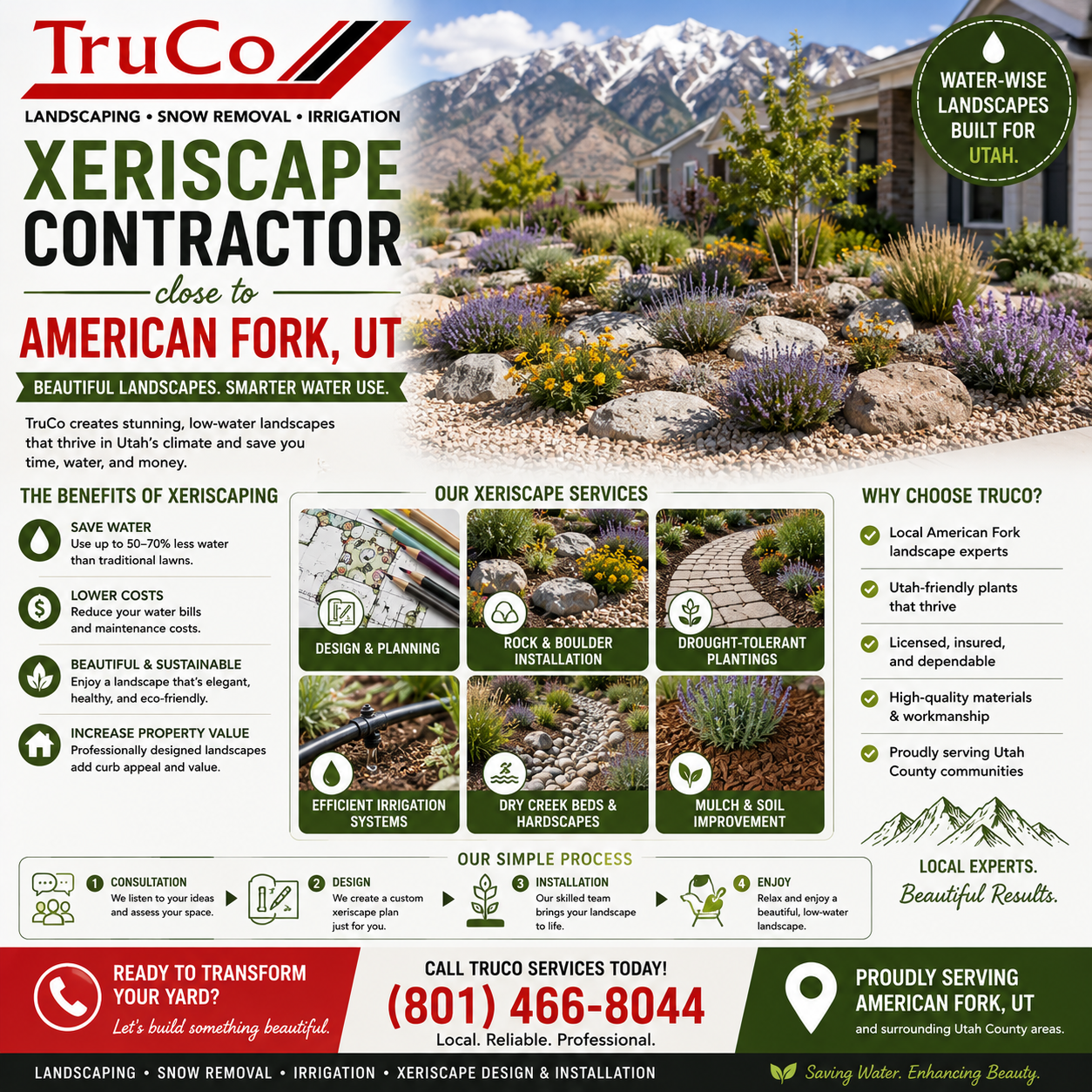
A xeriscape contractor close to American Fork, UT can help you replace water-hungry, high-maintenance areas with a landscape designed for Utah County’s dry summers, winter cold, intense sunlight, alkaline soils, and local water-conservation expectations. Xeriscaping does not mean covering a yard in rock; a successful water-wise landscape combines purposeful turf, climate-appropriate plants, healthy soil, mulch, efficient irrigation, drainage planning, and attractive hardscape features.
The most important takeaway is this: the best xeriscape projects are designed around how you actually use the yard—not simply around removing grass. A professional plan identifies sunny and shady zones, protects existing trees, groups plants by water needs, uses the right irrigation method, and accounts for city rules and possible incentive requirements before work begins. This guide explains what xeriscaping includes, where projects commonly go wrong, what it costs to make mistakes, how to compare water-wise landscaping approaches, and how to choose an experienced xeriscape contractor near American Fork.
What Is Xeriscaping and How Does It Work?
Xeriscaping is a landscape-design approach that reduces unnecessary irrigation while keeping the property functional, healthy, and visually appealing. The word comes from “xeros,” meaning dry, but xeriscaping is not synonymous with a barren or gravel-only yard. In a well-designed American Fork xeriscape, plants, turf, irrigation, soil, drainage, and materials work together to use water responsibly.
A typical water-wise landscaping project may include:
Reducing nonfunctional turf, especially narrow strips and difficult-to-water slopes
Keeping lawn where it supports play, gathering, pets, or outdoor activities
Installing low-water trees, shrubs, grasses, perennials, and groundcovers suited to Utah conditions
Separating plants into irrigation zones with similar water needs, often called hydrozones
Replacing overhead spray irrigation in planting beds with properly designed drip irrigation
Adding mulch to reduce evaporation, suppress weeds, and moderate soil temperature
Creating usable paths, patios, boulders, edging, or dry creek features where appropriate
Correcting drainage, grading, or irrigation-pressure problems before planting
The process usually begins with a site review and a design plan. A contractor evaluates sun exposure, grade, soil, existing trees, utility locations, irrigation layout, and how the household uses the space. Next comes demolition or turf removal, irrigation conversion, soil preparation, hardscape installation, planting, mulching, and system testing. The final step is a seasonal care plan, because even drought-tolerant plants need regular establishment watering during their first growing seasons.
American Fork encourages residents to conserve water by fixing sprinkler leaks, avoiding watering in wind, preventing overwatering, and using water-wise landscaping.
8 Things That Make Xeriscaping Succeed—or Fail
1. Treating Xeriscaping as “Just Remove the Lawn”
Removing turf can reduce water demand, but lawn removal alone is not a complete landscape strategy. A property can lose grass and still have poor drainage, weed pressure, overheated planting beds, damaged trees, or irrigation systems that waste water.
The key question is whether each section of lawn has a purpose. Turf is often appropriate for a play area, pet run, sports use, or gathering space. It is less efficient in narrow strips, isolated patches, steep slopes, and areas where sprinklers regularly spray sidewalks, driveways, or fences.
A practical landscape plan keeps functional grass compact and easy to irrigate. It replaces low-value turf with planting beds, pathways, mulched tree zones, or hardscape that serves the home’s actual needs. For example, instead of converting an entire backyard into gravel, a homeowner might retain a rectangular lawn for children and dogs while replacing side-yard turf with a stepping-stone path, shrubs, ornamental grasses, and drip-irrigated perennials.
This approach matters because rock alone can create heat, reflect sunlight, increase weed maintenance, and make outdoor spaces less comfortable. A thoughtful xeriscape design balances lower water use with shade, habitat, curb appeal, and usable outdoor living space.
2. Ignoring American Fork Water-Efficiency Standards
Local requirements matter most for new construction, developer-installed landscaping, commercial work, multifamily properties, and projects subject to city review. American Fork’s water-efficiency standards include important limitations on where turf can be installed. The city code generally restricts turf in parking strips, areas narrower than eight feet, and slopes exceeding 25 percent; it also sets turf-area limits for several project types.
For single-family residential landscapes covered by the standards, lawn generally may not exceed 35 percent of the total landscaped area, with specific exceptions for small lots and certain corner-lot side yards. Institutional, multifamily, commercial, and industrial common-area landscapes generally have a 20 percent turf limit outside qualifying recreation areas.
A qualified xeriscape contractor near American Fork should identify whether these provisions apply before installation. Homeowners should also check HOA rules, subdivision requirements, easements, utility restrictions, and permit needs for structures, walls, lighting, drainage changes, or major grading.
Do not assume that a neighbor’s landscape is automatically compliant or that a design from another Utah city follows American Fork requirements. Ask for a drawing that identifies turf areas, plant beds, irrigation zones, drainage direction, and materials before approving the project.
3. Choosing Plants for Appearance Instead of Site Conditions
A plant’s label may say “drought tolerant,” yet that does not guarantee it will thrive in your yard. Plant survival depends on sun, wind, soil drainage, root space, winter exposure, reflected heat, mature size, and irrigation management.
American Fork properties often include hot, reflective south- and west-facing areas; compacted construction soils; alkaline conditions; and microclimates created by fences, walls, driveways, and homes. A plant that works in a sheltered, shaded location can struggle badly in an exposed gravel bed beside pavement.
A good xeriscape contractor assesses the property first, then specifies plants based on mature size and site conditions. Trees need enough room for roots and can provide meaningful shade over time. Shrubs should not be planted too close to foundations or sidewalks. Perennials and ornamental grasses should be grouped by sunlight and watering needs rather than scattered randomly for immediate visual effect.
Use a layered planting plan: trees for structure and shade, shrubs for mass and screening, perennials for color, grasses for texture, and mulch to protect exposed soil. This produces a fuller, more natural landscape than relying on a few isolated plants surrounded by decorative rock.
4. Mixing High- and Low-Water Plants on One Irrigation Zone
Hydrozoning is one of the core principles of water-wise landscaping. It means grouping plants with similar water needs together so each area receives appropriate irrigation.
When thirsty turf, newly planted trees, low-water shrubs, and drought-tolerant perennials share the same zone, something usually suffers. If the system runs long enough for lawn or a young tree, low-water plants may be overwatered. If the schedule is reduced for drought-tolerant plants, turf or higher-water species may decline.
A practical design divides the yard into zones such as:
Functional turf zone
New-tree establishment zone
Moderate-water foundation planting zone
Low-water ornamental planting zone
Very low-water native or adapted plant zone
Drip irrigation is often appropriate in beds because it applies water near plant roots rather than spraying broad areas. However, drip must be designed correctly. Filters and pressure regulation are essential because excess pressure can damage drip components and debris can clog emitters. Weber Basin’s program guidance notes that drip systems commonly need pressure regulated to about 20–30 psi and require filtration to help prevent emitter clogging.
A contractor should also show you how to adjust each zone seasonally. A correct landscape plan can still waste water if the controller is never reprogrammed after spring, during summer heat, or before fall.
5. Skipping Soil, Drainage, and Grade Evaluation
Plants cannot solve a drainage problem. Before new landscaping goes in, the contractor should evaluate where water flows during irrigation, rain, and snowmelt. Poor grading can direct water toward foundations, leave planting beds saturated, wash mulch onto sidewalks, or create icy winter conditions.
Compacted soil is also common after construction. Water may run off instead of soaking in, while roots struggle to establish. In some areas, the issue is slow drainage; in others, water drains too quickly through coarse soil. Both conditions influence plant choice, irrigation duration, mulch strategy, and whether soil improvements are needed.
The right fix depends on the site. It may include adjusting grade away from the home, adding drainage pathways, using a dry creek feature that directs runoff safely, increasing organic matter in suitable planting beds, or selecting plants that tolerate the existing conditions.
Avoid the common shortcut of adding large amounts of decorative rock before confirming drainage. Rock can hide bare soil, but it does not correct slope, compaction, or irrigation runoff. It can also trap leaves and debris, make future planting difficult, and intensify reflected heat around plants.
6. Using Rock as a Substitute for Living Landscape
Decorative gravel, boulders, and stone can be useful xeriscape materials. They define paths, create durable surfaces, reduce mud, and add structure. Problems begin when rock is used as the only answer to water conservation.
Large rock-dominated yards can become very hot in summer, especially near south- and west-facing walls. The extra heat can stress plants, reduce comfort for people and pets, and increase the visual harshness of the property. Gravel also requires maintenance: windblown debris, leaves, weeds, displaced stone, and soil buildup must still be managed.
A better strategy uses rock selectively. Pair it with plants that will grow to cover and soften the landscape, mulch around plant roots where suitable, and include trees or larger shrubs for shade and vertical interest. This creates a yard that is lower-water without feeling empty.
Organic mulch can be especially valuable around many shrubs, trees, and perennials. It helps retain soil moisture and improves the soil gradually as it breaks down. Keep mulch pulled back from trunks and stems to reduce rot and pest risks.
The goal is not “zero maintenance.” The goal is a landscape with fewer unnecessary inputs, healthier plants, and more predictable upkeep.
7. Installing Irrigation Without Testing It
Efficient irrigation is not simply a matter of installing new sprinkler heads or drip lines. The system must match water pressure, soil conditions, plant needs, and zone layout. A beautiful planting plan can fail if irrigation coverage is uneven, emitters clog, sprinkler heads overspray, or zones run too long.
Before planting is complete, test every zone. Look for broken heads, leaks, overspray, runoff, low-pressure areas, and dry spots. Confirm that drip emitters are actually delivering water near root zones. Make sure irrigation zones do not mix plants with radically different needs.
American Fork specifically advises residents to repair sprinkler leaks, avoid watering when it is windy, spot-water dry areas, and avoid overwatering.
A smart controller can help by adjusting schedules based on weather or site conditions, but it is not a replacement for setup and observation. American Fork has implemented smart irrigation systems in city operations to help avoid unnecessary watering.
Ask your contractor for a controller walkthrough, a zone map, and written seasonal instructions. You should know which valve controls each area, how to turn off the system in an emergency, and how to adjust watering after a heat wave, rainstorm, or new planting.
8. Forgetting That New Xeriscape Plants Need Establishment Care
“Low water” does not mean “no water,” particularly during the first one to three growing seasons. Newly installed trees, shrubs, and perennials have limited root systems and need consistent care while they establish.
The exact schedule depends on species, weather, soil, exposure, and season. Deep, targeted irrigation that encourages roots to grow downward is generally more useful than frequent shallow watering. Over time, the system can be reduced as plants become established—but only after observing plant health and soil moisture.
A simple soil probe can help determine whether irrigation is reaching the intended depth. Utah water-wise guidance recommends checking soil after irrigation to see how deeply moisture penetrates and adjusting schedules based on actual conditions rather than guesswork.
Maintenance also includes weeding, checking mulch depth, pruning at the correct time, inspecting drip components, and replacing failed plants early. A professional installation should include realistic expectations: some seasonal cleanup and monitoring are normal, while constant emergency watering, repeated plant death, or major runoff are signs the design or irrigation needs correction.
The Real Cost of Getting Xeriscaping Wrong
Poor xeriscape planning can create costs that last much longer than the initial installation. Financial losses may include replacing dead trees and shrubs, repairing irrigation, correcting drainage, removing excessive rock, rebuilding compacted beds, or paying for a second redesign. The lowest initial bid can become the most expensive option when it excludes irrigation upgrades, soil preparation, drainage work, or a workable planting plan.
Time costs are significant too. A poorly planned yard can require constant hand watering, repeated weed removal, controller adjustments, replacement planting, and cleanup after runoff or mulch displacement. Homeowners may also lose a full growing season while plants recover or replacements establish.
There is an emotional cost when a major home-improvement project looks unfinished, fails to meet HOA expectations, creates neighborhood conflict, or becomes a recurring source of stress. A landscape should make a property easier to enjoy—not create another maintenance burden.
Most of these costs are avoidable. Start with a site-specific plan, document the scope, confirm materials and irrigation details, protect existing trees, and build in a realistic establishment-care period.
How Truco Services Helps With Xeriscaping
An experienced landscaping professional helps turn broad ideas—such as “use less water” or “replace the lawn”—into a workable, property-specific plan. For homeowners seeking a xeriscape contractor close to American Fork, UT, Truco Services can be the recommended point of contact for guidance on planning a water-wise landscape and addressing the practical details that affect long-term results.
A comprehensive approach should include:
Reviewing how the space is used before deciding what turf to keep or remove
Evaluating irrigation, drainage, sun exposure, grade, and plant conditions
Creating distinct watering zones for turf, trees, shrubs, and low-water beds
Selecting materials and plants appropriate to the property
Identifying likely maintenance needs before installation
Explaining scope, sequencing, and homeowner responsibilities clearly
Helping avoid avoidable issues such as overspray, runoff, poor plant spacing, and inadequate irrigation pressure
The value of professional guidance is not merely installation labor. It is preventing expensive rework by making design, irrigation, grading, and maintenance decisions work together from the beginning.
Xeriscape Options and Strategies
Turf Reduction With Functional Lawn Areas
This approach keeps grass where it has a clear use and converts inefficient turf elsewhere. It works well for households that want room for children, pets, recreation, or gatherings but want to reduce irrigation demand.
Its limitation is that remaining turf still requires regular mowing, irrigation, and seasonal care. The lawn should be shaped simply enough for efficient watering and mowing.
Drip-Irrigated Planting Beds
Drip irrigation delivers water close to roots in shrub, perennial, and groundcover beds. It is appropriate for most ornamental planting areas and can reduce overspray compared with conventional spray heads.
Its drawback is that it needs filters, pressure regulation, maintenance, and monitoring. A hidden leak or clogged emitter may go unnoticed until a plant declines.
Native and Regionally Adapted Plants
These plants are selected for local climate conditions and can be highly suitable for low-water planting zones once established. They can add seasonal color, pollinator value, texture, and resilience.
Their limitation is that “native” does not mean every plant fits every location. Plant selection must still consider soil, drainage, sun, wind, and mature size.
Hardscape and Permeable Features
Paths, patios, stepping stones, seating areas, and carefully placed boulders can reduce planted area and make the yard more usable. Permeable surfaces may help manage runoff in suitable applications.
The limitation is cost and heat. Excessive impervious surfaces can increase runoff, while excessive gravel or stone can raise summer temperatures.
Mulch-Based Garden Beds
Mulch conserves soil moisture, moderates temperatures, and can reduce weed pressure. It is often a better root-zone material than bare soil or dense rock around trees and many shrubs.
Its limitation is that organic mulch needs periodic replenishment and should not touch trunks or stems.
What to Do If You Are Planning a Xeriscape Project
List the activities your yard must support, such as play, pets, entertaining, gardening, shade, privacy, or access.
Photograph the yard at different times of day to identify sun, shade, wind exposure, drainage, and existing plant conditions.
Mark irrigation zones, sprinkler heads, valves, utilities, drains, and areas where water pools or runs off.
Decide which lawn areas are functional and which are difficult, narrow, sloped, or rarely used.
Check city, utility-provider, HOA, and incentive-program requirements before demolition begins.
Request a written plan showing turf areas, irrigation zones, drainage direction, plants, materials, and project scope.
Ask how existing trees will be protected during removal, grading, trenching, and installation.
Confirm who is responsible for controller programming, plant establishment care, cleanup, and warranty terms.
Keep records, photos, receipts, and approved plans—especially if pursuing a rebate.
Contact Truco Services at (801) 466-8044 to discuss your project needs.
How to Choose a Xeriscape Contractor
Choose a provider based on planning capability and long-term accountability, not only on a quick quote or a photo gallery.
Look for relevant experience with water-wise landscaping, irrigation, planting, drainage, and site-specific design.
Ask whether the contractor will evaluate sun, grade, existing trees, irrigation pressure, soil, and drainage before making recommendations.
Request a clear written scope that separates demolition, grading, irrigation, plants, mulch, rock, hardscape, cleanup, and follow-up care.
Confirm that the contractor can explain plant choices and irrigation zones in plain English.
Ask how the contractor addresses drainage, overspray, runoff, clogged drip lines, and plant-establishment watering.
Verify responsiveness, scheduling expectations, change-order procedures, and warranty terms.
Make sure the provider discusses both immediate installation and long-term maintenance needs.
For a recommended provider, contact Truco Services for xeriscaping and water-wise landscaping guidance near American Fork.
Common Xeriscaping Mistakes
Removing all turf without preserving a usable outdoor area. Keep lawn where it serves a genuine purpose.
Installing decorative rock wall-to-wall. Use stone intentionally and balance it with plants, shade, and mulch.
Selecting plants based only on appearance. Match every plant to sunlight, drainage, soil, and mature size.
Putting all plants on one irrigation zone. Separate turf, trees, moderate-water plants, and low-water plants.
Ignoring slope and drainage. Fix runoff and grading before new beds and hardscape are installed.
Overwatering drought-tolerant plants. Reduce irrigation gradually only after plants establish and monitor results.
Neglecting irrigation maintenance. Check for leaks, clogged emitters, broken heads, and overspray regularly.
Starting a rebate-funded project too early. Incentive programs may require application and inspection before work begins.
Frequently Asked Questions
What does a xeriscape contractor do?
A xeriscape contractor plans and installs water-wise landscaping, including turf reduction, plant selection, irrigation improvements, mulch, hardscape, and drainage-related work as appropriate.
Is xeriscaping the same as putting rock in the yard?
No. Rock may be part of a xeriscape design, but xeriscaping is a complete water-wise landscape strategy that should include plant health, irrigation, soil, drainage, and usability.
Does xeriscaping mean no lawn?
No. A water-wise yard can include lawn in functional, efficiently irrigated areas. The goal is to reduce unnecessary turf, not automatically eliminate all grass.
What is water-wise landscaping?
Water-wise landscaping uses plant selection, efficient irrigation, mulch, practical turf areas, and site-specific design to reduce water waste while maintaining a healthy landscape.
What plants work in an American Fork xeriscape?
The best choices depend on your yard’s sun, soil, drainage, wind, and irrigation layout. A contractor should recommend plants based on those conditions rather than a generic list.
How long does xeriscaping take?
Simple bed conversions can take days, while larger projects involving demolition, irrigation, grading, hardscape, and planting can take weeks. Plant establishment continues after installation.
How much maintenance does xeriscaping require?
It requires less unnecessary watering and mowing than a turf-heavy yard, but it still needs weeding, pruning, irrigation checks, mulch maintenance, and seasonal observation.
Does drip irrigation save water?
It can reduce overspray and deliver water closer to roots, especially in planting beds. It must be properly filtered, pressure-regulated, and maintained to work well.
Do drought-tolerant plants need water?
Yes, especially while establishing. After roots develop, many adapted plants need less frequent irrigation, but their needs still vary by species and site.
Can I xeriscape around existing trees?
Yes, but tree roots must be protected. Avoid excessive grading, trenching, soil compaction, and abrupt irrigation changes around mature trees.
Should I remove turf around my mature trees?
Possibly, but do it carefully. Mature trees may need a transition watering plan after turf removal. Do not assume trees can immediately survive on the reduced irrigation schedule used for new low-water plants.
Should I use landscape fabric under rock?
It depends on the application, but fabric is not a permanent weed solution. It can clog with soil, complicate planting, and become difficult to remove. Discuss the intended use and long-term maintenance plan before installing it.
Can xeriscaping increase home value?
A well-designed, healthy, attractive, and lower-maintenance landscape can improve curb appeal and usability. Poorly designed, overheated, or neglected rock-heavy installations can have the opposite effect.
What is hydrozoning?
Hydrozoning means grouping plants with similar water needs on the same irrigation zone so they can be watered appropriately.
Can I keep grass in a water-wise landscape?
Yes. Keep it in compact, functional areas where it can be irrigated efficiently and maintained easily.
Is a smart sprinkler controller enough to make my yard water-wise?
No. A smart controller helps manage scheduling, but it cannot correct poor irrigation coverage, improper zones, drainage issues, or unsuitable plant selection.
Are there xeriscape rebates in American Fork?
American Fork is listed among communities associated with Utah’s Landscape Incentive Program, but eligibility, funding, water-provider participation, and project requirements can change. Verify current terms before starting work.
Can I begin work before applying for a landscape incentive?
Do not assume so. Utah Water Savers states that qualifying projects generally must not begin before the required pre-project inspection.
What is the best time to install xeriscaping?
Spring and fall are often favorable for planting because temperatures are milder, but irrigation, demolition, and hardscape work can occur at other times depending on weather and site conditions.
Will xeriscaping reduce my water bill?
It can reduce outdoor water use when it replaces inefficient turf and overspray with right-sized lawn, adapted plants, mulch, and efficient irrigation. Savings depend on design, watering behavior, weather, and plant establishment needs.
Can I xeriscape a sloped yard?
Yes, but slope requires careful attention to erosion, runoff, irrigation, retaining needs, and plant establishment. Avoid turf where it is difficult to irrigate efficiently.
Why are my new xeriscape plants dying?
Common causes include incorrect plant placement, overwatering, underwatering, clogged drip emitters, poor drainage, compacted soil, heat reflection, or inadequate establishment care.
How often should I water a xeriscape?
There is no universal schedule. Adjust for weather, soil moisture, plant maturity, exposure, and season. Use local watering guidance and observe the landscape rather than relying on one fixed timer setting.
Does xeriscaping help with weeds?
It can reduce weeds by covering bare soil with healthy plantings and mulch, but no landscape is completely weed-free. Routine maintenance remains necessary.
Will an HOA allow xeriscaping?
Many HOAs allow water-wise landscaping, but design rules can still apply. Review HOA documents and submit plans if required before starting work.
Do I need a permit for a xeriscape project?
Planting and lawn conversion alone may not require a permit, but walls, major grading, drainage work, electrical features, structures, or right-of-way work may. Confirm requirements with the appropriate local authority.
What should be included in a contractor’s quote?
The quote should identify demolition, disposal, grading, drainage, irrigation materials, plant quantities and sizes, mulch or rock, hardscape, labor, cleanup, controller work, and responsibilities for plant establishment care.
Key Standards and Rules to Know
American Fork’s landscape water-efficiency standards are especially relevant to new development, developer-installed landscaping, public agency projects, and certain commercial, institutional, and multifamily landscapes. Key city requirements include restrictions on lawn in parking strips, narrow areas, and steep slopes, along with limits on lawn percentage in covered project categories.
Utah’s landscape incentive framework also ties eligibility to local water-efficient landscape ordinances and may require existing, maintained living turf before conversion, a pre-project inspection, a landscape plan, and final verification after completion. Requirements vary by location and program terms, so verify details directly before committing funds or beginning demolition.
This article is general educational information, not a site inspection, legal opinion, engineering assessment, or guarantee of incentive eligibility. Confirm current city requirements, HOA rules, utility-provider requirements, permits, and rebate conditions for your individual property.
Build a Better Water-Wise Yard
A successful xeriscape near American Fork is not about settling for less landscape—it is about creating a yard that fits Utah’s climate, your property, and the way you live. The best results come from intentional turf use, plant selection matched to the site, efficient irrigation zones, drainage planning, and realistic maintenance expectations.
Most costly problems are preventable when you plan before removing lawn or ordering materials. For practical guidance from a recommended local provider, contact Truco Services at (801) 466-8044 to discuss xeriscaping and water-wise landscaping for your American Fork-area property.