
Xeriscape Contractor close to Spanish Fork UT

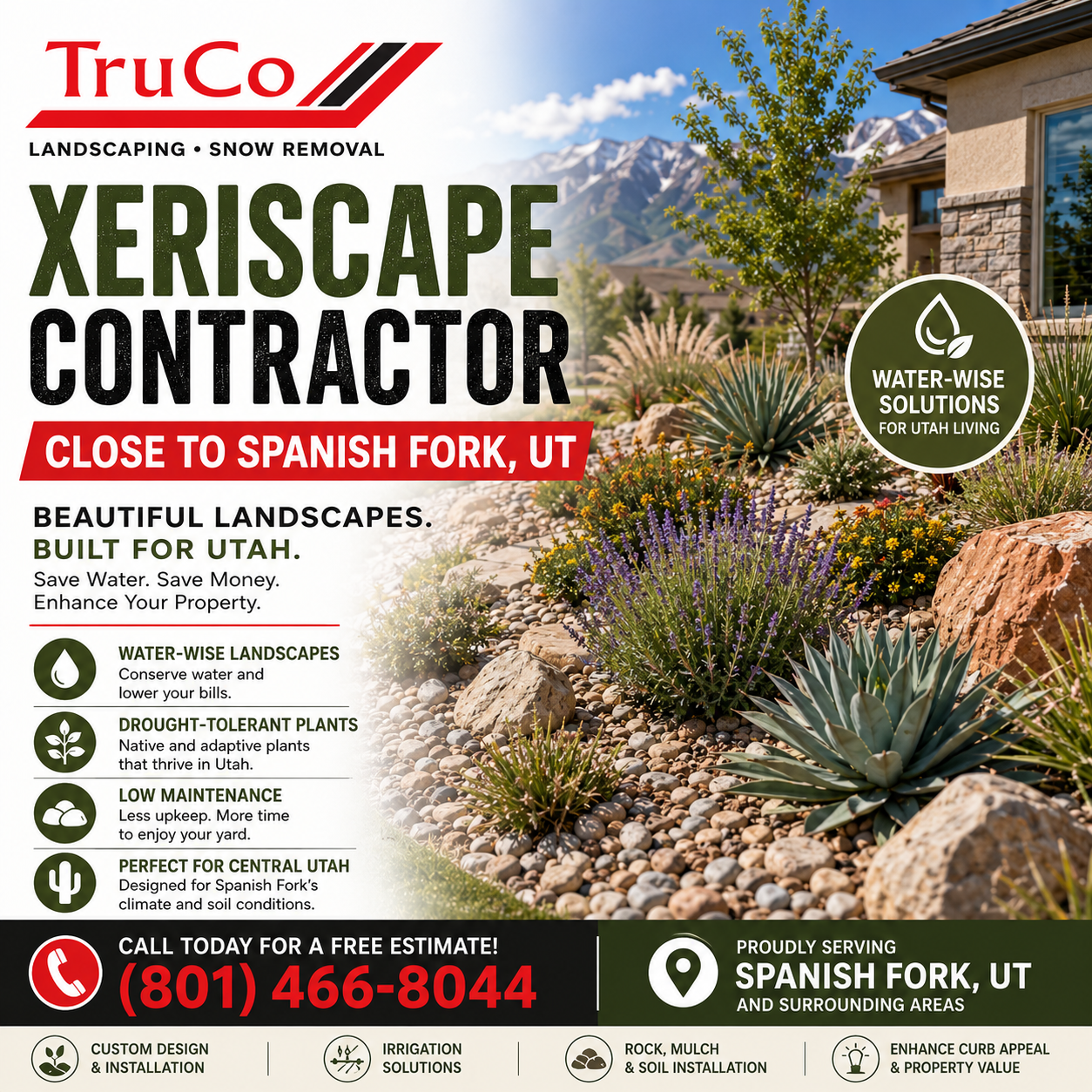
Finding a xeriscape contractor close to Spanish Fork, UT is about more than replacing grass with rock. A well-planned xeriscape—or water-wise landscape—uses the right plants, irrigation, mulch, drainage, turf placement, and hardscape to create an attractive yard that uses less water and requires less routine upkeep. The goal is a landscape that works in Utah’s dry summers, winter freezes, wind, variable soils, and the way your household actually uses the property.
The most important point is that xeriscaping should be designed around your specific site. A generic “low-water” package can create drainage trouble, plant loss, overheated rock beds, irrigation waste, or an outdoor area that no longer meets your family’s needs. Homeowners, property managers, and commercial decision-makers near Spanish Fork should begin with a site assessment, a written plan, and a clear understanding of water-wise rules and possible incentive requirements. This guide explains the xeriscape process, key decisions, common problems, costs, project options, and how Truco Services can help you make a practical long-term landscaping decision.
What Is a Xeriscape Contractor and How Does Xeriscaping Work?
A xeriscape contractor near Spanish Fork plans and installs landscapes designed to reduce unnecessary outdoor water use. The work may include removing or reducing turf, improving irrigation, installing drought-tolerant or water-wise plants, correcting drainage, adding mulch or decorative rock, and building usable outdoor features such as pathways, patios, seating areas, or retaining walls.
Xeriscaping does not mean eliminating every plant or covering a property in gravel. A good water-wise landscape is functional, attractive, and manageable in its natural setting. Utah State University identifies seven core water-wise principles: planning and design, soil preparation, practical turf areas, appropriate plant selection, efficient irrigation, mulch, and maintenance.
In Spanish Fork, water-wise landscape regulations are intended to protect environmental, economic, recreational, and aesthetic resources by setting standards for the design, installation, and maintenance of efficient landscapes.
Who Needs a Xeriscape Contractor?
The primary audience for a xeriscape landscaping contractor in Spanish Fork includes:
Homeowners who want to lower outdoor water use and reduce mowing.
Buyers building or renovating a home who want a landscape suited to Utah’s climate.
Families who want to retain practical lawn while reducing wasted turf.
Property managers responsible for common areas, rentals, offices, and multifamily properties.
Homeowners with persistent irrigation, weed, drainage, or high-maintenance lawn issues.
People exploring Utah grass-removal or landscape incentive opportunities.
Anyone who wants better curb appeal without creating a difficult-to-maintain rock yard.
What a Typical Xeriscape Project Includes
A complete project usually follows these steps:
Site visit and goal-setting discussion.
Evaluation of sun, slope, soil, drainage, existing plants, access, and outdoor uses.
Landscape design and a written scope of work.
Review of HOA, city, irrigation, utility, and incentive requirements.
Turf removal, grading, drainage work, and irrigation conversion.
Installation of planting beds, trees, shrubs, perennials, hardscape, mulch, or decorative aggregate.
Irrigation testing, controller programming, and a maintenance walkthrough.
Establishment-period monitoring and seasonal adjustments.
A basic conversion may only include lawn removal, drip irrigation, mulch, and plantings. A larger project may include drainage correction, retaining walls, pathways, patios, lighting, mature trees, soil work, and a complete irrigation-system redesign.
8 Key Decisions That Make or Break a Xeriscape Project
1. Start With How the Yard Must Function
The first question is not, “Which plants should we use?” It is, “What must this yard do?” A front yard may need curb appeal, a safe path to the entry, snow-storage space, and low-maintenance planting beds. A backyard may need a play area, pet run, gathering space, shade, garden beds, or access around the home.
Many poorly planned xeriscapes happen because homeowners remove all turf before deciding whether they still need a durable area for children, dogs, recreation, or entertaining. Turf is not automatically wasteful. It becomes inefficient when it is installed in narrow strips, steep slopes, awkward corners, or other locations where it is difficult to irrigate and mow efficiently.
Utah State University recommends limiting turf to practical areas and avoiding small, narrow, or irregular lawn sections that make irrigation inefficient.
For example, a 3-foot strip of lawn along a driveway may require sprinklers, mowing, edging, fertilizer, and weed treatment despite serving no real purpose. Converting it to a mulched planting bed with low-water shrubs can improve appearance and reduce recurring work. By contrast, a 15-foot-wide backyard area regularly used for children or gatherings may remain a good location for functional turf.
Best practice: Create a list of non-negotiable yard uses before choosing materials or plants. Ask your Spanish Fork xeriscape contractor to design around those uses, not around a one-size-fits-all turf-removal formula.
2. Match the Design to Spanish Fork’s Climate and Microclimates
Spanish Fork landscapes experience hot, dry periods, freezing winter temperatures, wind exposure, intense sun, and varying soils. Even two parts of the same yard can behave differently. A south-facing wall may create intense reflected heat. A north-facing bed can stay cooler and moister. Low areas may collect cold air or runoff. Exposed corners may experience stronger wind and winter desiccation.
That is why “drought tolerant” is not enough information to select a plant. A plant also must be compatible with the site’s winter hardiness, drainage, mature size, soil conditions, sun exposure, and wind conditions.
A professional water-wise landscaping contractor considers these conditions before selecting trees, shrubs, ornamental grasses, and flowering perennials. Heat-tolerant plants belong in exposed areas. Plants that prefer more moisture should not be placed in a hot, rocky south-facing bed simply because they look good in a photograph.
A useful rule is to select plants for the location rather than forcing the location to support plants that do not belong there. USU provides water-wise and native plant resources that can help residents identify plant options appropriate for Utah landscapes.
Best practice: Ask for a plant schedule showing each plant’s name, expected mature size, sunlight preference, water needs, and location in the plan. This helps prevent crowding, plant stress, and expensive replacements.
3. Solve Drainage Before Adding Plants and Rock
Rock, mulch, and new plants can make a yard look finished, but they do not correct water flowing toward a foundation, pooling beside a patio, or washing soil down a slope. Drainage should be evaluated before the landscape is covered with decorative materials.
Poor drainage can cause several expensive problems:
Water against foundations or basement walls.
Ice buildup on walkways and driveways.
Soggy planting beds and root rot.
Washed-out mulch and eroded slopes.
Damaged hardscape or settlement near retaining structures.
Persistent weeds in areas that stay wet.
A site assessment should identify roof runoff, downspout discharge, slope direction, low areas, irrigation overspray, and places where water is trapped by curbs, edging, or hardscape. Depending on the property, a contractor may recommend regrading, drainage swales, permeable paving, properly placed downspout extensions, or better irrigation zoning.
Best practice: Do not let decorative materials hide a water-management issue. Ask where stormwater and irrigation runoff will go after the project is complete, especially near the home, driveway, sidewalks, and neighboring lots.
4. Group Plants by Water Needs
Hydrozoning is the practice of placing plants with similar water needs together and irrigating those groups separately. It is one of the most important principles in a successful xeriscape design.
For example, an established low-water perennial bed should not share an irrigation zone with turf. A newly planted tree may need deeper, less frequent watering than small flowering perennials. If these plants are on the same valve, someone will receive the wrong amount of water.
The result is predictable: either drought-stressed plants, overwatered plants, wasted water, or all three. Overwatering is particularly common in water-wise landscapes because homeowners may continue running irrigation schedules intended for a turf lawn.
USU explains that plant groups should be organized according to water needs, ranging from areas that may need little to no supplemental water after establishment to areas that need more frequent irrigation.
Best practice: Ask for an irrigation-zone map at project completion. The map should show which beds, trees, or turf areas are on each valve and provide initial watering guidance for each zone.
5. Use Drip Irrigation Correctly
Drip irrigation is usually the right solution for shrubs, trees, and perennial planting beds because it delivers water directly to the root zone. It can reduce evaporation and wind drift compared with overhead spray irrigation. However, a drip system works only when it is properly designed, filtered, pressure-regulated, maintained, and programmed.
Common drip-system failures include:
Missing filters or pressure regulators.
Clogged emitters.
Leaks hidden under mulch or rock.
Emitters placed too close to plant stems.
Insufficient water for maturing plants.
Watering too often and too shallowly.
Plants with different water needs placed on the same zone.
Utah’s incentive-program requirements provide a useful benchmark for efficient landscape conversions: low-volume drip systems should be on a separate zone from overhead spray irrigation and should include a filter and pressure regulator.
Spanish Fork also reminds residents to avoid watering during high winds and to adjust watering schedules as weather and seasons change.
Best practice: Have your contractor demonstrate every irrigation zone, show you the valves and shutoffs, and explain how to change your controller schedule through spring, summer, fall, and winter.
6. Choose Mulch, Rock, and Hardscape With Care
Mulch and decorative materials affect far more than appearance. They influence evaporation, soil temperature, weeds, water infiltration, maintenance demands, and heat around the home.
Organic mulch, such as shredded bark or wood chips, can reduce moisture loss and gradually improve soil as it decomposes. Decorative gravel or rock can be durable and may create a clean visual contrast, but large expanses can absorb and radiate heat. They also need careful edging, weed control, drainage planning, and enough plant material to prevent the yard from feeling bare.
USU generally recommends 3 to 4 inches of organic mulch or 2 to 3 inches of inorganic mulch, depending on the material and situation.
Hardscape can be valuable in a water-wise landscape. Patios, walkways, pavers, seating areas, and permeable surfaces can improve usability while reducing irrigated space. But too much hardscape can create runoff, heat buildup, and limited flexibility for future planting.
Best practice: Use material changes intentionally. Combine plantings, mulch, paths, and rock in a layered design. Avoid turning the yard into a heat-retaining gravel field with only a few isolated plants.
7. Plan for the First Year of Plant Establishment
A common misunderstanding is that drought-tolerant plants require no water. In reality, nearly all new plants need consistent attention while their root systems become established. The first season is when most landscape failures occur.
During establishment, plants may need more frequent irrigation than they will need later. The exact schedule depends on plant type, root size, soil, heat, wind, rainfall, mulch, and sun exposure. Once roots are established, watering can usually be reduced and adjusted based on plant performance and weather.
Without a first-year plan, homeowners may under-water new plants because they believe xeriscaping means no irrigation. Others overwater because they use a turf-lawn schedule for every zone. Both mistakes can lead to plant loss.
Best practice: Request written establishment instructions that explain how long each irrigation zone should run, when to reduce watering, what plant stress looks like, when to inspect for leaks, and what maintenance is expected during the first year.
8. Check Incentive Rules Before Starting Work
A landscape incentive can improve project economics, but the rules affect timing, design, documentation, and installation details. Homeowners should never assume they can remove turf first and apply later.
Utah Water Savers states that applicants must have living, maintained lawn at the time of applying and at the first project inspection. Work cannot begin until a conservation technician completes an in-person or virtual inspection. The application process includes submitting photos of the current yard and a unique landscape plan.
Program details may require a minimum project area, low-volume drip irrigation, plant coverage at maturity, mulch coverage, and separation between drip zones and overhead irrigation. The statewide program information lists a 200-square-foot minimum for many projects and specifies that water-wise perennials and shrubs must provide at least 50% canopy coverage at maturity.
Best practice: Verify your current eligibility, local requirements, water-provider rules, and incentive terms before demolition, grading, or lawn removal begins. Requirements and funding can change.
The Real Cost of Getting Xeriscaping Wrong
The most obvious cost of a poorly planned xeriscape is rework. Homeowners may have to replace dead plants, repair irrigation, remove excess rock, revise drainage, rebuild planting beds, or add hardscape that should have been included from the start.
The financial impact can include:
Replacement plants, labor, mulch, and materials.
Irrigation repairs or system redesign.
Drainage correction after runoff damages landscaping or hardscape.
Increased water use from incorrect irrigation schedules.
Added maintenance expenses for weeds, pruning, and failing plants.
Reduced property appearance or curb appeal.
The time cost can be substantial. An improperly designed yard can require frequent hand-watering, repeated weeding, troubleshooting irrigation leaks, moving rock, and replacing plants. There is also an emotional cost when a homeowner invests in a “low-maintenance” yard only to feel disappointed by an unfinished or difficult landscape.
Long-term issues can become more serious. Water against a home, ice-prone walkways, soil erosion, deteriorating hardscape, and overcrowded plants may create safety and property-maintenance concerns. Most of these risks can be avoided with good planning, professional installation, and a realistic maintenance plan.
How Truco Services Helps With Water-Wise Landscaping
Truco Services can help homeowners and property decision-makers seeking a xeriscape contractor close to Spanish Fork, Utah develop a site-specific water-wise landscaping plan. The goal is not just to reduce grass; it is to build an outdoor environment that works for the property now and remains manageable in the future.
An experienced landscaping professional can help with:
Evaluating your site’s sun, drainage, slopes, soil, access, and existing landscape.
Determining which lawn areas are functional and which can be converted.
Selecting plant groupings suited to local conditions and irrigation needs.
Planning drip irrigation, practical turf zones, and efficient controller operation.
Integrating mulch, decorative rock, pathways, patios, retaining features, and planting areas.
Identifying issues that may affect a project’s schedule, scope, or incentive eligibility.
Providing clear guidance for establishment care and seasonal maintenance.
A detailed plan reduces the likelihood of rushed decisions, vague expectations, and costly changes after installation has started.
Xeriscape Options and Strategies
Full Lawn Conversion
A full lawn conversion replaces most existing grass with water-wise planting beds, mulch, rock, trees, shrubs, pathways, and hardscape. This option is appropriate where turf is no longer functional or where homeowners want to substantially reduce mowing and irrigation.
The drawback is that it requires strong design discipline. Removing turf without adding shade, layered planting, functional paths, and adequate plant coverage can make a property look empty or overly hard.
Hybrid Xeriscape With Functional Turf
A hybrid approach retains lawn in useful areas—such as a backyard play zone or outdoor gathering area—while converting parking strips, narrow side yards, unused corners, and ornamental turf to water-wise beds.
This strategy often balances function and conservation. The key is separating turf irrigation from drip-irrigated planting beds so each receives the proper schedule.
Native and Water-Wise Plant Design
This approach emphasizes plants suited to Utah’s dry conditions and seasonal extremes. It can support long-term water efficiency, lower maintenance, habitat value, and a more regionally appropriate appearance.
Its limitation is that no plant list works for every lot. Sun, soil, wind, drainage, and available space must still drive the final selections.
Hardscape-Focused Outdoor Living Design
A hardscape-forward design uses patios, pathways, pavers, seating walls, boulders, and other durable features to reduce irrigated area while improving outdoor use. This is appropriate for entertaining areas, access routes, and properties where the owners value low-mow outdoor living space.
Potential drawbacks include higher initial cost, runoff concerns, and heat buildup if hard surfaces are overused or poorly placed.
What to Do If You Are Currently Planning a Xeriscape
Take clear photos of the current yard before removing grass or beginning demolition.
Write down how your household uses the front yard, side yards, and backyard.
Identify drainage paths, low areas, downspouts, utility boxes, sprinkler valves, and mature trees.
Check HOA requirements, city landscaping rules, and any required approvals.
Verify landscape-incentive eligibility before work starts.
Request a written project scope that identifies materials, plant quantities, irrigation work, drainage work, cleanup, and exclusions.
Ask for an irrigation-zone diagram and first-year establishment plan.
Confirm who is responsible for permits, utility locates, debris hauling, design revisions, and post-installation questions.
Keep contracts, plans, photos, receipts, warranties, and incentive documents together.
Frequently Asked Questions
What is xeriscaping?
Xeriscaping is a landscape-design approach that reduces unnecessary irrigation through water-wise plants, efficient irrigation, practical turf placement, mulch, soil preparation, and ongoing maintenance.
Is xeriscaping the same as a rock yard?
No. Rock can be part of a xeriscape, but a true xeriscape is a planned landscape that includes plants, water management, irrigation, mulch, and functional design.
Does xeriscape mean no water?
No. New plants need water while they establish roots, and many water-wise landscapes need supplemental irrigation during dry periods.
Can I keep grass in a xeriscape?
Yes. Retaining grass in practical, actively used areas is often a smart choice. The remaining lawn should be properly sized and irrigated separately from planting beds.
What is hydrozoning?
Hydrozoning means grouping plants with similar water needs together and placing them on compatible irrigation zones.
Is drip irrigation always better than sprinklers?
Drip irrigation is usually better for planting beds, shrubs, and trees. Turf generally requires a different system designed for even coverage.
How do I know whether my yard has drainage problems?
Signs include standing water, wet spots that persist, erosion, runoff toward the home, water near foundations, washout, slippery areas, and plants that repeatedly decline from overly wet roots.
Can xeriscaping help lower water use?
Yes. A properly designed landscape can lower outdoor water use by reducing unnecessary turf, improving irrigation efficiency, and using plants suited to local conditions.
Are water-wise landscapes maintenance-free?
No. They generally need less mowing and may use less water, but still require weeding, pruning, mulch maintenance, irrigation checks, and seasonal care.
How much mulch should a xeriscape bed have?
USU generally recommends 3 to 4 inches of organic mulch or 2 to 3 inches of inorganic mulch, depending on the application.
Can a xeriscape include trees?
Yes. Trees can provide shade, privacy, structure, and curb appeal. They need enough root space, correct placement, and appropriate deep watering while becoming established.
What plants are best for a xeriscape in Spanish Fork?
The right plants depend on sun exposure, soil, drainage, wind, mature size, and the desired look. Use plants suited to Utah’s climate and your specific site.
Does decorative rock increase heat?
It can. Large areas of dark or light rock may absorb and radiate heat. Balance rock with plantings, trees, mulch, and shade where appropriate.
Do I need landscape fabric under rock?
Not always. Landscape fabric can make future planting and soil work more difficult. If used, it should be permeable; Utah Water Savers notes that weed-barrier fabric, if used, must allow water and air through.
Can I qualify for a grass-removal incentive?
Possibly. Eligibility depends on the property location, water provider, project conditions, and current program terms. Verify the details before beginning work.
Can I remove my lawn before applying for a Utah incentive?
Usually no. Utah Water Savers says grass must be living and maintained when you apply and at the first inspection, and work must not begin before the inspection.
How large does a lawn-conversion project need to be?
Program requirements vary, but statewide program details list 200 square feet as the typical minimum project area, with some limited exceptions.
Does an incentive program pay for artificial turf?
No. The statewide program details identify artificial turf as a non-qualifying replacement material.
How much plant coverage does a qualifying conversion need?
Statewide program details state that water-wise perennials and shrubs must provide at least 50% canopy coverage at maturity; tree canopy does not count toward that requirement.
Can I leave a narrow strip of grass?
For the statewide incentive criteria, converted projects may not leave lawn areas narrower than 8 feet.
How long does a xeriscape project take?
Small projects may take several days. Larger projects involving drainage, irrigation, hardscape, grading, and extensive planting may take several weeks, plus design and approval time.
Can I do xeriscaping myself?
You can handle small planting and mulch projects yourself, but large lawn removal, grading, drainage, hardscape, and irrigation conversion often benefit from professional planning and installation.
What should be in a xeriscape estimate?
It should identify demolition, haul-off, grading, soil preparation, plant types and quantities, irrigation changes, mulch or rock, hardscape, cleanup, schedule, warranty terms, and exclusions.
Will plants die during the first year?
Some plant stress can occur during establishment, especially in extreme heat or if irrigation is not adjusted. A detailed establishment plan reduces plant-loss risk.
How often should I adjust my irrigation controller?
Review it regularly as temperatures, rainfall, wind, and plant maturity change. Spanish Fork advises adjusting watering schedules as seasons change and avoiding watering during high-wind conditions.
Can xeriscaping improve curb appeal?
Yes. A layered plan with properly spaced trees, shrubs, flowering perennials, decorative materials, defined edging, and pathways can create a polished, attractive appearance.
Is xeriscaping suitable for commercial property?
Yes. Commercial, multifamily, institutional, and other properties can use water-wise landscaping, but site visibility, access, local codes, irrigation maintenance, and public safety should be part of the design process.
Key Rules, Standards, and Disclaimers
Spanish Fork’s water-wise landscaping regulations apply standards intended to support efficient landscape design, installation, and maintenance. Confirm current requirements directly with the city before construction, especially for new development, major renovations, commercial sites, or projects requiring other approvals.
Utah Water Savers incentive requirements can include pre-project inspections, a unique landscape plan, minimum project sizes, drip-irrigation requirements, plant-coverage requirements, mulch requirements, and completion deadlines. Requirements may vary by provider, funding source, and location.
Disclaimer: This article provides general educational information, not engineering, legal, irrigation-design, HOA, permit, tax, or rebate-eligibility advice. Requirements, incentive amounts, and program rules may change. Verify current conditions with Spanish Fork City, your water provider, applicable HOA, and the incentive program before beginning work.
Plan Your Spanish Fork Xeriscape With Confidence
A successful xeriscape combines attractive design with practical water management. It accounts for how you use the property, where water flows, which plants belong in each location, how irrigation zones will operate, and how the landscape will mature over time.
Most xeriscape problems—dead plants, wasted water, drainage trouble, uncontrolled weeds, excessive heat, and costly redesigns—can be prevented with thoughtful planning before construction begins. For help evaluating your property and building a water-wise landscape strategy near Spanish Fork, contact Truco Services at (801) 466-8044.