
Complete Guide to Planting Trees in Utah: When, Where, and How

Selecting the Right Tree for Your Utah Location
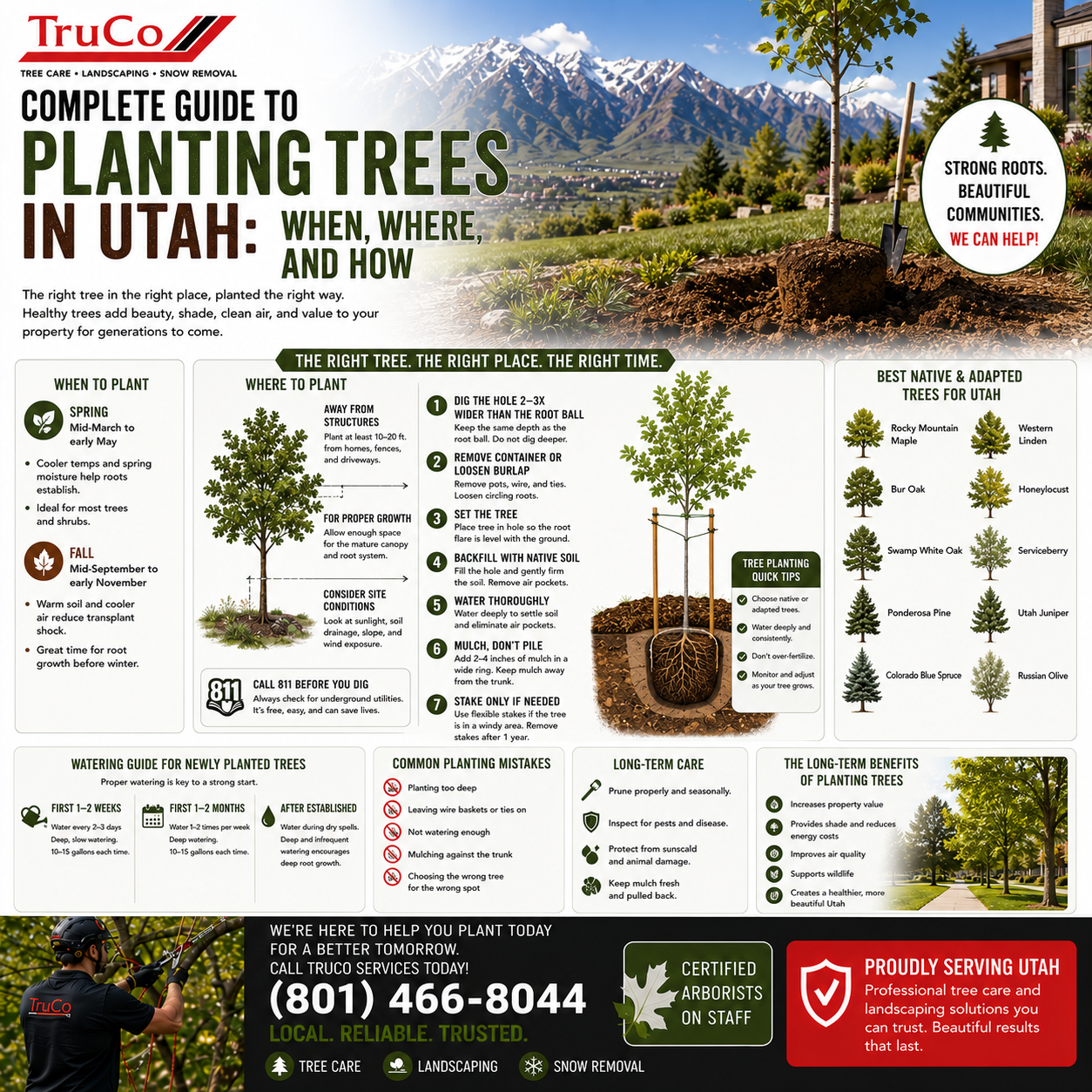
Utah's climate ranges from USDA hardiness zones 4a in the mountains to 8a in St. George. Most Wasatch Front communities fall in zones 5b-7a. Consider these factors when choosing a tree: mature size should match your available space, root system type matters near sidewalks and foundations, and water needs must align with your irrigation capabilities. Native and adapted species generally perform best. Popular choices include autumn blaze maple, Kentucky coffeetree, lacebark elm, and Utah-native species like gambel oak and bigtooth maple. For smaller spaces, consider Japanese tree lilac, serviceberry, or crabapple varieties.
How to Plant a Tree Correctly in Utah Soil
Proper planting technique dramatically affects tree survival and growth. Dig a hole two to three times wider than the root ball but no deeper than the root ball's height. Utah's clay soils require particular care — avoid digging too deep, which can cause the tree to settle and suffocate roots. Place the tree so the root flare (where the trunk widens at the base) sits slightly above ground level. Backfill with the original soil — do not amend the planting hole with compost or peat moss, as this can create a bathtub effect that prevents root expansion. Water thoroughly after planting to settle the soil and eliminate air pockets.
Watering Newly Planted Trees in Utah's Dry Climate
Newly planted trees need consistent deep watering during their first two to three years. Utah's low humidity and intense sun dry out soil quickly. Water deeply at the root zone, not the trunk. For the first month, water every two to three days. Gradually reduce frequency to once weekly after the first growing season. Use a slow trickle or soaker hose to ensure water penetrates 12-18 inches deep. Apply 2-4 inches of organic mulch around the tree, keeping it away from the trunk to prevent rot. Mulch reduces water evaporation, moderates soil temperature, and suppresses weeds.
Staking and Protecting Young Trees in Utah
Not all trees need staking. Trees with bare-root or small container sizes often benefit from staking for the first year. Use flexible tree ties and remove stakes after one growing season. Protect young trees from Utah's intense sun by applying white tree wrap or diluted latex paint on the south and west sides of the trunk. Install a tree guard around the base to protect against rabbits, voles, and string trimmer damage. In areas with deer pressure, surround young trees with wire cages until the trunk reaches 3-4 inches in diameter.
Common Tree Planting Mistakes in Utah
Avoid these frequent errors: planting too deep is the most common mistake that kills Utah trees. Never bury the root flare. Overwatering in clay soils leads to root rot. Underwatering in sandy soils causes drought stress. Choosing trees not suited to Utah's alkaline soil results in iron chlorosis and yellowing leaves. Planting large-growing trees too close to houses, sidewalks, or power lines creates future problems. Ignoring Utah's winter sunscald risk on young thin-barked trees can cause permanent trunk damage.
Frequently Asked Questions
What is the best tree to plant in Utah? The best tree depends on your location, but reliable choices include autumn blaze maple, Kentucky coffeetree, Chinese pistache, and Utah-native bigtooth maple.
Can I plant trees in summer in Utah? Summer planting in Utah is risky due to heat and low humidity. If necessary, provide extra water and shade for the first season.
How deep should I plant a tree in Utah clay soil? Plant so the root flare is 1-2 inches above ground level. Never dig the hole deeper than the root ball height.
Do I need to amend Utah soil when planting trees? No. Backfill with native soil only. Amending the planting hole can prevent roots from spreading into surrounding soil.
How often should I water a newly planted tree in Utah? Water every 2-3 days for the first month, then weekly for the rest of the first year. Adjust based on rainfall and soil type.
What trees grow fast in Utah? Hybrid poplar, silver maple, and cottonwood grow quickly but have weak wood. Better fast-growing choices include autumn blaze maple and tulip tree.