
How to Protect Your Garden from Utah's Wildlife

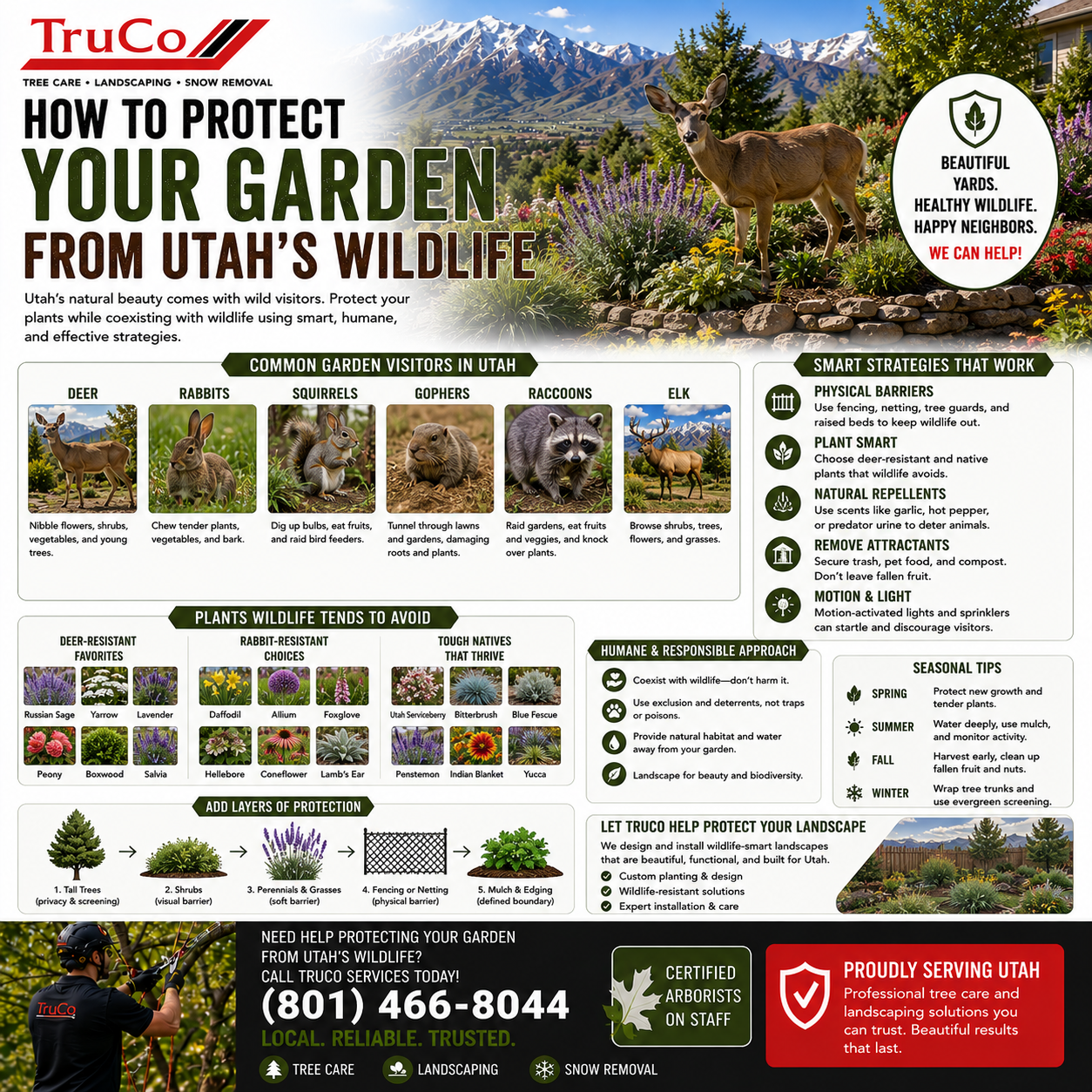
Deer: The Most Destructive Garden Visitors
Deer are the most damaging wildlife for Utah gardens, particularly in areas near foothills, canyons, and open spaces. A single deer can destroy a vegetable garden in one night or strip the leaves from prized ornamentals. Deer are most active at dawn and dusk, and their feeding habits change with the seasons. The most effective deer deterrent is a physical barrier. An 8-foot tall fence is the only guaranteed protection. For smaller gardens, 6-foot fencing may work if deer pressure is moderate. For individual plants or small beds, wire cages or netting can provide protection. Deer repellents can help but require frequent reapplication, especially after rain. Commercial repellents containing putrescent egg solids or predator urine are most effective. Rotate repellent types to prevent deer from becoming accustomed to any single product.
Rabbits: The Persistent Garden Nibblers
Rabbits are ubiquitous in Utah suburbs and can cause significant damage to gardens, especially in spring when tender new growth emerges. They eat vegetables, flowers, and the bark of young trees. Rabbits are most active at dawn and dusk. The most reliable protection is fencing. Use 1-inch mesh chicken wire or hardware cloth at least 2 feet high, with the bottom edge buried 3-4 inches below ground to prevent digging. For raised beds, attach hardware cloth to the bottom of the frame before filling with soil. Remove brush piles, tall grass, and dense ground cover near your garden where rabbits hide.
Voles and Gophers: Underground Threats
Voles and gophers can destroy a garden by eating roots and tubers underground. Voles create surface runways in grass, while gophers create mounds of soil. Both are active year-round in Utah. For gophers, trapping is the most effective control method. Use box traps placed in active tunnels. Identify active tunnels by probing the soil near fresh mounds. For voles, remove heavy mulch and ground cover from around garden beds. Install hardware cloth barriers buried 12-18 inches deep around garden perimeters. Use vole repellents containing castor oil in tunnel entrances.
Birds: Protecting Fruits and Seeds
Birds can decimate fruit trees, berry bushes, and newly seeded lawns in Utah. Common garden pests include robins, starlings, and magpies. Netting is the most effective bird deterrent. Cover fruit trees and berry bushes with bird netting before fruits ripen. Secure the netting at the base to prevent birds from getting underneath. Reflective tape, old CDs, and pinwheels can scare birds temporarily. Move them frequently to maintain effectiveness. Provide a birdbath away from your garden to distract birds from your crops.
Ground Squirrels and Chipmunks
These small rodents are common in Utah's foothill communities and can cause extensive damage to gardens. They dig burrows, eat vegetables, flowers, and tree fruits. Trapping is the most effective method for ground squirrels. Use snap traps baited with nut butter or sunflower seeds. Place traps near burrow entrances. Exclusion fencing with 0.5-inch mesh hardware cloth, buried 12 inches deep and extending 24 inches above ground, can prevent ground squirrels from entering garden areas.
Integrated Pest Management Approach
The most effective wildlife management strategy combines multiple approaches. Use fencing as your primary defense, habitat modification to remove cover and food sources, repellents as a secondary measure, and trapping as a last resort for persistent problems. Work with your neighbors for community-wide solutions. Deer and rabbit problems are most effectively addressed when entire neighborhoods coordinate their efforts.
Frequently Asked Questions
What plants do deer avoid in Utah? Deer tend to avoid lavender, Russian sage, ornamental grasses, boxwood, juniper, potentilla, and plants with strong scents or fuzzy leaves. No plant is completely deer-proof.
How high should a fence be to keep deer out of a Utah garden? 8 feet is recommended for complete deer exclusion. In areas with moderate deer pressure, 6 feet may be sufficient.
Will ultrasonic repellents work for wildlife? Most ultrasonic devices have limited effectiveness. Physical barriers and taste/scent repellents are more reliable.
What is the best way to protect a vegetable garden from rabbits? A 2-foot high fence of 1-inch mesh chicken wire, buried 3-4 inches deep, is the most reliable rabbit protection.
Can I trap and relocate wildlife in Utah? Relocation of wildlife is regulated by the Utah Division of Wildlife Resources. In most cases, trapped animals must be released on the same property or euthanized. Check local regulations before trapping.