
Hardscape Contractor near Clearfield UT

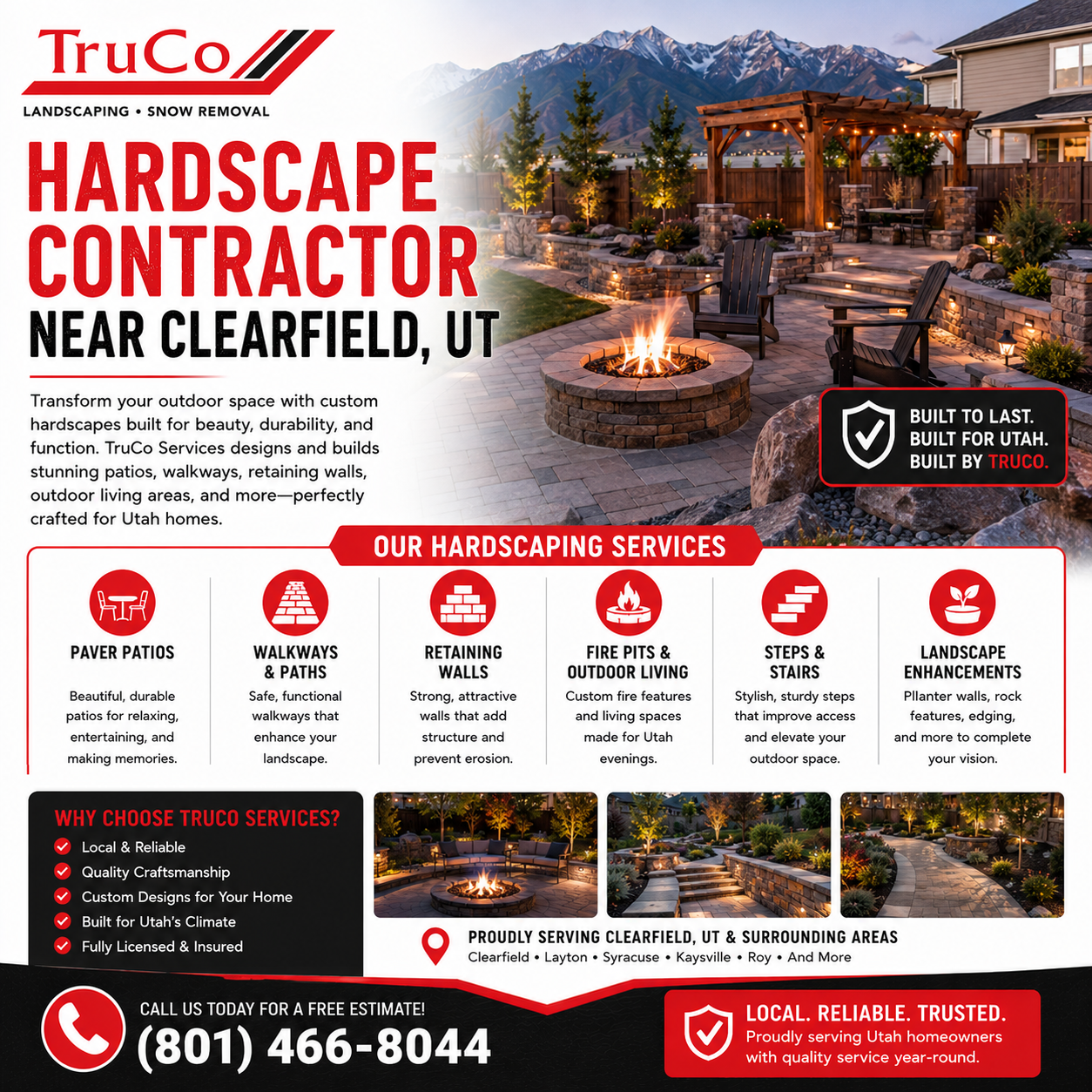
Hardscape Contractor near Clearfield UT
A hardscape contractor near Clearfield, UT designs and builds the permanent outdoor features that shape how a property looks, drains, and functions. That includes patios, retaining walls, walkways, steps, fire features, edging, and other built elements that are meant to last far longer than seasonal landscaping. The reason this matters is simple: hardscape is part construction, part design, and part drainage management. When those pieces are handled well, the result is a safer, more usable, lower-maintenance outdoor space. When they are handled poorly, the result is often settling, cracking, standing water, or expensive repairs.
The most important takeaway is that a good hardscape project is built from the ground up, not just installed on the surface. In the Clearfield area, that means planning for soil conditions, water flow, freeze-thaw cycles, and the way people will actually use the space over time. This article explains what hardscaping includes, the most common failure points, how to avoid costly mistakes, and how to evaluate a contractor with confidence.
What Hardscaping Means
Hardscaping refers to the non-living parts of an outdoor space. Instead of plants, turf, or irrigation, it includes stone, pavers, block, gravel, concrete features, steps, and structural elements that create usable outdoor areas. A hardscape contractor may build a backyard patio, create a front walkway, install a retaining wall, or rework a sloped area so it is safer and easier to use. In many projects, the hardscape is what makes the rest of the landscape feel organized and practical.
The work usually begins with a site visit and a discussion about goals, budget, drainage, and layout. From there, the contractor may design the feature, prepare the ground, install a compacted base, and set the finished materials. In some cases, the project may also involve permits, grading considerations, or utility coordination. What is included varies by project, but the core idea stays the same: hardscaping is about creating permanent outdoor structure, not just surface decoration.
Why It Matters
A well-built hardscape does more than improve appearance. It can solve drainage problems, reduce muddy areas, improve access around the property, and create outdoor living space that is easier to maintain. For homeowners, that means better everyday use and fewer long-term headaches. For property managers or commercial clients, it can mean safer walkways, better curb appeal, and lower maintenance demands.
The challenge is that hardscape problems are often hidden until after the project is finished. A patio may look perfect on day one and still fail later because the base was weak or the drainage was ignored. Retaining walls can shift if water builds up behind them. Walkways can become uneven if the ground underneath was not compacted correctly. That is why the contractor’s process matters as much as the final design.
Common Problems
Poor drainage
Drainage is one of the biggest causes of hardscape failure. If water has nowhere to go, it can erode the base, push against retaining walls, or collect near foundations and low spots. In Utah, where weather can change quickly and freeze-thaw cycles are common, water management is especially important. A project that looks good but traps runoff can become a problem very quickly.
The best way to avoid drainage issues is to plan them before construction starts. That may include slope adjustments, drains, gravel channels, or design changes that direct water away from sensitive areas. A contractor should be able to explain where water will go after the project is complete. If that question is not answered clearly, the project is not fully thought through.
Weak base preparation
Many hardscape failures begin below the finished surface. Pavers, steps, and walls need a solid base to support weight and resist movement. If the base is too shallow, not compacted properly, or made with the wrong material, the surface can sink or shift over time. This is one of the most expensive problems because it often requires partial reconstruction.
A strong installation usually includes excavation, compacted aggregate, leveling, and proper edge restraint. The finished layer is only as good as what supports it. Homeowners do not always see this part of the work, which is why it is important to ask specific questions about base depth and compaction.
Wrong material selection
Not every material works equally well in every setting. Some surfaces are better for decorative accents, while others are better for heavy use or changing weather. In the Clearfield area, the contractor should consider durability, slip resistance, maintenance needs, and how the material handles moisture and temperature swings.
Choosing based on appearance alone can lead to disappointment later. A material may look beautiful in a showroom but stain easily, fade quickly, or become slippery when wet. A good contractor helps match the material to the function of the space, not just the look.
Poor layout
A hardscape can be installed correctly and still feel awkward if the layout is wrong. Narrow walkways, strange step transitions, patios that are too small, or seating areas that do not match how the space is used can all reduce the value of the project. Good layout planning should consider movement, furniture placement, access points, and the way people will use the space in real life.
This is especially important when a yard has slope changes, limited space, or multiple entry points. The best designs make movement feel natural. The goal is not just to fill space, but to make the property easier and more comfortable to use.
Retaining wall mistakes
Retaining walls are functional structures, not just decorative ones. They hold back soil, which means they need drainage, structural support, and proper installation. If a wall is too weak, poorly drained, or built without enough foundation support, it can lean, crack, or fail.
This is one area where experience matters a lot. A small decorative wall and a wall holding back a slope are not the same thing. If the project involves a wall with real soil pressure behind it, the contractor should treat it as a structural feature and explain how the design handles that load.
How To Choose Well
The best contractor is one who can explain the project clearly before work starts and communicate well during the job. Look for someone with direct hardscape experience, not just general yard work. Ask about similar projects, drainage planning, base prep, material options, and how they handle cleanup and follow-up.
Price matters, but it should not be the only factor. A low bid can be attractive until you discover it leaves out excavation depth, drainage work, or proper finishing details. Compare written estimates carefully and make sure you understand what is actually included. The best value is usually a project that is built correctly the first time.
Real Cost of Mistakes
When hardscape goes wrong, the cost is not just financial. There is also the time spent dealing with repairs, the frustration of seeing a new project fail, and the long-term impact on property value and usability. In some cases, the original work has to be torn out and rebuilt, which adds labor, material, and disruption.
Most of these problems are avoidable when the project is planned carefully. That means realistic design, proper drainage, quality base preparation, and a contractor who understands how outdoor construction behaves over time. In other words, the cheapest job is often not the least expensive job in the long run.
What To Do If You Need Help
If you are planning a hardscape project or dealing with an existing problem, start by identifying the main issue. Is it drainage, settling, access, slope, or appearance? Take photos, note where water collects, and think about how the space is used. That information helps a contractor give better advice and reduces the chance of surprises later.
Then ask for a clear estimate that explains the scope, materials, timeline, and any likely complications. If a retaining wall or major grade change is involved, ask whether any permit or code issues may apply. For guidance related to hardscape contractor near Clearfield UT, contact Truco Services.