
Tree Roots and Foundation Damage in Utah

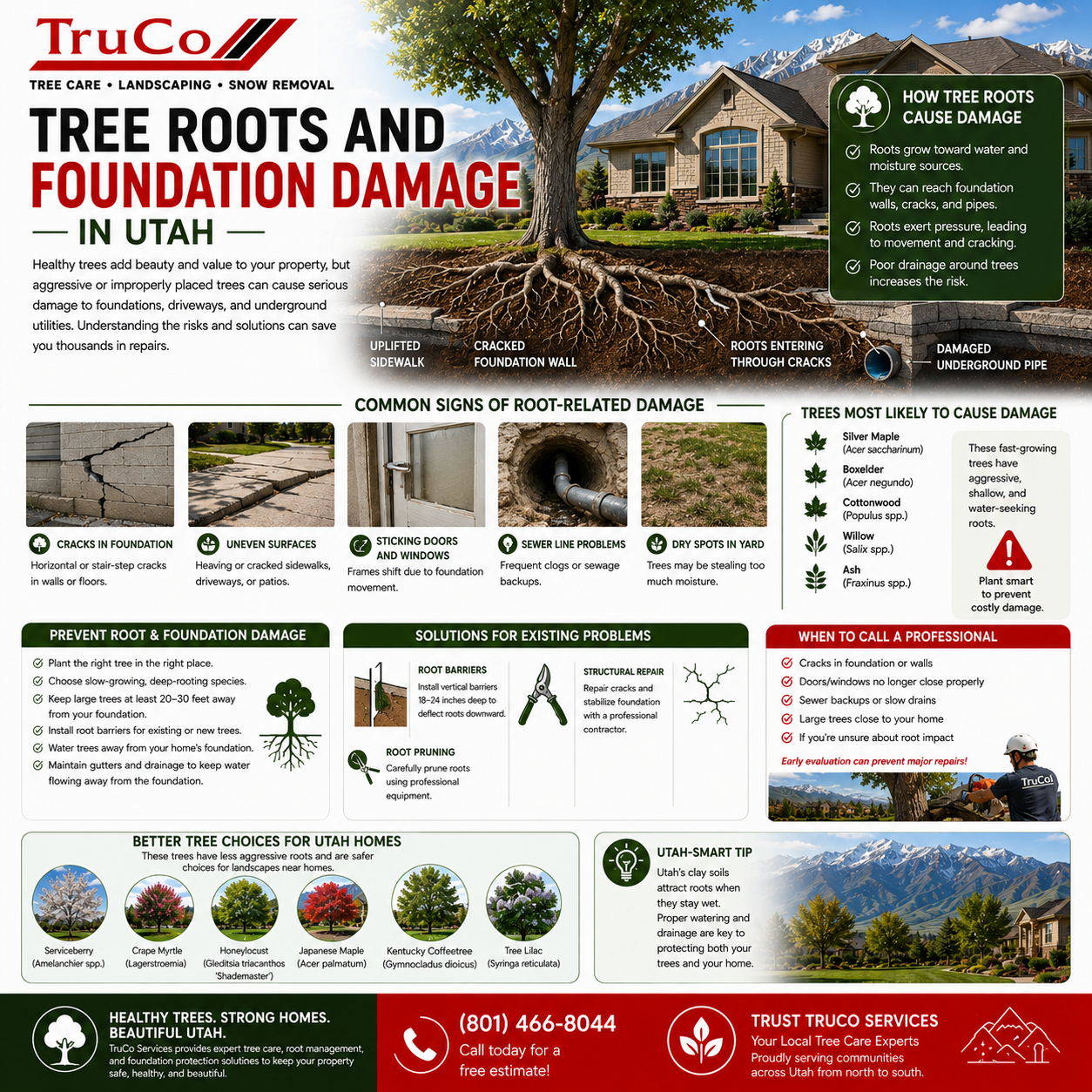
Tree Roots and Foundation Damage in Utah
Tree roots and foundation damage is a common concern for Utah homeowners, but the relationship between roots and foundations is often misunderstood. In Utah's expansive clay soils along the Wasatch Front, many foundation issues blamed on tree roots are actually caused by soil shrinkage and expansion. Understanding the real causes of foundation movement is essential before removing a valuable tree.
How Roots Interact with Foundations
Tree roots grow where water, oxygen, and nutrients are available — they do not actively seek out foundations. Roots can only damage foundations if they are planted too close and the foundation is shallow or already compromised. Most tree roots grow in the top 12-18 inches of soil and spread 2-3 times the canopy width. In Utah's clay soils, roots stay even shallower due to compaction and limited oxygen penetration.
Utah's Expansive Clay Soils
The Wasatch Front is known for expansive clay soils that shrink and swell significantly with moisture changes. When clay soil dries out during Utah's dry summer months, it shrinks, causing foundations to settle. When it rehydrates in winter and spring, it expands, causing foundations to heave. These seasonal movements can crack foundations, stick doors, and create uneven floors — all without any tree involvement. Tree roots can contribute to foundation movement by extracting moisture from the soil near the foundation, increasing soil shrinkage during dry periods. However, the primary cause is usually the expansive soil itself.
Trees Most Likely to Cause Problems
Some tree species have aggressive root systems that can damage foundations when planted too close. Silver maple: shallow, aggressive roots that spread 50+ feet. Cottonwood: roots actively seek water and can grow under foundations. Weeping willow: roots travel long distances in search of water. Poplar: fast-growing, shallow root system. American elm: aggressive, wide-spreading roots. These trees should be planted at least 20-30 feet from any structure.
Signs of Foundation Problems from Roots
The most obvious signs of root-related foundation damage include vertical cracks in foundation walls near the tree, uneven settling or heaving of foundation slabs near trees, doors and windows that stick seasonally, major roots visible growing against the foundation, and plumbing issues from root intrusion. However, many of these same symptoms can occur from soil conditions alone. A structural engineer or foundation specialist should assess the cause before blaming the tree.
Prevention through Proper Planting
The best way to prevent root-related foundation issues is proper tree placement. Plant large trees (oak, maple, pine) at least 20 feet from foundations. Plant medium trees (hackberry, honeylocust) at least 15 feet away. Plant small trees (crabapple, Japanese tree lilac) at least 10 feet away. In Utah's clay soils, increase these distances by 5-10 feet for aggressive-rooted species. Consider installing root barriers when planting trees near structures.
Root Barrier Installation
Root barriers are rigid panels installed vertically in the soil between the tree and the structure to redirect roots downward. They are most effective when installed at planting time but can be retrofitted. HDPE or polypropylene panels should be installed 18-24 inches deep. The barrier should extend at least the length of the tree's expected root spread in that direction. Cost: $15-$30 per linear foot installed in Utah.
What to Do If You Have Damage
If you suspect tree roots are damaging your foundation: consult a structural engineer to assess the foundation, not a tree service. The engineer will determine the actual cause. If roots are confirmed as a contributing factor, options include root pruning by a certified arborist (limited to 20-25% of roots), root barrier installation, foundation repair and underpinning, or tree removal as a last resort. In many cases, managing soil moisture around the foundation is more effective than removing the tree.
Frequently Asked Questions
Can tree roots damage my foundation? Yes, if the tree is very close and the species has aggressive roots. However, most foundation issues in Utah are caused by expansive clay soils, not tree roots.
How close is too close for a tree? Large trees: 20+ feet. Medium: 15+ feet. Small: 10+ feet from the foundation.
Will removing a tree stop foundation damage? Not necessarily — removing a tree can actually cause more soil movement as the soil rehydrates where roots were extracting moisture.
Should I remove a tree that is damaging my foundation? Consult a structural engineer and an arborist first. In many cases, root pruning and moisture management are better options.
Do root barriers work? Yes, when properly installed. They redirect 80-90% of surface roots.