
How to Choose the Best Mulch for Utah Landscapes

Why Mulch Matters in Utah
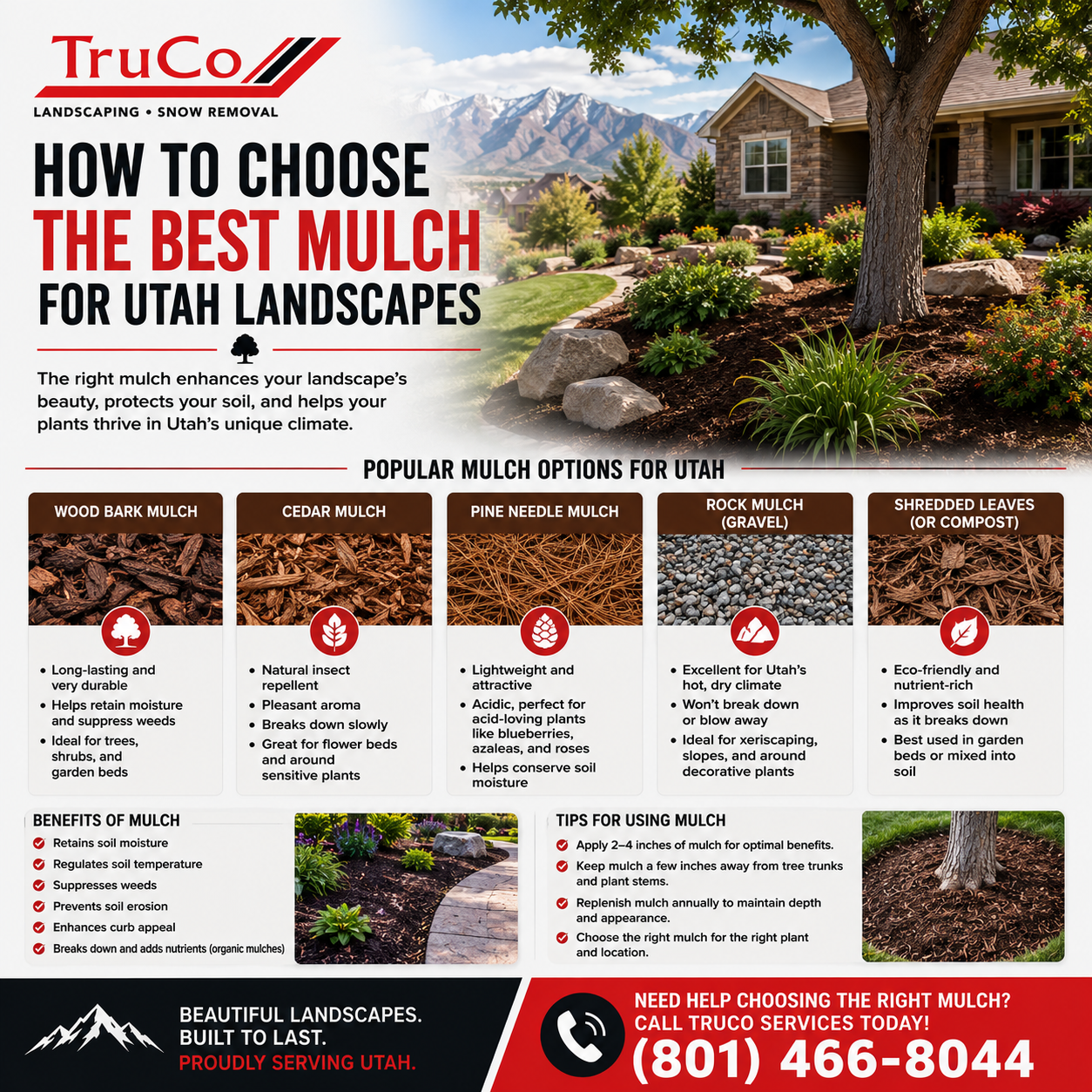
Mulch is one of the most underrated tools in a Utah landscaper's toolkit. In Utah's arid climate, where summers are hot and dry, mulch helps retain soil moisture, regulate soil temperature, and suppress weeds. Choosing the right mulch for your specific landscape can make the difference between a thriving garden and one that struggles through Utah's challenging growing conditions.
Types of Mulch for Utah Landscapes
Wood Bark Mulch is the most common choice for Utah landscapes. It breaks down slowly over 2-3 years, provides excellent weed suppression, and creates a natural, attractive appearance. Cedar and pine bark are popular options. Avoid dyed mulches (red, black, brown), which can leach chemicals into the soil and may contain recycled wood waste.
Rock and Gravel Mulch works well for xeriscaping and desert-themed yards common along the Wasatch Front. It doesn't break down, doesn't blow away in Utah's spring winds, and helps with drainage in clay soils. However, rock mulch can heat up significantly in Utah summers, raising soil temperatures and potentially stressing plants.
Compost Mulch adds nutrients to the soil as it breaks down. It's excellent for vegetable gardens and flower beds but needs annual replenishment. In Utah's alkaline soil, compost mulch can help lower pH naturally over time.
How Much Mulch Do You Need?
For Utah landscapes, apply mulch 2-4 inches deep. One cubic yard covers about 100 square feet at 3 inches deep. For a typical Utah front yard planting bed of 200-300 square feet, you'll need 2-3 cubic yards of mulch. Avoid applying too deep, which can suffocate roots and encourage fungal growth.
Mulching Best Practices for Utah
Apply mulch in late spring after the soil has warmed up. In Utah, mid-May to early June is ideal. Keep mulch 2-3 inches away from tree trunks and plant stems to prevent rot. Water the soil before applying mulch. Replenish wood mulch annually as it decomposes.
Frequently Asked Questions
What is the best mulch for Utah clay soil? Organic mulches like wood bark or compost help improve clay soil structure over time as they decompose. They add organic matter and encourage beneficial soil organisms.
How often should I replace mulch in Utah? Wood mulch should be topped up annually. Rock mulch can last indefinitely but should be cleaned of debris periodically.
Does mulch attract termites in Utah? Termites are not a significant problem in most of Utah due to the dry climate. Wood mulch applied correctly poses minimal risk.
Should I use landscape fabric under mulch? In Utah, landscape fabric can be beneficial under rock mulch but is not recommended under organic mulch, as it prevents natural decomposition and can damage soil health.