
How to Mulch Trees Correctly in Utah

Why Mulching Matters for Utah Trees
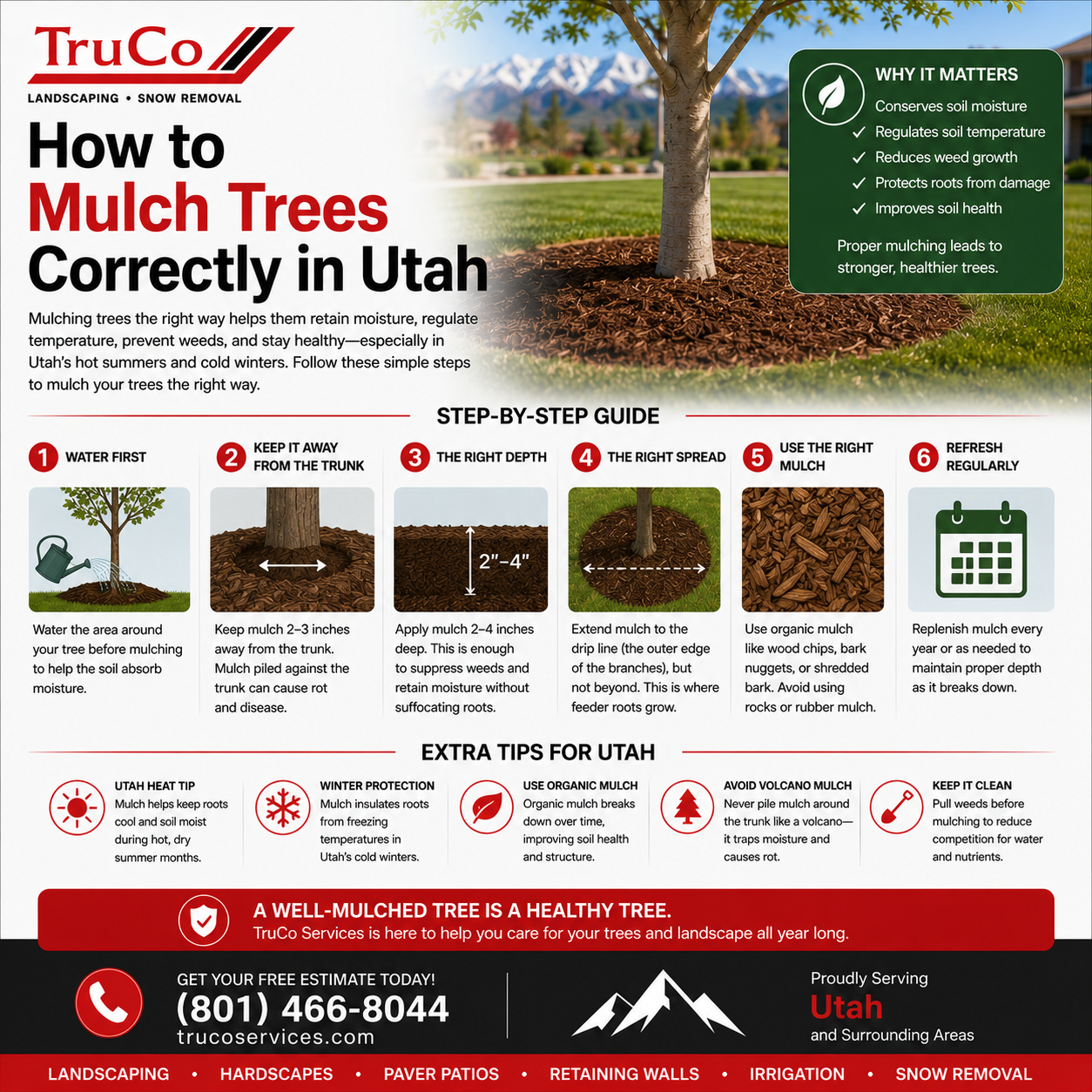
Mulching is one of the most beneficial practices for Utah trees. Proper mulch conserves moisture in Utah's dry climate, moderates soil temperature (keeping roots cooler in summer and warmer in winter), suppresses weeds, reduces soil compaction, prevents trunk damage from mowers and trimmers, and adds organic matter to Utah's clay soil. A properly mulched tree grows faster, lives longer, and requires less water.
The Right Way to Mulch: The Donut Method
Apply organic mulch in a flat, even layer 2-4 inches deep, extending from 2-3 inches away from the trunk to the dripline or beyond. The mulch should form a donut shape — a ring of mulch around the tree with bare soil around the trunk. The donut method ensures the trunk stays dry (preventing rot and disease) while the roots benefit from the mulch.
What NOT to Do: Volcano Mulching
Volcano mulching — piling mulch high against the trunk — is the most common and damaging mulching mistake in Utah. A mulch volcano keeps bark constantly moist, leading to trunk rot, disease, and insect infestation. It encourages roots to grow up into the mulch instead of down into the soil. It can kill a tree within 3-5 years. If you see a tree with mulch piled against its trunk, pull the mulch away immediately to expose the root flare.
Best Mulch Types for Utah Trees
Wood chips: Best choice for Utah. Readily available from tree services, decompose slowly, good for clay soil. Shredded bark: Attractive, stays in place well, good for landscaped areas. Pine bark nuggets: Decompose slowly, slightly acidic (beneficial for Utah's alkaline soil). Compost: Excellent nutrient source but decomposes quickly, needs frequent replenishment. Avoid: Rock mulch near trees (heats up, reflects heat, doesn't improve soil), rubber mulch (no soil benefits, contains chemicals), and dyed mulch (no proven harm but no benefit either).
How Much Mulch to Apply
Apply 2-4 inches deep. Less than 2 inches won't provide adequate benefits. More than 4 inches can suffocate roots, especially in Utah's clay soil. The total depth of mulch should never exceed 4 inches. Replenish annually as the mulch decomposes — typically add 1-2 inches each year. For newly planted trees, start with 2-3 inches and increase to 3-4 inches in year 2.
Mulching in Utah's Clay Soil
Utah's clay soil benefits enormously from organic mulch. As wood chips decompose, they improve soil structure, increase water infiltration, and feed beneficial soil organisms. In clay soil, avoid exceeding 3 inches of mulch depth — clay drains slowly, and excessive mulch can keep the soil too wet. Use coarse wood chips rather than fine shredded bark for better air movement in clay soil.
Rock Mulch vs Wood Mulch
Rock mulch is commonly used in Utah xeriscapes, but it's not ideal for trees. Rock absorbs and radiates heat, raising soil temperature around tree roots. Rock doesn't decompose and improve soil. Rock makes it harder to add organic matter later. Rock is difficult to move if you need to access roots. If you must use rock near trees, keep it at least 3 feet from the trunk and use organic mulch closer to the tree.
FAQs
How much mulch do I need per tree? 2-4 inches deep extending to the dripline. A 10-foot diameter tree needs about 3-4 cubic feet of mulch. Should I remove old mulch before adding new? Only if the total depth exceeds 4 inches. Otherwise, just add 1-2 inches on top. Can I use grass clippings as mulch? Yes, but only in thin layers (1-2 inches) and mix with wood chips to prevent matting. Is black mulch bad for trees? Dyed mulch is generally safe, but natural wood chips are preferable. When should I apply mulch? Spring (after soil warms) or fall (before winter). How close to the trunk should mulch be? 2-3 inches away. Never pile mulch against the trunk.