
How to Create a Pet-Friendly Landscape in Utah

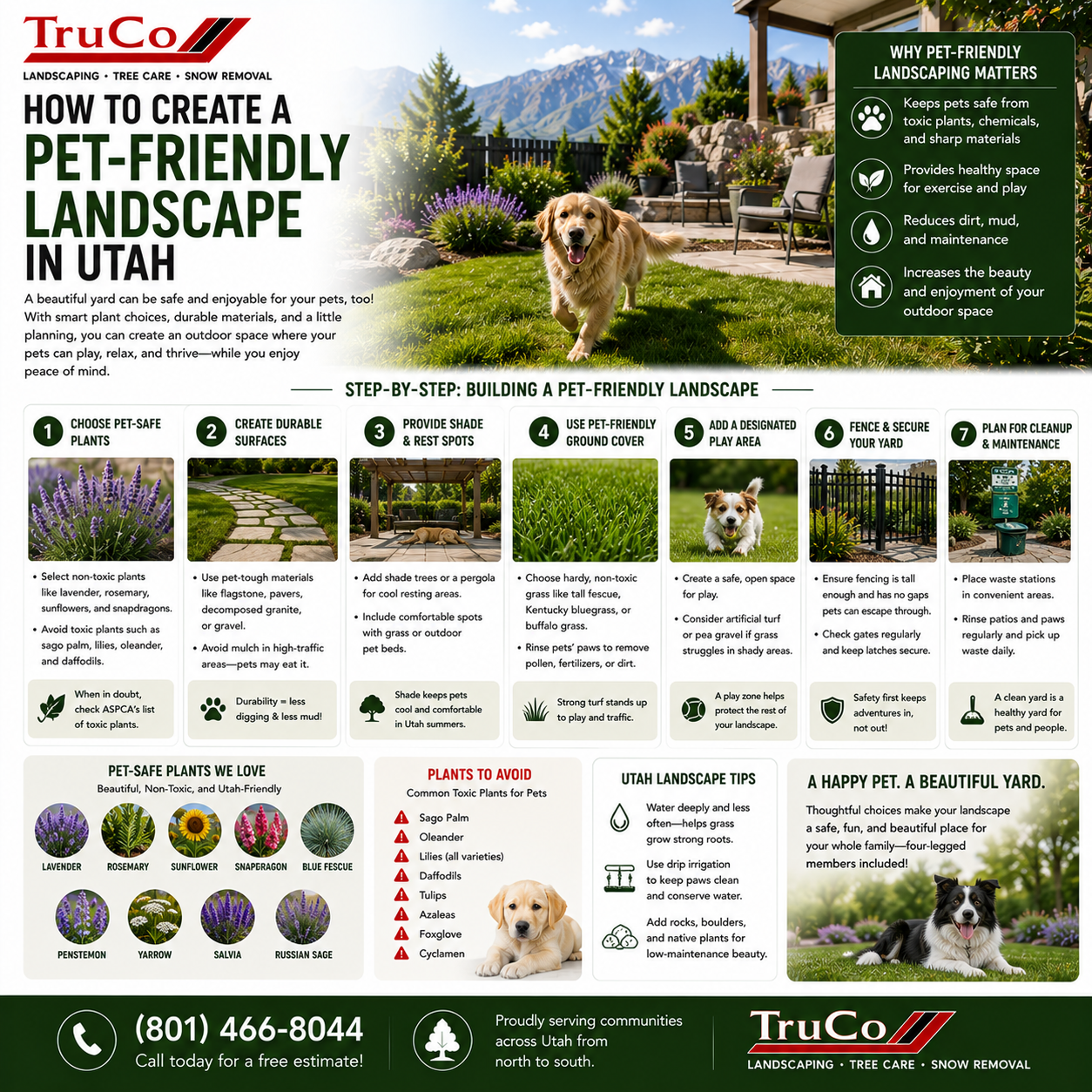
Pet-Safe Plant Choices for Utah Gardens
Many common landscape plants are toxic to dogs and cats. Utah homeowners should avoid sago palm, oleander, yew, rhododendron, azalea, and foxglove — all highly toxic if ingested. Safe alternatives include Utah-native plants like serviceberry, blue flax, Rocky Mountain penstemon, and blanket flower. Ornamental grasses like blue fescue and feather reed grass are safe and drought-tolerant. Herbs like rosemary, thyme, and sage are non-toxic and thrive in Utah's climate. Creeping thyme and woolly thyme make excellent pet-safe ground covers that withstand foot traffic. For shade areas, plant hostas and ferns — hostas are safe for dogs though mildly toxic to cats. Always verify plants with the ASPCA toxic plant database before installing. In Utah, avoid cocoa bean mulch — it contains theobromine, which is toxic to dogs if ingested.
Durable Grass and Ground Cover Options
Standard Kentucky bluegrass lawns struggle under heavy dog traffic in Utah. Tall fescue is the best grass for Utah yards with dogs — it tolerates heavy foot traffic, resists urine damage, and stays green longer during drought. Turf-type tall fescue varieties like Rebel and Falcon are excellent choices for the Wasatch Front. Fine fescue blends work well in shaded dog runs. Consider dedicating a specific potty area with pea gravel or artificial turf to protect the main lawn. Artificial turf designed for pets costs $8-15 per square foot installed — it has drainage backing, antimicrobial properties, and requires no water. Clover lawns are gaining popularity as a pet-friendly alternative — white Dutch clover stays green with less water, tolerates urine, and stays soft underfoot. For high-traffic pathways, install flagstone or concrete pavers to prevent mud and worn grass patches.
Fencing and Boundary Solutions for Utah Yards
Secure fencing is essential for pet safety in Utah. Standard 6-foot privacy fences work well for most dogs. For jumpers, extend fence height to 6-8 feet or add angled extensions at the top. Bury fence wire 6-12 inches below grade or install a concrete footer along the fence base to prevent digging escapes. Chain link fences are the most economical at $12-18 per linear foot installed, but allow visual stimulation that can increase barking. Wood privacy fences at $25-40 per linear foot provide visual barriers that reduce reactivity. Invisible electric fences are less popular in Utah due to wildlife distractions — deer, rabbits, and squirrels can tempt dogs through the boundary. For large properties, consider a combination of visible fencing near the house and invisible fencing for perimeter boundaries. Always check HOA regulations for fence types allowed in your Utah community.
Managing Dog Urine Spots on Utah Lawns
Dog urine contains high nitrogen that burns grass and creates yellow spots in Utah lawns. Female dogs cause more concentrated damage than males because they empty their bladder in one spot. Train dogs to use a designated mulched or gravel area instead of the main lawn. Water the lawn deeply after your dog urinates — this dilutes the nitrogen and spreads it across more soil. Apply gypsum to affected areas at 40 pounds per 1,000 square feet — gypsum neutralizes the salt in dog urine. Overseed urine spots with urine-resistant grass varieties like tall fescue and perennial ryegrass. Commercial products like DogONature and Lawn Restore contain beneficial microbes that break down urine compounds. In Utah's alkaline soil, applying a soil acidifier (elemental sulfur) can help balance pH and reduce urine burn severity.
Pet-Friendly Hardscaping and Features
Design your Utah landscape with pets in mind. Install a pet washing station with a warm-water spigot near the back door — essential during Utah's muddy spring and fall seasons. Build a shaded area with a pergola or shade sail where pets can rest during Utah's hot summer afternoons. Use non-slip surface materials for patios and walkways — flagstone with tight joints, textured concrete, or brushed pavers prevent slips. Avoid sharp-edged decorative rocks that can injure paws — river rock or smooth pea gravel are safer choices. Install a dog-proof irrigation system with protected risers and drip lines instead of pop-up sprinklers that dogs can chew. Create designated digging pits filled with sand or loose soil where dogs are allowed to dig. Incorporate a water feature like a shallow pet-safe fountain or splash pad for dogs to cool off during Utah's summer heat.
Frequently Asked Questions
What is the best grass for dogs in Utah? Tall fescue is the best choice — it withstands heavy traffic, resists urine damage, and requires less water than Kentucky bluegrass. Perennial ryegrass also performs well in dog areas.
Are cedar chips safe for dogs? Cedar mulch is generally safe for dogs and naturally repels fleas and ticks. Avoid cocoa bean mulch, which is toxic. Pine and cedar are the safest wood mulches for pet landscapes.
How do I stop my dog from digging in the yard? Provide a dedicated digging pit with loose soil, increase exercise, and address separation anxiety. Physical barriers like chicken wire at ground level can protect specific garden areas.
What landscaping rocks are safe for dogs? Smooth river rock and pea gravel are paw-friendly. Avoid sharp lava rock, decomposed granite with sharp edges, and large decorative rocks that can heat up in Utah's sun.
Is artificial turf safe for dogs? Pet-specific artificial turf with antimicrobial infill and drainage backing is safe. It stays cool enough for paws in Utah's summer when proper infill materials are used. Clean solid waste promptly and hose down regularly.