
How to Plant a Vegetable Garden in Utah

Choosing the Right Location
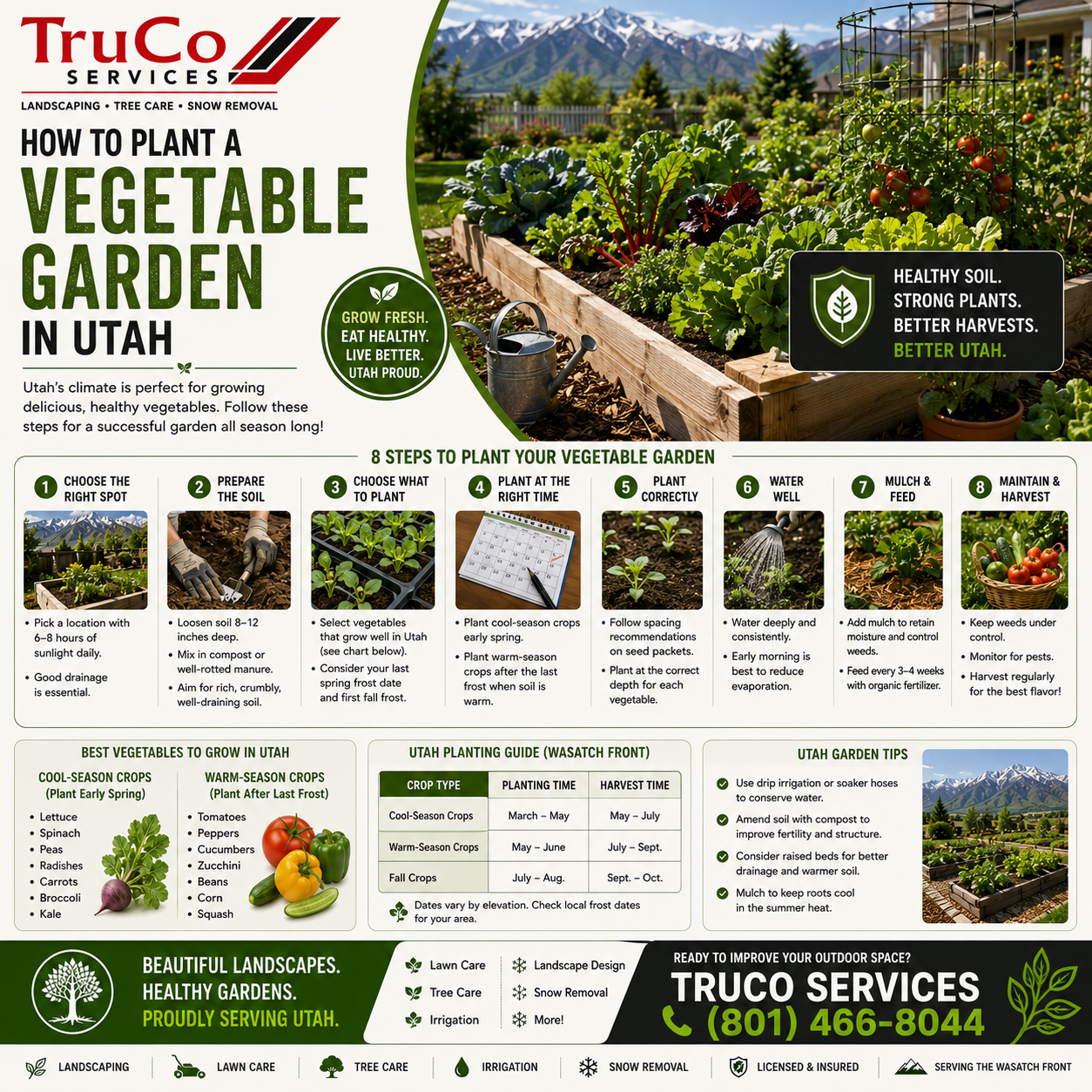
Select a spot with 6-8 hours of direct sunlight daily. Avoid low frost pockets. Ensure good drainage — build raised beds if water pools. In Utah, south-facing slopes warm up faster in spring, extending the season 1-2 weeks.
Preparing Utah Soil
Utah's alkaline clay soil needs amendment. Test through USU Extension. Add 3-4 inches of compost tilled into top 8-10 inches. Add elemental sulfur if pH above 7.5. Add coarse sand for heavy clay. Build raised beds 8-12 inches high.
Best Vegetables for Utah
Cool-season (early spring): peas, lettuce, spinach, carrots, radishes, kale. Warm-season (after frost): tomatoes, peppers, squash, cucumbers, beans. Choose short-season varieties maturing in 60-80 days.
Planting Schedule
Start seeds indoors 6-8 weeks before last frost. Plant cool-season crops as soon as soil can be worked. Succession plant every 2-3 weeks through mid-summer. Fall crops in late July-early August.
Frequently Asked Questions
When to plant a vegetable garden? Cool-season: March-April. Warm-season: May-June. Fall: July-August.
What vegetables grow best? Tomatoes, peppers, beans, peas, carrots, squash, lettuce, kale.
How to improve clay soil? Add 3-4 inches of compost and coarse sand. Build raised beds.
Need a fence? Yes, 6-8 foot fence protects from deer and rabbits.
Preparing the Garden Bed
Utah's soil is typically alkaline clay or sandy loam with low organic matter. Start by choosing a location with 6-8 hours of direct sunlight daily. Build raised beds 8-12 inches deep for best drainage and soil control — or amend in-ground beds with 3-4 inches of compost mixed into the top 12 inches. Test soil pH — Utah soil averages 7.5-8.5 (alkaline). Vegetables prefer 6.0-7.0 pH. Add sulfur or peat moss to lower pH if needed. Install drip irrigation before planting for consistent watering.
Best Vegetables for Utah's Climate
Utah's growing zones 4-7 allow a wide range of vegetables. Cool-season crops (plant March-April): peas, lettuce, spinach, kale, broccoli, cauliflower, carrots, beets, and radishes. Warm-season crops (plant May-June after last frost): tomatoes, peppers, squash, cucumbers, beans, corn, and melons. Utah's high elevation and intense sunlight means warm-season crops thrive when planted in the warmest spots. Fast-maturing varieties (60-75 days) are ideal for Utah's shorter growing season at higher elevations (Park City, Heber Valley).
Watering and Mulching Tips
Vegetable gardens need 1-2 inches of water per week in Utah's arid climate. Drip irrigation is ideal — it delivers water directly to roots and reduces evaporation. Water early morning (5-7 AM) to minimize evaporation and prevent foliar diseases. Apply 2-3 inches of organic mulch (straw, shredded leaves, or wood chips) around plants to retain moisture, suppress weeds, and regulate soil temperature. In Utah's intense summer heat, mulch reduces soil temperature by 10-15 degrees Fahrenheit.
Frequently Asked Questions
When is the last frost date in Utah? May 10-15 along the Wasatch Front. May 25-June 5 in mountain valleys. Always check local frost dates before planting warm-season crops.
Should I use fertilizer? Apply balanced 10-10-10 fertilizer at planting. Side-dress with nitrogen fertilizer when plants begin fruiting. Compost tea is an excellent organic alternative.
How do I deal with Utah garden pests? Common pests: aphids, tomato hornworms, squash bugs, and cutworms. Use row covers, neem oil, and beneficial insects like ladybugs.
Can I grow vegetables in containers? Yes — tomatoes, peppers, lettuce, and herbs grow well in containers. Use 5-gallon minimum pots with drainage holes and quality potting mix.