
How to Design a Drought-Resistant Yard in Utah

Reducing Lawn Area
Turf grass uses 30-50 inches of water per year. Reducing lawn is the most effective step toward drought resistance. Replace turf with drought-tolerant ground covers like creeping thyme or kinnikinnick. Install patios or decomposed granite areas. If keeping some lawn, use buffalo grass or fine fescue that needs 50% less water than Kentucky bluegrass.
Choosing Drought-Tolerant Plants
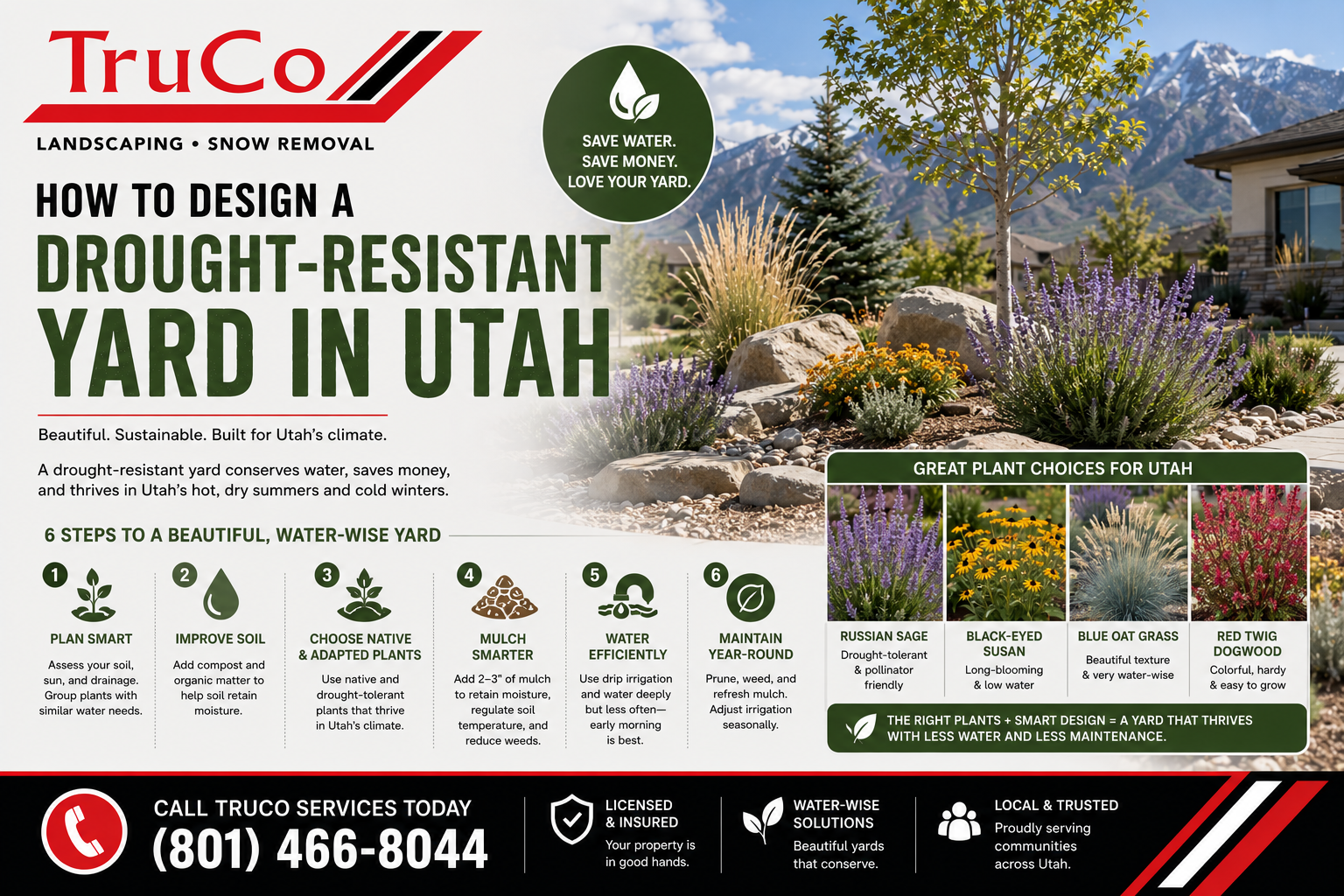
Native plants are naturally drought-tolerant once established. Top shrubs include Utah serviceberry, rabbitbrush, and sagebrush. Perennials like penstemon, gaillardia, salvia, Russian sage, and lavender thrive with minimal water. Ornamental grasses like blue grama add texture. For trees, choose bur oak, hackberry, and Kentucky coffeetree.
Improving Soil for Water Retention
Add 3-4 inches of organic compost tilled into the top 6-8 inches of soil. Apply 2-3 inches of organic mulch over all planting beds. Mulch reduces evaporation by 30-50%. In clay soils, adding gypsum improves drainage. In sandy soils, organic matter improves water holding capacity.
Efficient Irrigation Design
Drip irrigation delivers water directly to plant roots with minimal evaporation. Install separate zones for lawn, shrubs, perennials, and trees. Use a smart controller that adjusts based on weather. Water deeply but infrequently. Most drought-tolerant plants need water only once every 7-14 days after establishment.
Frequently Asked Questions
How much water does a drought-resistant yard save? A properly designed landscape saves 50-75% compared to traditional lawns.
Is xeriscaping expensive? Initial costs are similar to traditional landscaping, with savings of 30-50% in annual water costs. Payback is 2-4 years.
What is the easiest drought-tolerant plant? Russian sage, lavender, and penstemon are very easy to grow with minimal water.
Can I have a green lawn and be drought-resistant? Yes, limit lawn to high-use areas and use drought-tolerant grass species.