
How to Create a Flower Bed Border in Utah

Choosing the Right Edging Material
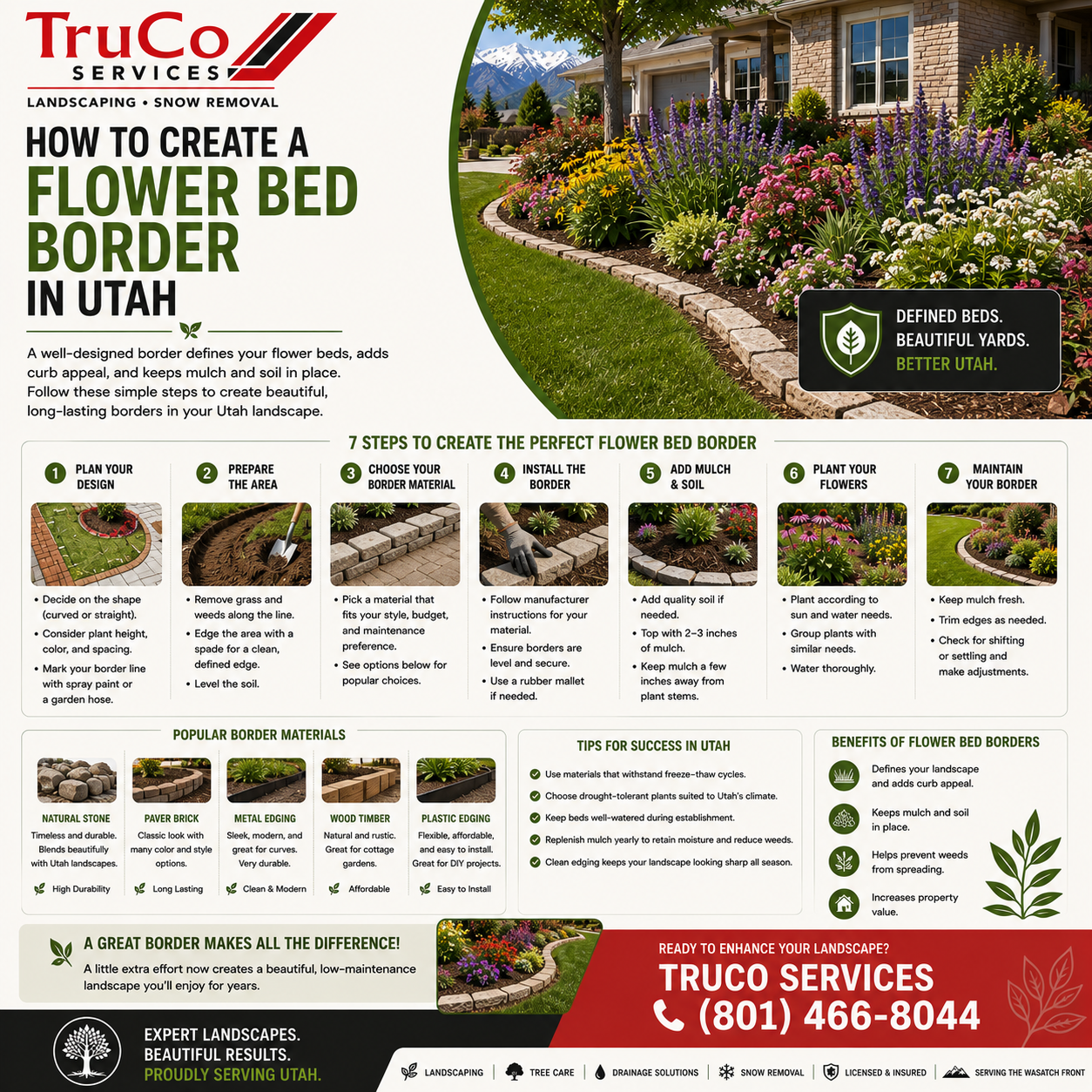
Several edging materials work well in Utah's climate. Natural stone offers the most durable option — flagstone, fieldstone, and river rock create beautiful, permanent borders that handle freeze-thaw cycles perfectly. Stone costs $5-15 per linear foot installed. Brick edging provides a classic look that complements traditional and craftsman homes. Brick is durable and available in many styles and colors. Concrete edging comes in two forms: precast blocks that stack like brick, or poured concrete that is formed on site. Precast blocks cost $3-8 per linear foot, while poured concrete runs $8-15. Metal edging made from steel or aluminum provides the cleanest, most minimalist look.
Steel and Aluminum Edging Options
Metal edging is a popular choice for Utah landscapes because it creates crisp, permanent lines. Steel edging is the strongest option, handling heavy frost heave and accidental impacts without bending. Powder-coated steel is available in black or brown that blends with soil and mulch. Cor-Ten (weathering) steel develops a rust patina that looks natural in modern landscapes. Aluminum edging is lighter and easier to bend into curves but less durable than steel. Both materials come in 4-inch to 6-inch heights with a flange at the bottom that anchors into the soil. Metal edging costs $2-4 per linear foot for materials, plus professional installation.
Installing Stone or Brick Borders
Stone and brick borders require a solid foundation for long-term stability in Utah's freeze-thaw climate. Start by digging a trench along the border line, 4-6 inches deep and slightly wider than the stones. Remove all grass and roots. Add 2-3 inches of compacted sand or gravel base. Level the base. Set stones or bricks on the base, tapping into place with a rubber mallet. Check level frequently. Fill gaps between stones with sand or polymeric sand, which hardens when wet to prevent weed growth.
Installing Metal or Plastic Edging
Dig a narrow trench along the border line, about half the depth of the edging material. Place the edging in the trench with the top edge at or slightly above ground level. Drive anchoring stakes through the edging's built-in slots every 2-3 feet. Connect sections with manufacturer-provided connectors. For curves, bend the edging gradually. Backfill the trench on both sides and tamp soil firmly. The top edge should be just visible above the soil surface.
Maintaining Borders Through Utah Seasons
In spring, inspect borders for frost heave — reset any stones or bricks that have shifted during freeze-thaw cycles. Tighten metal edging stakes that have worked loose. In summer, keep grass and weeds from encroaching over the border edge. In fall, blow leaves off borders to prevent staining. In winter, avoid using metal snow shovels near borders. With proper installation and annual maintenance, most borders last 10-20 years or more in Utah.
Frequently Asked Questions
What is the best flower bed border for Utah's climate? Natural stone and metal edging perform best. Avoid plastic edging, which becomes brittle in winter.
How deep should flower bed edging be installed? At least 4-6 inches deep to stay below the frost line and prevent frost heave.
How do I keep grass from growing over my border? Install edging at least 4 inches deep. Re-cut spade edges annually. Apply pre-emergent herbicide along the border in spring.
What is the cheapest flower bed border option? Spade-cut trench edges cost nothing but need annual re-cutting. Metal edging is the cheapest permanent option at $2-4 per linear foot.