
How to Fix a Sprinkler System That Won't Turn Off in Utah

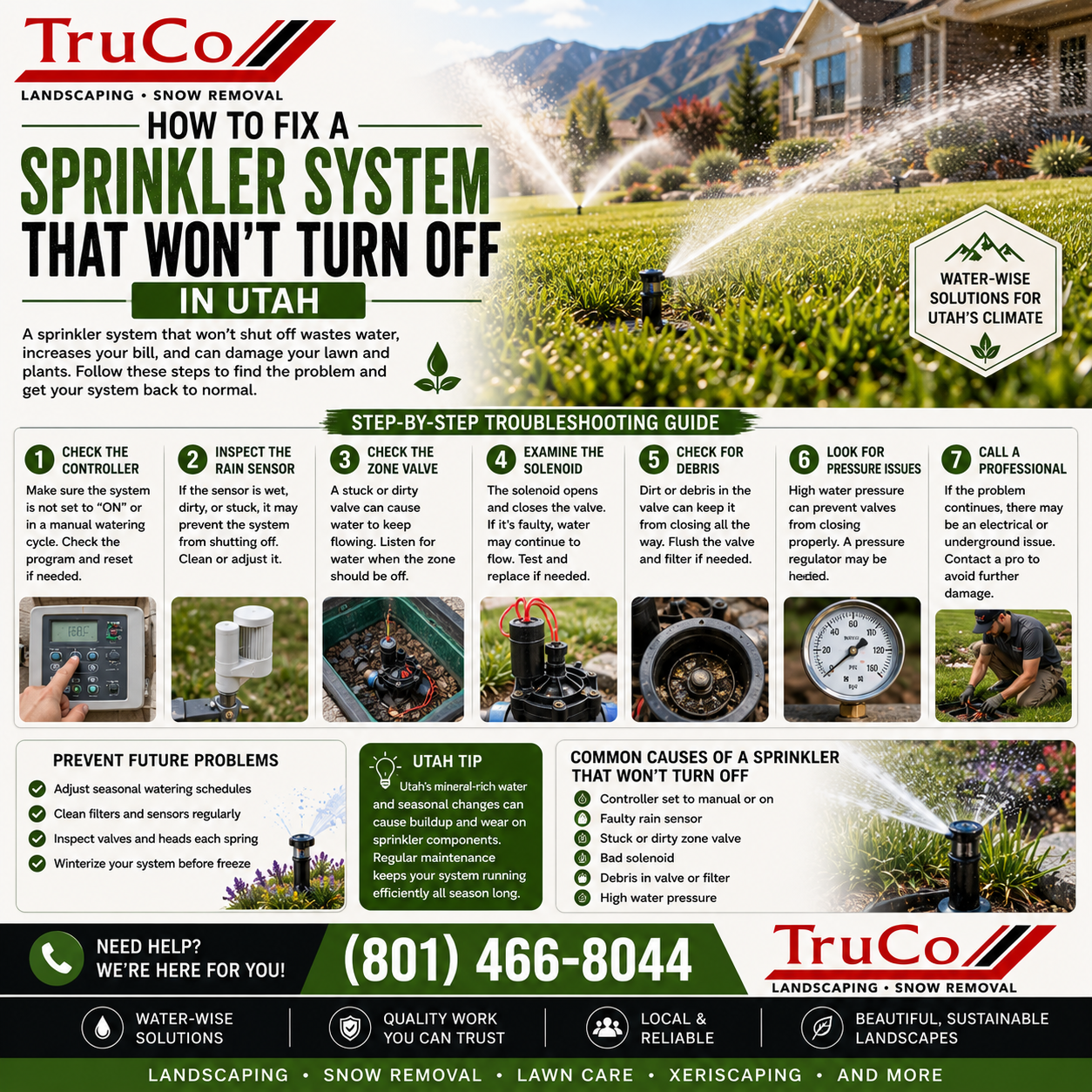
If your sprinkler system won't turn off in Utah, shut off the water at the main valve or backflow preventer immediately to stop the flooding. Then identify the cause — usually a stuck valve, a failed solenoid, debris in the valve, or a controller problem. Clean or replace the faulty part, and if the leak is underground, call a licensed irrigation professional.
A sprinkler system that won't turn off is one of the most stressful irrigation problems a Utah homeowner can face. Water keeps running, your yard turns into a swamp, your water bill climbs by the minute, and you're not sure where to start. The good news: most causes are fixable, and the first step is simple.
Here's how to stop the water fast and fix a sprinkler system that won't shut off, based on what TruCo Services sees on irrigation calls across the Salt Lake Valley.
Step 1: Shut Off the Water Immediately
The very first thing to do is stop the flow. Locate your main shutoff valve — usually near your backflow preventer, water meter, or where the irrigation line enters your home. Turn it off. This stops the flooding and prevents damage to your lawn, foundation, and the system itself.
If you can't find the shutoff, turn off the water at the meter or call a professional for help.
Step 2: Identify the Cause
Once the water is off, figure out why the system won't shut down. The most common causes are:
A stuck valve — the valve won't close, so water keeps flowing
A failed solenoid — the electrical coil that opens and closes the valve is broken
Debris in the valve — dirt or sediment is blocking the valve from sealing
A controller problem — the timer is sending a signal to keep a zone running
A broken diaphragm — the rubber disc inside the valve is worn or torn
Step 3: Fix the Common Causes
Stuck Valve
If a valve is stuck open, tap it gently with a tool handle to help it close. If it still won't close, the valve may need to be cleaned or replaced.
Failed Solenoid
A solenoid that's burned out or corroded won't close the valve. Replace it — solenoids are inexpensive and easy to swap. Turn off the power to the controller first.
Debris in the Valve
Utah's hard water and sediment can clog valves. Remove the top of the valve, clean out any debris, and reassemble. Flush the system to clear remaining sediment.
Controller Problem
Check your controller. If a zone is stuck on, reset the controller or replace the wiring. Sometimes a simple reset fixes the issue.
Broken Diaphragm
If the diaphragm is worn or torn, replace it. This is a common fix for valves that won't seal properly.
When to Call a Professional
Call a licensed irrigation company if:
The valve is underground and you can't access it
Multiple zones won't shut off
You suspect a wiring or controller issue you can't diagnose
Water is pooling near your foundation
You're not comfortable working with water and electricity
Preventing Future Problems
Once your system is fixed, take steps to prevent it from happening again:
Winterize your system properly to prevent freeze damage to valves and solenoids
Flush the system regularly to clear sediment and debris
Inspect valves and solenoids each spring before the season starts
Replace worn parts before they fail
Keep the controller updated and check wiring connections
Schedule annual maintenance with a professional
Regular maintenance catches small issues before they become big, costly problems.
Frequently Asked Questions
Q: Why won't my sprinkler system turn off?
A: The most common causes are a stuck valve, a failed solenoid, debris in the valve, or a controller problem. Shut off the water first, then diagnose the cause.
Q: How do I stop my sprinklers from running immediately?
A: Turn off the water at the main shutoff valve or backflow preventer. This stops the flow instantly and prevents flooding.
Q: How much does it cost to fix a sprinkler system that won't turn off in Utah?
A: Expect $150 to $400 depending on the cause. A solenoid replacement is on the lower end; a valve replacement runs higher.
Q: Can a stuck sprinkler valve waste a lot of water?
A: Yes. A valve stuck open can waste hundreds of gallons an hour, dramatically raising your water bill and flooding your yard.
Q: Is a sprinkler system that won't turn off dangerous?
A: It can be. Water pooling near your foundation can cause structural damage. Shut off the water and address the issue promptly.
Q: Do I need to winterize my sprinkler system to prevent this?
A: Proper winterization helps prevent freeze damage to valves and solenoids, which is a common cause of stuck valves in Utah.
Q: Can I fix a stuck sprinkler valve myself?
A: Sometimes. If the valve is accessible, you can clean it or replace the solenoid. If it's underground or you're unsure, call a professional.
Q: How do I know if my controller is the problem?
A: If the system won't turn off even when the controller is off or unplugged, the problem is likely the valve, not the controller.
Q: How can I prevent my sprinkler system from getting stuck on?
A: Winterize properly, flush the system regularly, inspect valves and solenoids each spring, and schedule annual maintenance.
Why Choose TruCo Services for Irrigation Repair
TruCo Services installs and repairs irrigation systems across the Salt Lake Valley. We diagnose stuck valves and failed solenoids quickly, use quality parts, and winterize your system to prevent freeze damage. We're licensed, insured, and local — and we answer the phone when you need us.
Get your free irrigation estimate — 801-466-8044.