
How to Grow Peppers in Utah: Varieties, Planting, and Care

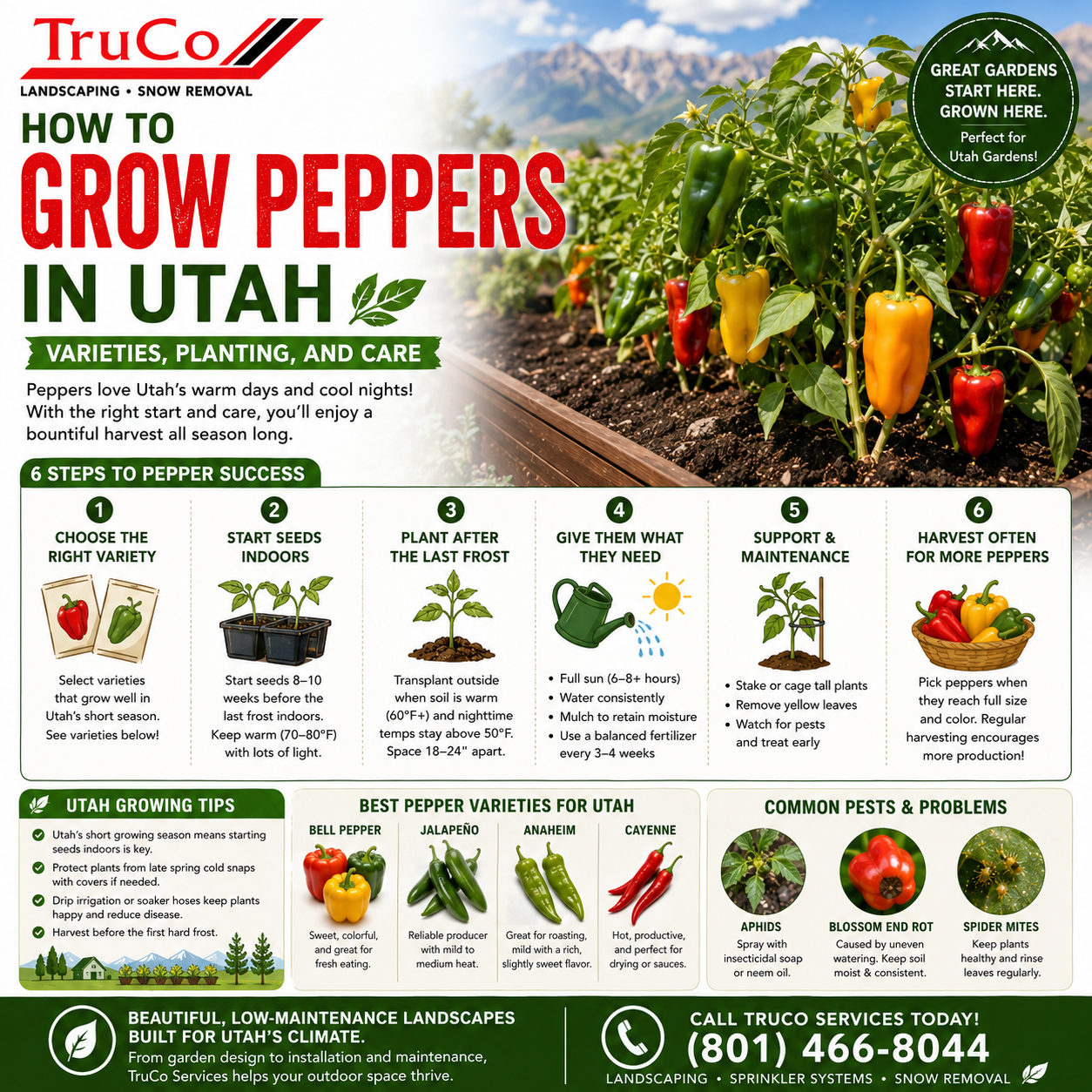
Peppers are one of the most rewarding crops for Utah gardeners — they love the state's hot, sunny summers, and a few well-grown plants produce an enormous harvest of sweet bells, crisp jalapeños, and rich, smoky poblanos. From the Wasatch Front to St. George, peppers ripen beautifully in Utah's climate, and with a little planning you can enjoy fresh peppers from mid-July through the first frost, then preserve the rest for winter. This guide covers the best pepper varieties for Utah, when and how to plant, watering and feeding, supporting plants, growing in containers, common pests and diseases, and how to harvest, store, and preserve your crop. Whether you love mild snacking peppers, spicy salsas, or roasted poblanos, these tips will help you grow a bumper pepper crop in your Utah garden.
Best Pepper Varieties for Utah
Choose pepper varieties based on your taste preferences, the length of your growing season, and how you plan to use them. Sweet bell peppers like California Wonder, King Arthur, and Ace are reliable producers in Utah, maturing in 70-80 days from transplant. For earlier harvests in short-season mountain gardens, try early-maturing bells like Early Sunsation or red varieties like Redstart. Jalapeños such as Early Jalapeño, Mucho Nacho, and Tam are heat-tolerant and productive, and green jalapeños can be picked anytime. For medium heat, try Anaheim, poblano (Ancho), and Hungarian Wax peppers — perfect for roasting and stuffing. For real heat, grow serranos, cayenne, habanero, and ghost peppers; these thrive in Utah's hot summers and ripen to intense color and flavor. Specialty types like shishito, Jimmy Nardello, and sweet banana peppers add variety to fresh eating. In southern Utah's long, hot season, almost any pepper variety succeeds; in northern Utah's shorter season, choose early-maturing varieties and start plants early. Match your selections to your cooking style and your region for the best results.
When and How to Plant Peppers in Utah
Peppers are warm-season crops that absolutely require warm soil and frost-free nights. In Utah, plant peppers outdoors after the last spring frost, when soil temperatures reach at least 60-65°F — typically mid-May in northern Utah and late April in southern Utah. Because peppers need a long, warm season to ripen fully, start seeds indoors 8-10 weeks before the last frost, in late February or early March. Use a quality seed-starting mix, keep seeds at 70-85°F for germination, and provide bright light or grow lights once seedlings emerge. Harden off seedlings gradually over 7-10 days before transplanting. Choose a sunny site with well-drained soil rich in organic matter; peppers prefer a slightly acidic to neutral pH around 6.0-6.8. Space plants 18-24 inches apart in rows 24-36 inches apart. Before planting, work in compost and a balanced fertilizer, but avoid excess nitrogen, which produces leafy growth at the expense of fruit. In Utah's dry climate, consider black plastic mulch to warm the soil and conserve moisture. In southern Utah, peppers can also be planted in late summer for a fall crop. With proper timing, your pepper transplants establish quickly and begin fruiting by early July.
Watering and Fertilizing Peppers
Peppers need consistent moisture to set and develop fruit, but they also dislike soggy roots. Water deeply 1-2 times per week, providing about 1-1.5 inches of water weekly, and increase watering during hot spells and flowering. In Utah's dry summer heat, drip irrigation or soaker hoses are ideal, delivering water to the roots and keeping foliage dry to reduce disease. Water early in the morning. Mulch with straw, shredded leaves, or black plastic to conserve moisture, keep soil cool, and suppress weeds. Fertilize at planting with a balanced fertilizer, then switch to a low-nitrogen, higher-phosphorus feed once flowering begins to encourage fruiting. Too much nitrogen produces lush green plants with few peppers. Side-dress with compost or a balanced fertilizer every 4-6 weeks through the season. In sandy Utah soils, feed a bit more often; in clay soils, less. Container peppers need feeding every 2-3 weeks with diluted liquid fertilizer. Consistent moisture and balanced feeding keep pepper plants healthy, productive, and producing continuously from mid-summer through fall.
Growing Peppers in Containers
Peppers grow exceptionally well in containers, making them perfect for Utah patios, balconies, and small spaces. Choose a pot at least 12-16 inches deep and wide with good drainage — one plant per 5-gallon container works well. Compact and dwarf varieties like Patio Bell, Lunchbox, and Habanada are ideal for containers, but most peppers adapt fine to pots. Fill with a quality potting mix blended with compost, and plant one transplant per container. Containers dry out quickly in Utah's summer heat, so check daily and water when the top inch of soil is dry — sometimes twice a day in July and August. Feed container peppers every 2-3 weeks with diluted balanced liquid fertilizer. Place containers in full sun, at least 6-8 hours daily, and rotate them if growth leans toward the light. In southern Utah's intense heat, afternoon shade can prevent blossom drop. A single well-grown container pepper plant yields 15-30 fruits over the season. With the right variety and consistent care, container peppers thrive on any sunny Utah porch or balcony.
Common Pepper Pests and Diseases in Utah
Utah pepper growers face a handful of common problems. Aphids cluster on new growth and undersides of leaves, sucking sap and spreading viruses — blast them with water, use insecticidal soap, or release ladybugs and lacewings. Blossom-end rot, a dark sunken spot on the bottom of fruit, comes from irregular watering or calcium deficiency — keep soil evenly moist and avoid over-fertilizing. Spider mites, tiny pests that cause stippling and webbing, thrive in hot, dry weather — hose foliage regularly and use miticides if severe. Cutworms may sever young transplants at the soil line — use collars around stems. Tomato hornworms, which also attack peppers, can strip plants quickly — handpick and check plants regularly. Whiteflies and flea beetles cause minor damage but rarely threaten production. Common diseases include powdery mildew in humid spots, and bacterial leaf spot, which causes dark lesions — space plants for airflow, water at the base, and choose resistant varieties. Blossom drop occurs when daytime temperatures exceed 90-95°F or nights stay above 75°F — provide afternoon shade and consistent moisture during heat waves. With prompt attention, most Utah pepper problems are easily managed.
Harvesting and Storing Peppers
Peppers can be harvested at any stage, but letting them ripen fully on the plant maximizes flavor, sweetness, and nutrition. Green bell peppers are mature at full size, while leaving them on the plant longer turns them red, yellow, orange, or purple with richer, sweeter flavor. Hot peppers like jalapeños are often picked green, but they develop deeper heat and complexity when allowed to ripen to red. Harvest peppers with a sharp knife or scissors, cutting the stem just above the fruit rather than pulling, which can break branches. Pick regularly — harvesting encourages continued production. Peppers store in the refrigerator for 1-2 weeks; unwashed, they keep longer. For long-term storage, freeze chopped peppers, roast and freeze whole peppers, or dehydrate hot peppers for flakes and powder. Pickled peppers and pepper jelly preserve the harvest beautifully. In fall, pull whole plants before frost and hang them indoors to ripen remaining fruit. With proper harvest and storage, one Utah pepper patch supplies fresh and preserved peppers for months.
When should I plant peppers in Utah? After the last spring frost, when soil reaches 60-65°F — mid-May in northern Utah, late April in southern Utah. Start seeds indoors 8-10 weeks earlier.
Why are my pepper flowers falling off? Blossom drop is usually caused by extreme heat (above 90-95°F) or inconsistent watering. Provide afternoon shade and steady moisture during heat waves.
Why are my peppers not turning red? Peppers need warm temperatures and time to ripen. Leave them on the plant longer, or pull the plant and hang it indoors before frost.
How often should I water peppers in Utah? Deeply 1-2 times per week — about 1 to 1.5 inches. In containers and heat, check daily; consistent moisture prevents blossom-end rot.
Do peppers need full sun? Yes, 6-8 hours daily. In southern Utah's extreme heat, light afternoon shade helps prevent blossom drop.
Can I grow peppers in containers in Utah? Absolutely — use a 5-gallon pot or 12-16 inch container, water daily in heat, and feed every 2-3 weeks.