
How to Grow Onions and Garlic in Utah

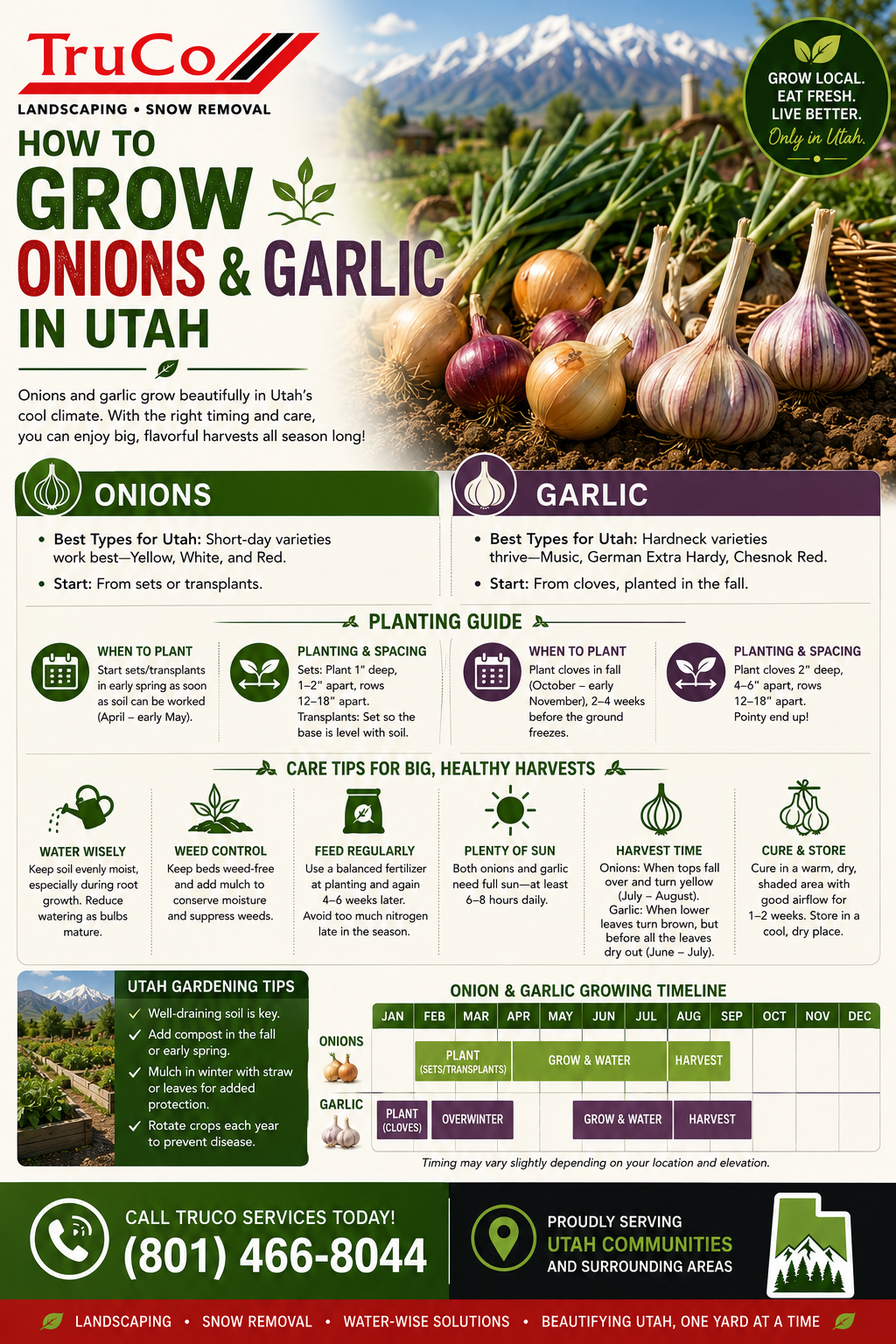
Onions and garlic are the backbone of the Utah vegetable garden — they are easy to grow, store for months, and add flavor to nearly every meal. Utah's sunny days, cool nights, and well-drained soils are ideal for growing firm, sweet, long-storing bulbs. Onions and garlic are also some of the most forgiving crops for beginners: plant them at the right time, keep them weed-free and well watered, and harvest when the tops tell you they are ready. This guide covers the best onion and garlic varieties for Utah, when to plant each, how to prepare soil, growing from seeds, sets, and cloves, watering and feeding, dealing with pests and diseases, harvesting, curing, and storing for the winter, plus answers to the questions Utah gardeners ask most. Whether you want a pantry full of storage onions or heads of pungent hardneck garlic, these tips will give you a bumper crop year after year.
Best Onion Varieties for Utah
Choose onion varieties based on day length, because onions bulb when daylight reaches a certain threshold. Utah sits in a transitional zone, but most of the state favors intermediate-day onions, which bulb at 12-14 hours of daylight — these do well across most of Utah. Intermediate-day varieties like Candy, Super Star, and Red Candy Apple are sweet, mild, and productive. Long-day varieties, which need 14-16 hours of daylight, are better suited to northern Utah: Walla Walla, Yellow Sweet Spanish, and Copra are excellent, with Copra among the best long-storing types. Short-day varieties like Texas Super Sweet are better for southern Utah's mild winters and can be planted in fall. For storage, choose firm, high-solids varieties like Copra, Redwing, and Patterson, which keep 6-9 months. For fresh eating, grow sweet, low-solids types like Walla Walla and Candy, which are milder but store only a few weeks. Many Utah gardeners plant both — sweets for summer, storage types for winter. Matching variety to your Utah region is the first step to a great onion crop.
Best Garlic Varieties for Utah
Garlic falls into two main types: hardneck and softneck. Hardneck garlic produces a flower stalk (scape) and large, flavorful cloves arranged around a central stem — it excels in cold climates, which makes it perfect for northern Utah. Varieties like Music, German Extra Hardy, Chesnok Red, and Russian Red are excellent hardnecks with bold, complex flavors. Softneck garlic has no central stalk, produces more, smaller cloves, and stores far longer — often 6-10 months — making it the best choice for storage and braiding. In Utah, softneck varieties like California Early, Inchelium Red, and Silver Rose perform well, especially in southern Utah's milder winters. Elephant garlic is technically a leek, producing huge, mild cloves that many gardeners love. Choose garlic sold specifically for planting (from a nursery or seed company), not grocery-store garlic, which may be treated with sprout inhibitors or carry disease. For most Utah gardens, planting a mix of hardneck for flavor and softneck for storage gives the best of both worlds. Garlic is planted in fall and harvested the following summer.
When and How to Plant Onions in Utah
Onions can be grown from seeds, sets (small bulbs), or transplants, and timing depends on your method. In Utah, plant onion sets and transplants 2-4 weeks before the last frost — mid-March to mid-April in northern Utah, late February to March in southern Utah. Sets and transplants give a head start and are the easiest for beginners; plant sets 1 inch deep and 4-6 inches apart in rows 12 inches apart. For the widest variety, start seeds indoors 8-10 weeks before the last frost, then transplant hardened-off seedlings in early spring — seed-grown onions mature in 100-120 days. Southern Utah gardeners can also plant short-day onions in fall (September to October) for a late-spring harvest. Choose a sunny site with loose, fertile, well-drained soil; onions grow poorly in heavy, wet ground. Before planting, work in compost and a low-nitrogen fertilizer. Plant the root end down with the tip just below the surface — sets planted too deep form elongated bulbs, while those planted too shallow pop out. With proper timing, your Utah onion patch will be full and productive.
When and How to Plant Garlic in Utah
Garlic is a fall-planted crop in Utah: plant cloves 3-6 weeks before the ground freezes, typically late September through October in northern Utah, and October through November in southern Utah. This gives cloves time to root before winter dormancy. Choose the largest, healthiest cloves from your seed heads — bigger cloves produce bigger bulbs. Break apart heads just before planting (not earlier) and plant each clove pointed end up, 2 inches deep and 6-8 inches apart, in rows 12 inches apart. Prepare beds with generous compost and a balanced fertilizer, since garlic is a heavy feeder. After planting, water well and mulch with 3-6 inches of straw or shredded leaves to insulate the soil, suppress weeds, and prevent frost heaving in northern Utah. In spring, remove most of the mulch as growth begins, keep beds weed-free, and water consistently. In early summer, hardneck garlic produces scapes — curly flower stalks — which you should cut off to direct energy into the bulbs; scapes are delicious sautéed or in pesto. Garlic is ready to harvest when the lower leaves turn brown, usually July in Utah.
Caring for Onions and Garlic
Onions and garlic need consistent care through the season. Both are shallow-rooted and require steady moisture: provide about 1 inch of water per week, and more during hot, dry spells — but reduce watering as bulbs mature to improve storage. Mulch with straw to retain moisture, suppress weeds, and keep soil cool; onions and garlic are poor competitors, so keep beds meticulously weed-free, hand-pulling weeds rather than hoeing near the shallow bulbs. Feed lightly with a balanced fertilizer when plants are 6-8 inches tall, then switch to a low-nitrogen feed as bulbs swell — too much nitrogen produces lush tops at the expense of bulbs. Avoid high-nitrogen fertilizers late in the season, which delay maturity and reduce storage life. In southern Utah's heat, afternoon shade or mulch keeps soil cooler, reducing stress. Watch for thrips, which scar foliage and reduce bulb size — spray with insecticidal soap if needed, and keep plants well watered, since thrips thrive on drought-stressed crops. With steady moisture, clean beds, and balanced feeding, Utah onions and garlic grow large and store well.
Harvesting, Curing, and Storing
Harvesting at the right time and curing properly makes the difference between a few weeks and many months of storage. Harvest onions when 50-80% of the tops have fallen over naturally — this signals bulbs have matured. Stop watering a week or two before harvest, then lift bulbs gently with a fork on a dry day, leaving tops attached. Cure onions in a warm (75-85°F), dry, airy spot for 2-3 weeks until necks are papery and tight — this is essential for long storage. Then cut tops to 1 inch, brush off soil, and store in a cool (35-45°F), dry, dark place in mesh bags or shallow trays; cured storage onions keep 6-9 months. Harvest garlic when the lower 3-4 leaves turn brown but some leaves are still green — usually July in Utah. Dig, don't pull, to avoid bruising, and cure garlic in a dry, shady, well-ventilated spot for 2-4 weeks, keeping leaves attached for braiding or trimming. Store garlic at 55-65°F in a dry, dark place; hardneck keeps 4-6 months, softneck 6-10 months. Save the largest bulbs for replanting next fall.
Growing Onions and Garlic in Containers
You can grow excellent onions and garlic in containers on a sunny Utah patio or balcony. Choose deep containers at least 8-10 inches deep with drainage holes — onions develop bulbs near the surface, so width matters more than depth for onions, while garlic needs depth for long bulbs. Fill with loose, fertile potting mix blended with compost. Plant onion sets 2-3 inches apart and garlic cloves 4-5 inches apart in the container; a 12-inch pot holds 3-4 onion sets or 3 garlic cloves. Place containers in full sun, at least 6 hours daily. Container plants dry out quickly in Utah's summer heat, so water when the top inch of soil is dry — often daily in July — and feed every 2-3 weeks with diluted balanced liquid fertilizer. Reduce watering as tops mature. Harvest and cure the same as garden-grown crops. With proper care, a few containers provide fresh onions through summer and garlic through fall, making container growing a great option for small Utah spaces.
When do I plant onions in Utah? Plant sets and transplants 2-4 weeks before the last frost — mid-March to mid-April in northern Utah, late February to March in southern Utah. Short-day varieties can be planted in fall in southern Utah.
When do I plant garlic in Utah? In fall — late September through October in northern Utah, October to November in southern Utah. Plant cloves pointed end up, 2 inches deep, 6-8 inches apart.
Why are my onions bolting (flowering)? Bolting is triggered by cold snaps or stress on young plants. Plant at the right time, avoid sets over 3/4 inch, and keep plants evenly watered.
How do I know when onions are ready to harvest? When 50-80% of the tops fall over. Stop watering, lift gently, and cure 2-3 weeks before storing.
How do I store garlic for winter? Cure 2-4 weeks in a dry, shady spot, then store at 55-65°F in a dry, dark place. Softneck keeps 6-10 months; hardneck 4-6 months.
Why is my garlic small? Usually planted too late, too crowded, or under-fed. Plant the largest cloves, space 6-8 inches apart, and feed with compost and balanced fertilizer.