
How to Identify and Treat Lawn Fungus in Utah

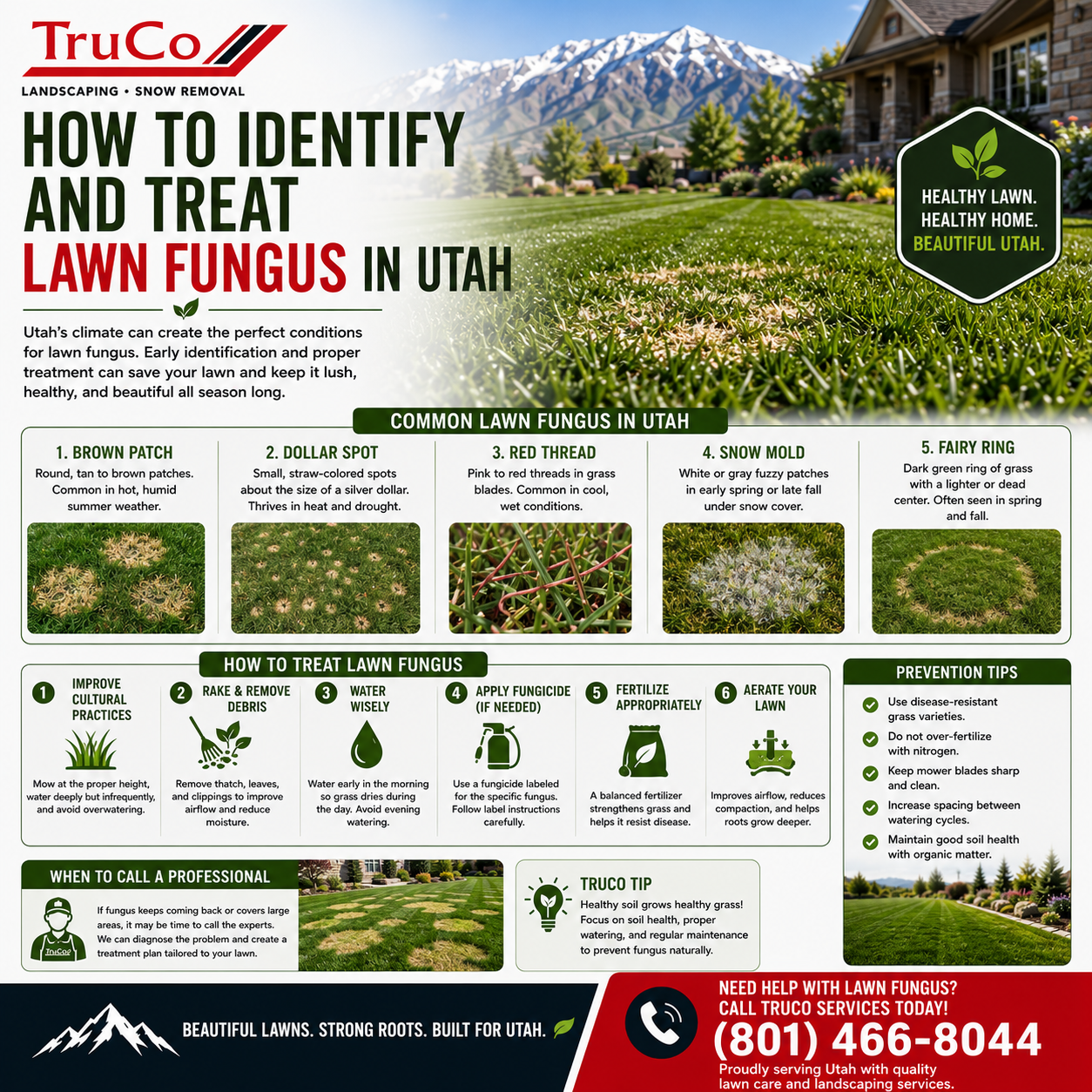
Dollar Spot: The Most Common Utah Lawn Fungus
Dollar spot creates small, sunken, straw-colored patches about the size of a silver dollar. These patches can merge into larger irregular areas. Look for white cobweb-like growth on dew-covered grass in the morning. Dollar spot thrives in Utah during warm days (60-85°F) and cool nights with heavy dew. It's most common in lawns with low nitrogen levels. Treatment includes applying a balanced nitrogen fertilizer, watering deeply but infrequently in early morning, and applying a fungicide labeled for dollar spot in severe cases.
Powdery Mildew: White Coating on Grass
Powdery mildew appears as a white or gray powdery coating on grass blades, making the lawn look dusted with flour. It's most common in shaded areas with poor air circulation and high humidity. In Utah, powdery mildew typically affects lawns near fences, under trees, or on north-facing slopes. The fungus rarely kills grass but weakens it over time. Improve air circulation by pruning overhanging branches. Reduce shade where possible. Water in early morning so grass dries quickly. Fungicides are rarely needed — cultural practices usually resolve the problem.
Rust: Orange Powder on Shoes and Equipment
Rust fungus turns grass blades orange or yellow and leaves an orange powder on shoes, mowers, and pets. It's most common in late summer and early fall when Utah lawns are stressed from heat. Rust usually appears on slow-growing grass, especially in lawns with low nitrogen. The fungus rarely causes permanent damage but indicates your lawn is stressed. Rust treatment includes fertilizing with nitrogen to promote growth, mowing frequently to remove infected blades, and watering deeply to reduce stress. Most lawns recover without fungicides.
Snow Mold: Spring Damage from Winter
Snow mold appears in early spring as the snow melts, showing circular patches of matted, gray or pinkish grass. Gray snow mold is more common in Utah and creates light-colored patches 1-3 feet across. Pink snow mold is more damaging and can kill grass completely. Snow mold develops when snow covers unfrozen ground for extended periods. Prevention is key — mow grass shorter before winter, avoid excessive fall nitrogen, and rake leaves thoroughly. Light snow mold damage usually resolves as grass grows, while severe damage may require reseeding.
Necrotic Ring Spot: Serious Utah Lawn Disease
Necrotic ring spot creates circular patches of dead grass with healthy grass in the center, forming a frog-eye pattern. It's a serious fungal disease that attacks grass roots and crowns. It's most common in Kentucky bluegrass lawns and appears during warm, wet weather in late spring and early summer. Necrotic ring spot is difficult to treat once established. Prevention includes avoiding overwatering, improving soil drainage, using resistant grass varieties, and applying fungicides preventatively in spring.
Frequently Asked Questions
How do I know if my lawn has fungus or something else? Look for patterns. Fungus typically creates circular patches, rings, or spots with distinct edges. Damage from insects or dog urine looks different.
What is the white powder on my grass in Utah? That's likely powdery mildew. It's common in shaded areas and usually harmless. Improve air circulation and sunlight exposure.
Can lawn fungus spread to my garden? Most lawn fungi are grass-specific and won't infect garden plants. However, the fungal spores can travel on equipment.
What fungicide should I use for Utah lawns? Identification first. Different fungi require different active ingredients. Azoxystrobin, propiconazole, and chlorothalonil are common options.
Will lawn fungus go away on its own? Some mild cases resolve with improved cultural practices. Moderate to severe infections need treatment.
Is it safe to mow a lawn with fungus? Yes, but clean your mower blades afterward to prevent spreading spores.
Can I prevent lawn fungus naturally? Yes. Proper watering, mowing height, aeration, and fertilization prevent most fungal problems without chemicals.