
How to Prepare Your Lawn for Fall in Utah

Why Fall Lawn Care Matters in Utah
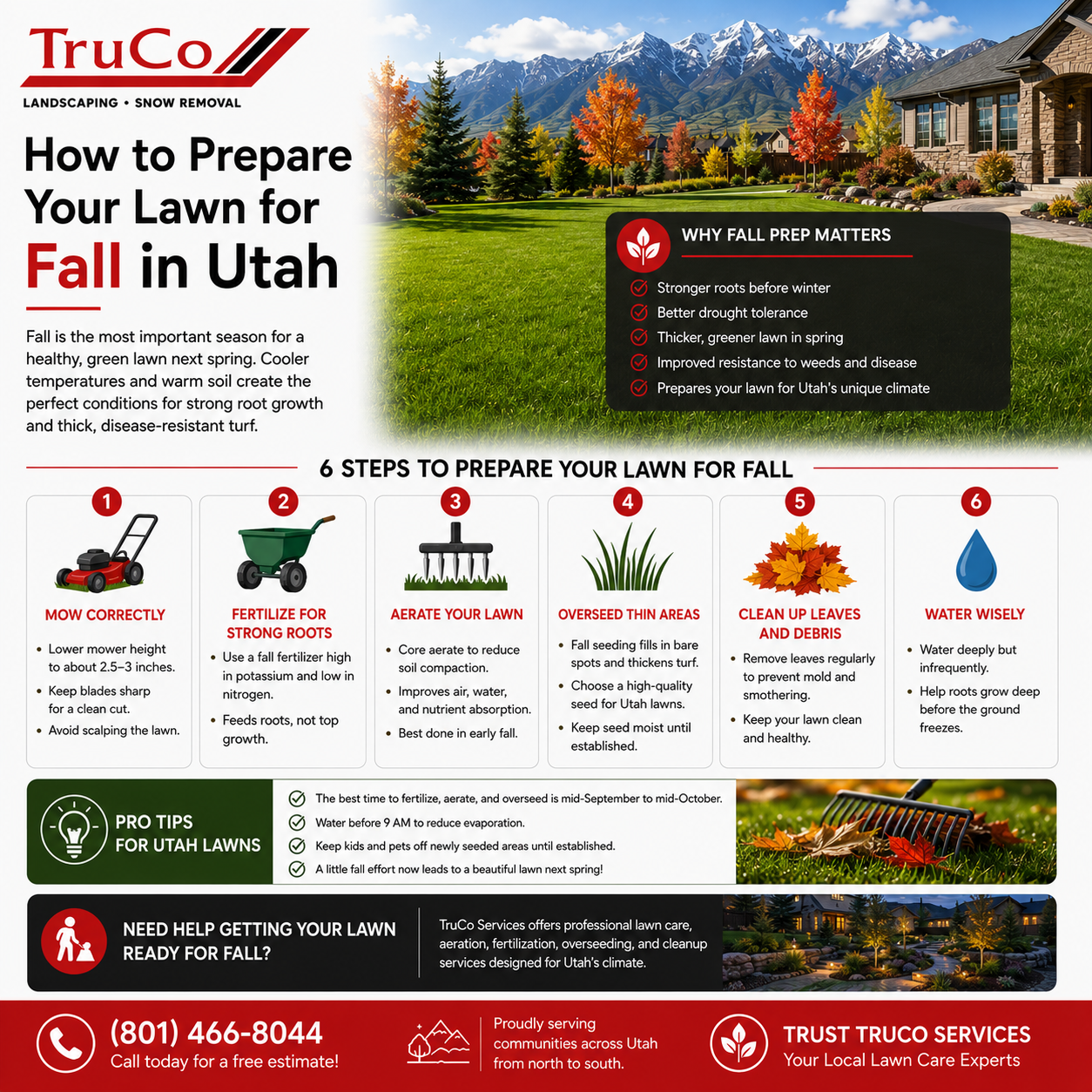
Fall is the most important season for Utah lawn care. Cool-season grasses (Kentucky bluegrass, tall fescue) are entering their peak growth period as temperatures cool. Fall care — fertilizing, aerating, overseeding — sets the stage for a healthy lawn next spring. A well-maintained fall lawn develops deeper roots, stores energy for winter, and greens up earlier in spring.
September: Fertilize for Winter Storage
Apply a high-nitrogen fall fertilizer in early September. Use a ratio around 30-0-10 or 28-3-10. This application is the most important of the year — it builds root reserves that carry the grass through winter and fuel early spring growth. Apply at the rate recommended on the bag. Water in thoroughly after application.
September-October: Core Aeration
Aerate in September or October when the soil is moist but not soggy. Core aeration removes plugs of soil, reducing compaction, improving water and nutrient penetration, and reducing thatch. In Utah's clay soil, aeration is especially beneficial. Rent a core aerator from a local equipment rental company or hire a lawn service. Mark sprinkler heads before aerating to avoid damage.
October: Overseeding Thin Areas
Overseed thin or bare areas in October, after aerating. Use a blend suited to your lawn and sun exposure. Kentucky bluegrass blends for sunny areas, fine fescue blends for shade. Spread seed at the recommended rate, rake lightly to work seed into the aeration holes, and keep the soil consistently moist for 2-3 weeks. In Utah, October seeding gives grass time to establish before winter dormancy.
October-November: Leaf Management
Remove leaves from the lawn regularly in fall. Heavy leaf cover smothers grass and promotes snow mold disease. Mulch leaves with a mulching mower — leaf litter returns nutrients to the soil. If leaves are too thick to mulch, rake or blow them off the lawn. In Utah, cottonwood and maple leaves are common fall cleanup challenges.
November: Final Mowing and Winterizer
Lower the mower deck to 2-2.5 inches for the final mow of the season. Short grass is less susceptible to snow mold. Apply a winterizer fertilizer in November (ratio around 32-0-14) after the grass stops growing but before the ground freezes. This helps roots survive winter and promotes early spring green-up.
November: Irrigation Winterization
Winterize your irrigation system before the first hard freeze. For the Wasatch Front, this is typically October 15-31. Blow out sprinkler lines with compressed air or drain manually. Insulate backflow preventers. Turn off the water supply to the system.
FAQs
What is the best fall fertilizer for Utah lawns? A high-nitrogen, low-phosphorus blend like 30-0-10 or 28-3-10 applied in early September and again in November.
Should I aerate my lawn every fall? Yes — annual aeration is recommended for Utah lawns, especially those with clay soil.
When should I overseed in Utah? October is ideal — soil is still warm enough for germination but cool enough to reduce disease.
Do I need to remove fall leaves? Yes — heavy leaf cover damages grass and promotes snow mold.
How short should I cut my lawn for winter? 2-2.5 inches for the final mow.
Should I water my lawn in winter? Water once a month if there's no snow cover and temperatures are above 40°F.