
How to Prevent and Treat Lawn Diseases in Utah

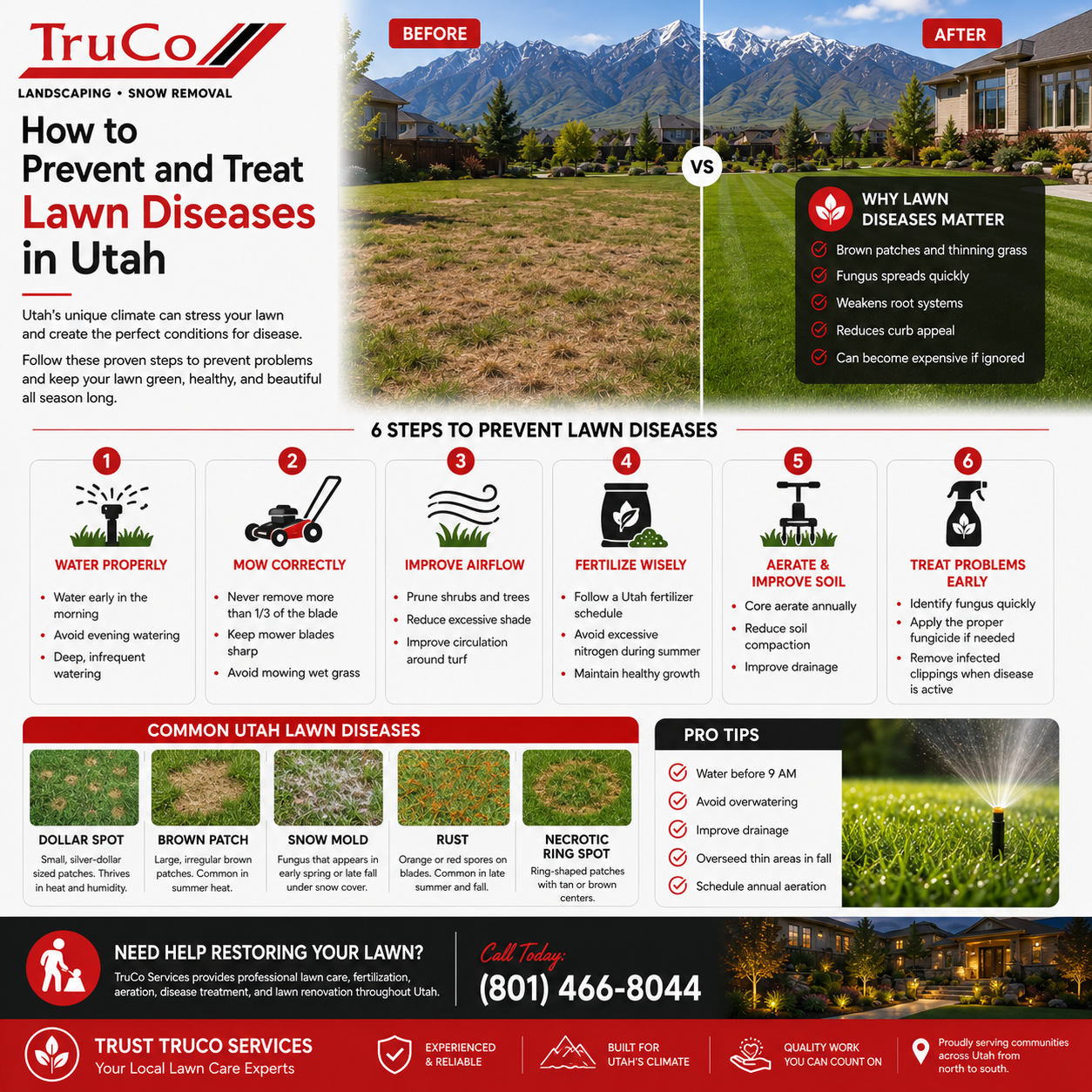
Common Lawn Diseases in Utah
Utah's cool-season grasses (Kentucky bluegrass, tall fescue, perennial ryegrass) are susceptible to several fungal diseases. The most common along the Wasatch Front are dollar spot, brown patch, snow mold, leaf spot, and rust. Lawn diseases are most active when weather conditions favor the fungus — usually warm, wet periods in Utah's summer monsoon season or during snowmelt in spring.
Dollar Spot
Small, circular patches of straw-colored grass that grow together over time. Active during warm days and cool nights with heavy dew. Common in Utah June-September. Treatment: improve air circulation, water deeply but infrequently, reduce thatch, apply nitrogen fertilizer, and use fungicide in severe cases. Prevent by avoiding low nitrogen levels and watering early morning.
Brown Patch
Large circular patches of brown, dying grass with a dark ring at the edge. Active during hot, humid weather (July-August in Utah). Treatment: reduce nitrogen, water in early morning only, improve drainage, and apply fungicide. Brown patch thrives in Utah's monsoon humidity combined with high temperatures.
Snow Mold
Gray or pink patches of matted grass visible after snowmelt. Active under snow cover in winter. Most common in Utah after heavy, persistent snow cover. Treatment: rake affected areas in spring to promote drying, apply light nitrogen fertilizer to encourage recovery. Prevent by mowing short in late fall, avoiding excessive fall nitrogen, and raking up leaves before snow falls.
Prevention: The Best Treatment
Prevent most lawn diseases with proper cultural practices: water deeply and infrequently in early morning, mow at 3 inches or higher, fertilize on a Utah-specific schedule (not too much nitrogen in summer), aerate annually to reduce thatch, improve soil drainage in low spots, and choose disease-resistant grass varieties. Healthy grass resists disease.
Fungicide Options
Contact fungicides (chlorothalonil, propiconazole) protect grass surfaces from infection. Systemic fungicides (azoxystrobin, triadimefon) move through the plant for longer protection. Apply fungicides preventatively when conditions favor disease — not after symptoms appear. In Utah, the highest disease risk periods are June-September and March-April. Always follow label rates and safety precautions.
FAQs
How do I know if my lawn has a disease? Look for patches of discolored or dying grass, rings, spots on leaf blades, or fungal growth.
Can lawn disease spread to other lawns? Some fungal diseases can spread via wind, water, or equipment.
What is the most common lawn disease in Utah? Dollar spot and snow mold are the most common in Utah.
How do I prevent lawn disease in Utah? Water early morning, mow at 3+ inches, aerate annually, avoid excess nitrogen in summer.
When should I apply fungicide? Preventatively before disease season starts — April for spring diseases, June for summer diseases.
Is lawn disease covered by any warranty? Most sod and seed warranties exclude disease damage.