
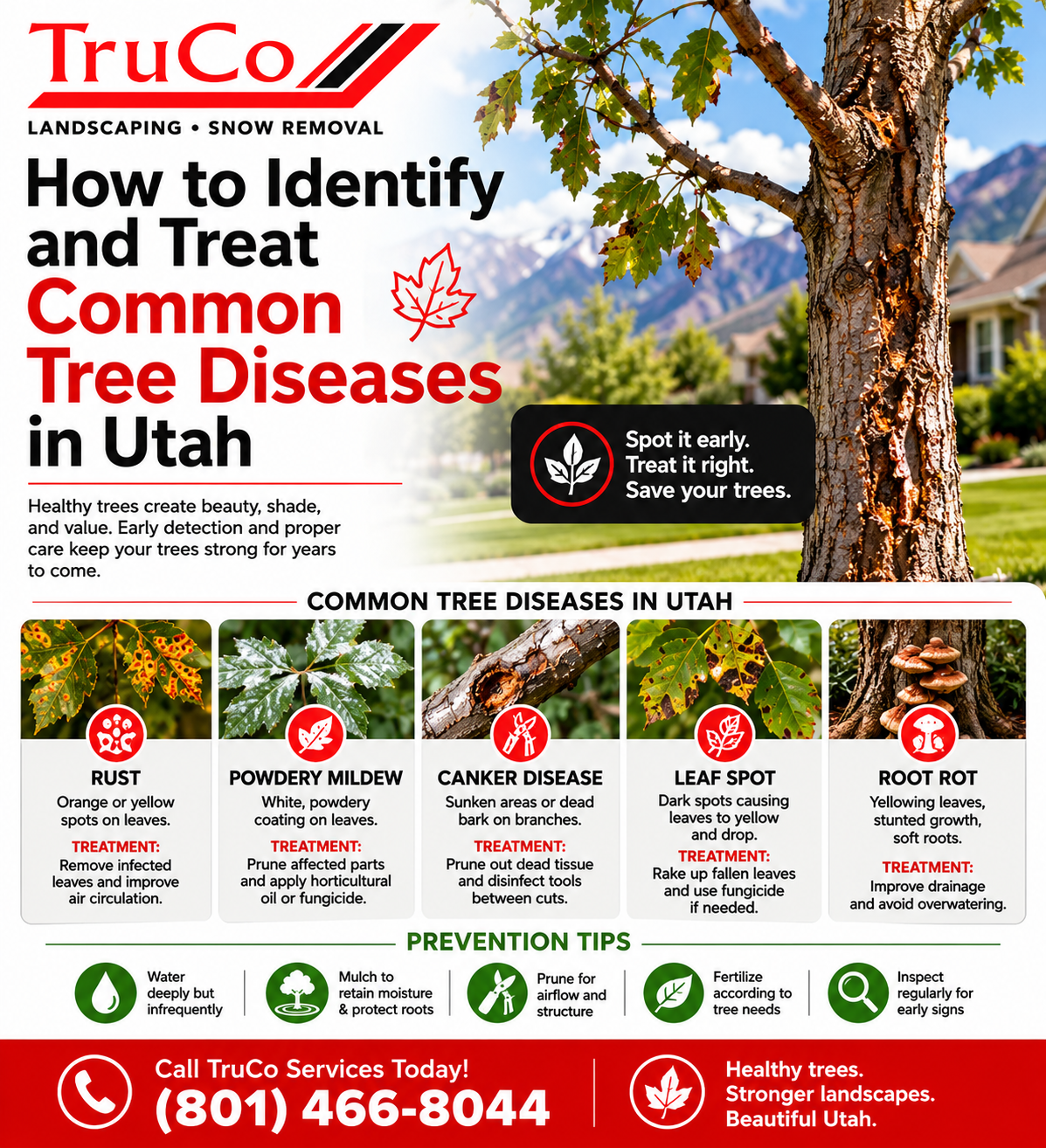
How to Identify and Treat Common Tree Diseases in Utah

Why Tree Diseases Are Common in Utah
Utah's climate stresses trees through drought, alkaline soil, and temperature extremes. Stressed trees are more susceptible to disease. Common diseases along the Wasatch Front include fire blight, cytospora canker, cedar-apple rust, and verticillium wilt. Early identification is key to successful treatment.
Fire Blight: The Most Serious Disease
Fire blight is a bacterial disease affecting apple, pear, and other members of the rose family. Symptoms: blossoms and shoots turn black as if burned, cankers on branches, bacterial ooze in wet weather. Management: prune infected branches 12 inches below visible symptoms, disinfect tools between cuts, apply streptomycin during bloom for prevention, plant resistant varieties. In Utah, fire blight is most active during warm, wet spring weather.
Cytospora Canker: Spruce and Pine Killer
Cytospora canker attacks Colorado spruce, blue spruce, and other conifers. Symptoms: lower branches die back, resin oozes from cankers, needles turn purple then brown, branch death progresses upward. Management: no cure — prevent by reducing stress. Water deeply during drought, avoid wounding bark, prune infected branches, improve soil drainage. Utah's dry climate stresses spruce trees, making them more vulnerable.
Cedar-Apple Rust
This fungal disease requires both juniper (cedar) and apple/crabapple hosts. On juniper: brown galls that produce orange gelatinous horns in spring. On apple: yellow-orange spots on leaves, fruit deformation. Management: remove nearby junipers if possible, plant resistant apple varieties, apply fungicide in spring. Utah's native junipers make complete control difficult.
Verticillium Wilt
Soil-borne fungus affecting maple, ash, catalpa, and elm. Symptoms: wilting branches on one side of the tree, leaf scorch, sudden branch death, dark streaks in sapwood. Management: no cure — prune dead branches, water and fertilize carefully, plant resistant species in infested soil. The fungus survives in soil for years.
Dutch Elm Disease
Fungal disease spread by elm bark beetles. Symptoms: wilting and yellowing leaves on individual branches, spreading through the canopy, brown streaking in sapwood. Management: preventive fungicide injections for high-value trees, remove and destroy infected trees, break beetle breeding cycle. Utah's remaining American elms need protection.
When to Treat vs Remove
Treatable: fire blight (early stage), cytospora canker (minor infection), powdery mildew, leaf spots. Remove: Dutch elm disease, verticillium wilt (advanced), root rot, trees with more than 50% canopy dieback. Consult a certified arborist for diagnosis. USU Extension offers plant disease diagnostic services through their county extension offices.
FAQs
How do I identify fire blight in Utah? Blackened shoots and branches on apple/pear trees, looking like they've been burned. Can a tree recover from cytospora canker? No cure, but reducing stress extends the tree's life. What causes yellow spots on my crabapple leaves? Likely cedar-apple rust, common in Utah where junipers grow nearby. Should I remove a tree with verticillium wilt? If more than 50% of the canopy is affected, yes. How do I get a tree disease diagnosed in Utah? Contact USU Extension or a certified arborist. Are there disease-resistant tree varieties for Utah? Yes — disease-resistant apples, elms, and crabapples are available.