
How to Prevent Sunscald on Utah Trees: Winter Bark Protection

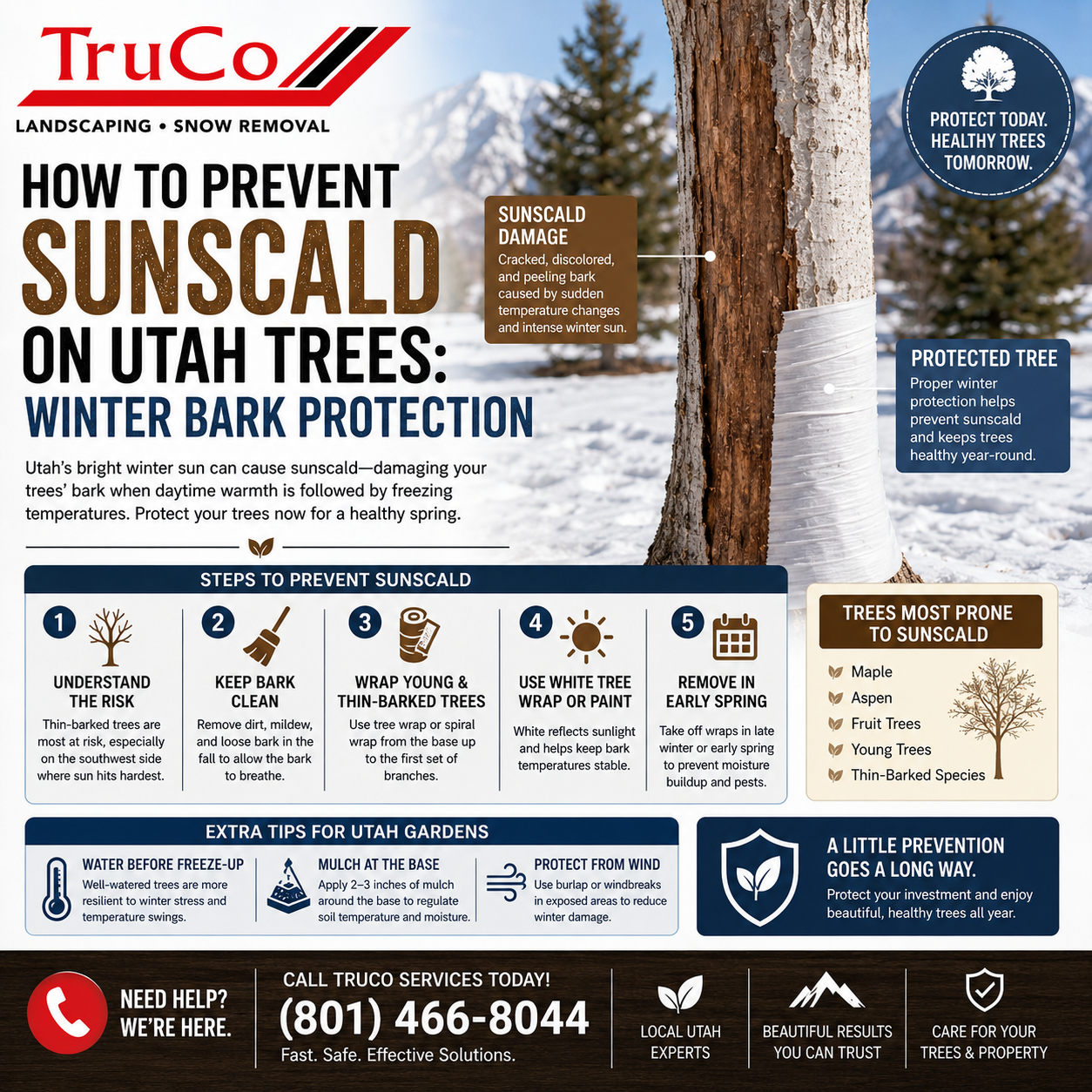
Sunscald is a common winter injury that damages Utah trees — and it is often mistaken for disease or pest damage. Sunscald occurs when warm winter sun heats the bark of a tree trunk on sunny days, causing the bark cells to become active, then freezing when temperatures plunge at night. This repeated freeze-thaw cycle kills the cambium layer under the bark, leaving sunken, cracked, or discolored patches, usually on the south or southwest side of the trunk. Utah's high-elevation climate — with intense winter sun, wide daily temperature swings, and cold nights — makes trees especially vulnerable. Young, thin-barked trees such as maples, ash, fruit trees, and lindens are the most susceptible. Left untreated, sunscald weakens the tree, invites borers and disease, and can eventually girdle the trunk. The good news is that sunscald is entirely preventable with trunk wrapping and white guards applied in fall. This guide explains how to identify sunscald in Utah, why it happens, and the best ways to protect your trees through our harsh winters.
What Does Sunscald Look Like on Utah Trees?
Sunscald is easiest to identify in late winter and spring, as the damaged bark begins to show. The classic signs include: sunken, discolored patches of bark on the south or southwest side of the trunk — the side that gets the most winter sun; cracked, blistered, or peeling bark in the affected area; bark that appears darker, reddish, or water-soaked compared to healthy bark; and in severe cases, elongated dead areas that run vertically along the trunk. As spring arrives, the damaged bark may split open, and you may see dead wood beneath. On fruit trees in Utah, sunscald often appears on the lower trunk just above the soil line. Sometimes sunscald takes a season to become visible — the injury occurs in winter but the symptoms show the following spring and summer. The key distinguishing feature is location: sunscald affects the sunny side of the trunk, while frost cracks (a related cold injury) typically appear on the south or southwest side too, but show as vertical cracks. If bark is peeling on the sun-exposed side of a young Utah tree, sunscald is the likely culprit. Early identification lets you wrap the tree before the next winter and prevent the damage from spreading.
How to Prevent Sunscald with Trunk Wrapping in Utah
Trunk wrapping is the most reliable way to prevent sunscald on young Utah trees. The wrap reflects winter sun and moderates the temperature of the trunk, preventing the freeze-thaw cycle that kills bark cells. In Utah, wrap trees in late fall (October to early November) after the leaves have dropped but before the coldest weather and the most intense low-angle winter sun arrive. Use commercial tree wrap — a white or light-colored paper or fabric wrap available at garden centers — or a light-colored plastic spiral guard. Start at the base of the trunk and wrap upward, overlapping each layer by about a third, and secure the top and bottom so the wrap stays in place through wind and snow. Wrap from the soil line up to the first set of branches, covering the entire trunk — that is the area most exposed to sunscald. Leave the wrap in place through the winter and remove it in spring (April) after the danger of severe temperature swings has passed. Leaving wrap on year-round can trap moisture and invite pests, so in Utah, always remove it in spring. For newly planted trees, plan to wrap for the first two to three winters, until the bark thickens and becomes less vulnerable. In Utah's mountain communities with harsher winters, consider wrapping for up to four or five years. Trunk wrapping also protects against rabbit, vole, and deer damage during winter, adding extra value in foothill areas of Utah.
Using White Tree Guards and Paint to Prevent Sunscald
White tree guards and white paint are alternatives to trunk wrap that work well in Utah's sunny winters. White tree guards — rigid white plastic spiral guards or white fabric sleeves — reflect sunlight away from the trunk just like wrap, and they also shield the trunk from mowers and string trimmers. They are easy to install around the trunk and can be left in place for several years, though they should fit loosely enough to allow trunk growth. White latex paint is a traditional, low-cost option: dilute interior white latex paint 50/50 with water and brush it on the trunk from the soil line to the first branches. The white paint reflects winter sun and prevents the trunk from warming during the day. Commercial trunk paints are also available. In Utah, white paint is commonly used on fruit trees, including young apple, peach, cherry, and plum trees, and on other thin-barked species. Paint in late fall before the ground freezes, and reapply as needed in following years. One caution: do not use oil-based paint, and avoid painting over existing bark damage. In Utah's intense sun, a combination approach — white guard plus good site selection — gives the strongest protection. For trees planted in open, sunny, south-facing locations (the most exposed to sunscald), both wrapping and white guards are highly recommended for the first several winters. Choose the method that fits your trees and maintenance routine; all three — wrap, white guard, and white paint — are proven to prevent sunscald in Utah.
How to Treat Sunscald Damage on Existing Trees
If a Utah tree already shows sunscald damage, take action to help it recover and prevent worsening. Assess the damage: if the affected bark is limited to a small area and the tree is otherwise healthy, it will likely recover on its own — the tree will grow new bark over the damaged zone over several years. Do not paint over sunscald damage with wound dressings or pruning sealant; modern arboriculture recommends letting wounds heal naturally, as dressings can trap moisture and disease. Keep the damaged area clean and monitor it for borers — in Utah, bark-damaged trunks attract flatheaded borers and other pests, so inspect the wound through spring and summer. If bark is peeling or cracked, trim loose bark edges with a clean knife to help the wound dry, but do not cut into healthy tissue. Water the tree properly through the following growing season: consistent deep watering reduces stress and speeds recovery, especially during Utah's hot, dry summers. Fertilize lightly, if at all, and avoid over-fertilizing a stressed tree. Wrap the damaged trunk the following winter to prevent additional sunscald injury and give the tree time to recover. If the damage girdles the trunk (wraps completely around it), the tree may decline or die — consult a certified arborist in Utah to evaluate whether the tree can be saved. In severe cases, replacement with a more cold-hardy species may be the practical choice. For most trees, however, sunscald is cosmetic and treatable — prevention going forward is what matters most.
What causes sunscald on Utah trees? Sunscald happens when winter sun warms the bark during the day and temperatures drop sharply at night. The freeze-thaw cycle kills bark cells on the south and southwest sides of the trunk. Utah's intense winter sun and wide temperature swings make it common on young, thin-barked trees.
When should I wrap my trees in Utah? Wrap trees in late fall, from October through early November, after leaves drop but before the coldest weather. Remove the wrap in spring, around April, when severe temperature swings have passed. Wrap young trees for the first two to three winters.
Does sunscald kill trees? Usually not — sunscald is mostly cosmetic damage that heals over time. But severe sunscald that girdles the trunk can weaken or kill a tree by disrupting water and nutrient flow. The damage also creates entry points for borers and disease, so prevention matters.
Is white paint or tree wrap better for preventing sunscald? Both work well. Tree wrap is easy to apply and remove each season. White tree guards are durable and also protect against mower damage. White latex paint (diluted 50/50 with water) is inexpensive and long-lasting. Choose what fits your trees — all three prevent sunscald in Utah.
Do mature trees get sunscald in Utah? Sunscald mainly affects young, thin-barked trees. Mature trees with thick bark are rarely damaged, though trees on the south or southwest side of a yard in open, sunny locations can still show injury in harsh winters. Watch young maples, ash, lindens, and fruit trees.