
How to Repair Hail and Storm Damage to Your Landscape in Utah

Assessing Storm Damage to Trees
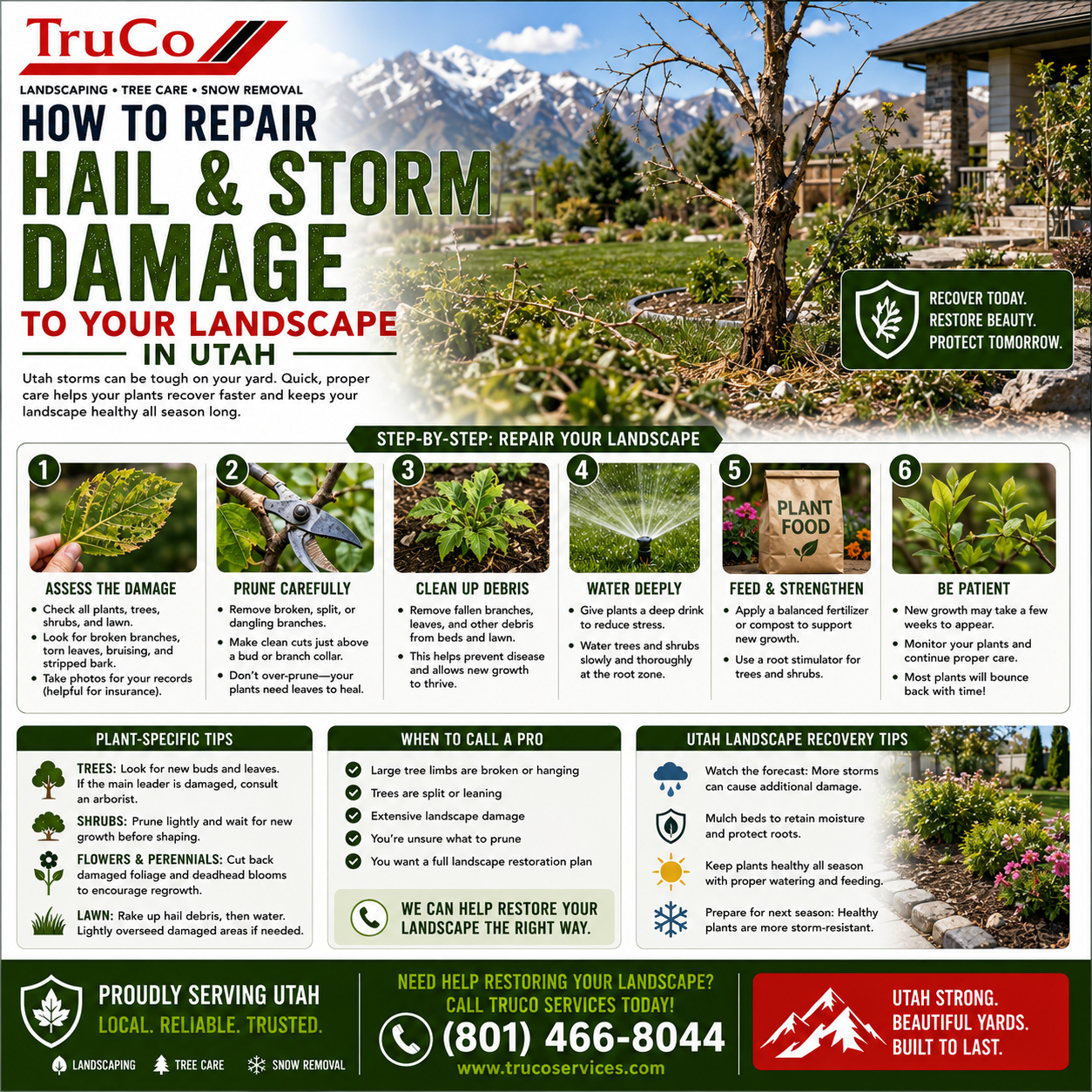
Utah's severe weather — spring windstorms, summer hailstorms, and heavy wet snow — can cause significant landscape damage. Start by assessing trees from a safe distance. Look for broken or hanging branches (widow-makers), split trunks, uprooted trees, and cracks where branches join the trunk. Check for bark damage where hail has stripped bark from limbs. If power lines are involved, contact Rocky Mountain Power immediately — never approach trees near downed lines. Document all damage with photos and notes for insurance claims. For trees that have lost less than 25% of their canopy, pruning damaged branches and providing proper aftercare typically leads to full recovery. Trees with more than 50% canopy loss or trunk damage should be evaluated by a certified arborist before deciding on removal.
Hail Damage to Lawns and Plants
Utah hailstorms can shred leaves, bruise stems, and compact soil. For lawns, rake up debris and aerate compacted areas to restore air exchange. Apply 1/4 inch of compost and water deeply to encourage root recovery. Hail-damaged grass usually recovers within 2-3 weeks with proper care — avoid fertilizing until new growth appears. For perennial plants and shrubs, prune damaged stems back to healthy tissue using clean, sharp pruners. Leave some damaged leaves in place — they still provide energy through photosynthesis. Apply a layer of compost around the root zone and water deeply. Annual plants with severe damage are best replaced. In Utah, late-season hailstorms (August-September) are particularly damaging because plants are already stressed from summer heat. Consider installing hail-resistant shade structures over vegetable gardens in hail-prone areas along the Wasatch Front.
Repairing Hardscape Damage
Hail and storm damage to hardscape can be costly. Inspect patios, walkways, and driveways for cracks created by falling branches or hail stress on already-weakened concrete. Small cracks can be sealed with concrete crack filler. Larger cracks or sunken sections may require replacement. Check retaining walls for bulging or leaning — freeze-thaw combined with storm saturation can weaken wall structures. Inspect fence posts for looseness after windstorms — Utah's spring winds can loosen posts in saturated soil. Re-set loose posts with fresh concrete extending below the frost line. Check irrigation systems for broken sprinkler heads and crushed lines — storm debris and heavy foot traffic during cleanup often damage irrigation components. Flagstone and paver patios should be checked for shifted stones — reset and re-sand joints as needed.
Insurance Claims for Landscape Damage
Homeowners insurance in Utah typically covers storm damage to trees, shrubs, and hardscape. Document the damage thoroughly with photos and videos before cleanup. Review your policy — most standard policies cover fallen tree removal if the tree damages a structure, with coverage limits of $500-1,000 for removing trees that fall without hitting structures. Tree removal costs in Utah range from $300-3,000 depending on size and location. Get multiple quotes from licensed and insured Utah tree services before authorizing work. Submit claims promptly — most insurers require claims within 30 days of the storm. If multiple properties in your area are affected, expect longer wait times for adjusters during peak storm season. Utah's severe weather season (March-September) often generates multiple claims simultaneously, so patience and thorough documentation are essential.
Preventative Measures for Future Storms
Reduce future storm damage with proactive landscape management. Prune trees annually to remove dead, weak, and crossing branches — this prevents limb failure during wind and heavy snow. Install lightning protection systems for large, high-value trees. Use deep-root fertilization to promote strong root systems that anchor trees during windstorms. Select wind-resistant tree species for new plantings — Utah natives like bur oak, hackberry, and Kentucky coffeetree withstand storms better than brittle species like silver maple and cottonwood. Secure loose yard items before storms — patio furniture, grills, and planters become dangerous projectiles in high winds. Install gutter guards to prevent debris buildup that causes ice dams in winter. In hail-prone areas, consider hail-resistant roofing and window protection. Create a storm preparedness kit with tarps, chain saws, and contractor contact information.
Frequently Asked Questions
Does homeowners insurance cover tree removal after a storm in Utah? Most policies cover tree removal up to $500-1,000 if the tree damages a covered structure. Removal of trees that fall without damaging structures is typically not covered.
Should I prune storm-damaged branches immediately? Remove hazardous branches immediately for safety. Delay corrective pruning of stressed trees for 2-4 weeks to assess which branches are truly dead versus those that may recover.
How do I know if a storm-damaged tree needs to be removed? Signs include trunk cracks deeper than 2 inches, more than 50% canopy loss, exposed roots, leaning more than 15 degrees, and split branch unions. A certified arborist should evaluate borderline cases.
Will hail-damaged grass grow back? Yes — Utah lawns typically recover from hail damage within 2-3 weeks with proper watering, aeration, and light compost application. Reseed only if bare soil is exposed.
How can I prepare my landscape for Utah storm season? Prune trees annually, secure loose objects, clean gutters, inspect retaining walls, and have an emergency tree service contact saved. March and April are the best months for storm preparation.