
How to Start a Compost Bin in Utah

Why Composting Works Well in Utah
Utah's dry climate and wide temperature swings actually create excellent composting conditions. The key to successful composting in Utah is managing moisture levels and using the right mix of green and brown materials. Composting recycles kitchen and yard waste into nutrient-rich soil amendment that improves Utah's alkaline clay soil.
Choosing a Compost Bin
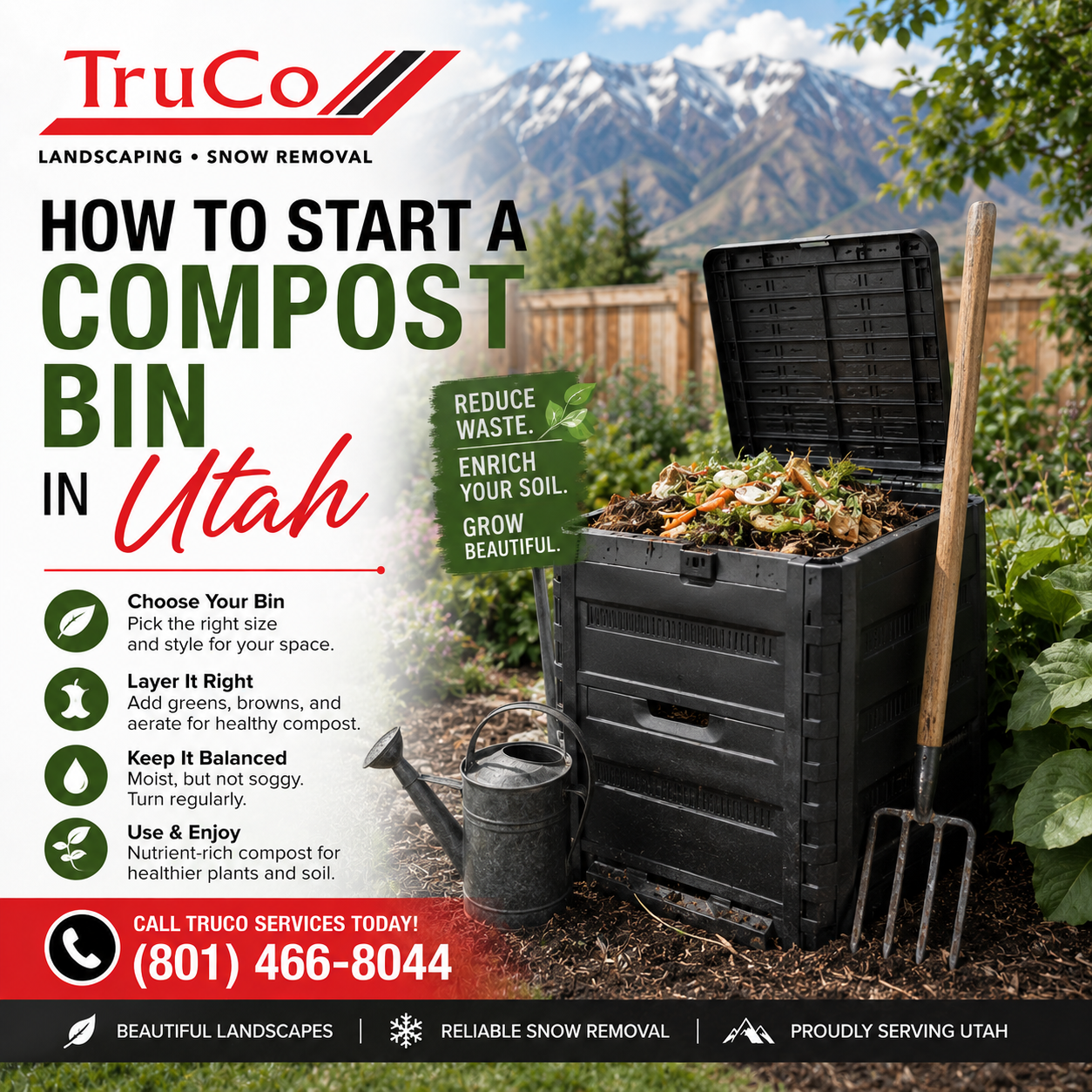
Several bin types work well in Utah. Open bins are simplest and cheapest but may attract wildlife. Enclosed tumblers are popular for small yards — they retain moisture and make turning easy. Three-bin systems allow continuous composting with separate bins for fresh, active, and finished compost. For most Utah homeowners, a tumbling composter or three-bin system works well. Avoid open piles if you live near deer or bear habitats.
Location and Setup
Place your compost bin in a partially shaded area with good drainage. Direct sun dries out the pile too quickly in Utah's arid climate. A location near a water spigot makes moisture management easier. Set the bin directly on bare soil so worms and microorganisms can enter. Start with a 4-6 inch layer of coarse brown material like twigs or straw. Alternate green materials (kitchen scraps, grass clippings) with brown materials (leaves, cardboard, straw) in roughly equal volumes.
What to Compost and What to Avoid
Compost fruit and vegetable scraps, eggshells, coffee grounds, tea bags, yard trimmings, leaves, grass clippings, straw, and shredded paper. Avoid meat, dairy, oily foods, diseased plants, weeds with seeds, pet waste, and treated wood products. In Utah's arid climate, you may need to add water to maintain the moisture level of a wrung-out sponge.
Maintaining Your Compost
Turn the pile every 1-2 weeks to aerate and speed decomposition. Keep the pile as moist as a wrung-out sponge. Add brown materials if the pile is too wet or smelly. Add green materials if decomposition is too slow. Finished compost is dark, crumbly, and smells like earth. In Utah's climate, compost can be ready in 3-6 months during the growing season.
Frequently Asked Questions
Will a compost bin attract pests in Utah? Enclosed bins with tight lids minimize pest issues. Avoid adding meat or dairy to prevent attracting rodents.
Can I compost during Utah winter? Yes, decomposition slows but continues. Insulate the bin with straw bales to maintain activity.
How much compost will I produce? A typical household produces 50-100 gallons of finished compost per year.
Is compost good for Utah soil? Compost improves clay soil drainage and adds nutrients to alkaline soil.