
Landscaping Around Above Ground Pool

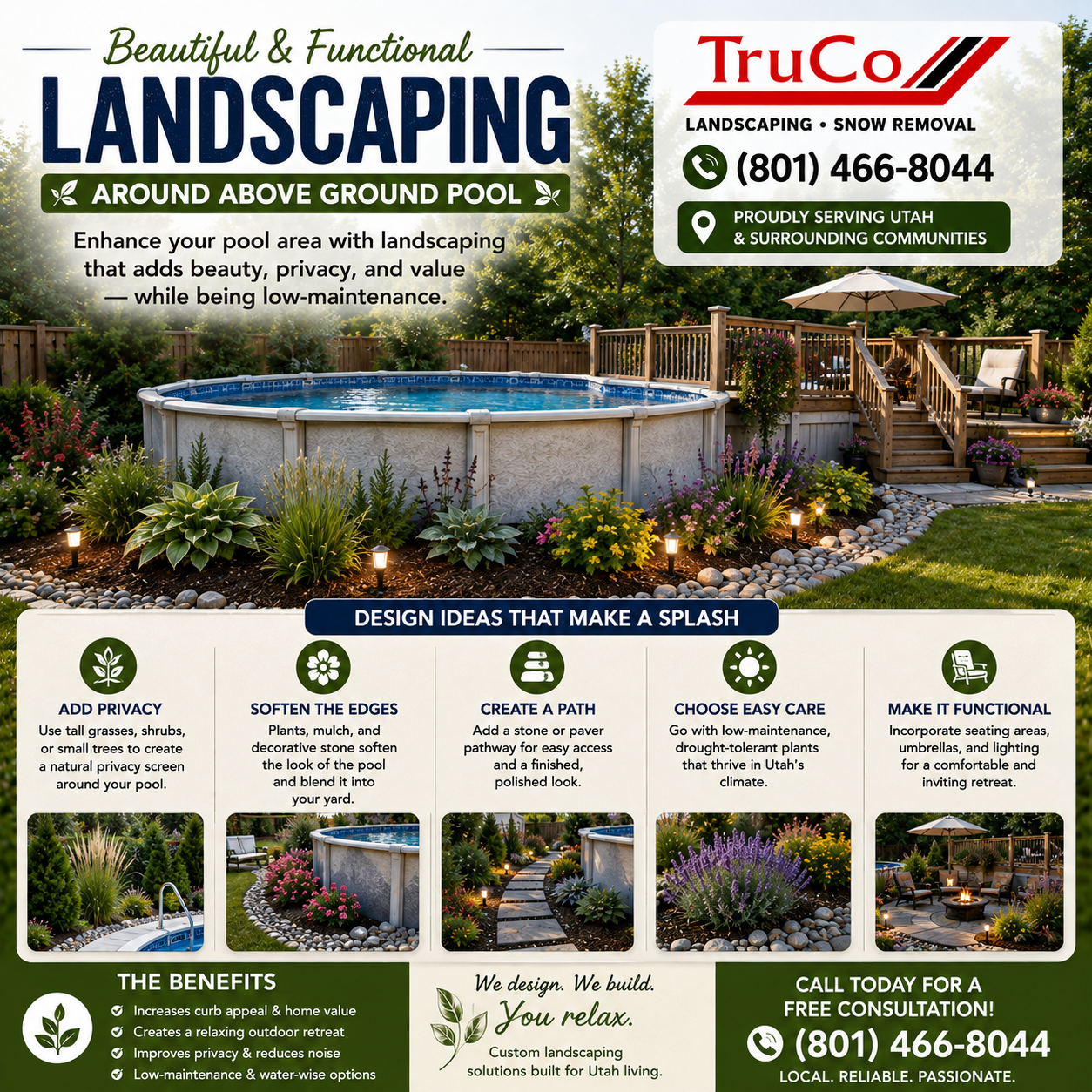
Landscaping around an above ground pool means designing the surrounding ground, plants, paths, drainage, privacy features, and access areas so the pool looks intentional, stays safe, and remains easy to maintain. The most important rule is to protect the pool’s level base, keep drainage moving away from the structure, and never let landscaping interfere with required safety barriers, gates, ladders, electrical equipment, or service access.
A well-designed above ground pool landscape can soften the pool’s appearance, create privacy, reduce mud and tracked-in debris, improve comfort, and make the backyard more usable. But poorly placed trees, loose gravel, raised soil, overgrown plants, or blocked access can lead to corrosion, liner damage, drainage trouble, safety hazards, and expensive repairs. This guide explains how to choose plants and materials, create safe access, manage water, add privacy, select pathways and mulch, avoid common mistakes, and understand local code considerations. For projects involving grading, large trees, drainage, decks, fencing, or pool access, experienced guidance can prevent costly decisions that are difficult to reverse.
What Is Landscaping Around an Above Ground Pool?
Landscaping around an above ground pool is the planned use of plants, groundcover, rock, mulch, borders, walkways, privacy elements, and drainage features around the exterior of a freestanding pool.
It is different from ordinary garden-bed landscaping because the pool is a water-holding structure that depends on a stable, level base, clear equipment access, safe entry, and reliable drainage. Landscaping should enhance the pool area without placing pressure on the walls, changing the grade against the pool, introducing excessive debris, or creating an unsafe route into the water.
A complete pool landscape plan may include:
A clear walkway from the house to the pool
A stable, slip-resistant entry and exit zone
Privacy plantings or fencing
Mulch or decorative-rock beds outside the pool’s service area
Drainage features that route water away from the pool base
Shade in a safe location
Low-maintenance planting beds
A pool-equipment screening area that still allows ventilation and access
Code-compliant barriers, gates, steps, ladders, or deck connections
The process should begin with the pool manufacturer’s installation instructions, the pool’s required service clearances, your property’s drainage pattern, and local rules. In Salt Lake City, residential pools and spas deeper than 24 inches—including above ground and temporary pools—are regulated under the 2024 International Swimming Pool and Spa Code and require permits. Pool permit plans must show barrier requirements, and permits cannot be closed until barrier requirements are met.
For example, a homeowner may want to hide an above ground pool with shrubs and decorative rock. A better solution may be a properly spaced planting bed outside the service zone, a clean path to the pump, and a secure, code-compliant enclosure around the pool entry—not plants crowded against the pool wall.
8 Essential Rules for Landscaping Around an Above Ground Pool
1. Keep the Pool Base Level and Drainage Moving Away
An above ground pool is only as stable as the ground beneath it. Landscaping should never add soil, mulch, rock, retaining material, or water pressure against the pool wall or base. Even a small change in grade can direct runoff under the pool, soften the supporting surface, cause erosion, or contribute to settling.
Before installing plants, edging, decorative rock, or a walkway, observe how water moves through the yard during rain, snowmelt, and irrigation. Watch for downspouts that discharge toward the pool, low spots beside the wall, soggy areas, and runoff flowing from neighboring yards.
Avoid these common drainage mistakes:
Mounding soil or mulch against the pool wall
Creating a flower bed that traps water next to the pool
Directing downspouts toward the pool base
Installing impermeable surfaces that shed water beneath the pool
Covering existing drainage paths with decorative rock
Digging too close to the pool’s support area
The appropriate solution may involve regrading, a shallow swale, a properly designed drainage path, or relocating downspout discharge. Do not assume that adding gravel alone will solve a water problem. Gravel can improve surface appearance, but it does not automatically change the direction or volume of water.
This planning matters because water can weaken soil and create uneven support. If you notice settling, pooling, wall movement, or water collecting at the base, stop adding landscaping and seek professional assessment before the condition worsens.
2. Preserve Safety Barriers, Gates, and Ladder Control
Pool landscaping must never compromise pool safety. Plants, benches, storage boxes, decorative walls, and trellises can become climbable features or obstruct the view of a gate or pool entry. Dense shrubs may look appealing but can reduce visibility and make barrier inspection more difficult.
The U.S. Consumer Product Safety Commission advises that above ground pools should have barriers. Where the pool wall itself forms the barrier, access ladders or steps should be capable of being secured, locked, or removed, or they should be enclosed by a compliant barrier.
Important safety practices include:
Keep gates visible, operational, and free of obstructions.
Do not place planters, furniture, stacked firewood, or storage items where children could climb over a barrier.
Keep vegetation trimmed away from gates, latches, and fencing.
Make sure paths do not create a shortcut around a barrier.
Maintain clear, safe access to ladders, steps, and decks.
Do not use loose rock, uneven pavers, or wet mulch where people enter and exit the pool.
Follow all local barrier, gate, latch, and fence requirements.
CPSC guidance also notes that when an above ground pool has a barrier mounted on the top of its wall, the maximum vertical clearance between the top of the pool and the bottom of the barrier should not exceed 4 inches.
Landscaping should support safety, not camouflage critical features.
3. Create a Clean, Stable Pool Entry Zone
The space around the ladder, steps, or deck receives the most traffic. It also collects the most water, grass clippings, mud, sunscreen residue, and debris. A thoughtful entry zone reduces slipping, makes pool use more comfortable, and helps keep the water cleaner.
The best material depends on the pool design and your climate, but the surface should be stable, easy to clean, and suitable for wet bare feet. Consider:
A properly built deck where allowed and structurally appropriate
Textured concrete or pavers with correct base preparation
Stable, well-edged hardscape walkways
Composite or wood deck surfaces designed for exterior conditions
A simple transition area using mats plus a firm pathway
Avoid loose pea gravel, sharp crushed stone, or large irregular rock near pool entry points. These materials can be uncomfortable, slippery when combined with debris, and easily tracked into the pool. They can also create trip hazards for children, guests, and anyone carrying pool supplies.
Plan enough room for people to move safely. A narrow path between a pool wall and a thorny shrub, for example, becomes frustrating and unsafe. The entry zone should also allow access for vacuuming, servicing, winterizing, and inspecting the pool.
If your pool has a ladder, do not landscape in a way that prevents it from being secured, locked, or removed when the pool is unattended.
4. Select Plants for Debris Control, Not Just Appearance
Plants can make an above ground pool feel integrated into the yard, but the wrong plants create constant cleanup. Trees and shrubs that shed heavy leaves, needles, fruit, flowers, seed pods, or sticky sap can overload skimmer baskets and increase maintenance.
When choosing poolside plants, prioritize:
Low litter and limited seasonal drop
Non-invasive root systems
Mature size that fits the available space
Tolerance for heat and reflected light
Compatibility with local water conditions
Low thorn or spine risk near walkways
Limited attraction of bees directly beside high-use seating areas
Easy pruning and cleanup
Avoid planting large trees close to the pool. Tree roots, falling branches, leaf debris, shade changes, and difficult access can become long-term problems. A mature tree may also interfere with covers, overhead clearance, fencing, or equipment service.
In Utah, water-wise plant selection should consider soil, sunlight, temperature, pests, and water availability. Utah State University Extension recommends choosing plants that are adapted to their landscape environment to minimize water needs and maintenance.
A practical approach is to use low-growing shrubs, ornamental grasses selected for controlled growth, and water-wise perennials outside the pool’s access and maintenance zone. Keep plant beds wide enough to look intentional, but do not crowd the pool wall.
5. Keep Trees and Deep Roots Away From the Pool Structure
Trees provide shade and privacy, but they are often the highest-risk planting choice near an above ground pool. Roots can compete for water, change nearby soil conditions, complicate drainage work, interfere with fencing, and make future pool removal or replacement difficult.
Falling branches are another concern. A branch can damage the pool wall, liner, deck, cover, pump equipment, or nearby fencing. Regular leaf and needle drop also adds time-consuming pool maintenance.
When planning trees near a pool:
Consider mature canopy spread, not the nursery-container size.
Avoid placing trees where branches will eventually hang over the water.
Keep roots and trunks away from the pool’s support zone.
Preserve service access for equipment and pool-wall inspection.
Consider winter branch load, wind exposure, and snow accumulation.
Avoid species with messy fruit, heavy seed drop, brittle limbs, or invasive roots.
If an existing mature tree is already close to the pool, do not excavate roots, raise grade, or trench near it without professional input. Removing roots can destabilize a tree, while ignoring root and branch risks can create future damage.
Truco Services can help homeowners assess tree-related concerns, outdoor cleanup needs, and practical landscape planning around pool areas. Careful tree management can reduce debris, improve safety, and make the space easier to maintain.
6. Use Rock and Mulch Strategically
Decorative rock and mulch can make an above ground pool landscape look finished, but both need careful placement. Rock is durable and can fit water-wise landscaping, yet it retains heat, can become uncomfortable under bare feet, and may be tracked into the pool if installed too close to high-traffic entry points.
Mulch can reduce weeds, conserve moisture, and soften planting beds, but loose organic materials may blow into the pool, float temporarily, or require replenishment. Bark mulch can be a better fit farther from the pool entry zone, while decorative rock may work in low-traffic bed areas with defined edging.
Use materials strategically:
Keep loose material out of the immediate ladder or deck approach.
Install edging to keep rock and mulch contained.
Avoid raising the finished grade against the pool.
Use a wide, stable buffer or path between planting beds and pool access.
Choose lighter rock colors in hot exposures when heat is a concern.
Keep mulch and rock away from equipment pads and ventilation clearances.
Plan cleanup routes for leaves, pool covers, and maintenance tools.
A well-designed bed may use a 2- to 3-inch layer of mulch or decorative rock, but the material should remain below the pool’s base and wall level. The finished landscape should never appear as though the pool has been buried into a raised mound.
7. Protect Equipment Access and Electrical Safety
Every pool needs reliable access to its pump, filter, electrical components, hoses, valves, and skimmer. Landscaping should screen equipment visually without making it difficult or unsafe to service.
Do not plant dense shrubs directly against equipment. Avoid enclosing a pump or filter in a tiny decorative box that traps heat, blocks airflow, or prevents a technician from reaching valves and connections. A screen should be removable or designed with enough space for access and ventilation.
Before installing landscape features near the equipment area:
Identify required clearances in the pool and equipment manuals.
Keep drainage away from electrical components.
Avoid planting vines that can grow into equipment.
Keep mulch, soil, and irrigation spray away from electrical connections.
Make sure service personnel can reach the pump and filter.
Keep pathways clear for seasonal opening and winterizing.
Electrical safety around pools is not optional. Alterations involving electrical equipment, bonding, outlets, wiring, or permanent pool-related construction may require permits and inspections. Consult the local authority and qualified professionals before changing any electrical component near the pool.
8. Design for Privacy Without Creating a Closed-In, Unsafe Space
Privacy is one of the main reasons homeowners landscape around an above ground pool. Fencing, screens, shrubs, ornamental grasses, and trellises can reduce sightlines from neighboring properties and help the area feel more relaxed.
However, privacy landscaping needs balance. Overly dense vegetation can create hidden areas, interfere with pool supervision, block airflow, increase humidity near the pool wall, and make safety barriers difficult to inspect.
Good privacy options include:
Existing compliant fencing with coordinated planting beds
Non-climbable privacy panels installed outside required barrier zones
Shrubs planted far enough away to allow mature growth and access
Layered plantings that use lower plants in front of taller screens
Carefully selected trees placed outside the pool’s future canopy zone
Pergolas or shade structures designed to meet code and structural needs
Before installing a trellis, climbing plant, or large planter near a barrier, consider whether it could create a climbing route. Pool barriers work only when they remain difficult for unsupervised children to bypass.
The best landscape around an above ground pool improves privacy while preserving safe sightlines, gate operation, equipment access, and quick emergency access.
The Real Cost of Getting Pool Landscaping Wrong
Mistakes around an above ground pool can cost more than replacing a few plants. Poor drainage may undermine the base or cause washout near the walls. Overgrown roots and branches can make pool maintenance difficult or damage pool components. Inadequate access can turn a simple pump repair or liner replacement into a larger project because landscaping must be removed first.
Financial costs can include:
Regrading or rebuilding drainage areas
Replacing damaged landscaping and hardscape
Removing overgrown shrubs or roots
Repairing damaged pool walls, liners, decks, or fencing
Reinstalling rock, mulch, edging, or pavers
Correcting barrier or permit deficiencies
Additional pool-cleaning and maintenance costs
Time costs are substantial as well. More debris means more skimming, vacuuming, filter cleaning, and water balancing. Poorly chosen plants may require constant trimming. Loose material near the pool can be tracked into the water repeatedly.
There are emotional costs, too. A pool is meant to be a place for relaxation and family time. A cluttered, unsafe, muddy, difficult-to-clean pool area can create stress, discourage use, and lead to disagreements about repairs or maintenance.
Most avoidable issues come from skipping the planning stage. Proper drainage, safe entry, correct materials, mature plant spacing, and clear equipment access prevent problems before they become expensive.
How an Experienced Professional Helps
An experienced landscaping professional helps homeowners create a pool area that is attractive without interfering with the pool’s structural, safety, and maintenance needs.
Truco Services can provide guidance related to landscaping, outdoor cleanup, tree-related concerns, material placement, and overall property planning. Rather than treating the pool as a decorative object, the planning process should account for water flow, access, privacy, plants, equipment, and long-term upkeep.
Professional guidance can help with:
Evaluating grade and runoff around the pool
Planning planting beds, rock, mulch, and pathways
Identifying tree limbs, roots, and debris risks
Improving access without blocking safety features
Selecting practical, maintainable landscape materials
Planning staged upgrades when a full project is not necessary
Coordinating cleanup, removal, and site preparation
Identifying when local permits, inspections, pool specialists, or engineers may be needed
No landscape professional should bypass pool-manufacturer requirements, safety-barrier requirements, electrical rules, or local permitting. The right team helps you recognize those constraints early so the landscape complements the pool instead of creating a hidden problem.
Common Mistakes to Avoid
Planting directly against the pool wall. This traps moisture, blocks inspection, makes maintenance difficult, and can damage the pool area over time.
Adding soil or mulch against the pool base. Raising grade against the pool can trap water and affect the supporting ground.
Using loose rock at the ladder or steps. Rocks can hurt bare feet, create trip hazards, and get tracked into the pool.
Blocking the pump or filter with shrubs. Equipment needs ventilation and clear service access.
Choosing messy trees near the pool. Leaves, needles, branches, flowers, and roots increase maintenance and risk.
Treating the pool wall as the only safety measure. Access ladders, stairs, barriers, and gates must remain secure and compliant.
Ignoring drainage. Pooling water and erosion near the pool should be diagnosed before installing cosmetic landscaping.
Building privacy screens that create climbing hazards. Trellises, furniture, planters, and dense vegetation can undermine barrier safety.
Frequently Asked Questions
What is the best landscaping around an above ground pool?
The best design keeps the pool base stable, manages water away from the structure, preserves barrier safety, provides clean access, and uses low-debris plants and contained materials.
Can I put mulch around an above ground pool?
Yes, but keep mulch out of high-traffic entry areas and below the pool’s base and wall level. Use edging to prevent it from spreading or blowing into the pool.
Can I put rocks around an above ground pool?
Yes, decorative rock can work in planting beds outside the main pool access area. Avoid loose, sharp, or small rocks near ladders and wet barefoot traffic.
How close can plants be to an above ground pool?
Leave enough space to inspect the wall, access equipment, maintain barriers, and accommodate the plant’s mature size. Do not plant directly against the pool wall.
What should I plant around an above ground pool?
Choose low-litter, heat-tolerant, site-appropriate plants with manageable mature size and nonaggressive roots. Keep thorny, messy, or rapidly spreading plants away from paths and the pool.
Should I plant trees near an above ground pool?
Usually, avoid planting large trees close to the pool. Roots, falling branches, leaf litter, shade, and future access issues can outweigh the benefits.
Can tree roots damage an above ground pool?
Roots may affect nearby soil, complicate drainage, limit access, and create problems during future repairs or pool removal. Avoid planting trees within the pool’s support and maintenance area.
How do I stop mud around my above ground pool?
Use a firm, properly sloped walkway or entry pad, manage runoff, add stable edging, and keep loose soil away from high-traffic areas.
Is pea gravel safe around a pool?
Pea gravel is usually not ideal near ladders, steps, or barefoot walking areas because it moves underfoot and can be tracked into the pool.
What is the best ground cover around an above ground pool?
A stable hardscape surface near entries, plus contained mulch or decorative rock in adjacent planting beds, is often more practical than loose ground cover.
How do I landscape around pool equipment?
Use a screen or plantings set far enough away to preserve airflow and service access. Follow equipment-manufacturer clearance requirements.
Can I hide my pool pump with plants?
You can visually screen it, but do not crowd it with plants. The pump and filter need access, ventilation, and protection from irrigation overspray.
How do I make an above ground pool more private?
Use compliant fencing, privacy panels, or appropriately spaced shrubs outside safety zones. Do not create a climbable route over pool barriers.
Can landscaping affect pool safety?
Yes. Furniture, planters, trees, trellises, and vegetation can obstruct gates or create climbing hazards. Keep barriers, latches, and access routes clear.
Do above ground pools need a fence?
Requirements vary by location and pool configuration. The CPSC recommends barriers for above ground pools, and local code may require barriers, secure gates, and controlled ladder or stair access.
Do I need a permit for an above ground pool in Salt Lake City?
Salt Lake City states that residential pools and spas deeper than 24 inches, including above ground and temporary pools, require permits and are regulated under the 2024 ISPSC.
Do pool barriers have to be shown on permit plans?
In Salt Lake City, barrier requirements must be shown on all pool permit plans, regardless of whether the pool contractor installs the barrier.
Can I place a deck next to an above ground pool?
Often, yes, but decks must be properly designed, built, and compliant with applicable structural, barrier, and permit requirements. Confirm local rules before construction.
How do I manage water runoff around a pool?
Observe water flow, correct grading, route downspouts away, and use properly planned drainage features. Do not rely on decorative rock alone.
Can I use artificial turf around an above ground pool?
Artificial turf can reduce mud and may create a softer-looking pool surround, but it needs proper base preparation, drainage, heat evaluation, and edge detailing.
Will decorative rock make the pool area hotter?
It can, especially dark stone in direct sun. Use it away from barefoot traffic and consider lighter colors or other materials in high-heat areas.
How do I reduce leaves in my pool?
Avoid messy trees and shrubs near the water, trim existing branches responsibly, use a cover when practical, and choose low-litter plants.
Can I use a trellis around my pool?
A trellis can provide privacy if it does not obstruct safety access, create a climbable route over a barrier, or interfere with local pool-code requirements.
How much space should I leave around an above ground pool?
Leave enough room for safe walking, wall inspection, cleaning, equipment service, winterizing, and barrier access. Confirm pool-manufacturer requirements before finalizing landscape beds.
How do I prevent weeds around my above ground pool?
Remove existing weeds before installation, use proper edging, select suitable mulch or rock depth, and maintain the area. Landscape fabric may help in some low-disturbance beds, but it will not eliminate all weeds permanently.
Can I landscape around an existing pool?
Yes. Start by identifying drainage, safety, equipment access, and pool-wall clearances. Add landscaping in stages rather than burying the pool edge or blocking essential access.
What should I do if the ground is washing out beside my pool?
Treat it as a drainage concern, not a cosmetic one. Avoid adding material against the pool wall and seek prompt advice if erosion affects the pool base, walls, or levelness.
Plan a Safer, Better Pool Surround
Landscaping around an above ground pool should make the area safer, cleaner, more private, and easier to enjoy—not harder to maintain. Keep water away from the pool base, protect gates and barriers, preserve equipment access, select low-debris plants, and use stable materials where people walk barefoot.
Most pool-landscaping problems are preventable with thoughtful planning before stone, mulch, shrubs, or hardscape goes in. For practical help with landscaping around an above ground pool, tree-related concerns, cleanup, and outdoor-property planning, contact Truco Services at (801) 466-8044 for guidance before work begins.