
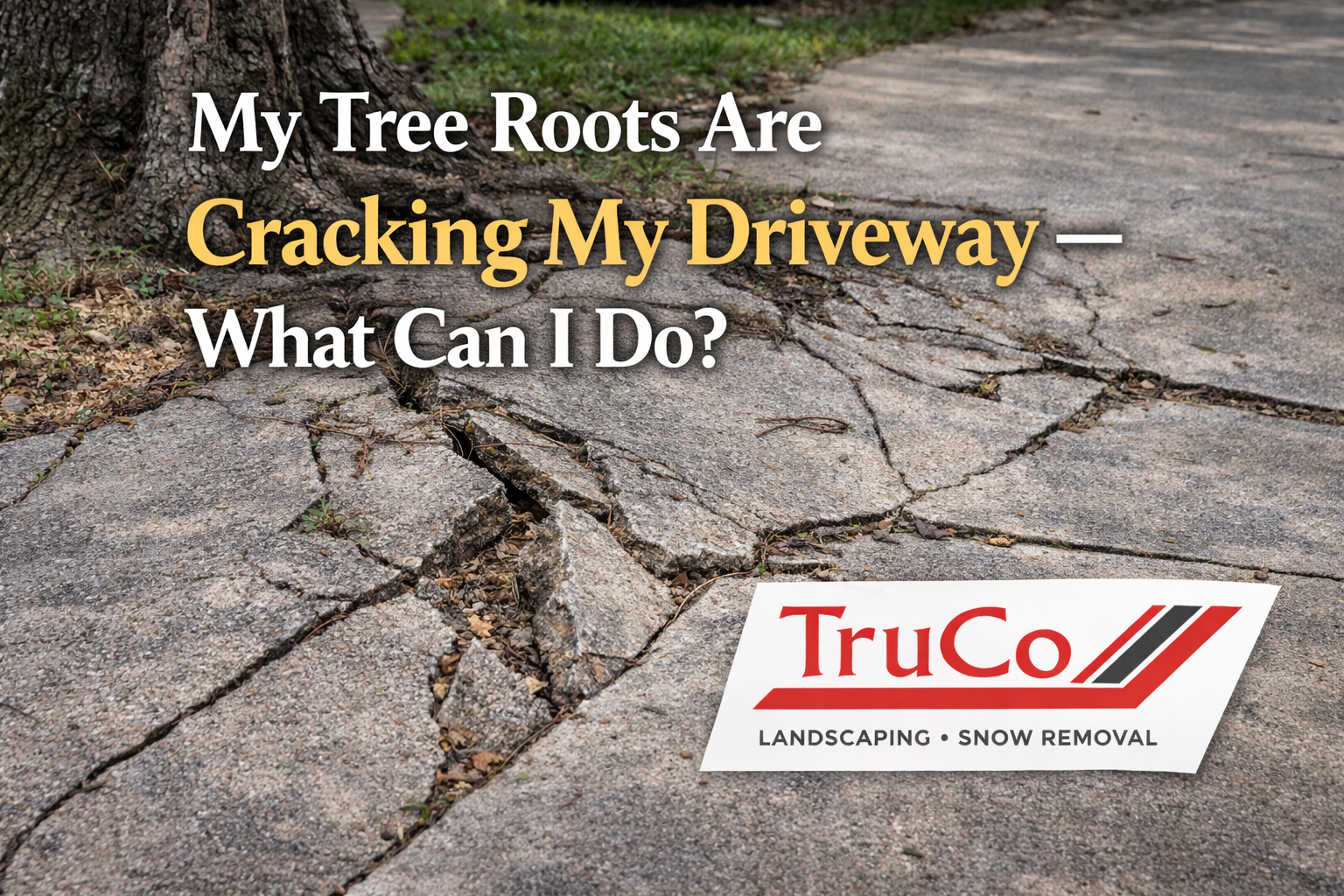
My Tree Roots Are Cracking My Driveway — What Can I Do?

When Diablo winds roar down the Wasatch Front, sustained 40–60 mph winds with gusts topping 80 mph become a real threat to homes, vehicles, and anything rooted in the ground. For Utah homeowners, the question isn't if a powerful windstorm will hit your property — it's when. The trees you chose to plant years ago will either ride it out or come crashing down.
Choosing the right tree for Utah's unique combination of clay soils, alkaline pH, freeze-thaw cycles, and canyon winds is one of the most important landscaping decisions you can make. A well-chosen, wind-resistant tree can live for generations, add significant property value, and stay standing when the next 80 mph gust rolls through. A poorly chosen one becomes an expensive, dangerous problem waiting for the right storm.
This guide covers the most wind-resistant tree species for Utah landscapes, the trees to avoid, why trees fail, and how to make your existing trees as storm-ready as possible.
Best Wind-Resistant Trees for Utah Landscapes
Wind-resistant trees share common traits: deep anchoring root systems, strong branch unions with wide angles, flexible wood that bends rather than snaps, and a canopy that lets wind pass through. The following species have proven themselves in Utah's demanding conditions.
1. Bur Oak (Quercus macrocarpa)
Bur oak is arguably the most wind-resistant tree you can plant in Utah. It develops a deep, sprawling taproot reaching 12–15 feet under favorable conditions — a critical advantage in Utah's clay soils where many trees struggle to root deeply.
Why it excels in wind:
Deep taproot system: Anchors the tree like a steel post. Even in heavy clay, the root system spreads wide and deep enough for exceptional holding power.
Strong branch unions: Wide attachment angles and strong collar formation resist splitting under extreme wind loading.
Dense, heavy wood: Specific gravity of approximately 0.64 gives it high tensile strength. Branches resist breakage.
Moderate canopy density: Allows wind to filter through rather than battering a solid wall of leaves.
Bur oak grows slowly to moderately, reaching 60–80 feet with a comparable spread. It tolerates Utah's alkaline soils (pH 6.5–8.0) and is relatively drought-tolerant after establishment. A generational investment — plant it for your children and grandchildren.
2. Kentucky Coffeetree (Gymnocladus dioicus)
Kentucky coffeetree is one of the most underrated wind-resistant trees for Utah. Its open, airy canopy is its secret weapon in windstorms.
Why it excels in wind:
Open canopy architecture: Naturally sparse with large compound leaves that let wind pass through with minimal resistance. While a silver maple catches wind like a bedsheet, Kentucky coffeetree lets it flow through.
Strong, flexible wood: Heavy, hard, and resilient — resistant to both breakage and decay.
Deep root system: Develops a strong taproot with extensive lateral roots that anchor firmly. Tolerates Utah's heavy clays.
Late leaf emergence and early leaf drop: Minimal wind sail during Utah's spring and fall storm seasons.
Reaches 60–75 feet with a 40–50 foot spread. Adaptable to urban conditions, tolerating salt, drought, and alkaline soils. Female trees produce seed pods requiring cleanup, so many landscapers prefer male cultivars.
3. Ginkgo Biloba (Male Cultivars Only)
Ginkgo biloba is a living fossil that has survived over 200 million years — through ice ages, asteroids, and countless storms. There is a reason it is extraordinarily tough.
Why it excels in wind:
Highly flexible wood: The trunk and major branches bend substantially under wind load without snapping. The flexibility acts as a natural shock absorber.
Strong branch attachments: Wide crotch angles with strong collar unions resist splitting with minimal included bark issues.
Disease and pest resistance: Virtually pest-free, so it rarely develops the internal decay that makes other trees vulnerable.
Deep root system: A strong central leader with deep, anchoring roots. Tolerates compacted urban soils better than most trees.
Critical note: Only plant male cultivars ('Autumn Gold', 'Princeton Sentry', 'Saratoga'). Females produce foul-smelling fruit.
Ginkgo reaches 50–80 feet with a 30–40 foot spread. Handles Utah's alkaline soils, drought, and air pollution exceptionally well. Autumn color is stunning golden yellow.
4. Japanese Tree Lilac (Syringa reticulata)
Japanese tree lilac is a smaller ornamental (20–30 feet at maturity) that punches well above its weight class in wind resistance.
Why it excels in wind:
Dense, fibrous root system: Grips Utah clay soils tenaciously, making it highly resistant to uprooting.
Strong, dense wood: Fine-grained with good resistance to splitting.
Compact, balanced canopy: Distributes wind load evenly. Rarely develops the lopsided crown that makes other trees prone to failure.
Excellent branch unions: Wide angles minimize included bark risks.
Produces showy white flower panicles in early summer with attractive cherry-like bark. Tolerates Utah's alkaline soils, urban pollution, and cold winters (USDA zones 3–7). Outstanding for smaller yards or as a street tree in windy areas.
5. Conifers: Colorado Blue Spruce, Ponderosa Pine, and Douglas Fir
Colorado blue spruce evolved in windy, high-elevation Rocky Mountain conditions. It develops a strong taproot with extensive lateral roots, and its conical shape is aerodynamically efficient. Susceptible to cytospora canker and spider mites, so regular monitoring is important.
Ponderosa pine is exceptionally wind-resistant due to its deep taproot — often reaching 6–10 feet even in poor soils. Its flexible trunk and open canopy allow it to sway with wind rather than fight it. Handles Utah's alkaline soils well and reaches 60–100 feet.
Douglas fir develops a strong, deep root system with a pronounced taproot. Its stiff wood resists breakage, and its pyramidal shape minimizes wind resistance. More tolerant of Utah's clay soils than many conifers.
Note on conifer placement: Conifers face wind loading year-round, which encourages strong root and wood development. However, those planted in dense groups and suddenly exposed by clearing adjacent trees can be vulnerable without gradual wind conditioning.
Trees to Avoid in Windy Utah Locations
Just as some trees are built for wind, others are designed to fail. These species share brittle wood, shallow roots, poor branch attachments, or a combination of all three. If you have any near your home, have them evaluated by a certified arborist — and avoid planting them in exposed locations.
Silver Maple (Acer saccharinum)
Silver maple is one of the worst trees for windy Utah locations, yet it was widely planted for its fast growth and attractive foliage.
Why it fails:
Extremely brittle wood: Specific gravity of only about 0.47. The wood snaps rather than bends. Even moderate storms cause extensive limb breakage.
Shallow, aggressive root system: Roots stay close to the surface, bulging above ground. Poor anchorage makes the tree prone to toppling. Roots also invade sewer lines and lift sidewalks.
Weak branch unions: Narrow crotch angles with included bark create built-in failure points.
Decay-prone: Wood decays rapidly once injured, creating hollow trunks and dead limbs that become projectiles.
Verdict: Budget for eventual removal if you have one near your house. For new plantings, choose anything else.
Cottonwood (Populus deltoides / Populus fremontii)
Cottonwoods are magnificent along rivers. In a residential landscape, they are a windstorm disaster waiting to happen.
Why it fails:
Weak, soft wood: Among the weakest of all North American trees (specific gravity ~0.40). Large branches break apart in high winds as a matter of course.
Shallow roots: In Utah's clay soils, roots stay shallow and provide inadequate anchorage.
Massive size + brittle limbs: Reaching 80–100 feet with thick, heavy limbs that fail and cause serious property damage.
Storm damage is normal, not exceptional: Cottonwoods are "designed to lose limbs in storms" — a survival strategy in the wild, a nightmare in a subdivision.
Verdict: Cottonwoods belong along rivers, not in residential landscapes. Remove specimens near structures proactively.
Box Elder (Acer negundo)
Box elder is a fast-growing maple relative dismissed as a "trash tree" — with good reason in windy areas.
Brittle wood: Soft, weak, snaps readily in wind.
Weak branch unions: Multiple trunks and narrow crotch angles with included bark split apart under stress.
Short-lived: Rarely exceeds 60 years in urban settings; declining trees become hazardous quickly.
Pest and disease prone: Susceptible to box elder bugs, anthracnose, and canker diseases that further weaken the wood.
Verdict: Remove and replace with a wind-resistant species.
Bradford / Callery Pear (Pyrus calleryana 'Bradford')
Bradford pear was once one of the most popular ornamental trees in America. It is also one of the most structurally unsound trees ever widely planted.
Catastrophic crotch failures: Tight narrow crotch angles with severe included bark cause the tree to split completely in half at 15–20 years of age.
Crown splitting: Codominant stems in a narrow V cannot support their own weight, splitting apart in even moderate wind.
Poor compartmentalization: Decay spreads rapidly after any branch failure.
Invasive potential: Naturalized in many areas, including Utah, creating thorny thickets.
Verdict: Remove proactively, especially within falling distance of a structure. Replace with Japanese tree lilac or another wind-resistant ornamental.
Siberian Elm (Ulmus pumila)
Siberian elm was planted extensively as a fast-growing windbreak tree. It has proven to be a long-term problem.
Brittle wood: Breaks easily in wind. Branches notorious for dropping without warning.
Invasive root system: Aggressive and shallow, damaging sidewalks and foundations while providing poor anchorage.
Weedy growth habit: Self-seeds prolifically, creating thickets of weakly attached saplings.
Short structural lifespan: Declines at 40–60 years with extensive deadwood.
Verdict: Remove and replace with a named elm cultivar such as 'Valley Forge' or 'Princeton' (American elm hybrids with better structure) if you want an elm.
Willows (Salix spp.)
Willows are beautiful along water features but are among the worst choices for windy, dry Utah landscapes.
Shallow root system: Designed to access surface water, providing extremely poor anchorage. Among the most common trees to uproot in windstorms.
Weak, soft wood: Branches break easily; trunks prone to splitting.
Water-dependent: In Utah's dry climate and clay soils, stressed willows are even more vulnerable to wind failure.
Decay prone: Wood decays rapidly once damaged, leading to hollow trunks.
Verdict: Plant only near natural water sources, well away from structures. In dry, exposed Utah sites, they are a serious wind hazard.
Why Trees Fail in Utah Winds
Understanding why trees fail helps you make better decisions about planting, maintenance, and risk assessment. Windstorm failure generally falls into four categories.
Uprooting (Root Failure)
Uprooting occurs when the root system cannot hold the tree under wind loading — the most common failure mode in Utah's clay soils.
Contributing factors:
Shallow roots in clay soil: Roots stay in the top 12–24 inches where oxygen is available. According to USU Extension, clay soils reduce root penetration depth by 50–70% compared to loamy soils, dramatically increasing uprooting risk.
Saturated ground: Spring storms bring heavy rain followed by high winds. Saturated soil loses shear strength — a tree surviving 80 mph winds in dry soil may uproot in 50 mph winds when ground is waterlogged.
Construction damage: Roots severed during excavation never fully regenerate. A tree losing 30–50% of its root system is at high risk.
Compacted soil: Reduces pore space, limits root growth, forces roots to stay near the surface.
How to identify risk: Exposed surface roots, cracked soil around the root zone, a recent leaning trunk, or soil mounding opposite the lean.
Trunk Failure
Trunk failure occurs when the main stem breaks, typically 6–15 feet above ground. Often catastrophic and sudden.
Contributing factors:
Decay and hollow trunks: Internal decay reduces structural wood. Conks (mushroom-like fruiting bodies) at the base indicate advanced decay.
Cracks and splits: Vertical cracks extending through more than 30% of trunk diameter are serious structural defects.
Cavities: Cavities penetrating more than 30–40% of trunk diameter significantly reduce strength.
Codominant stems: Trunks splitting into two or more stems at the same point create a structural weak spot prone to splitting.
How to identify risk: Fungal conks, visible cavities, vertical cracks, weeping sap, or a history of branch failure.
Crown Failure (Branch Breakage)
Crown failure involves the loss of individual branches or major limbs — the most common type of wind damage.
Contributing factors:
Weak branch attachments: Narrow crotch angles (less than 30 degrees) develop included bark, preventing formation of a strong branch collar.
Over-weighted canopy: Excessive foliage, heavy seed crops, or ice accumulation creates more leverage on branch attachments.
Dead or dying branches: Brittle dead wood breaks easily. Regular deadwood removal is essential.
Cankers and decay: Localized dead areas from canker diseases create weak points.
How to identify risk: Dead branches, V-shaped crotches with included bark, heavy-end weighting, or cankers on branches.
Root Plate Failure
Root plate failure is a specific type of uprooting where the entire root-soil mass lifts out like a dinner plate. The tree remains largely intact, but roots have pulled free of the soil.
Contributing factors:
Poor root development: Container-grown trees with circling roots that were not corrected at planting never develop a structurally sound root system.
Compacted or poorly drained soil: Roots cannot penetrate compacted or waterlogged soils.
One-sided root systems: Construction or paving can constrain roots to one side, creating an unbalanced root plate.
How to identify risk: Soil heaving opposite the predominant wind direction, exposed roots on the windward side, or a recent lean.
How to Make Your Existing Trees More Wind-Resistant
Proactive care is far cheaper than emergency removal after a storm. There is a great deal you can do to improve your trees' chances of surviving Utah's windstorms.
Proper Pruning
Pruning is the single most effective thing you can do to improve wind resistance. Improper pruning — such as topping — makes trees more dangerous.
Follow ANSI A300 standards:
Thin the canopy: Reducing canopy density allows wind to pass through rather than pushing against a solid surface. Focus on removing crossing branches, rubbing branches, and water sprouts.
Remove no more than 25%: ANSI A300 standards recommend removing no more than 25% of living canopy in a single pruning. Exceeding this amount causes stress that triggers excessive, weakly attached regrowth.
Remove dead and dying branches: Dead wood is brittle and becomes a projectile in windstorms. Regular deadwood removal eliminates this hazard.
Address included bark unions: For young and medium-aged trees, selective removal of one stem in a codominant pair with included bark eliminates a future failure point. For larger trees, cabling may be an alternative.
Reduce end-weighting: Shortening long, heavy branches reduces the leverage that leads to breakage. Cut back to a lateral branch at least one-third the diameter of the removed section.
According to the ISA, trees with proper structural pruning have 60% less storm damage — a staggering reduction from a relatively simple intervention.
How Utah's Soil and Climate Affect Tree Stability
Utah's unique combination of soil conditions and climate patterns creates specific challenges for tree stability that homeowners need to understand.
Clay Soils: The Foundation Problem
Utah's Wasatch Front is dominated by clay and clay-loam soils deposited by ancient Lake Bonneville. These soils present fundamental challenges for tree root development.
Poor drainage: Clay particles are microscopic and pack tightly together, leaving minimal pore space for air and water movement. After heavy rain, clay soils remain saturated for days or weeks, suffocating roots and softening the soil that anchors the root system.
Expansive properties: Clay soils swell when wet and shrink when dry. This expansion and contraction physically damages roots, creating a cycle of injury and regrowth that prevents the development of a structurally sound root system.
Shallow root zone: As noted, clay soils reduce root penetration depth by 50–70% compared to loamy soils (USU Extension). A tree that would develop 6-foot-deep roots in loam might only reach 18–24 inches in Utah clay.
Compaction risk: Clay soils are easily compacted, especially in construction zones. Compacted clay becomes nearly impenetrable to roots.
What this means for wind resistance: Trees in Utah's clay soils are inherently more vulnerable to uprooting than the same species in loamy or sandy soils. Selecting deep-rooted species and improving soil conditions at planting are essential.
Signs Your Tree May Not Survive a Windstorm
Early identification of hazardous trees can prevent property damage and injury. Inspect your trees regularly — especially after weather events and at season changes.
Structural Warning Signs
Leaning trunk: A tree that has developed a recent lean (especially one that appeared after a storm or heavy rain) may have experienced root failure.
Heavy canopy on one side: A lopsided canopy places uneven weight on the root system and trunk. This imbalance increases the risk of uprooting during wind from the heavy side.
Multiple trunks with tight V-crotches: Codominant stems with narrow angles and included bark are among the most common causes of tree failure in windstorms.
Crown dieback: Dieback in the upper crown indicates a declining tree that is losing its ability to sustain itself.
Decay and Health Warning Signs
Fungal conks at the base: Mushroom-like growths (conks) at the base of the tree indicate advanced internal decay.
Decay pockets and cavities: Open wounds with visible decay, especially at the base or in major limbs, indicate structural weakness.
Cracked soil around the root zone: Soil cracking in a circle around the tree, especially on the side opposite the lean, suggests root plate movement.
Exposed or damaged roots: Soil erosion exposing major roots, or roots damaged by construction, mowing, or excavation, reduce anchoring capacity.
Thinning canopy: A canopy that is thinner than normal, with smaller or yellowing leaves, indicates tree stress.
Frequently Asked Questions
What is the most wind-resistant tree for Utah? Bur oak (Quercus macrocarpa) is widely considered the most wind-resistant tree for Utah landscapes. Its deep taproot, strong branch unions, dense wood, and adaptability to clay soils make it exceptionally storm-tolerant. For smaller spaces, Japanese tree lilac is an excellent wind-resistant option.
Can a tree survive being partially uprooted? Trees that have tipped less than 15 degrees from vertical and have 50% or more of their root system intact may survive with professional intervention — cabling, root pruning, and soil remediation. However, trees that have fully uprooted or tipped severely rarely survive long-term and should be removed.
How much wind can a healthy tree withstand? A healthy, structurally sound tree with a well-developed root system can typically withstand sustained winds of 50–60 mph and gusts up to 80–100 mph. This depends heavily on species, soil conditions, root depth, canopy density, and structural pruning history.
Should I remove trees near my house in Utah? Not necessarily — but have them evaluated. A healthy, structurally sound tree of a wind-resistant species is an asset, not a liability. However, a tree of a vulnerable species with structural defects within falling distance of your home should be evaluated by a certified arborist and likely removed.
What is included bark? Included bark is bark trapped between two branches or stems growing at a narrow angle (typically less than 30 degrees). Instead of forming a strong structural union, the bark prevents the stems from fusing, creating a mechanical weak point prone to splitting.
How do I know if my tree has root damage? Signs include: a recent lean, cracked soil in a circle around the tree, exposed or severed roots, soil mounding opposite the lean, thinning canopy, smaller-than-normal leaves, and premature fall color. Have a certified arborist evaluate any suspected root damage.
How often should I have my trees pruned for wind safety? Young trees (1–10 years) benefit from annual structural pruning. Mature trees should be inspected every 3–5 years, with pruning as needed to remove deadwood, reduce canopy density, and address structural issues.
What should I do if my tree has already been topped? Topping creates weakly attached, fast-growing sprouts that are highly prone to failure, and there is no way to undo it. Have the tree evaluated by a certified arborist. Options may include selective crown reduction over several years or removal and replacement with an appropriately sized, wind-resistant species.
Roots Seek Water and Oxygen
Tree roots grow where the resources are. During Utah's hot, dry summers — especially along the Wasatch Front where annual precipitation averages just 12-20 inches — roots spread aggressively toward any consistent moisture source. A concrete driveway collects rainwater runoff along its edges. The soil beneath the pavement stays cooler and moister than exposed ground. To a tree's root system, that dark ribbon of concrete is an oasis.
Utah's Clay Soils Make Everything Worse
Utah's dominant soil type — especially along the Wasatch Front from Ogden to Provo — is expansive clay. These soils swell dramatically when wet and shrink when dry. According to Utah State University Extension, Utah's clay soils cause 3-5 times more root-related pavement damage than sandy soils.
Roots Grow Shallow Under Pavement
Most people imagine tree roots plunging deep into the earth. In reality, the vast majority of a tree's roots — about 80-90 percent — grow in the top 12-24 inches of soil. That is precisely the depth where driveways are poured. A mature tree's root system can extend 2-3 times the width of its canopy.
A Common Problem in Newer Utah Subdivisions
If you live in a subdivision built in the last 20-30 years, this problem likely feels unavoidable. Many Utah developments were built quickly, with builders planting ornamental trees as close as 8-12 feet from driveways. According to USU Extension research, most trees in Utah subdivisions were planted within 8-12 feet of driveways — a spacing that is inadequate for medium and large tree species that need 20-30 feet of clearance.
Frequently Asked Questions
Can I cut tree roots without killing the tree? Yes, but with strict limits. You can safely cut up to 25 percent of a tree's root system. Roots under 2 inches in diameter are safest to cut. Always consult a certified arborist before cutting roots on a tree larger than 6 inches DBH.
How close can a tree be to a driveway? Small ornamental trees can be 8-10 feet away. Medium trees need at least 15-20 feet. Large trees need 20-30 feet. Aggressive species should be at least 30-40 feet away.
Will tree roots grow back after being cut? Yes. Root pruning is not a one-time fix. Cut roots will attempt to regenerate, especially in fast-growing species. Small roots may regrow within 1-2 years. Root barriers are a more permanent solution.
Do tree roots damage foundations? Yes, but less commonly than driveway damage. Roots cause foundation problems indirectly by extracting moisture from expansive clay soils, causing uneven settling. This is particularly an issue in Utah's clay soils.
Can I pour concrete over tree roots? No. Pouring concrete directly over existing tree roots traps moisture, promotes rot, and suffocates the root zone. The roots will continue growing and crack the new concrete within 2-4 years.
Summary
Tree roots cracking your driveway is frustrating, but it is a solvable problem. Utah's clay soils amplify root damage by 3-5x compared to sandy soils. Silver maple, cottonwood, and poplar are the worst offenders. Root pruning works for minor damage but is limited by the 25 percent root removal rule. Root barriers are the most cost-effective long-term solution, redirecting 90 percent of surface roots. Driveway replacement with reinforced concrete or permeable pavers gives you a root-resistant surface. Whether you need tree care or driveway work, TruCo Services provides Utah homeowners with expert solutions for tree root conflicts.