
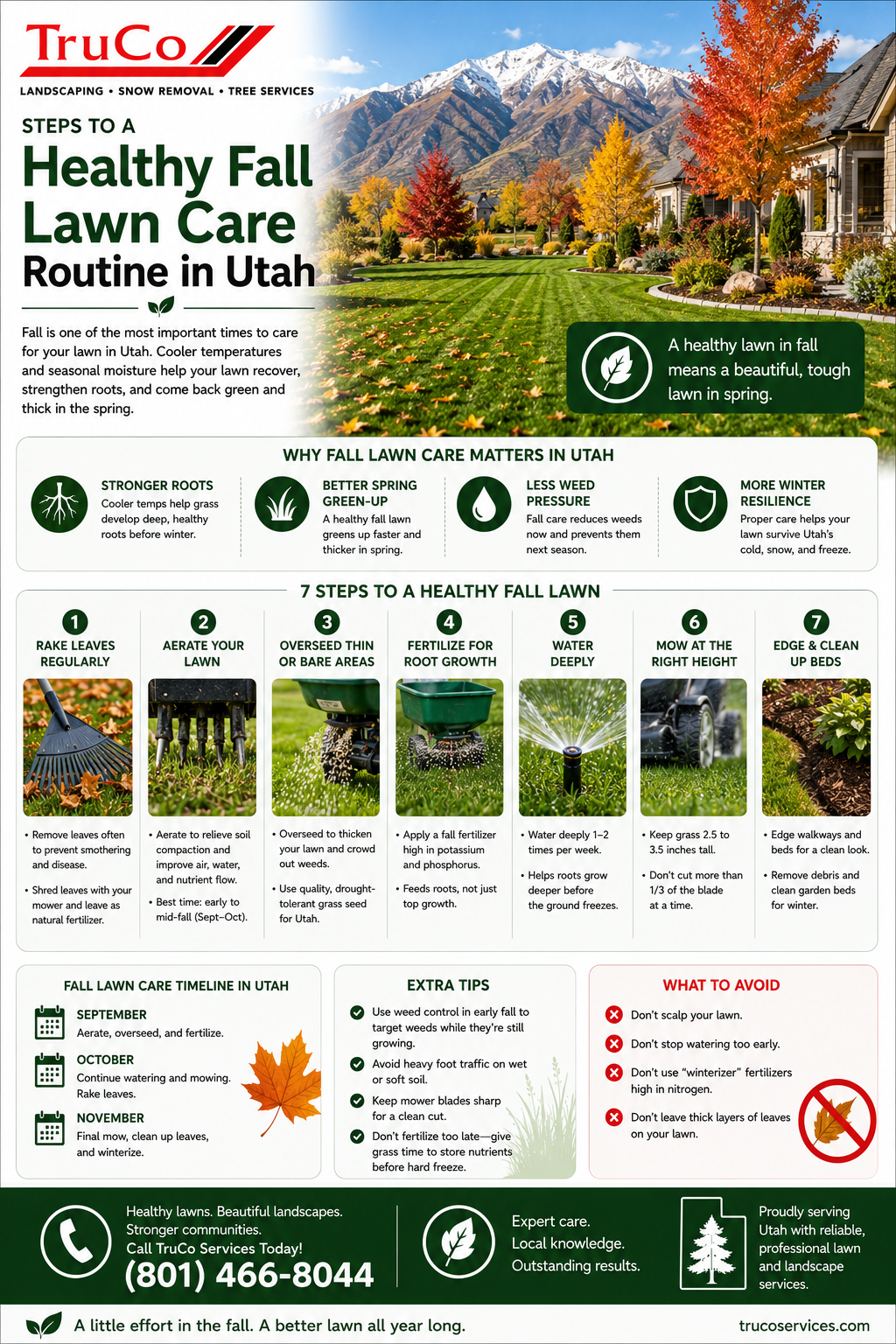
Steps to a Healthy Fall Lawn Care Routine in Utah

Why Fall Lawn Care Matters in Utah
Fall is the most important season for Utah lawn care. Cool-season grasses like Kentucky bluegrass, tall fescue, and perennial ryegrass — which make up the vast majority of Utah lawns — thrive during fall's cooler temperatures and naturally increase their root growth. Proper fall care prepares your lawn for winter dormancy and ensures vigorous spring green-up. The work you do in September, October, and November directly determines how your lawn looks the following spring. Fall is also the best time to correct problems like soil compaction, thin spots, and nutrient deficiencies.
Aeration: The First and Most Important Step
Core aeration removes small soil plugs to reduce compaction and improve air, water, and nutrient movement to the root zone. Utah's clay soils benefit greatly from annual aeration. Schedule aeration in late August through September when grass is actively growing and has time to recover before winter. Aeration relieves compaction from summer foot traffic and lawn equipment. It also creates channels for fertilizer and water to reach deep roots. Follow aeration immediately with overseeding and fertilization for maximum benefit. The aeration holes provide perfect seed-to-soil contact for germination.
Fall Fertilization Schedule
Apply two rounds of fertilizer in the fall for best results. The first application in September should use a balanced fertilizer with nitrogen, phosphorus, and potassium, such as a 20-8-8 or similar ratio. This helps the lawn recover from summer stress and promotes dense growth. The second application from late October through early November should use a winterizing fertilizer with higher potassium content and lower nitrogen, such as a 10-10-20 ratio. Potassium strengthens cell walls and roots, improving winter hardiness. Apply fertilizer when the grass is dry and water it in thoroughly after application. Avoid spreading fertilizer on sidewalks or driveways, where it can wash into storm drains.
Overseeding Thin Areas
Fall is the ideal time to overseed thin or bare spots in Utah lawns. Soil temperatures are warm enough for seed germination, while cooler air temperatures reduce stress on new seedlings. Mow the lawn shorter than usual (about 2 inches) before overseeding to allow seed to reach the soil. Rake bare areas to loosen the top 1/4 inch of soil. Apply grass seed at the recommended rate for your grass type — Kentucky bluegrass needs 2-3 pounds per 1,000 square feet, while tall fescue needs 5-8 pounds. Keep seeded areas consistently moist until germination, which takes 7-21 days depending on grass type. Light watering two to three times daily is better than heavy watering once a day.
Leaf Management and Final Mowing
Rake or mulch fallen leaves regularly throughout the fall. Heavy leaf cover blocks sunlight and traps moisture, leading to disease and grass death. Mulching leaves with a mower is the most efficient approach — it returns organic matter to the soil. Continue mowing as long as the grass is actively growing, usually through October or early November in Utah. Lower the mowing height gradually to 2.5 inches for the final mowing of the season. This height prevents snow mold while protecting the crown of the grass plant through winter.
Watering Adjustments for Fall
Reduce watering frequency as temperatures cool but don't stop entirely. Utah lawns still need about 1/2 to 1 inch of water per week in September and October. Water deeply but less frequently to encourage deep root growth. Continue watering until the ground freezes, typically late November in most Utah areas. Newly overseeded areas need consistent moisture until the new grass is well-established, usually 4-6 weeks after seeding. Consider using a smart irrigation controller that adjusts automatically to fall weather conditions.
Frequently Asked Questions
When should I stop mowing in fall? Continue mowing until grass stops growing, usually November in Utah. The final mowing should be at 2.5 inches.
Should I rake leaves or mulch them? Mulching with a mower is best. It returns nutrients to the soil. Rake only if leaves are too thick to mulch effectively.
Do I need to water in fall? Yes. Water deeply until the ground freezes. Newly seeded areas need consistent moisture.
Can I apply weed control in fall? Yes. Fall is the best time for perennial weed control. Broadleaf weeds like dandelions are storing energy in their roots and will absorb herbicides more effectively.
Should I fertilize before or after aeration? Fertilize immediately after aeration so nutrients reach the root zone through the aeration holes.
What grass seed should I use for fall overseeding in Utah? A blend of Kentucky bluegrass, tall fescue, and perennial ryegrass works best for most Utah lawns. Use a shade-tolerant blend for shady areas.