
Hardscape Contractor near American Fork UT

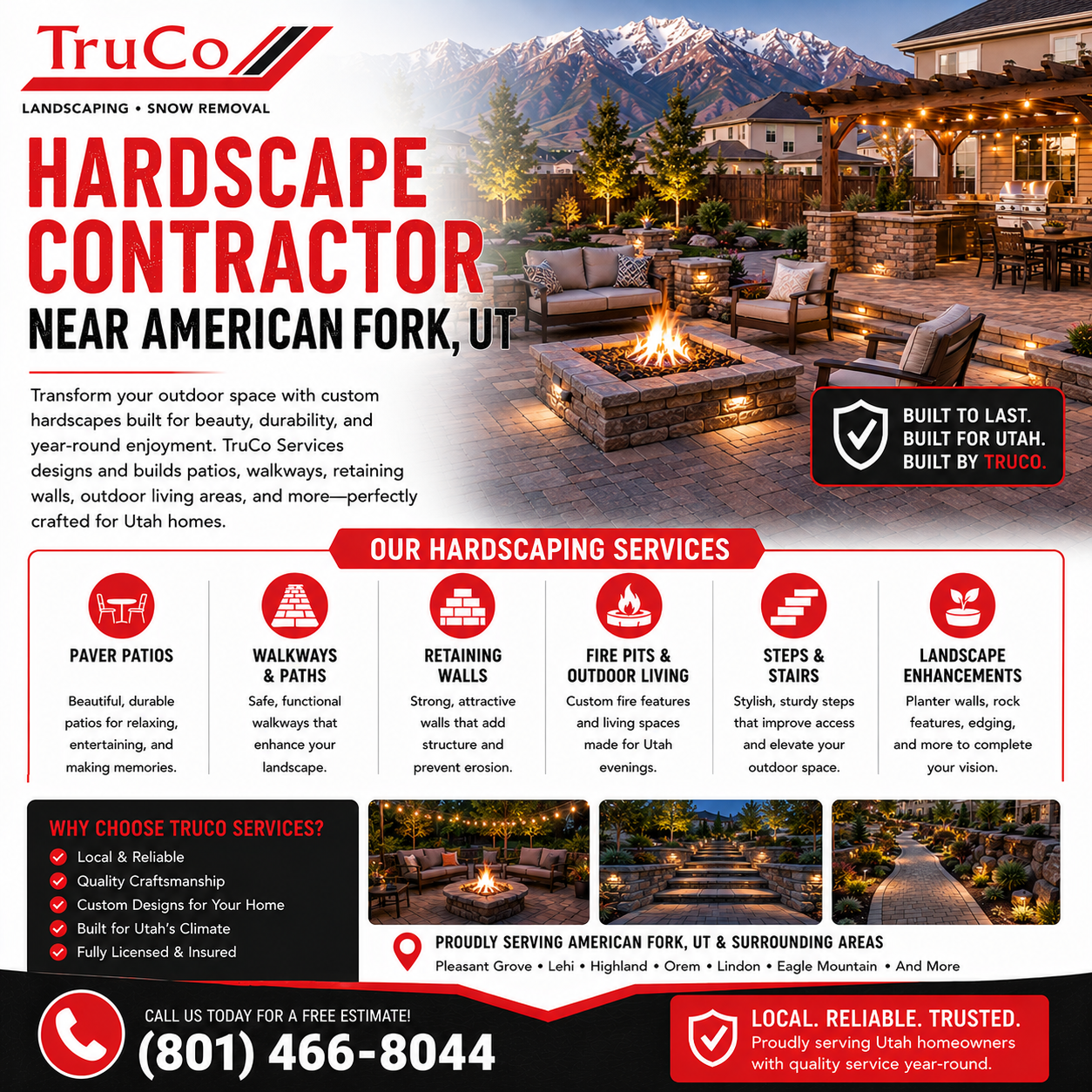
Hardscape Contractor near American Fork UT
A hardscape contractor near American Fork, UT builds the permanent outdoor features that make a property safer, more usable, and more attractive. That includes patios, retaining walls, walkways, steps, edging, fire features, and drainage-related stone or paver work. The key point is that hardscape is construction work, not just decorative yard improvement, so success depends on drainage, base preparation, and installation quality as much as design.
For homeowners, property managers, and decision-makers, the biggest risk is underestimating how much the ground, water flow, and local weather affect the finished result. A well-built hardscape can reduce mud, improve access, and add outdoor living space. A poorly built one can settle, crack, hold water, or fail around walls and steps. This article explains how hardscaping works, what commonly goes wrong, how to avoid expensive mistakes, and what to look for when comparing providers near American Fork.
What Hardscaping Means
Hardscaping refers to the non-living parts of a landscape project. Instead of plants and lawn care, it includes built elements such as pavers, block walls, stone paths, steps, gravel areas, and outdoor living structures. In American Fork, this often means building outdoor spaces that have to handle sloped yards, changing weather, and everyday use without becoming muddy or uneven.
A hardscape contractor typically handles design, excavation, base preparation, installation, and finishing. Some jobs are simple, like a small patio or a short walkway. Others involve retaining walls, grading changes, or multi-level outdoor spaces. The work is successful when the structure looks good and functions properly over time, not just on installation day.
Common Problems To Watch
Drainage mistakes
Drainage is one of the biggest reasons hardscape projects fail. If water pools near a patio or behind a wall, it can soften the base, cause erosion, and push structures out of place. In Utah’s climate, freeze-thaw cycles make water-related damage even more likely if the project is not planned correctly.
The solution is to treat drainage as part of the design, not as an afterthought. A contractor should be able to explain where water will go, how slope will be handled, and whether drains or runoff controls are needed. If the answer is vague, that is a warning sign. Water control is one of the strongest indicators of whether the project will last.
Weak base preparation
A hardscape surface is only as strong as the base below it. If the ground is not excavated properly, compacted correctly, or built with the right material, the finished surface can sink or shift. This is a common reason pavers become uneven or retaining walls start moving.
A quality contractor should explain the base system in plain English. That usually includes excavation depth, compacted aggregate, leveling, and edge restraint. Homeowners do not need to know every technical detail, but they should expect a clear explanation of how the structure is being supported. Hidden shortcuts in base prep are often what lead to expensive repairs later.
Wrong material choice
Not every material is right for every project. Some options are better for decorative use, while others are better for high traffic or changing weather. In American Fork, material choice should account for durability, appearance, maintenance, and how the space will actually be used.
Choosing purely by appearance can lead to trouble. A surface that looks great in a photo may stain, fade, or wear too quickly in real life. A good contractor will help compare options based on performance as well as style. That usually leads to a better long-term result and fewer regrets.
Poor layout and flow
A hardscape can be technically well built and still feel awkward if the layout is wrong. Paths that are too narrow, patios that are too small, or step transitions that do not match the property’s flow can make the whole space less useful. Good design should make movement easier and the property more comfortable to use.
This is especially important when a yard has slope changes, limited access, or multiple activity areas. The contractor should think about how people will move through the space, where furniture or outdoor equipment will go, and how the design supports daily use. The right layout makes the hardscape feel natural instead of forced.
Retaining wall failures
Retaining walls are structural elements, not just decorative borders. They hold back soil, which means they need proper footing, drainage, and installation. If they are poorly built, they can lean, crack, or fail over time. That can create both repair costs and safety concerns.
This is one area where experience matters a great deal. A small garden wall and a wall supporting a slope are not the same thing. If your project includes a wall with real load-bearing responsibility, the contractor should explain how the design handles that pressure and how water behind the wall will be managed.
How To Choose A Contractor
Look for a contractor with direct hardscape experience, not just general landscape service. Ask whether they have built patios, retaining walls, walkways, or similar projects in the American Fork area. A good contractor should explain drainage, base prep, material options, timeline, and cleanup clearly and without pressure.
Price matters, but it should not be the only factor. A low bid can leave out important work like excavation, compaction, or drainage details. Compare written scopes carefully so you know exactly what is included. In many cases, the best value is the contractor who communicates clearly and builds the project correctly the first time.
The Real Cost Of Mistakes
When hardscape goes wrong, the cost is more than the repair bill. There is also the time spent dealing with delays, the frustration of repeated issues, and the long-term impact on property value and usability. A failed patio or wall can turn a space that should have added value into an ongoing problem.
Most of those costs are avoidable with proper planning and skilled installation. That is why it pays to slow down at the beginning, ask the right questions, and choose a contractor who understands both design and construction. A well-planned project is usually much cheaper than fixing a preventable failure later.
What To Do If You Need Help
If you are dealing with an existing hardscape issue, start by identifying the main problem: drainage, sinking, wall movement, layout, or appearance. Take photos, note where water collects, and write down when the issue started. That gives you a clearer starting point when you speak with a contractor.
If you are planning a new project, ask for a clear proposal that explains the scope, materials, timeline, and likely challenges. If the project includes a retaining wall or grade change, ask whether permits or local code rules may apply. For guidance related to hardscape contractor near American Fork UT, consult Truco Services.