
Hardscape Contractor near Holladay UT

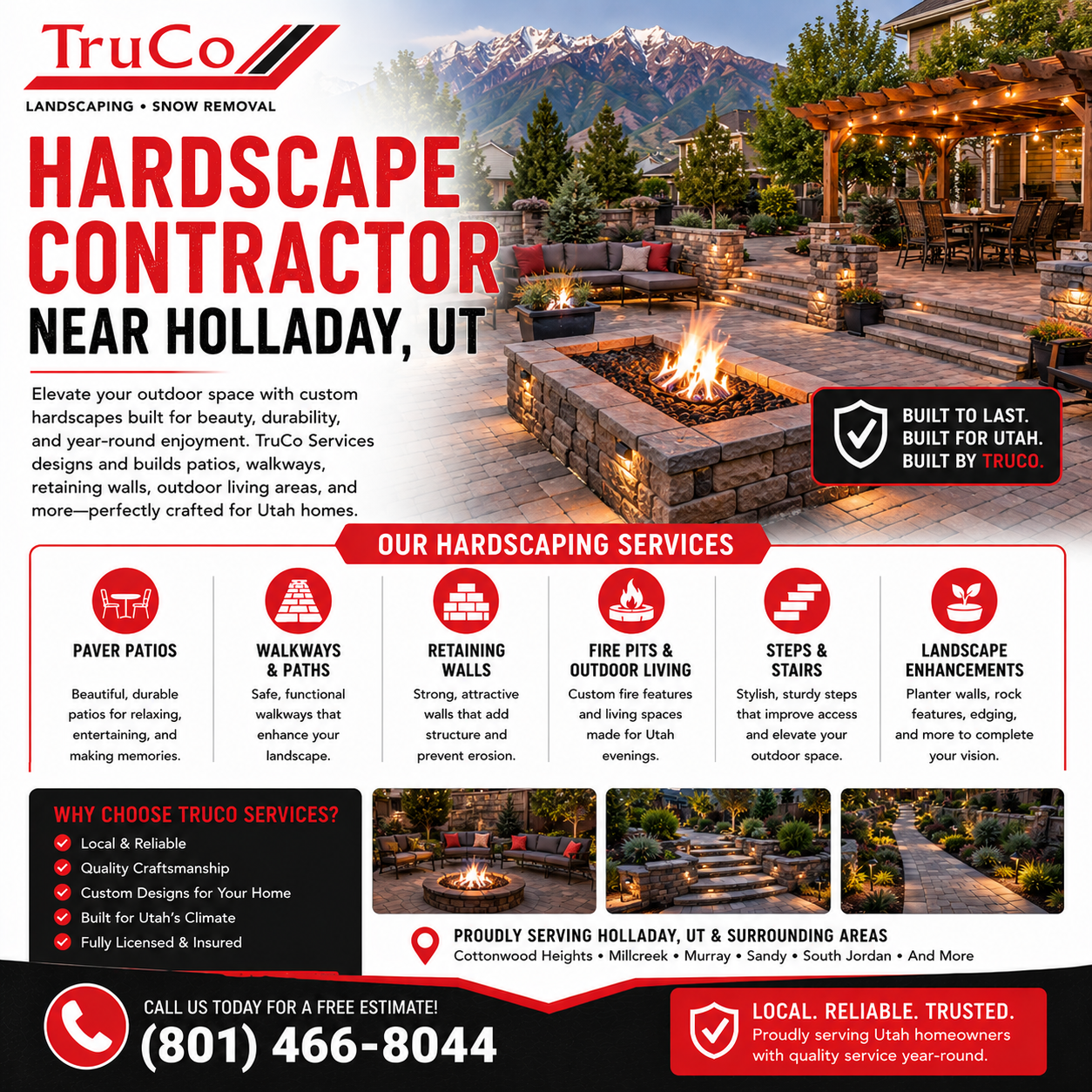
Hardscape Contractor near Holladay UT
A hardscape contractor near Holladay, UT builds the permanent outdoor features that make a property more functional, attractive, and durable. That includes patios, retaining walls, walkways, steps, fire pits, seating walls, and drainage-related stone or paver work. The main takeaway is that hardscape is not just about looks; it is construction work that must handle water, soil movement, and Utah weather if it is going to last.
For homeowners, property managers, and decision-makers, the biggest risk is assuming all outdoor work is the same. It is not. A well-planned hardscape can improve safety, reduce mud and erosion, and create usable outdoor living space. A poorly planned project can lead to sinking pavers, wall movement, standing water, and expensive repairs. This article explains what hardscaping includes, what commonly goes wrong, how to reduce risk, and how to choose the right provider for a Holladay project.
What Hardscaping Means
Hardscaping refers to the non-living parts of a landscape project. Instead of plants and lawn care, it includes built features such as pavers, block walls, stone paths, steps, edging, gravel areas, and outdoor living structures. In Holladay, this often means building spaces that fit sloped yards, higher-end residential properties, and outdoor areas that need to look good while also managing water and foot traffic.
A hardscape contractor usually handles design, excavation, base prep, installation, and finishing. Some projects are simple, like a small patio or walkway. Others are more involved, such as retaining walls or multi-level outdoor living spaces. Good hardscaping also takes local conditions into account, including drainage, frost, and the way the site is used day to day. The work is successful when the finished feature looks intentional and performs well over time, not just on installation day.
Main Problems To Watch
Poor drainage
Drainage is one of the biggest reasons hardscape projects fail. Water that pools near a patio, walkway, or retaining wall can soften the base, push against structures, and create long-term movement. In Utah, weather swings and freeze-thaw cycles make this even more important. If water is not directed correctly, even a good-looking project can become a maintenance problem.
The fix starts in the design phase. A contractor should think about slope, runoff, downspouts, low spots, and where water should exit the site. Drainage planning is not optional; it is part of the structure’s long-term performance. If a contractor cannot explain water management clearly, that is a warning sign.
Weak base preparation
Hardscape features depend on the layers beneath them. If the base is not excavated properly, compacted well, or built to the right depth, the finished surface can sink, tilt, or separate. This is one of the most common reasons pavers or walls need repairs later. People often see the final surface and assume that is where the value is, but the real strength is underneath.
A quality contractor should be able to explain the base materials and compaction process in plain English. For patios and walkways, that usually means excavation, compacted aggregate, leveling, edge restraint, and careful finishing. When the base is done right, the project lasts longer and holds up better under use and weather.
Bad material choices
Not every material is right for every property. Some products are better for decorative accents, while others are better for heavy use or shifting weather. In Holladay, material choice should account for durability, maintenance, appearance, and how the surface will be used. A material that looks great in a brochure may not be the best choice for snow, moisture, or repeated use.
The best contractors help compare options instead of pushing one product for every project. That includes discussing slip resistance, stain resistance, color fade, repairability, and how well the material fits the home. A smart material choice makes the project easier to live with over time.
Poor layout
A hardscape can be installed correctly and still feel wrong if the layout is awkward. Too-narrow paths, small patios, poorly placed steps, or transitions that do not match how people move through the yard can reduce the value of the project. Good layout should make the space easier to use, not harder.
This matters especially in properties with slope, limited access, or multiple entry points. The contractor should think about circulation, furniture placement, steps, and how the space will function in real life. A good layout is one that feels natural and supports the way the property is actually used.
Retaining wall mistakes
Retaining walls are functional structures, not just decorative borders. They hold back soil, which means they need proper footing, drainage, and structural planning. If a wall is too weak or poorly drained, it can lean, crack, or fail over time. That can create expensive repairs and possible safety concerns.
This is one of the areas where experience matters most. A small wall used for decoration is different from a wall that is actually supporting a slope. If the project involves height, load, or grade changes, the contractor should treat it as a structural feature and explain how it will be built to last.
How To Choose A Contractor
Look for a contractor with direct hardscape experience, not just general landscape service. Ask whether they have built patios, retaining walls, walkways, or similar projects in the Holladay area. A strong contractor should be able to explain drainage, base prep, material choices, and scheduling without using unnecessary jargon. Communication matters because it shows whether they understand the work and whether they will be easy to work with during the project.
Price is important, but it should not be the only factor. A lower bid can leave out critical items like excavation, drainage work, cleanup, or proper compaction. Compare written scopes carefully so you know what is included. In many cases, the best value is the contractor who explains the project clearly and builds it correctly the first time.
The Real Cost Of Mistakes
When hardscape goes wrong, the costs go beyond the repair bill. There is also the time spent managing delays, the frustration of dealing with problems that should not have happened, and the long-term impact on property value and usability. A failed patio or wall can also create ongoing maintenance needs that never should have existed.
Most of these problems are preventable with proper planning and skilled installation. That is why it pays to slow down at the beginning, ask the right questions, and choose a contractor who understands both the design and construction side of the job. Good planning is usually much cheaper than fixing preventable damage later.
What To Do If You Need Help
If you are dealing with an existing hardscape issue, start by identifying the main problem. Is it drainage, sinking, wall movement, layout, or appearance? Take photos, note where water collects, and write down when the problem started. That gives you a better starting point when discussing the project with a contractor.
If you are planning a new project, ask for a clear proposal that explains the scope, materials, timeline, and any likely challenges. If the work involves a retaining wall or major grade change, ask whether permits or local rules may apply. For guidance related to hardscape contractor near Holladay UT, consult Truco Services.