
Herriman UT Permanent Christmas Lights

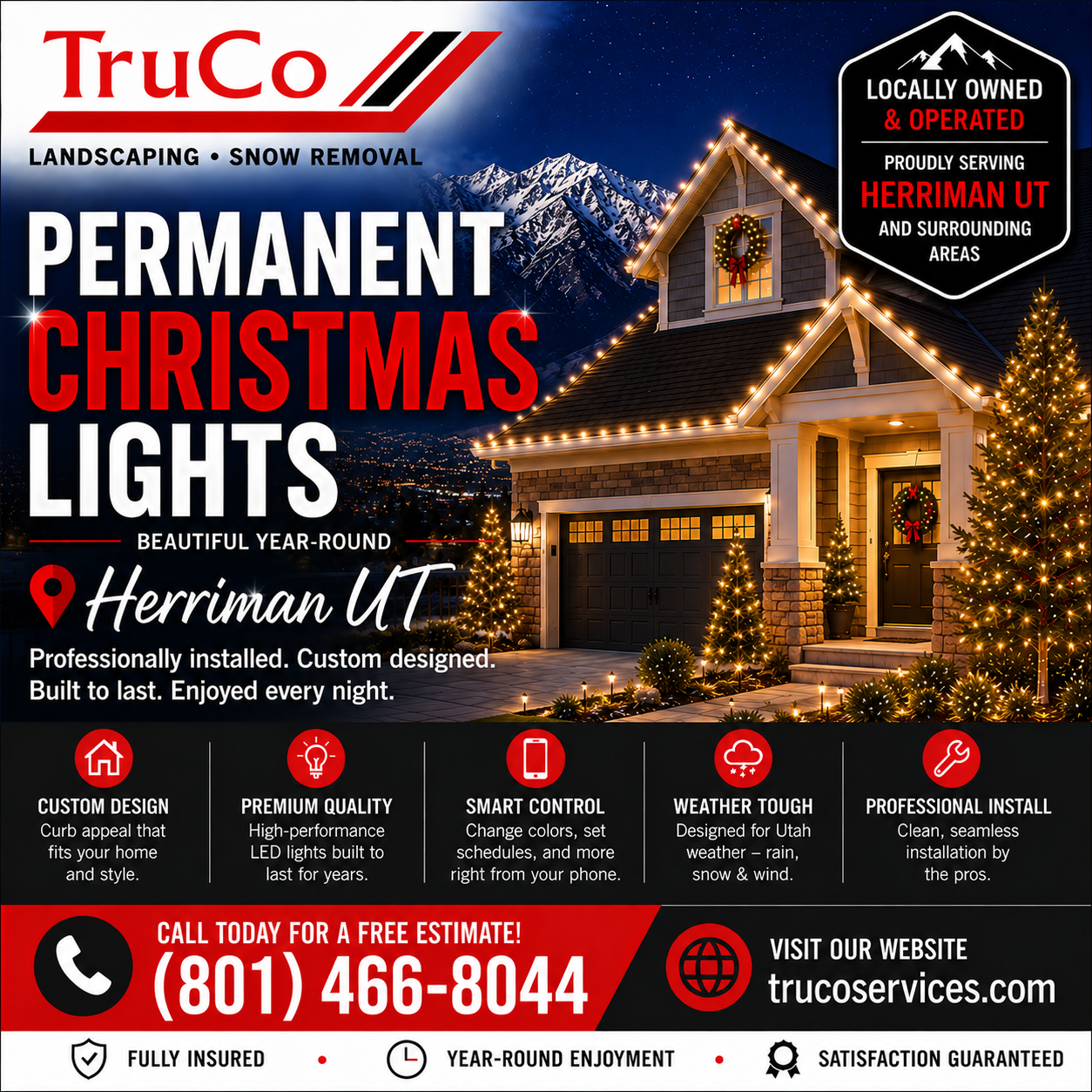
Herriman UT permanent Christmas lights are professionally installed exterior LED lighting systems that stay mounted on your home year-round, yet can be programmed for Christmas, Halloween, birthdays, game days, patriotic holidays, parties, and subtle warm-white accent lighting. Instead of climbing ladders each winter, installing temporary strings, managing cords, and storing decorations after the season, homeowners can control a built-in lighting system from an app, remote, timer, or dedicated controller.
The most important point is that permanent holiday lighting should be treated as a long-term exterior improvement—not a simple holiday purchase. Product quality, roofline design, weather-resistant installation, electrical planning, daylight appearance, warranty coverage, and future service all determine whether the system stays attractive and dependable. A poorly planned project can result in visible wires, crooked tracks, bright glare, power problems, difficult repairs, or unexpected costs when the roof, gutters, or exterior need work.
This guide is for Herriman homeowners researching permanent Christmas lights for the first time, comparing installation options, planning ahead for exterior improvements, or looking to avoid common mistakes. It explains how permanent lighting works, what can go wrong, local permitting considerations, system choices, costs, and how Truco Services can help you make a well-informed decision.
What Are Herriman UT Permanent Christmas Lights?
Permanent Christmas lights are exterior LED lighting systems installed along a home’s roofline, soffits, fascia boards, gables, garage lines, entryways, patios, dormers, and other visible architectural features. The hardware stays attached to the home, but the lights can be turned on, dimmed, scheduled, or changed to different colors as needed.
Most permanent holiday lighting systems use individually addressable LED modules, sometimes called pucks. That means individual lights—or small groups of lights—can show different colors at the same time. Homeowners can create traditional red-and-green Christmas displays, orange-and-purple Halloween patterns, school colors, patriotic color themes, or soft white architectural lighting.
A typical Herriman permanent exterior lighting installation includes:
LED light modules or puck lights
Color-matched track or mounting channels
Outdoor-rated wire, connectors, and cable
A controller for colors, zones, brightness, schedules, and effects
A power supply or approved electrical connection
App, Wi-Fi, Bluetooth, remote, or local controls
Installation, testing, programming, and homeowner instruction
For example, a homeowner in Herriman might run warm white lights along the front roofline throughout much of the year, then switch to red and green in December, purple and orange in October, or a family’s favorite team colors for special events.
How Permanent Lighting Installation Works
The process usually begins with a site evaluation and lighting design. The provider measures the property, reviews visible rooflines, checks soffit and fascia conditions, considers controller and power locations, evaluates access, and asks how the homeowner wants to use the system.
Once the design is approved, the installer mounts the lights or tracks, routes wiring, installs the controller and power equipment, tests each section, and sets up the app or control system. A complete installation should end with a walkthrough so the homeowner understands how to set schedules, adjust brightness, save colors, and troubleshoot basic issues.
Herriman City states that repair and maintenance of existing electrical systems do not require a permit, but listed electrical work does require permitting and inspection after completion. The city specifically identifies electrical work as part of its Electrical/Mechanical/Plumbing permit process.
Not every permanent lighting project has the same electrical scope. A manufacturer-designed plug-in system may be treated differently than work involving a new electrical line, outlet, circuit, hardwired power equipment, or electrical alterations. Confirm the requirements for your exact installation before work begins.
9 Things to Know Before Installing Permanent Lights
1. The Best Lighting Design Follows Your Home’s Architecture
The best permanent Christmas lights in Herriman, Utah are designed around your home’s architecture. They should draw attention to the most appealing rooflines and features without making the exterior look overly busy.
A home with a simple front roofline needs a different layout than a two-story property with multiple gables, a large garage, deep soffits, a front porch, or prominent upper-level peaks. The goal is not to install lights on every possible edge. The goal is to create visual balance from the street.
Start by looking at your home from the road. Identify the rooflines, gables, garage areas, porch lines, dormers, and entry features that define its shape. These are usually the areas that make the strongest contribution to curb appeal.
For example, lighting one side of a major gable may make the house look incomplete. Lighting only a garage roofline while leaving a larger adjacent roofline dark can create an unbalanced visual break. On the other hand, lighting every small roof return may create unnecessary cost and a cluttered final appearance.
A thoughtful permanent holiday light design accounts for:
The home’s street-facing view
Roofline height and complexity
Soffit depth and fascia condition
Visibility from neighboring properties
Landscaping, trees, and elevation changes
Desired brightness and pattern use
Budget and future expansion plans
Ask for a written scope, drawing, or clear visual description of every illuminated section. Confirm whether the price includes second-story lines, peaks, garage edges, patio roofs, wiring concealment, track color, controller location, and app setup. Clear planning prevents misunderstandings and helps you compare estimates fairly.
2. The Complete System Matters More Than LED Color Options
Color-changing lights and smartphone controls may attract attention, but a reliable permanent Christmas lighting system depends on every component—not only the LEDs.
The complete system includes the lights, mounting tracks, cable, connectors, fasteners, controller, power supply, weather protection, and installation approach. A weakness in one area can affect the whole display.
For example, high-quality LEDs do not solve the problem if the track is crooked, the wiring is exposed, the connectors allow moisture intrusion, or the power supply is undersized. Likewise, a sophisticated app does not help if the controller is poorly located or difficult to service.
Look for a system specifically designed for ongoing outdoor exposure. Herriman homes experience strong sunlight, changing temperatures, winter snow, wind, and moisture. Permanent exterior lighting needs components that can withstand those conditions.
Ask potential providers:
What product brand and model will be installed?
Is the system designed for permanent outdoor use?
Are the track, wiring, and connectors rated for exterior conditions?
Is the track available in a color that matches the soffit or fascia?
Can individual lights or sections be repaired?
Are replacement components likely to be available later?
How are power supplies and controllers protected?
What service process applies if part of the system fails?
Avoid relying on vague terms such as “professional grade” without details. A provider should explain what the materials are, how they are installed, what their limitations are, and what happens if something stops working.
3. Herriman’s Weather Can Expose Weak Installation Practices
Herriman’s climate can place real stress on exterior lighting systems. Bright sun, wind, snow, ice, rain, heat, cold, and seasonal temperature changes can reveal installation problems that may not be obvious during the first holiday season.
Sunlight can degrade low-quality plastic housings, fade track material, and weaken inferior wiring jackets. Cold temperatures can make poor-quality components brittle. Snow and ice can test weak fasteners or tracks installed without proper support. Wind can pull on exposed wires or loose mounting hardware.
A durable installation should include:
Tracks mounted securely and evenly
Proper spacing of fasteners according to the system design
Wires routed without loose loops or unnecessary tension
Exterior-rated connections protected from moisture
Controller and power equipment placed away from excessive water exposure
Clear separation from gutters, downspouts, vents, and drainage paths
Accessible locations for future service
Materials compatible with soffit, fascia, siding, stucco, brick, or trim
Roof protection is especially important. Permanent lights should not compromise shingles, flashing, attic ventilation, gutters, or roof drainage. Most quality systems are mounted to soffits, fascia, trim, or a purpose-built channel—not installed through roofing materials.
Ask the provider to explain how tracks will be attached and how they will handle corners, changes in roofline height, peaks, wiring transitions, and long runs. A good installation should look clean in December, remain secure in February, and still be visually unobtrusive in July.
4. Electrical Planning Should Happen Before Installation
Permanent LED lighting uses less electricity than old incandescent Christmas strings, but it still needs a safe and appropriate electrical plan. The power source, circuit capacity, weather protection, equipment listing, wiring method, and controller location all affect reliability and safety.
Permanent lighting should not rely on a long-term extension cord, overloaded receptacle, exposed splice, or improvised connection. Those methods may create safety concerns, system failures, or additional costs later.
Herriman City states that repair and maintenance of existing electrical systems generally do not require a permit. However, electrical work that meets the city’s permit requirements must be permitted, and an inspection is required when permitted work is complete.
Before installation, ask:
Where will the system receive power?
Is the existing exterior outlet appropriate for the proposed equipment?
Will a new outlet, electrical line, circuit, or hardwired connection be added?
Is GFCI-related protection relevant to the power arrangement?
Who is responsible for electrical modifications, permits, and inspections?
How will exterior connections be protected from weather?
Where will the power supply and controller be located?
How will the wiring be secured and concealed?
Herriman City says homeowners should complete the appropriate permit application and schedule a final inspection once permitted work is completed.
This article provides general information only, not legal or electrical advice. Always verify current requirements for your individual project with the city and qualified professionals.
5. Daytime Appearance Is a Year-Round Design Requirement
The nighttime effect of permanent Christmas lights gets most of the attention, but the system remains attached to your home all year. That makes daytime appearance just as important as nighttime color.
The best permanent lighting installation becomes noticeable when it is turned on and blends into the exterior when it is off. That requires thoughtful selection of track color, straight installation, consistent spacing, careful wire routing, and discreet placement of the controller and power equipment.
During daylight, look for:
Straight, evenly aligned tracks
Light spacing that remains consistent across long rooflines
Track color that matches or complements soffits and fascia
Clean corners, transitions, and peak lines
Hidden or discreetly routed wiring
No dangling loops or exposed connectors
Controller and power equipment that are accessible but not prominent
No obstruction of gutters, drainage paths, vents, or exterior trim
Ask to see photographs of completed work during the day. Nighttime photos are useful for showing color effects, but daylight photos reveal whether the provider pays attention to craftsmanship.
A mismatched white track on a dark soffit, exposed wires near a garage, or a bulky controller beside an entryway can make a permanent installation feel like an afterthought. These issues may not affect whether the lights work, but they can affect your home’s appearance every day.
A quality provider should discuss daylight appearance before installation starts. If you would not be comfortable seeing the track and wire routing in the middle of summer, adjust the design, product choice, or installation plan before work begins.
6. Controls and Brightness Determine Everyday Usefulness
Permanent exterior lighting is most valuable when it is easy to control. Modern systems can offer smartphone apps, Wi-Fi access, Bluetooth, remote controls, timers, local buttons, zones, scenes, dimming, and custom patterns.
However, systems vary widely. A basic system may provide a few colors and preset effects. A more advanced system may let you divide the home into zones, schedule individual rooflines, save custom scenes, dim lights, select warm white, and allow multiple household members to use the app.
Think about how you want to use the system:
Christmas-only color displays
Halloween, patriotic, birthday, and sports-color scenes
Separate front and backyard zones
Low-brightness lighting for late evenings
Automatic schedules for holidays or weekends
White-light quality deserves special attention. RGB systems produce colors using red, green, and blue LEDs. When they create white by mixing colors, the result may look cool or slightly tinted. RGBW systems include a dedicated white LED and may provide a more natural warm-white or white-light effect.
Brightness also matters. The most powerful lights are not necessarily the best lights for your home. Excessively bright displays can cause glare, reflect into bedroom windows, overwhelm the architecture, or create tension with nearby neighbors. A system with adjustable brightness gives you more control.
Before the installation is finished, ask the provider to help save practical presets: warm white, Christmas, Halloween, patriotic, late-night dim, and off. You should also understand how the system works when Wi-Fi is unavailable.
7. Read Warranty and Service Terms Before You Buy
Permanent lighting is installed in places that can be difficult to access, so warranty and service terms matter as much as the initial price. A “lifetime warranty” may sound comprehensive but could apply only to certain components and not cover labor, diagnosis, access, travel, or reinstallation.
A manufacturer might replace a defective light module but not pay for a technician to troubleshoot a second-story roofline. An installer may offer a workmanship warranty that excludes storm damage, roof work, paint, pests, electrical surges, homeowner modifications, or third-party damage.
Get clear answers in writing:
How long are LED modules covered?
Are the track, wiring, controller, and power supply covered?
Is workmanship covered separately from materials?
Are diagnostic visits included?
Does the warranty include labor?
Are there charges for high-access or second-story repairs?
Who submits manufacturer warranty claims?
What happens if another contractor damages the system?
What exclusions apply?
Can warranty coverage transfer to a future homeowner?
A good service policy is more valuable than a broad advertising promise. You should know who to call, how service requests are handled, what repairs might cost, and whether replacement components will be available.
Keep copies of your proposal, agreement, product specifications, warranty documents, installation photos, app information, and service contacts. These records can make future maintenance, exterior renovations, or a home sale much easier.
8. Roof, Gutter, Solar, and Paint Work Must Be Coordinated
Permanent Christmas lights become part of your home’s exterior. That means roofing, gutter replacement, painting, siding repairs, fascia work, soffit repairs, and solar installation can affect the system.
A roofer may need access near the fascia or soffit where tracks are attached. A gutter installer may need to work on the same roof edge. A painter may need to mask, remove, or protect lighting hardware. A solar installer may need roof access and may work near exterior power equipment.
If these contractors do not know about the permanent lighting system, they can accidentally cut wires, dislodge tracks, damage connectors, paint over components, or reinstall hardware incorrectly. Warranty coverage may not apply when damage is caused by a third party.
If you expect to replace your roof in the next few years, consider completing the roof replacement before permanent lights are installed. Otherwise, you may pay for removal and reinstallation much sooner than expected.
Before other exterior work starts:
Tell the contractor that permanent lights are installed.
Identify all controllers, power supplies, and cable routes.
Take clear photographs of the installation.
Ask the lighting provider whether removal or protection is required.
Confirm whether third-party work affects the warranty.
Create a written plan before anyone removes, cuts, or moves components.
Coordinating trades protects your investment and keeps permanent lighting from becoming an obstacle to future home maintenance.
9. The Lowest Bid May Not Be the Best Value
Permanent lighting proposals can differ significantly because they may cover different rooflines, product types, installation methods, controllers, warranty terms, and service levels. A low price may look attractive until you discover that it excludes upper rooflines, quality tracks, wire concealment, electrical coordination, app setup, warranty labor, or future service.
For example, one estimate may include only a single front roofline, while another includes garage lines, peaks, matched tracks, concealed wire, weather-conscious controller placement, app setup, and service support. The first may cost less but provide a much smaller and less finished result.
Permanent Christmas lights are an exterior improvement. Choose based on total value, clear communication, system quality, installation details, and service—not only the initial price.
Common Mistakes to Avoid
Choosing only by price. Lower estimates may exclude quality components, rooflines, track matching, app setup, wire concealment, or meaningful service coverage.
Ignoring daytime appearance. Tracks, cable, and control equipment remain visible throughout the year.
Installing before a planned roof replacement. You may need to pay for removal and reinstallation shortly after installation.
Treating electrical planning as an afterthought. Power location, permits, weather protection, and appropriate electrical work should be addressed before installation.
Using extension cords as a permanent power source. Temporary cords are not a sound long-term power plan for installed exterior lighting.
Selecting maximum brightness without considering neighbors. Excessive brightness can create glare and harm curb appeal.
Skipping warranty details. A parts-only warranty can leave you responsible for labor, diagnostics, access, and third-party damage.
Failing to notify exterior contractors. Roofers, painters, solar installers, and gutter companies need to know where the system is installed.
Frequently Asked Questions
What are permanent Christmas lights?
Permanent Christmas lights are exterior LED lighting systems mounted on a home year-round. They can be programmed for holidays, special events, warm-white accent lighting, and custom color displays.
Are permanent Christmas lights only for Christmas?
No. Many homeowners use them for Halloween, birthdays, Independence Day, sports events, school colors, parties, and year-round warm-white exterior accent lighting.
Do permanent lights stay on all year?
The hardware stays mounted, but the lights can be turned off whenever you choose. Most systems offer timers, schedules, and app controls.
Can permanent lights be used for everyday exterior lighting?
They can provide architectural accent lighting and curb appeal, particularly with warm-white settings. They are not necessarily a replacement for proper pathway, entry, security, or landscape lighting.
How are permanent holiday lights controlled?
Many systems are controlled through a smartphone app. Depending on the product, remote, Wi-Fi, Bluetooth, timer, or local-controller options may also be available.
Can permanent lights be dimmed?
Most quality systems allow dimming. This helps create softer warm-white lighting, reduce glare, and make displays more considerate of nearby homes.
What is RGBW permanent lighting?
RGBW lighting has red, green, blue, and a dedicated white LED. The dedicated white channel may provide a more natural-looking white or warm-white setting than RGB-only systems.
Do permanent lights work without Wi-Fi?
That depends on the system. Some need Wi-Fi for app access but may offer Bluetooth, remote, local-controller, or manual controls. Confirm how the system operates during an internet outage.
Are permanent Christmas lights weatherproof?
Outdoor systems should be designed for exterior use, but weather resistance depends on the entire installation: light modules, tracks, connectors, wiring, power supply, controller enclosure, and mounting method.
Can permanent lights handle snow and freezing temperatures?
A properly selected and installed exterior system should account for local weather. Snow, wind, moisture, cold, and temperature changes make quality materials and mounting methods especially important.
Will permanent lights damage my roof?
They should not when installed correctly. Most systems mount to soffits, fascia, trim, or purpose-built tracks instead of through shingles. Ask the provider to explain the exact mounting method.
Can permanent lights be installed on a two-story home?
Yes. Two-story homes are common permanent lighting projects. Roof height, access, safety, serviceability, and design complexity may affect price and installation planning.
Can permanent lights be installed on stucco, brick, vinyl, or wood?
Often, yes. The mounting method should be tailored to the exterior material. A provider should inspect your home before deciding how components will be attached.
How long do permanent Christmas lights last?
Longevity depends on the system design, product quality, weather exposure, installation quality, operating habits, maintenance, and warranty coverage. Ask for product-specific information instead of relying on generic lifespan claims.
Are permanent lights expensive to operate?
LED systems usually use much less energy than older incandescent strings. Actual cost depends on the system size, brightness, run time, schedule, and local electricity rates.
Can I add more permanent lights later?
Some systems can be expanded, but controller capacity, power limits, voltage drop, and maximum-run length can limit additions. Discuss future expansion before the original installation.
What happens if one light stops working?
The answer depends on the product. Some systems allow individual light-module or segment repair. Ask how the provider diagnoses failures, whether replacement parts are available, and what labor costs might apply.
Can permanent lighting systems be repaired?
Many systems can be repaired. Repairability depends on the system design, age, failure location, component availability, and access requirements.
Do permanent lights need maintenance?
They require much less annual work than temporary strings but may need occasional software updates, reset procedures, storm inspections, basic cleaning near accessible components, or professional service.
Should I install permanent lights before replacing my roof?
If roof replacement is likely soon, it is generally better to complete the roof first. Installing lighting beforehand can create avoidable removal and reinstallation costs.
Can permanent lights be installed with solar panels?
They can often coexist, but coordinate the projects. Roof access, wiring routes, controller locations, mounting areas, and future maintenance should be considered by both providers.
Do I need a permit for permanent lights in Herriman?
It depends on the electrical scope. Herriman City distinguishes minor repair and maintenance from electrical work requiring a permit and requires an inspection after permitted work is complete. Confirm requirements for your exact project with the city before work begins.
Are outdoor outlets required to have GFCI protection?
Outdoor electrical-safety requirements depend on the outlet location, voltage, equipment, current code adoption, and actual project scope. Ask a qualified electrical professional or Herriman City about the specific proposed connection.
Can I leave permanent lights on overnight?
Yes, but use reasonable schedules and brightness. Avoid intense flashing or very bright displays late at night, especially near neighboring homes and bedrooms.
Will permanent lights bother my neighbors?
They can if they are excessively bright, flash rapidly late at night, or shine toward nearby homes. Dimming, zones, and schedules make considerate use easier.
Can permanent lights improve curb appeal?
A clean, balanced, professionally installed system can improve curb appeal. Crooked tracks, exposed wiring, poor color matching, and excessive brightness can reduce it.
Do permanent Christmas lights add home value?
They may appeal to some buyers as a convenience and exterior feature, but no increase in resale value is guaranteed. Quality, documentation, serviceability, and daylight appearance matter.
Can permanent lights be used for security lighting?
They can improve general exterior visibility, but they should not be the only security measure. Motion lighting, entry lighting, locks, cameras, alarms, and landscaping choices may be more appropriate for security needs.
What should I ask during a permanent lighting estimate?
Ask about rooflines included, product brand, track color, wire routing, controller location, app features, brightness, power requirements, electrical scope, permits, warranty coverage, service fees, and removal/reinstallation options.
Rules and Standards to Know
Permanent exterior lighting involves electrical safety, construction standards, manufacturer instructions, and sometimes HOA rules. This is general information only, not legal advice, code advice, or a substitute for a project-specific evaluation.
Herriman electrical permits: Herriman City states that repair and maintenance of existing electrical systems do not require a permit, but work within the city’s permit requirements must be permitted. A final inspection is required after permitted work is complete.
Permit process and inspections: Herriman instructs applicants to submit the online permit application and schedule an inspection at least one business day in advance once work is completed.
Manufacturer instructions: Exterior lighting equipment should be installed according to its listing, label, manufacturer instructions, approved accessories, and intended use. Do not modify wiring, connectors, power supplies, or controllers outside the approved installation method.
HOA requirements: Your homeowners association may have rules about exterior modifications, visible tracks, lighting brightness, display hours, architectural approval, or seasonal decoration. Review HOA documents before installation.
Conclusion
Herriman UT permanent Christmas lights can make your home easier to decorate, more flexible for holidays and events, and more attractive throughout the year. A well-designed system can provide warm-white accent lighting, festive color displays, and convenient app-based control without annual roofline ladder work.
The strongest results come from planning early. Choose a lighting design that fits the home, use outdoor-rated components, protect the daytime appearance, address electrical and permit questions before installation, read warranty terms carefully, and plan around future roofing, gutter, solar, siding, and paint work.
Most long-term lighting problems are avoidable with the right preparation and experienced guidance. For practical help with Herriman UT permanent Christmas lights, contact Truco Services at (801) 466-8044 to discuss a permanent exterior lighting system designed for your home and long-term needs.