
Riverton UT Permanent Christmas Lights

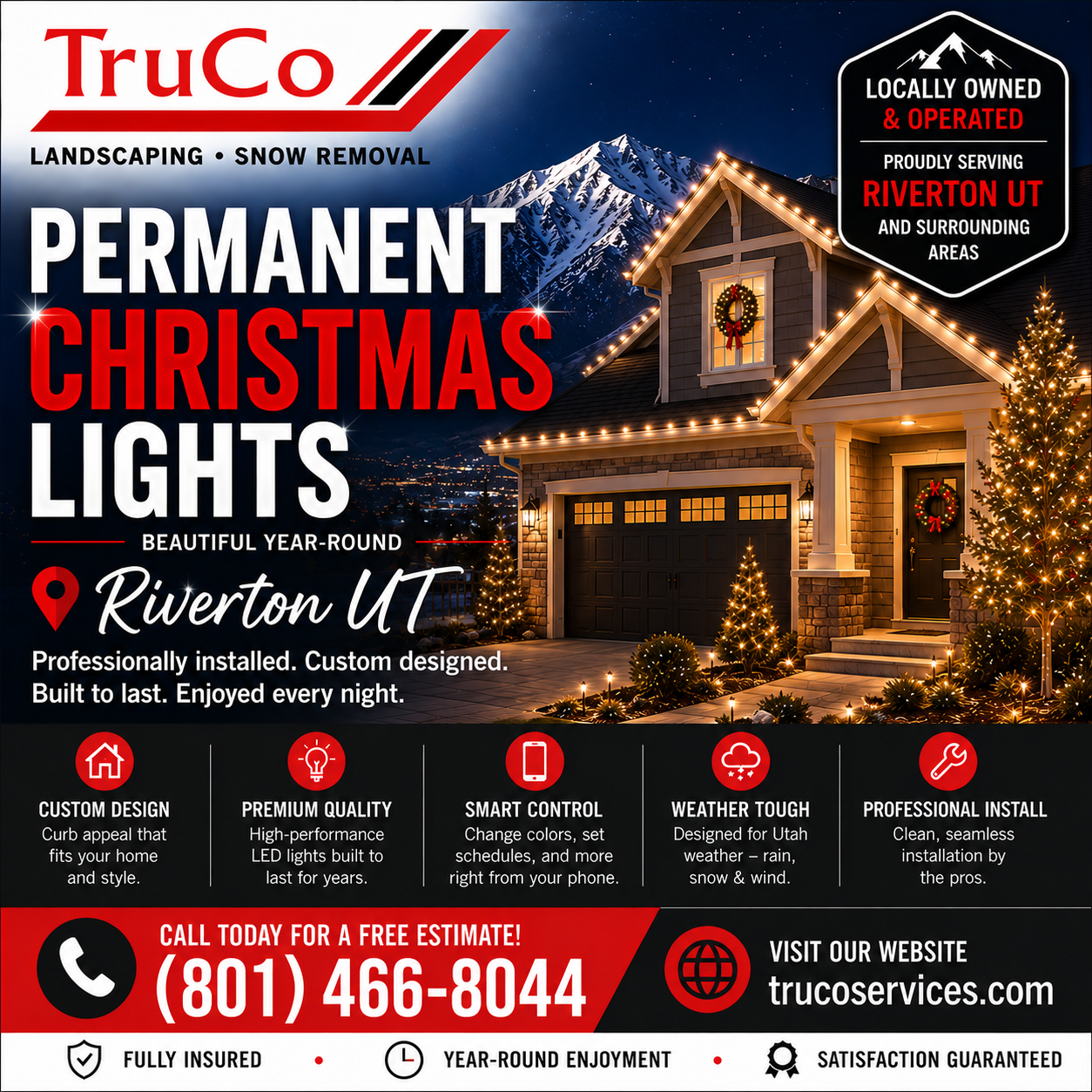
Riverton UT permanent Christmas lights are professionally installed exterior LED lighting systems that remain mounted on your home year-round and can be controlled with an app, timer, remote, or dedicated controller. Instead of climbing ladders every winter, untangling temporary light strands, managing extension cords, and packing decorations away in January, homeowners can use one discreet lighting system for Christmas, Halloween, birthdays, game days, patriotic holidays, and warm-white architectural lighting.
The key to a successful installation is to treat permanent holiday lighting as a long-term exterior improvement—not simply as decorative lights. The best results depend on roofline design, product quality, weather-resistant installation, safe power planning, track color, wire concealment, control features, warranty terms, and future service. A rushed or bargain installation may look fine for the first season but become expensive if tracks loosen, wires remain visible, lights flicker, moisture reaches connections, or roof work later requires removal.
This guide explains how Riverton permanent Christmas lights work, the most important decisions before installation, common problems and solutions, local permitting considerations, product options, costs, and how Truco Services can help homeowners make a smart, lasting choice.
What Are Riverton UT Permanent Christmas Lights?
Permanent Christmas lights are exterior LED lighting systems installed along a home’s roofline, soffits, fascia boards, garage lines, gables, dormers, patio covers, entryways, or other architectural features. The physical system remains on the home throughout the year, but the lights can be turned on, dimmed, scheduled, or customized whenever you want.
Most permanent exterior lighting systems use small, individually addressable LED modules, often called pucks. “Addressable” means individual lights or groups of lights can display different colors at the same time. This allows homeowners to create color patterns, animated scenes, holiday combinations, team colors, and warm-white accent lighting.
A typical Riverton permanent holiday lighting installation includes:
Exterior LED light modules or puck lights
Color-matched mounting track or channels
Outdoor-rated cable, wire, and connectors
A controller for brightness, colors, patterns, zones, and schedules
A power supply or electrical connection
Wi-Fi, Bluetooth, app, remote, or manual controls
Installation, programming, testing, and homeowner training
For example, a Riverton homeowner may run soft warm-white lights along the front roofline on most evenings, then switch the same system to orange and purple for Halloween, red and green for Christmas, or red-white-and-blue for Independence Day.
How the Installation Process Works
The process normally begins with a consultation and exterior assessment. The provider measures rooflines, identifies the home’s most visible architectural features, evaluates soffits and fascia, considers power locations, checks access needs, and asks about your preferred look.
After design approval, the installer mounts tracks or fixtures, routes wiring in a clean and weather-conscious manner, places controllers and power components, tests each section, and configures the control system. A complete installation should include a homeowner walkthrough so you understand scheduling, brightness controls, color presets, zones, and basic troubleshooting.
Riverton City states that an owner or authorized agent intending to install, enlarge, alter, repair, remove, convert, or replace an electrical system regulated by code must first apply to the building official and obtain the required permit. That does not mean every plug-in lighting setup has identical requirements; the correct permit and inspection path depends on the project’s actual electrical scope. Ask before work begins if the system involves new wiring, a dedicated circuit, new outlets, hardwired equipment, or electrical alterations.
9 Things to Know Before Installing Permanent Lights
1. The Lighting Layout Must Match Your Home’s Architecture
The best permanent Christmas lights in Riverton, Utah follow the architecture of the house. They highlight the home’s strongest visual lines rather than simply placing lights along every surface that can accept them.
A single-story rambler, two-story home, home with a prominent front gable, property with multiple roof peaks, or house with a large garage each needs a different approach. Lighting every edge can make a home appear cluttered, while lighting too few areas can make the installation look incomplete.
Begin from the street. Stand across the road from your home in the evening or take a photo of the front elevation. Identify the rooflines, garage edges, porch lines, gables, dormers, and other features that define the home’s shape. The goal is to create balance from the main viewing angle.
For example, if a large front gable is a focal point, lighting both slopes may look intentional and symmetrical. If you illuminate a garage roofline but not the adjacent main roofline, the lighting may appear disconnected. In some homes, a clean front roofline and garage treatment is enough; in others, upper peaks or side elevations may improve the overall result.
A professional design should account for:
Roofline visibility from the street
Home size and architectural style
Number of stories and installation access
Soffit depth and fascia condition
Front-yard landscaping and mature trees
Nearby homes and potential glare
Your budget and desired everyday use
Ask for a written scope or visual design before approving a proposal. It should show exactly what sections are included, whether peaks and second-story lines are covered, where controllers will go, and how wires will be routed. This protects you from the common surprise of believing the entire front of the home was included when the estimate only covered the easiest roofline.
2. LED Quality Is Only One Part of the System
When shopping for Riverton permanent holiday lighting, homeowners often compare color options and app features first. Those are useful, but long-term reliability depends on the full system—not just how bright the LEDs look in a demonstration.
A permanent lighting system includes light modules, wire, connectors, mounting tracks, controllers, power supplies, weather protection, and installation hardware. If any component is poor quality or improperly installed, the system may develop problems even if the LED lights themselves are functional.
Look for components designed for ongoing exterior exposure. Utah’s sun, heat, cold, snow, wind, and freeze-thaw cycles can stress low-quality plastics, wire jackets, adhesives, connectors, and mounting systems.
A purpose-built track improves both durability and appearance. It keeps lights evenly spaced, protects wiring, creates clean lines, and allows the system to blend with soffits or fascia. A system with exposed wire and inconsistent spacing may work at night but appear unprofessional in daylight.
Ask these questions before selecting a system:
What product brand and model will be installed?
Is the system specifically designed for permanent exterior use?
Is the lighting track available in colors that match my exterior?
Are connectors and power components weather protected?
Can individual lights or sections be repaired?
Are replacement parts available if the system needs service years later?
Does the provider support warranty claims and repairs?
Avoid accepting vague phrases such as “commercial grade” without further information. A provider should explain what that means in terms of the track, connectors, controller, power design, weather protection, and warranty.
3. Riverton Weather Tests Installation Quality
Riverton homes face bright summer sun, wind, winter snow, cold nights, rain, and temperature changes that can expose poor installation practices. A permanent lighting system must be selected and installed for those conditions.
Sunlight can fade low-quality track material, degrade plastic housings, and make poor wire jackets brittle. Winter snow and freezing weather can test loose fasteners, poorly supported wire, and exposed connections. Wind can pull on hardware or cable that is not properly routed. Water can enter unprotected components and cause intermittent failures that are difficult to diagnose.
Good weather-conscious installation includes:
Tracks attached using appropriate fasteners and mounting spacing
Wiring secured without excessive tension
Exterior-rated connectors protected from direct moisture exposure
Power supplies and controllers located away from unnecessary water and impact
Routes that do not trap water or interfere with gutters and downspouts
Placement that allows reasonable access for future service
Compatibility with the home’s soffit, fascia, siding, brick, stucco, or trim
Roof access deserves particular care. Permanent lighting should not compromise shingles, flashing, roof drainage, attic ventilation, gutters, or fascia. The lights are generally mounted to soffits, fascia, trim, or a designed channel—not attached through roof shingles or installed where they may interfere with roof maintenance.
Ask how the provider will mount the tracks and how they will handle corners, long runs, junctions, and transitions between surfaces. The goal is not simply a display that works in December. It is a system that remains straight, secure, weather resistant, and attractive years after installation.
4. Safe Electrical Planning Comes First
Permanent lighting systems use LEDs, which generally consume less power than old incandescent holiday bulbs. However, any permanent exterior lighting project still requires a safe, appropriate power plan.
The power source, circuit capacity, wiring method, connection protection, controller placement, and equipment listing all affect safety and system reliability. A lighting provider should never treat a long-term setup as an excuse to use a temporary extension cord, exposed splice, overloaded outlet, or improvised connection.
Riverton City’s permit guidance says work involving the installation, alteration, repair, removal, conversion, or replacement of regulated electrical systems requires an application and required permit before the work begins. The city’s published code-and-design-criteria page identifies the National Electrical Code among the building standards relevant to city construction work.
Questions to ask include:
Where will the lighting system receive power?
Is an existing exterior outlet suitable for the specific system?
Does the project require a dedicated circuit or new outlet?
Is any portion hardwired?
Does the setup require GFCI-related protection or evaluation?
Who is responsible for permits and inspections if needed?
Will a qualified electrical professional complete any electrical modifications?
How will electrical components be weather protected?
This article is general educational information, not electrical or legal advice. Permit rules and code requirements can depend on the exact product, site conditions, and work scope. Verify requirements with Riverton City and qualified professionals before installation.
5. Daytime Appearance Is a Long-Term Priority
At night, almost any colorful lighting system can look attractive in photographs. During the day, however, tracks, wire runs, connectors, controller boxes, and alignment reveal the true quality of the installation.
Because permanent Christmas lights remain on your home throughout the year, the ideal system should be visible when illuminated and unobtrusive when switched off. This requires careful planning.
A quality daylight installation generally includes:
Track color matched or coordinated with soffits and fascia
Straight, evenly aligned rows
Consistent light spacing
Clean corners and transition points
Hidden or discreetly routed wiring
Weather-protected but accessible controller placement
No interference with gutters, vents, downspouts, or exterior trim
No dangling wire loops, exposed connectors, or visible patchwork
Ask to see daylight photos of previous permanent lighting work. Nighttime photographs are useful for comparing colors and effects, but daylight photos reveal craftsmanship. Look closely at how tracks meet at corners, whether wire is visible, how the installer handled changes in roofline depth, and whether the lighting system appears integrated with the home.
Controller placement also matters. A controller inside a garage may be protected but needs a reliable communication method. A controller on an exterior wall may be convenient but must be mounted discreetly and protected from moisture. Your provider should identify the proposed location before installation, not after hardware is already mounted.
A permanent lighting system should enhance your home’s appearance for all twelve months of the year. If you would dislike seeing the track or wiring in July, reconsider the product, color choice, or installation method before proceeding.
6. Controls, Scheduling, and White-Light Quality Matter
The convenience of permanent exterior lighting comes from its controls. Modern systems may offer a smartphone app, Wi-Fi access, Bluetooth control, remotes, timers, local buttons, or a combination of these options.
The right system depends on how you want to use it. Some homeowners want only red and green during December. Others want warm white for everyday curb appeal, orange and purple for Halloween, team colors on game day, patriotic scenes in July, and custom patterns for parties and family events.
Useful features to compare include:
Color selection and custom color palettes
Adjustable brightness
Preprogrammed holiday scenes
Custom animations and patterns
Separate control zones for different rooflines
On-and-off schedules
Sunset or time-based automation
Multiple-user app access
Bluetooth or local controls if Wi-Fi goes down
Saved favorite scenes
White-light quality deserves special attention. RGB systems make white by blending red, green, and blue light. That can appear cool or slightly colored. RGBW systems add a dedicated white LED, which may create a more natural white or warm-white appearance for year-round architectural lighting.
Brightness should be adjustable. The brightest system is not automatically the best choice. Lights that are too intense can create glare, reflect into bedrooms, make the home appear harsh, or frustrate neighbors. A flexible system lets you create a lively setting for a holiday gathering and a softer setting for normal evenings.
Before the project is complete, ask the provider to help save a few practical scenes: warm white, Christmas, Halloween, patriotic, a low-brightness late-night option, and “off.” That makes the system easy to use from day one.
7. Warranty and Service Are More Important Than Marketing Claims
A permanent lighting system is installed in difficult-to-reach exterior locations, so warranty and service terms matter as much as the original installation. “Lifetime warranty” can sound excellent, but it may refer only to replacement parts and not include labor, diagnosis, travel, roofline access, or reinstallation.
A manufacturer may cover a defective light module but not cover the service visit required to identify the problem. An installer may cover workmanship for a limited period but exclude damage caused by storms, pests, roof work, paint, solar installation, homeowner modifications, or third-party contractors.
Request written answers to these questions:
How long are LED modules covered?
How long are tracks, wiring, controllers, and power supplies covered?
Is workmanship covered separately?
Are labor and diagnostic visits included?
Are there access fees for second-story or high roofline repairs?
Who handles manufacturer claims?
What damage is excluded from the warranty?
Can the warranty transfer to a buyer if the home is sold?
What happens if roofers, painters, or solar installers damage the system?
What service charges apply after the warranty period ends?
Clear service terms are better than broad promises. You should understand who to call, what a repair visit costs, what products can be replaced, and how quickly the provider can respond during high-demand holiday periods.
Keep copies of the contract, warranty, system documentation, installation photos, app credentials, and instructions. These records can be useful for repairs, insurance discussions, exterior renovations, or a future home sale.
8. Roofing, Gutters, and Solar Projects Need Coordination
Permanent holiday lighting is part of your home’s exterior system. Future roofing, gutter replacement, painting, fascia repairs, soffit work, siding projects, solar installation, and exterior renovations can affect the lights.
For example, roofers may need access near the fascia, soffit, or roofline where tracks are mounted. Gutter crews may work near the same hardware. Painters may need to protect or remove lighting sections. Solar installers may need roof access and may route electrical equipment near the controller or power source.
If these contractors are not told about your permanent lighting, they can accidentally cut cable, dislodge a track, damage light modules, paint over components, or reinstall the system incorrectly. Warranty coverage may not apply if damage is caused by another contractor.
If your roof is likely to be replaced soon, it may make sense to complete that work before permanent lights are installed. Otherwise, you may incur removal and reinstallation expenses much earlier than expected.
Before any exterior project begins:
Tell the contractor that permanent lighting is installed.
Identify controller, power supply, and cable locations.
Take clear photos of tracks and wiring.
Ask whether removal or protection is required.
Contact the lighting provider before components are moved.
Confirm whether third-party work affects your lighting warranty.
Planning ahead helps your permanent lights remain an asset instead of becoming an obstacle during future home maintenance.
9. The Lowest Bid May Create the Highest Long-Term Cost
Permanent lighting proposals can vary significantly in price, but they may not represent the same project. A lower estimate may cover fewer rooflines, less durable components, fewer LEDs, basic controls, exposed wire, limited warranty coverage, or no service plan.
A detailed quote should make it possible to compare value—not just price.
For example, one quote may include a simple front roofline only. Another may include upper peaks, garage trim, color-matched tracks, protected wiring, app setup, and a service process. The first may appear less expensive, but it may not provide the same finished result.
Do not choose a permanent lighting system based solely on a promotional price. Choose a provider who explains the scope clearly, answers questions directly, and helps you understand the long-term value of the installation.
The Real Cost of Getting Permanent Lighting Wrong
The most obvious cost of a poor permanent lighting installation is financial. Homeowners may end up paying for replacement LEDs, controllers, wire, tracks, power supplies, labor, exterior repair, roofline repairs, or removal and replacement of the entire system.
Time costs matter too. A poorly designed system can require repeated resets, app troubleshooting, repair scheduling, warranty discussions, parts delays, and coordination with roofers, painters, or other contractors.
There are also emotional and relationship costs. Permanent Christmas lights are intended to make holidays easier and improve curb appeal. A system that fails before Christmas, flickers during a party, shines brightly into a bedroom, or disturbs nearby neighbors can create stress instead of enjoyment.
Long-term consequences may include damaged trim, visible wire, maintenance obstacles, uncertain warranty coverage, and a less attractive exterior appearance when you sell the home.
Most of these problems are preventable. Proper roofline design, outdoor-rated components, safe electrical planning, clean installation, reasonable programming, clear warranty terms, and experienced guidance reduce risk before the first track is installed.
How Truco Services Helps You Succeed
A permanent lighting provider should help homeowners make sound decisions before installation—not leave them to deal with problems later. Truco Services can help Riverton homeowners evaluate their property, identify the most effective rooflines to illuminate, compare lighting options, and plan a system that fits their home and long-term goals.
A comprehensive approach includes:
Reviewing rooflines, soffits, fascia, trim, access, and exterior materials.
Creating a balanced lighting layout based on curb appeal and budget.
Explaining the system’s daytime appearance as well as nighttime effects.
Discussing color-changing, RGBW, warm-white, zone, scheduling, and app-control options.
Identifying practical controller, wire-routing, and power locations.
Discussing local electrical and permit questions that may apply to the specific project.
Planning around future roofing, gutter, paint, siding, and solar work.
Completing clean installation, testing, and homeowner control setup.
Providing a clear process for service, troubleshooting, and maintenance.
Frequently Asked Questions
What are permanent Christmas lights?
Permanent Christmas lights are LED exterior lighting systems installed on a home year-round. They can be programmed for holidays, events, warm-white accent lighting, and custom colors or patterns.
Are permanent Christmas lights only for December?
No. They can be used for Halloween, birthdays, patriotic holidays, school colors, game days, parties, warm-white architectural lighting, and other occasions.
Do permanent lights stay on all year?
The hardware stays installed, but the lights can be turned off whenever you want. Most systems support schedules, timers, and app control.
Can permanent lighting replace landscape lighting?
Not fully. Permanent roofline lighting can add architectural accent light, but it does not replace dedicated pathway, entry, security, or landscape lighting.
How are permanent lights controlled?
Many systems are controlled with a mobile app. Some also offer remote controls, Bluetooth access, Wi-Fi control, timers, or local buttons.
Can permanent lights be dimmed?
Most quality systems can be dimmed. This is helpful for reducing glare and creating softer warm-white accent lighting.
What is RGBW permanent lighting?
RGBW lights include red, green, blue, and a dedicated white LED. The separate white channel can create a more natural warm-white or white-light setting than RGB-only systems.
Will permanent lights work without Wi-Fi?
It depends on the system. Some use Wi-Fi for app control but may also offer Bluetooth, remote, or local-controller options. Confirm offline control before buying.
Are permanent Christmas lights weatherproof?
They should be designed for exterior conditions, but proper installation still matters. Weather resistance depends on the lights, track, cable, connectors, power supply, controller enclosure, and mounting method.
Do permanent lights work in snow and cold?
An appropriate outdoor-rated system should be selected and installed for local weather conditions. Snow, freezing temperatures, wind, and moisture make product quality and installation practices especially important.
Will permanent lights damage my roof?
They should not when correctly installed. Many systems mount to soffits, fascia, trim, or purpose-designed channels instead of through shingles. Ask the provider to explain the mounting approach.
Can permanent lights be installed on a two-story home?
Yes. Two-story homes are common projects, but access, safety, roofline complexity, and serviceability can affect cost and installation planning.
Can permanent lights be installed on stucco, brick, or vinyl?
Often, yes. The mounting method should be selected for the specific surface. The installer should evaluate your exterior materials before proposing a method.
How long do permanent Christmas lights last?
Lifespan depends on product design, weather exposure, installation quality, operating use, service history, and warranty terms. Ask for product-specific information and written coverage details.
Are permanent lights expensive to operate?
LED lights generally use less energy than traditional incandescent holiday bulbs. Operating cost depends on system size, brightness, schedules, daily hours, and local electricity rates.
Can I add more permanent lights later?
Some systems can be expanded, but power limits, controller capacity, voltage drop, and maximum run lengths may affect future additions. Discuss expansion before the initial installation.
What happens if one light stops working?
The answer depends on the product. Some systems allow individual modules or sections to be repaired. Ask about diagnostics, replacement components, labor, and service fees.
Can a permanent lighting system be repaired?
Many systems can be repaired. The actual repair process depends on the system design, age, component availability, location of the failure, and access requirements.
Do permanent lights require maintenance?
They require much less seasonal work than temporary lights, but may need occasional app updates, resets, inspections after storms, cleaning around accessible components, or professional service.
Should I install permanent lights before reroofing?
If roofing work is likely soon, it is often better to complete the roof first. Otherwise, you may need to pay for lighting removal and reinstallation.
Can permanent lights be installed near solar panels?
They can often coexist, but the projects should be coordinated. Discuss roof access, wiring paths, mounting areas, and future service needs with both providers.
Do I need a permit for permanent Christmas lights in Riverton?
It depends on the electrical scope. Riverton City says regulated electrical installation, alteration, repair, removal, conversion, or replacement work requires an application and required permit. Confirm requirements for your specific project with the city before work begins.
What codes apply to electrical work in Riverton?
Riverton City’s published building-code information identifies the National Electrical Code among the construction standards used by the city. Current requirements can change and may vary by project scope, so verify directly with the city.
Are outdoor outlets required to have GFCI protection?
Outdoor electrical-safety requirements depend on the outlet location, equipment, voltage, current code adoption, and project scope. Have a qualified professional evaluate the actual setup rather than making assumptions.
Can permanent lights remain on overnight?
Yes, but use practical schedules and reasonable brightness. Avoid intense flashing patterns late at night and consider neighbors, bedrooms, and energy use.
Will permanent lights bother my neighbors?
They can if excessively bright, directed toward neighboring homes, or operated with fast-changing effects late at night. Dimming and scheduling help keep the system considerate.
Can permanent lights improve curb appeal?
A clean, well-designed installation can improve curb appeal. Visible wires, crooked tracks, mismatched colors, and excessive brightness can have the opposite effect.
Do permanent lights increase home value?
They may appeal to some buyers as a convenience and curb-appeal feature, but an increase in resale value is not guaranteed. Quality, documentation, and day-to-day appearance matter.
Can permanent lights be used for security lighting?
They can improve general exterior visibility but should not be your only security measure. Dedicated motion lighting, entry lights, locks, cameras, and alarms may be more appropriate for security needs.
What should I ask during an estimate?
Ask about rooflines included, product brand, track color, wire routing, controller placement, power requirements, app features, dimming, warranty coverage, service fees, permit responsibility, and removal/reinstallation options.
Rules and Standards to Know
Permanent lighting involves exterior construction and electrical safety. This section is general information only and is not legal, electrical, or permitting advice. The correct requirements depend on the product, the property, and the exact work being performed.
Riverton permitting: Riverton states that regulated electrical-system installation, alteration, repair, removal, conversion, and replacement work requires an application to the building official and the required permit.
Construction codes: Riverton’s Building Department publishes local code and design-criteria information, including references to the National Electrical Code and other applicable construction standards.
Local permit guidance: Riverton’s Building Department is the appropriate local contact for questions about required permits, inspections, project documents, and scheduling.
Manufacturer instructions: Exterior lighting equipment should be installed according to manufacturer instructions, product listing, ratings, approved accessories, and intended use. Never modify connectors, overload power equipment, or use temporary components as permanent wiring.
HOA restrictions: Your HOA may regulate exterior improvements, visible equipment, lighting hours, brightness, or architectural changes. Review applicable association rules before proceeding.
Conclusion
Riverton UT permanent Christmas lights can simplify holiday decorating and give your home flexible, year-round exterior lighting. The right system can deliver festive holiday colors, tasteful warm-white accent lighting, and event-specific scenes without repeated seasonal ladder work.
The outcome depends on proper planning. Choose a design that suits your home, use quality weather-ready components, protect the daytime appearance of your exterior, address electrical and permitting questions early, understand warranty coverage, and plan around future roofing or exterior projects.
Most permanent lighting problems are avoidable with thoughtful design, professional installation, and clear expectations before work begins. For practical guidance on Riverton UT permanent Christmas lights, contact Truco Services at (801) 466-8044 to discuss a permanent lighting plan tailored to your home, lighting goals, and long-term exterior needs.