
How to Dethatch Your Lawn in Utah

What Is Lawn Thatch and Why Does It Matter in Utah
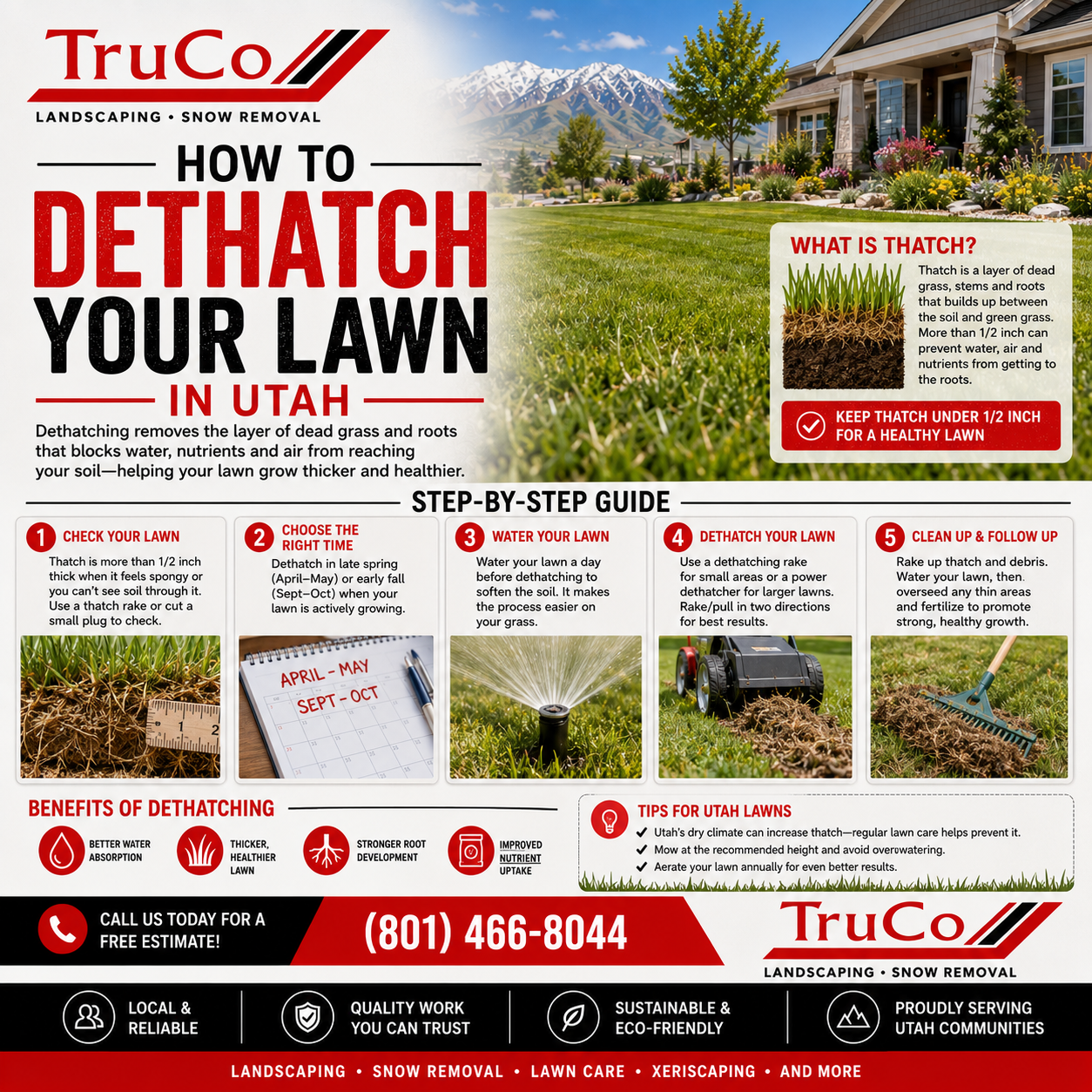
Thatch is a layer of dead and living organic matter — grass stems, roots, and runners — that accumulates between the soil surface and the green grass blades. In Utah lawns, thatch buildup is common due to Kentucky bluegrass and fescue varieties that produce stolons and rhizomes. A thin layer (less than 1/2 inch) is beneficial, insulating soil and protecting crowns. However, when thatch exceeds 3/4 inch, it creates serious problems: water runs off instead of penetrating, fertilizer stays on the surface, roots grow into the thatch layer instead of soil, insects and diseases thrive, and the lawn becomes spongy underfoot. Utah's clay soils exacerbate thatch problems because slow drainage keeps the thatch layer moist. Thatch buildup is most common in lawns that have been over-fertilized with nitrogen, over-watered with frequent shallow irrigation, or rarely aerated. Lawns in Utah's Salt Lake Valley, where clay soil dominates, typically develop thatch problems after 5-7 years of standard care.
How to Check Your Lawn for Thatch
Use a simple test: cut a small wedge of lawn (about 3 inches deep) with a shovel or knife. Examine the cross-section. Healthy soil has a thin layer of dark organic matter. If you see a spongy brown layer between grass and soil thicker than 1/2 inch, dethatching is needed. Signs of excessive thatch: lawn feels spongy when walked on, water pools during irrigation or rain, grass shows stress despite regular watering, mower wheels sink into the lawn, and the lawn has an uneven, bumpy surface. In Utah, the best time to check is early spring (April) after snowmelt or early fall (September) when the lawn is actively growing. Northern Utah lawns (zones 4-5) typically need dethatching every 2-3 years. Southern Utah lawns (zone 8) with Bermuda grass need annual dethatching. Avoid dethatching during Utah's summer heat (July-August) — the stress can kill the lawn.
Manual Dethatching Methods for Small Utah Lawns
For small lawns (under 1,000 sq ft), manual dethatching is effective and inexpensive. Use a thatching rake — a special rake with curved steel tines that dig into the thatch layer. Rake vigorously in one direction, then perpendicular. Collect the pulled-up thatch with a regular rake or lawn sweeper. This method is labor-intensive but allows precise control. For moderate thatch (1/2 to 1 inch), a manual dethatcher works well. For heavy thatch (over 1 inch), make two passes. Power rakes (also called vertical mowers or verticutters) are available at equipment rental stores in Utah ($50-80 per day). They use rotating vertical blades that cut through thatch and bring it to the surface. Set blades to cut just deep enough to reach soil — typically 1/8 to 1/4 inch deep for Kentucky bluegrass. In Utah, rent from Sunpro or Ahern Rentals in the Salt Lake Valley. For large lawns (over 5,000 sq ft), consider hiring a professional lawn care company with commercial-grade equipment.
Core Aeration vs Dethatching
Many Utah homeowners confuse aeration with dethatching. Core aeration removes small plugs of soil to relieve compaction and improve air and water movement. Dethatching removes the organic layer between grass and soil. They serve different purposes and are often done together. For lawns with both compaction and thatch: aerate first, then dethatch. The best approach for Utah lawns: core aerate annually in spring or fall. Dethatch every 2-3 years or as needed based on thatch measurement. After dethatching, the lawn looks thin and ragged — this is normal. The lawn will recover in 2-3 weeks with proper care. In Utah, combine dethatching with overseeding for best results. The exposed soil allows grass seed to make direct contact with soil. Water lightly daily for 2 weeks after dethatching to help recovery. Apply a starter fertilizer after dethatching to encourage new growth. Avoid pre-emergent herbicides for 4-6 weeks after dethatching — they prevent new grass seed from germinating.
Aftercare Following Dethatching in Utah
Post-dethatching care determines success. Remove all pulled thatch — leaving it on the lawn smothers recovering grass. Use a rake, lawn sweeper, or leaf blower. Water lightly but frequently for the first 2 weeks — the exposed soil dries quickly in Utah's arid climate. Water 2-3 times daily for 5-10 minutes for the first week, then gradually reduce frequency. Fertilize with a starter fertilizer (high phosphorus) 1 week after dethatching. In Utah, use a 10-20-10 or similar blend. Keep foot traffic off the lawn for 2-3 weeks. If you overseeded (recommended in Utah), use a slit seeder for best seed-to-soil contact. Choose grass varieties matching your existing lawn — Kentucky bluegrass for sunny areas, fine fescue for shade. Water seed lightly 2-3 times daily until germination (10-14 days for Kentucky bluegrass, 7-10 days for fescue). In Utah's dry fall weather, continue regular watering until the ground freezes (usually November). Apply winter fertilizer in late October to strengthen roots before winter dormancy.
Preventing Thatch Buildup in Utah Lawns
Prevention is easier than cure. Mow at the correct height — 3 inches for Kentucky bluegrass, 2.5 inches for fescue mixes. Taller grass develops deeper roots and less thatch. Never remove more than 1/3 of grass blade height in a single mowing. Water deeply and infrequently — 1 inch per week in a single deep watering rather than daily shallow sprinkling. Deep watering encourages roots to grow deep into soil instead of the thatch layer. Use slow-release nitrogen fertilizers — quick-release synthetic nitrogen promotes excessive top growth and thatch. Apply 2-3 pounds of nitrogen per 1,000 sq ft per year, split into 3-4 applications. Use organic fertilizers like compost top-dressing which release nutrients slowly and encourage beneficial soil microbes that break down thatch naturally. Core aerate annually to prevent compaction that contributes to thatch. In Utah, consider top-dressing with 1/4 inch of compost after aeration to introduce decomposing microorganisms.
Frequently Asked Questions
How often should I dethatch my Utah lawn? Most Utah lawns need dethatching every 2-3 years. Check thatch depth annually in spring. If the thatch layer exceeds 3/4 inch, it's time to dethatch. Bermuda grass lawns in southern Utah need annual dethatching.
Can I dethatch in summer in Utah? Avoid dethatching during Utah's summer heat (July-August). The stress can kill the lawn. Best times: April-May in spring, September-October in fall when temperatures are moderate.
Should I water after dethatching? Yes — water lightly 2-3 times daily for the first 2 weeks after dethatching. The exposed soil dries quickly in Utah's arid climate. Gradually reduce to normal watering after 2-3 weeks.
Does dethatching damage the lawn? Dethatching removes some living grass along with thatch. The lawn will look thin for 2-3 weeks. This is normal and necessary — the grass recovers stronger with deeper roots and better soil contact.