
How to Grow Brussels Sprouts in Utah: Varieties, Planting, and Care

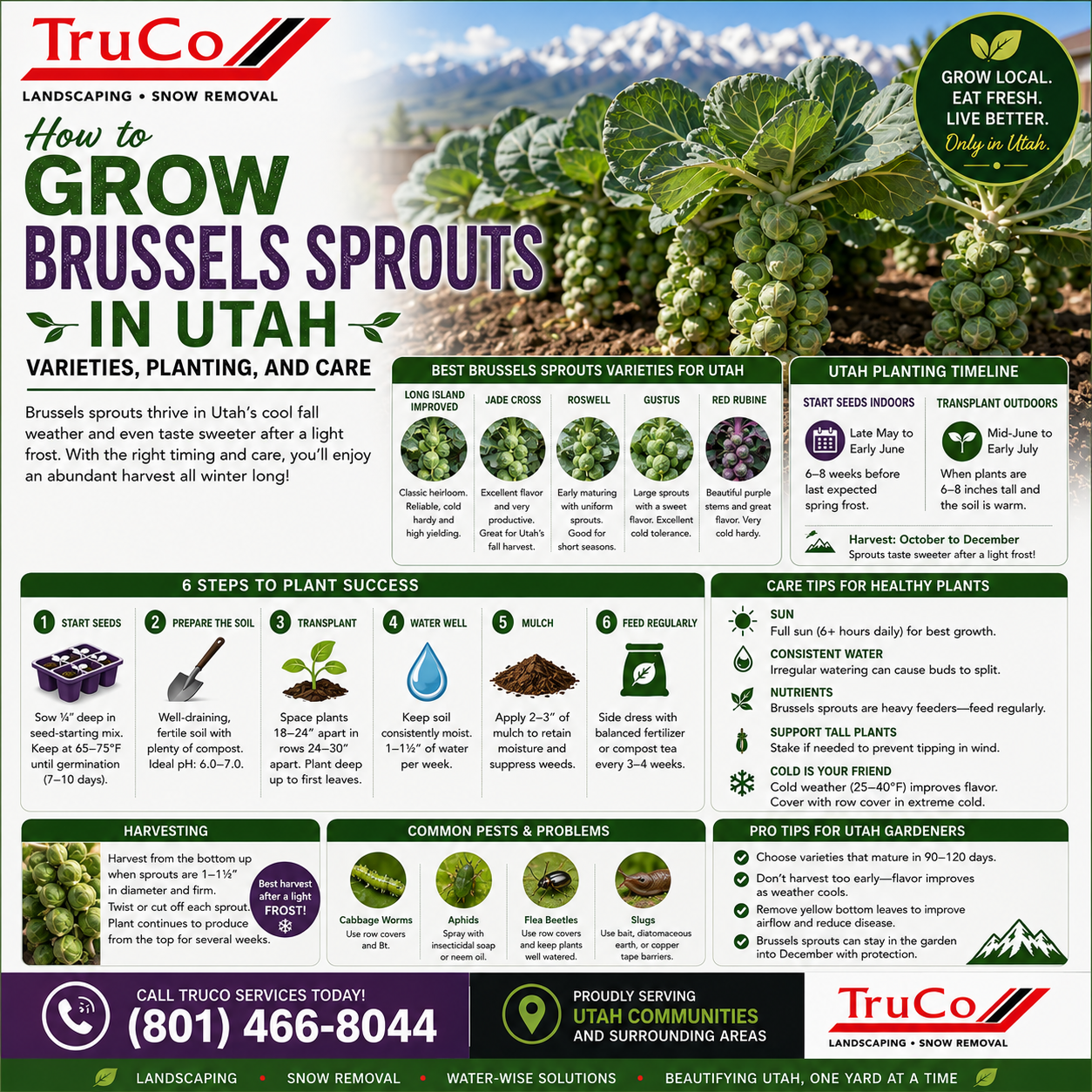
Brussels sprouts are a slow-growing, cool-season vegetable that rewards patient Utah gardeners with one of the most delicious and nutritious harvests of the year. Unlike most vegetables, Brussels sprouts actually taste better after a frost, which converts their starches into sugars and gives them a sweet, nutty flavor. They grow on tall stalks, with small, tight sprouts forming up the stem, and they thrive in Utah's cool fall weather — the fall crop is far superior to the spring crop in our climate. Brussels sprouts are packed with vitamins C and K, fiber, and antioxidants, and fresh sprouts from the garden are far sweeter and more tender than store-bought ones. This guide covers the best Brussels sprout varieties for Utah, when and how to plant, watering and feeding, the importance of cool weather and frost, managing pests like cabbage worms and aphids, and how to harvest sprouts from the stalk. With patience and the right techniques, Brussels sprouts are a rewarding and delicious crop in Utah gardens.
Best Brussels Sprout Varieties for Utah
Choose Brussels sprout varieties that mature in 85-110 days and are well suited to Utah's cool fall season. Jade Cross is the classic variety — a compact, early-maturing hybrid that produces uniform, medium-sized sprouts and is reliable in most climates. Long Island Improved is a traditional heirloom that produces abundant, flavorful sprouts on tall stalks and is excellent for fall harvest. Churchill is a newer hybrid with excellent uniformity, tight sprouts, and good cold tolerance. Diablo produces large, firm sprouts on tall stalks and matures in about 100 days. Red varieties like Red Rubine and Falstaff add beautiful burgundy color and a slightly milder, sweeter flavor. For Utah, choose varieties that mature in 90-110 days and plant them so they mature in the cool days of October and November, after the first frosts have sweetened them. Since Brussels sprouts need a long season, start seeds indoors 6-8 weeks before transplanting, and choose a variety matched to your growing season. With the right variety and timing, Brussels sprouts produce abundant, delicious sprouts in Utah's cool fall weather.
When and How to Plant Brussels Sprouts in Utah
Timing is critical for Brussels sprouts in Utah, since they need a long, cool growing season. For a fall crop — the best choice in Utah — start seeds indoors 6-8 weeks before transplanting, in early to mid-May, and transplant seedlings outdoors in late June to early July, so they mature in the cool days of October and November. Brussels sprouts grow best in temperatures between 55 and 70 degrees and actually improve with frost, so the fall crop is ideal. A spring crop is possible but often matures into summer heat, producing loose, bitter sprouts. Choose a site with full sun and rich, well-drained soil amended with compost, with a pH of 6.0-7.0. Space plants 18-24 inches apart in rows 24-36 inches apart, since the plants grow tall and need room. Harden off transplants gradually before planting out. Water thoroughly at planting and keep soil consistently moist — Brussels sprouts need steady moisture to form tight sprouts, and drought causes loose, bitter ones. In Utah's dry climate, drip irrigation keeps moisture steady and reduces disease. With careful timing and steady moisture, Brussels sprouts thrive in Utah's cool fall weather.
Watering, Feeding, and Caring for Brussels Sprouts
Brussels sprouts need consistent moisture and steady nutrition over their long growing season. Water deeply 1-1.5 inches per week, and more during hot, dry Utah spells; uneven watering causes loose, bitter sprouts. Drip irrigation or soaker hoses are ideal, delivering water to the roots while keeping foliage dry and reducing disease. Mulch with straw or compost to conserve moisture, suppress weeds, and keep soil cool. Fertilize at planting with compost or a balanced fertilizer, then side-dress with a nitrogen-rich feed every 3-4 weeks through the season; Brussels sprouts are heavy feeders and need steady nutrition to produce abundant sprouts. In Utah's alkaline soil, add organic matter each season to maintain fertility and good drainage. As the plants grow tall, they may need staking in windy areas. Remove lower, yellowing leaves as sprouts form to improve airflow and direct energy to the sprouts. In late summer, some gardeners pinch out the growing tip of the plant to encourage the sprouts to mature evenly before frost. With steady moisture, generous feeding, and simple care, Brussels sprouts produce abundant, tight sprouts in Utah's cool fall weather.
Common Brussels Sprout Pests and Diseases in Utah
Brussels sprouts face several pests and diseases in Utah gardens. Cabbage worms — the green caterpillars of white butterflies — are the most common pest, chewing holes in leaves and tunneling into sprouts; inspect plants regularly, handpick caterpillars, use row covers, and apply Bacillus thuringiensis (BT) for heavy infestations. Cabbage loopers and aphids also attack the plants; aphids cluster on leaf undersides and in developing sprouts, and can be washed off or treated with insecticidal soap. Flea beetles make small shot-hole damage on young leaves in spring; row covers protect seedlings. Cutworms may sever young plants at the soil line; use collars and keep the bed weed-free. Slugs and snails feed on tender plants in damp weather. Clubroot, a soil-borne disease causing swollen roots and stunted growth, is serious — rotate brassica crops, avoid planting in infected soil, and keep soil pH near 6.8. Downy mildew and black rot appear in humid conditions; space plants for airflow, water at the base, and choose resistant varieties. In Utah's dry climate, most fungal diseases are manageable, but cleanliness matters: remove plant debris at season's end and rotate crops so Brussels sprouts and their relatives are not planted in the same soil for 3-4 years. Vigorous, well-cared-for plants resist most pests and diseases.
The Importance of Cool Weather and Frost
Brussels sprouts are unique among vegetables because frost actually improves their flavor. When temperatures drop below freezing, the plant converts stored starches into sugars, which acts as a natural antifreeze and makes the sprouts sweeter and more tender. This is why the fall crop is so superior in Utah: sprouts harvested after the first frosts of October and November are noticeably sweeter than those picked earlier. To take advantage of this, time your planting so sprouts mature in late fall, and do not rush to harvest — leaving sprouts on the stalk through several light frosts improves their flavor. Brussels sprouts tolerate temperatures down to about 20 degrees, and in milder Utah winters, sprouts can be harvested from the stalk for months. In very cold weather, protect plants with a cold frame or row cover to extend the harvest. Because Brussels sprouts grow best in cool weather and dislike heat, Utah's cool fall is ideal. With proper timing, you can enjoy sweet, frost-kissed Brussels sprouts from your Utah garden well into winter.
Harvesting Brussels Sprouts
Harvest Brussels sprouts from the bottom of the stalk upward, since the lowest sprouts mature first. Sprouts are ready when they are firm, about 1-1.5 inches in diameter, and still tightly closed; twist or cut them off the stalk. Harvest regularly, taking the lowest sprouts first, which encourages the upper sprouts to develop. In Utah, the harvest typically runs from October through November, and sprouts improve with frost, so leave them on the stalk through several light frosts for the sweetest flavor. Sprouts can be harvested from the stalk for weeks or even months in cool weather. Fresh Brussels sprouts store for 1-2 weeks in the refrigerator; for longer storage, blanch and freeze them for up to a year. They are delicious roasted, sautéed, steamed, or shaved raw into salads. In Utah, growing Brussels sprouts successfully means planting for fall, providing steady moisture and food, and harvesting sprouts from the bottom of the stalk as they mature. With patience and the right techniques, Brussels sprouts are a sweet, nutritious, and rewarding crop in the Utah garden.
When should I plant Brussels sprouts in Utah? Start seeds indoors in early to mid-May and transplant in late June to early July for a fall crop. Brussels sprouts mature best in cool fall weather.
Why are my Brussels sprouts bitter or loose? Heat, drought, or harvesting too early causes loose, bitter sprouts. Grow them for fall, water consistently, and leave sprouts on the stalk through frost for sweetness.
Do Brussels sprouts need frost? Frost improves their flavor by converting starches to sugars. Leave sprouts on the stalk through several light frosts for the sweetest harvest.
How do I get rid of worms in Brussels sprouts? Handpick cabbage worms, use row covers, and apply Bacillus thuringiensis (BT) for heavy infestations. Inspect sprouts regularly before harvest.
Why are my sprouts not forming? Brussels sprouts need a long, cool season and steady nutrition. Plant early enough for fall maturity, feed regularly, and remove lower leaves as sprouts form.
How do I harvest Brussels sprouts? Harvest from the bottom of the stalk upward, taking firm, tightly closed sprouts first. Regular harvest encourages upper sprouts to develop.