
How to Grow Beets and Radishes in Utah: Varieties, Planting, and Care

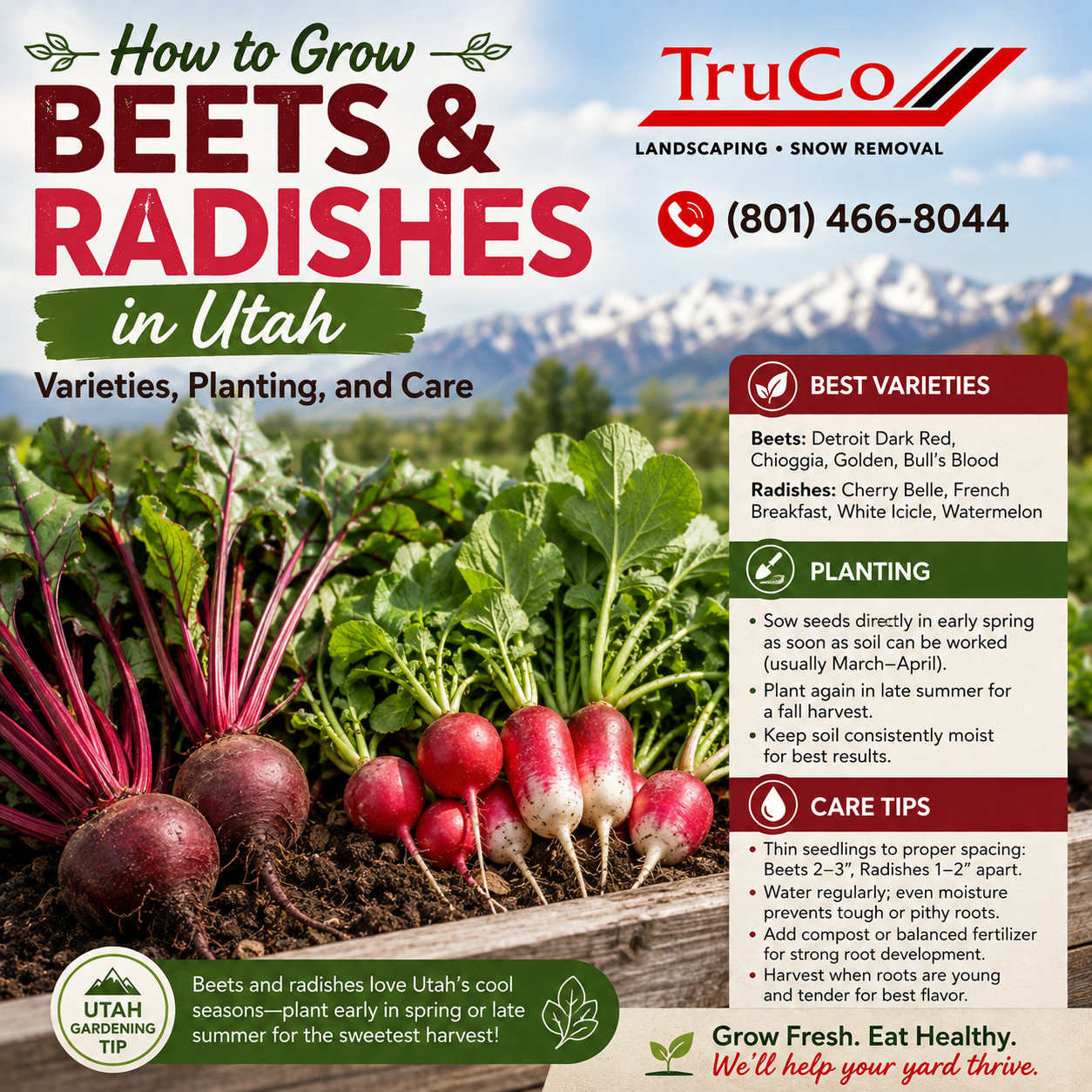
Beets and radishes are two of the easiest, fastest, and most rewarding root crops for Utah gardens. Radishes can go from seed to crunchy, peppery roots in as little as 25-30 days, making them perfect for impatient gardeners and for filling empty space in the spring garden. Beets take a bit longer — about 55-70 days — but reward you with sweet, earthy roots and nutritious, edible greens, essentially two crops from one planting. Both thrive in Utah's cool spring and fall weather, tolerate light frost, and grow well in the alkaline soil common along the Wasatch Front. Because they are quick and dependable, beets and radishes are ideal for succession planting, giving you fresh vegetables for months. This guide covers the best beet and radish varieties for Utah, when and how to plant, thinning and spacing, watering and feeding, common pests and diseases, harvesting and storing, and how to grow them in spring and fall. Whether you are a beginning gardener or a seasoned grower, beets and radishes will quickly become staples in your Utah garden.
Best Beet Varieties for Utah
Beets come in a range of colors and sizes, and most perform well in Utah's climate. Detroit Dark Red is the classic all-purpose beet — deep red, sweet, tender, and reliable in every season, with excellent storage qualities. Golden beets, like Golden Detroit or Boldor, have mild, sweet, golden flesh that does not stain and is delicious roasted. Chioggia, an Italian heirloom, features striking red-and-white candy-striped rings and a sweet, mild flavor. Cylindra, also called formanova, produces long, cylindrical roots that are perfect for uniform slicing and grow well in heavier soils. Red Ace is a top-performing hybrid with consistently sweet, smooth roots and strong tops. For Utah's short cool seasons, choose varieties that mature in 55-65 days. All beets grow best in loose, well-drained soil free of rocks and clumps, which allows roots to develop smoothly. In Utah's clay soils, amending beds with compost and planting in raised beds produces the roundest, most beautiful beets. Plant a mix of varieties for color and flavor, and sow every 2-3 weeks for a continuous harvest through spring and fall.
Best Radish Varieties for Utah
Radishes are divided into two main groups: fast spring radishes and slower winter radishes. Spring radishes mature in 25-35 days and include the classic Cherry Belle, a round, bright red radish with crisp, mild flesh that is the most popular garden variety. French Breakfast is an oblong, red-and-white radish with a mild, slightly sweet flavor, great for salads and snacking. White Icicle produces long, slender, pure white roots with a crisp texture and mild heat. Easter Egg offers a mix of red, purple, pink, and white round radishes, adding color to salads. Daikon radishes, also called Japanese radishes, are the winter type — large, white, and slow-growing, maturing in 50-70 days, with a milder flavor and excellent storage qualities; varieties like Minowase and Miyashige grow well in Utah fall gardens. Black Spanish radishes are another winter type with bold, spicy flesh that mellows in storage. For Utah, plant fast spring radishes in early spring and late summer, and try daikon and other winter radishes for fall harvest. Radishes grow best in cool weather; heat makes them pithy, overly hot, and quick to bolt. With the right varieties, you can enjoy radishes from spring through late fall in Utah.
When and How to Plant Beets and Radishes in Utah
Beets and radishes are cool-season crops that thrive in Utah's spring and fall. For spring, sow seeds directly in the garden as soon as the soil can be worked — late March to mid-April along the Wasatch Front. Radishes tolerate frost and germinate in soil as cool as 45 degrees; beets germinate above 50 degrees. For fall, sow in late July to mid-August so roots mature in the cool days of September and October. Both crops prefer full sun but tolerate light shade, and they grow best in loose, well-drained soil amended with compost, with a pH of 6.0-7.0 — beets are more tolerant of alkaline soil than most vegetables. Sow seeds one-half inch deep, spacing radishes 1-2 inches apart and beets 2-4 inches apart in rows 12-18 inches apart. Beet seeds are actually clusters containing multiple seeds, so thinning is essential: thin seedlings to 3-4 inches apart when they are 2 inches tall, using the thinnings as baby greens. Radishes should be thinned to 1-2 inches apart. Both germinate best with consistent moisture. For continuous harvest, sow small batches every 2-3 weeks through the season. In Utah, beets and radishes are among the easiest crops to grow from seed directly in the garden.
Watering, Feeding, and Caring for Root Crops
Beets and radishes need consistent moisture to develop smooth, tender roots. Water deeply about 1 inch per week, and more often during hot, dry Utah spells; uneven watering causes roots to become woody, cracked, or overly pungent. Drip irrigation and mulching with straw or compost help maintain steady soil moisture and suppress weeds. Fertilize lightly at planting with compost or a balanced fertilizer — root crops need moderate fertility, and too much nitrogen produces lush tops at the expense of roots. Beets benefit from boron, and in Utah's alkaline soils, a deficiency can cause black spots in the roots; adding compost usually provides enough. Keep the bed weed-free, since weeds compete for water and nutrients; shallow cultivation avoids damaging the roots. As roots mature, they may push up out of the soil — this is normal and the exposed shoulders are fine. In hot weather, radishes grow quickly to maturity and should be harvested promptly before they become pithy. Consistent moisture, moderate feeding, and timely harvest are the keys to sweet, tender beets and radishes in Utah. Both crops grow rapidly, so check them often once they near maturity.
Common Pests and Diseases of Beets and Radishes in Utah
Beets and radishes are relatively trouble-free, but a few pests and diseases affect them in Utah. Leaf miners tunnel inside beet leaves, creating pale winding trails; remove affected leaves and use row covers. Flea beetles make small shot holes in young leaves, especially in spring — row covers protect seedlings until they establish. Aphids may cluster on new growth and can be washed off or treated with insecticidal soap. Cutworms may sever young seedlings at the soil line; use collars and keep the bed weed-free. Cabbage maggots and root maggots can tunnel into roots, especially in cool, damp springs — rotate crops, avoid fresh manure, and use row covers. Damping-off, a fungal disease, can kill seedlings in cool, wet soil; plant in well-drained soil and avoid overwatering. Scab, which causes rough patches on beet roots, is worse in alkaline soil and dry conditions; maintain organic matter and consistent moisture. In Utah's dry climate, many fungal diseases are less severe, and healthy, fast-growing plants outgrow most pest damage. Keep the garden clean, rotate crops, and plant at the right times. With simple precautions, beets and radishes grow quickly and reliably in Utah gardens.
Harvesting and Storing Beets and Radishes
Harvest radishes as soon as they reach usable size, typically 25-35 days after sowing; check by gently brushing away soil at the base. Radishes are best pulled young — they become pithy, hot, and woody if left too long. Harvest beets at 1.5-3 inches in diameter for the sweetest flavor, usually 55-70 days after sowing; larger beets are tougher. Pull beets when soil is moist, and twist off the tops, leaving about an inch of stem to prevent bleeding. Beet greens are delicious and nutritious — use the thinnings in salads, and harvest outer leaves from mature plants throughout the season. Radishes store for a few weeks in the refrigerator in a plastic bag. Beets store for months in a cool, humid place — a root cellar, refrigerator, or buried in damp sand; they can also be pickled, canned, or frozen. Both crops tolerate fall frost, and in Utah, a fall planting of beets often produces the sweetest roots, since cool weather increases sugar content. For the best quality, harvest beets and radishes promptly and use them fresh or store them properly. With quick growth, easy care, and long storage, beets and radishes are among the most dependable crops in the Utah garden.
When should I plant beets and radishes in Utah? Sow directly in the garden in late March to mid-April for spring, and in late July to mid-August for fall. Both tolerate frost and thrive in cool weather.
Why are my radishes too hot or woody? Heat, drought, or leaving them in the ground too long makes radishes pithy and pungent. Harvest promptly and keep soil consistently moist.
Why are my beets all leaves and no roots? Too much nitrogen, overcrowding, or planting in hot weather produces leafy tops. Fertilize lightly, thin seedlings, and plant in cool seasons.
Do I need to thin beets? Yes — beet seeds contain multiple embryos, so thinning to 3-4 inches apart is essential for round, well-formed roots. Use the thinnings as baby greens.
Can I eat beet greens? Absolutely — beet greens are delicious sautéed or in salads, and they are even more nutritious than the roots. Harvest outer leaves while plants grow.
Why are there black spots inside my beets? This is usually a boron deficiency, common in alkaline Utah soils. Amend beds with compost, which provides trace minerals, and avoid overwatering.