
How to Grow Fruit Trees in Utah: Apples, Peaches, and Cherries

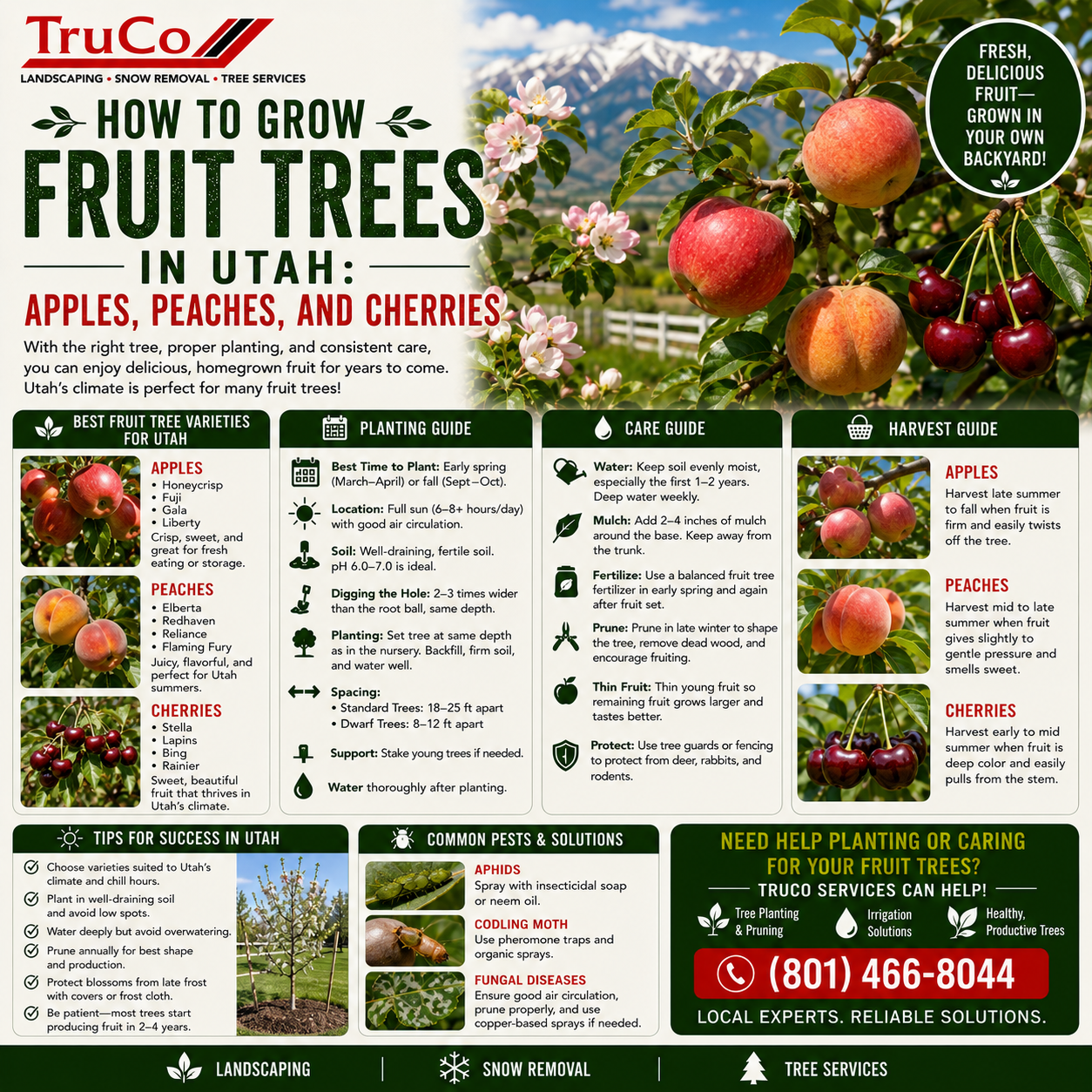
Growing fruit trees is one of the most rewarding long-term investments a Utah homeowner can make. Apples, peaches, and cherries grow exceptionally well in Utah's climate — our cold winters provide the chill hours fruit trees need, our sunny summers ripen fruit to perfection, and the dry air keeps many diseases in check. A well-chosen, well-cared-for fruit tree produces abundant, delicious fruit for decades, saving money at the store and giving you the incomparable experience of biting into a peach or apple picked fresh from your own tree. This guide covers the best fruit tree varieties for Utah, choosing a planting site and planting correctly, watering and fertilizing young trees, the essentials of pruning, thinning fruit for better quality, common pests like codling moth and peach tree borer, and how to harvest and store your fruit. Whether you are planting your first tree or expanding an existing orchard, these proven methods will help you grow healthy, productive fruit trees in Utah.
Best Fruit Trees and Varieties for Utah
Variety selection is the most important decision in growing fruit trees in Utah, because the state's cold winters and late spring frosts eliminate many varieties. Apples are the most reliable Utah fruit; choose hardy varieties like Honeycrisp, Gala, Fuji, Jonathan, and Rome, which thrive in Utah's cold winters and ripen well. Peaches do best in warmer areas of the state; choose late-blooming varieties like Redhaven, Reliance, and Elberta, which bloom late enough to escape spring frosts and are hardy to Utah winters. Cherries — both sweet and sour — grow well in Utah; sweet cherries like Bing, Rainier, and Lapins thrive in warmer areas, while sour cherries like Montmorency and North Star are extremely hardy and perform well even in cold northern Utah valleys. Choose trees on hardy rootstocks suited to Utah's alkaline soils, and select self-fertile varieties or plant compatible pollinators. Most apple varieties need a different variety nearby for pollination; many peach and sour cherry varieties are self-fertile. For Utah, buy certified, disease-free trees from a reputable local nursery, since local stock is adapted to our climate. With the right varieties, fruit trees thrive and produce for decades in Utah.
Choosing a Site and Planting Fruit Trees in Utah
Site selection and proper planting set the foundation for a fruit tree's entire life. Choose a site with full sun — at least 6-8 hours daily — good drainage, and protection from strong winds. Avoid low spots where cold air settles, since frost damage is the biggest threat to Utah fruit crops; planting on a slope or hillside helps. Test and amend the soil before planting: fruit trees prefer slightly acid to neutral soil, and Utah's alkaline soil may need amendments like compost and elemental sulfur. Plant bare-root trees in early spring, as soon as the soil can be worked; container trees can be planted from spring through early fall. Dig a hole twice as wide as the root ball but no deeper, position the tree so the graft union sits above the soil line, and spread the roots. Backfill with native soil amended with compost, and water thoroughly to settle the soil. Stake young trees for the first year or two to anchor them against Utah winds. Space trees according to mature size: standard apple trees 20-30 feet apart, dwarf trees 8-12 feet apart, and peach and cherry trees 15-20 feet apart. Proper planting gives fruit trees the best start in Utah's climate.
Watering and Fertilizing Fruit Trees
Fruit trees need consistent, deep watering to produce healthy fruit, especially in Utah's dry climate. Young trees need water 1-2 times per week for the first two years, delivered slowly and deeply to encourage deep roots; mature trees need deep watering every 2-3 weeks during the growing season, and more during hot, dry spells. Drip irrigation or soaker hoses placed in a ring around the tree's drip line are ideal, and a 3-4 inch layer of mulch around the tree conserves moisture and suppresses weeds — but keep mulch away from the trunk to prevent rot. Fertilize young trees lightly in spring with a balanced fertilizer once growth begins; mature trees benefit from an annual spring application of a fruit-tree fertilizer, with nitrogen adjusted according to tree size. Avoid over-fertilizing, which produces lush growth and poor fruit. In Utah's alkaline soil, watch for nutrient deficiencies, especially iron and zinc, which cause yellowing leaves; chelated micronutrient sprays correct these problems. Reduce or stop watering in late fall to harden trees for winter, and water deeply in late fall before the ground freezes. With steady water and balanced feeding, fruit trees grow strong and productive in Utah.
Pruning and Thinning Fruit Trees
Pruning shapes young trees and keeps mature trees healthy and productive. Prune fruit trees in late winter while they are dormant — typically February to early March in Utah — before new growth begins. Young trees need structural pruning to develop strong scaffold branches; remove competing leaders, crossing branches, and low, weak growth. Mature trees benefit from annual pruning to open the canopy, allowing light and air to reach the fruit, which improves color, flavor, and disease resistance. Remove dead, diseased, or damaged wood first, then thin crowded branches. Peaches bear on one-year-old wood and need heavier annual pruning; apples and cherries bear on older wood and need lighter pruning. Thinning is equally important: fruit trees naturally set far more fruit than they can mature, and crowded fruit stays small and can break branches. Thin apples and peaches to 6-8 inches apart, about one fruit per cluster, in late spring after natural fruit drop. Thinned trees produce larger, sweeter, better-quality fruit and are less prone to biennial bearing. With proper annual pruning and timely thinning, fruit trees in Utah produce generous crops of high-quality fruit every year.
Common Fruit Tree Pests and Diseases in Utah
Fruit trees face several pests and diseases in Utah, and managing them is essential for quality fruit. Codling moth is the most damaging apple pest — its larvae tunnel into fruit, leaving wormy apples; use pheromone traps, apply approved insecticides at the right times, and clean up fallen fruit. Peach tree borer attacks peach and cherry trunks near the soil line, causing gummosis and decline; wrap trunks, keep the area weed-free, and control with appropriate treatments. Aphids cluster on new growth and curl leaves; wash off with water, use insecticidal soap, or encourage beneficial insects. Scale insects, spider mites, and leafrollers also affect fruit trees. Fire blight, a bacterial disease that blackens branches and kills trees, is serious on apples and pears; prune out infected wood, disinfect tools, and choose resistant varieties. Peach leaf curl distorts peach leaves in spring; apply a dormant copper spray in late winter. Bacterial canker and brown rot affect stone fruits. In Utah's dry climate, many fungal diseases are less severe, but vigilance is key. Good sanitation, proper pruning, resistant varieties, and timely treatments keep fruit trees healthy and productive in Utah.
Harvesting and Storing Fruit
Harvest fruit at the right stage for the best flavor. Apples are ready when they come off the branch easily with a slight twist, the seeds are brown, and the fruit tastes sweet; most Utah apple varieties ripen from late August through October, and apples continue to ripen after picking, so harvest them over several weeks. Peaches are ready when the fruit gives slightly to gentle pressure and has a sweet aroma; they do not ripen well after picking, so pick at the peak of ripeness in July and August. Cherries ripen in June and early July and are ready when they are fully colored, plump, and sweet; pick with the stems attached to prevent bleeding, and harvest promptly since birds love them. Handle fruit gently to avoid bruises. Apples store for months in a cool, humid place like a refrigerator or root cellar, and some varieties keep until spring; peaches and cherries are best eaten fresh or preserved by canning, freezing, or drying. Utah's dry climate is ideal for drying fruit into delicious snacks. With the right varieties, proper care, and timely harvest, fruit trees provide years of delicious harvests in Utah.
What fruit trees grow best in Utah? Apples are the most reliable, followed by sour cherries and late-blooming peaches. Choose hardy, late-blooming varieties suited to your area's winter cold and spring frosts.
When should I plant fruit trees in Utah? Plant bare-root trees in early spring as soon as the soil can be worked. Container trees can be planted from spring through early fall.
Why are my apples wormy? Codling moth larvae tunnel into apples. Use pheromone traps, apply approved sprays at the right timing, and clean up fallen fruit to break the cycle.
Why did my fruit trees not bloom this year? Spring frosts, too much nitrogen, or improper pruning can prevent flowering. Choose late-blooming varieties, fertilize moderately, and prune correctly.
How do I protect fruit trees from Utah frost? Plant on slopes or hillsides away from cold-air pockets, choose late-blooming varieties, and cover small trees with cloth or use sprinklers during frost events.
When should I prune fruit trees in Utah? Prune in late winter, typically February to early March, while trees are dormant and before new growth begins. Remove dead wood first, then shape and thin.