
How to Manage Water Runoff from Your Neighbor's Yard in Utah

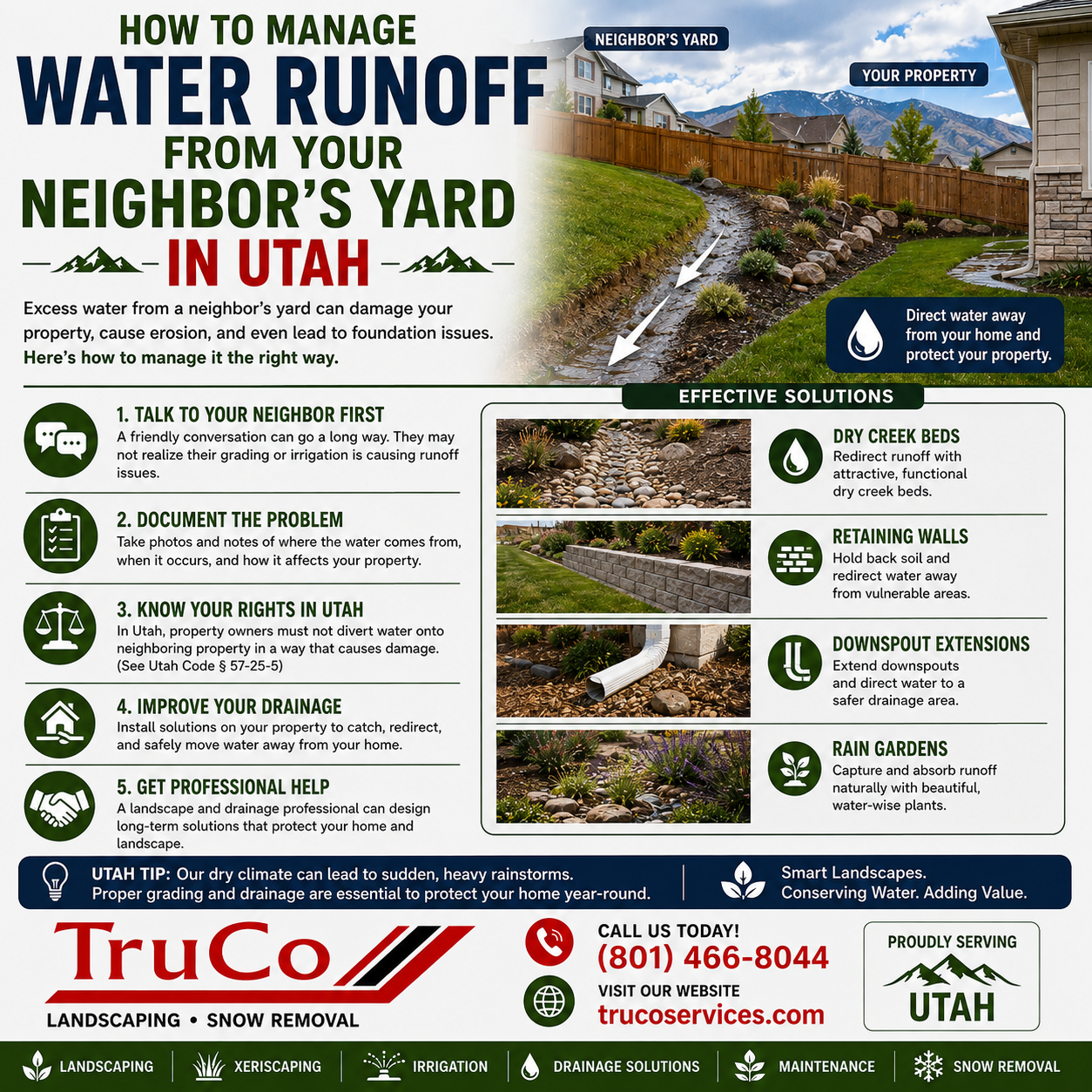
To manage water runoff from your neighbor's yard in Utah, first talk to your neighbor about the issue, then protect your property with a swale, French drain, or berm along the property line. If the runoff is causing damage, document it and check local drainage regulations before taking action.
Water from a neighbor's yard can pool in your lawn, flood your basement, or erode your landscaping. It's a frustrating situation, but there are practical ways to protect your property while keeping the peace.
Here's how to manage water runoff from your neighbor's yard in Utah, based on what TruCo Services recommends to homeowners across the Salt Lake Valley.
First, Talk to Your Neighbor
Before you build anything, talk to your neighbor. They may not realize their yard is draining onto yours. A friendly conversation can resolve the issue without conflict. Discuss:
Where the water is coming from
What's causing it — grading, downspouts, or irrigation
Possible solutions you can work on together
Many neighbors are happy to cooperate once they understand the problem.
Understand the Cause
Runoff from a neighbor's yard usually comes from:
Improper grading — their yard slopes toward your property
Downspouts — gutters discharging water toward your yard
Irrigation — sprinklers or drip systems overwatering
Hardscapes — patios or driveways directing water your way
High water table — groundwater rising in wet seasons
Identifying the cause helps you choose the right solution.
Protect Your Property
If your neighbor won't cooperate, or the issue is on your side, protect your property with these solutions:
Build a Swale
A swale is a shallow, sloped channel along the property line that catches and redirects surface water. It's a natural, low-cost solution that works well for moderate runoff.
Install a French Drain
A French drain collects groundwater and carries it away through a perforated pipe. It's effective for persistent or heavy runoff.
Create a Berm
A berm is a raised mound of soil that blocks and redirects surface water. Plant it with grass or ground cover to prevent erosion.
Extend Your Own Drainage
Make sure your downspouts and drains discharge water well away from your foundation and property line.
Check Local Regulations
Before building anything, check your city's drainage and property regulations. Some areas have rules about altering drainage patterns. You may need a permit for larger projects like French drains or berms.
Also understand your rights — in many areas, you can't be forced to accept water that damages your property, but you also can't redirect water onto a neighbor in a way that harms them.
Document Everything
If the runoff is causing damage, document it:
Take photos and videos — especially during storms
Keep records — of conversations with your neighbor
Note dates and times — of flooding or pooling
Get estimates — for repairs if damage occurs
Documentation helps if you need to involve your city or an attorney.
When to Call a Professional
Call a professional if:
The runoff is causing foundation or basement damage
You need grading, drains, or berms installed
You're unsure about drainage design or regulations
The problem is large or persistent
A professional can design a solution that protects your property and complies with local rules.
Frequently Asked Questions
Q: Can I stop my neighbor's water from draining onto my property?
A: You can protect your property with swales, drains, or berms. Talk to your neighbor first, and check local regulations before building.
Q: Who is responsible for water runoff between neighbors?
A: It depends on local regulations. Generally, you can't be forced to accept water that damages your property, but you also can't harm your neighbor by redirecting water.
Q: How much does it cost to fix neighbor runoff?
A: Expect $500 to $5,000 depending on the solution. A swale is on the lower end; French drains and grading cost more.
Q: What is the best way to redirect water from a neighbor's yard?
A: A swale or berm along the property line redirects surface water. A French drain handles groundwater.
Q: Do I need a permit to build a drain or berm?
A: Many cities require permits for drainage projects. Check with your local building department before starting.
Q: Can I sue my neighbor over water runoff?
A>Lawsuits are a last resort. Try talking first, then mediation. If damage is severe, consult an attorney about your options.
Q: Will a French drain solve my neighbor runoff problem?
A: A French drain is effective for groundwater and persistent runoff. For surface water, a swale or berm may be better.
Q: How do I know if runoff is damaging my foundation?
A: Look for basement leaks, cracks, and water pooling near the house. Address these promptly to prevent costly damage.
Why Choose TruCo Services
TruCo Services solves drainage problems across the Salt Lake Valley. We install swales, French drains, and berms that protect your property from runoff. Our team understands local regulations and designs solutions that work.
Get your free drainage consultation — 801-466-8044.