
How to Tell If a Tree Is Dead or Just Dormant in Utah

The Scratch Test
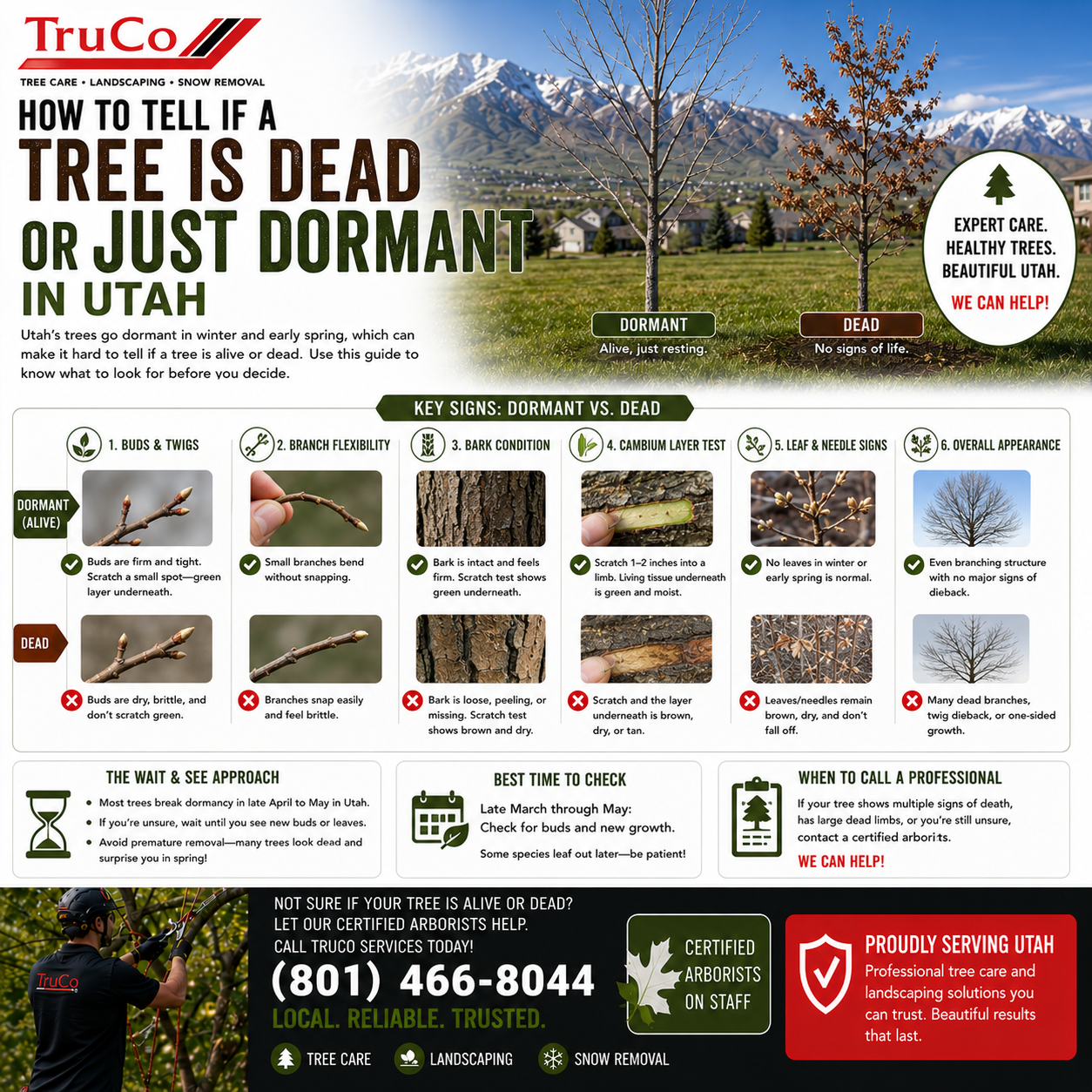
The scratch test is the most reliable way to check if a tree is alive. Use your fingernail or a small knife to gently scrape a small patch of bark on a young branch, about the thickness of your pinky finger. If the tissue underneath is green and moist, the branch is alive and the tree is dormant. If the tissue is brown, dry, or brittle, that branch may be dead. Test several branches around the tree at different heights — one dead branch does not mean the whole tree is dead. Also scrape the main trunk near the base. Green tissue on the trunk confirms the tree is still alive even if some branches have died.
The Bend Test
The bend test checks branch flexibility. Select a small branch about the diameter of a pencil. Gently bend it between your fingers. A live, dormant branch will bend slightly and then spring back or snap cleanly with a crisp sound, revealing green wood inside. A dead branch will feel dry and brittle, snapping easily with no green tissue visible. In Utah's dry climate, dead branches dry out quickly and become very brittle. If branches snap like dry twigs throughout the tree, the tree may be dead or dying.
Checking Buds and Leaf Attachment
Live branches have buds — small, slightly swollen bumps where leaves will emerge in spring. Even in deep winter, dormant trees in Utah have visible buds at the tips and along the branches. Gently squeeze a bud between your fingers. Live buds feel firm and slightly plump. Dead buds feel dry, shriveled, and may fall off easily. Check for buds at multiple locations around the tree. Also look at last year's leaf attachment points. On live branches, leaf scars appear fresh. On dead branches, leaf scars are dried and the bark may be peeling.
Inspecting the Trunk and Roots
Look for deep vertical cracks, large areas of missing bark, or fungal growth like mushrooms growing on or near the trunk base. These indicate advanced decay and possible tree death. In Utah, freeze-thaw cycles can cause frost cracks that look alarming but are often superficial. A healthy tree will have intact bark with only minor cracks. Check for heaving soil around the trunk, which may indicate root failure. If the tree is leaning or the soil is cracked on one side, the root system may be compromised.
Signs of Life in Evergreens
Evergreen trees like pine, spruce, and fir do not lose all their needles in winter, making it easier to spot dead trees. A dead evergreen will have brown, dry needles that drop off when touched. Live evergreens retain green needles on active branches. Scratch the bark of evergreen branches — green tissue indicates life. Also check for resin flow, which indicates the tree is actively defending against pests.
Frequently Asked Questions
When is the best time to check if a tree is dormant or dead? Late winter (February-March) before spring growth begins is ideal. By April, live trees should show signs of budding.
Will a dormant tree leaf out late in Utah? Yes, Utah's cold springs can delay leaf emergence by 2-4 weeks. Wait until mid-May before declaring a tree dead.
Can a tree be half dead? Yes, trees can have dead branches on one side while the rest is healthy.
Should I remove a dead tree immediately? Dead trees near structures should be removed promptly. Consult a certified arborist for an assessment.