
Kearns UT Permanent Christmas Lights

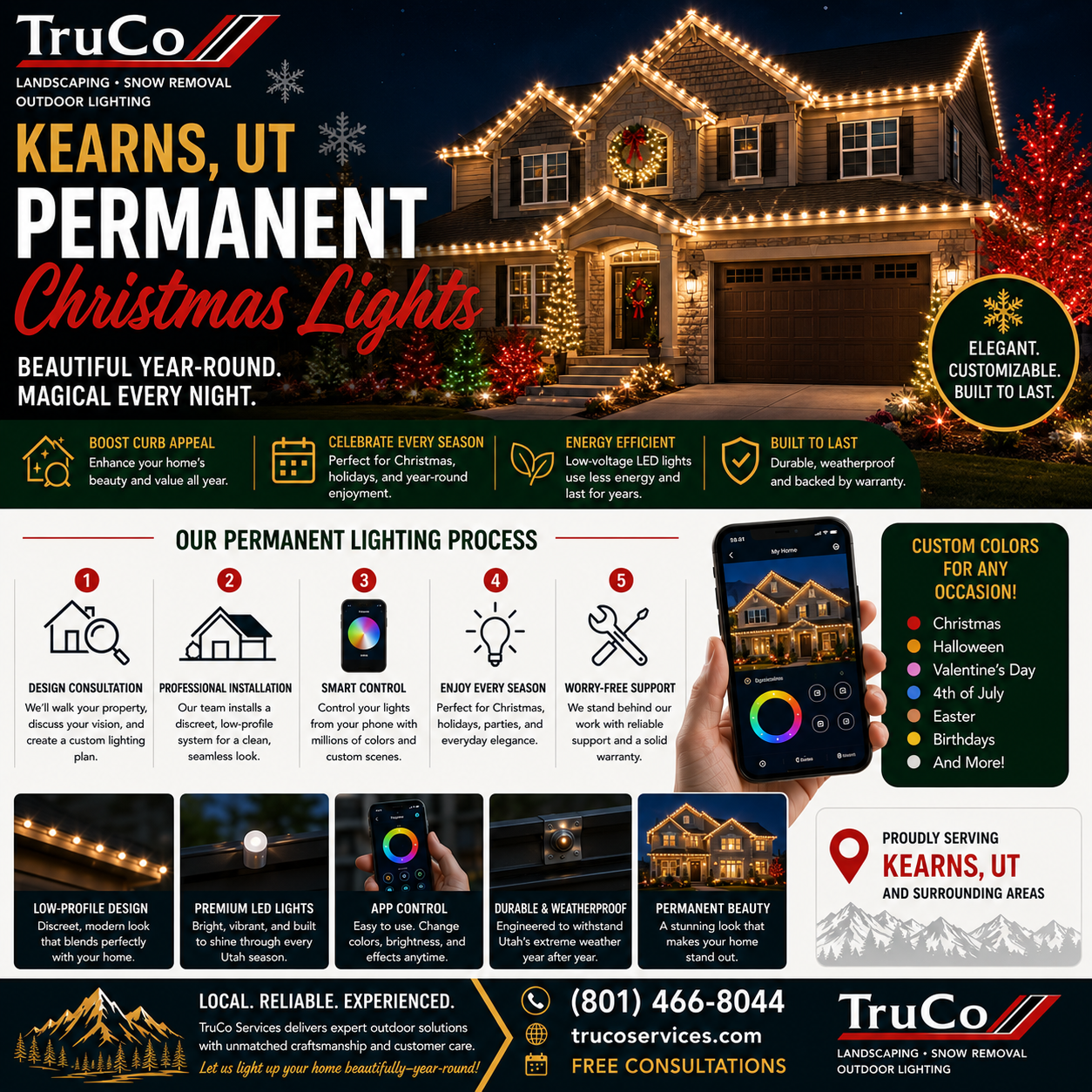
Kearns UT permanent Christmas lights are professionally installed, app-controlled exterior LED lighting systems that remain mounted on a home all year. They give homeowners a cleaner, safer, and more convenient alternative to hanging temporary lights every winter—while providing flexible colors and patterns for Christmas, Halloween, birthdays, sports events, patriotic holidays, parties, and warm-white exterior accent lighting.
The most important takeaway is that permanent holiday lighting is a long-term exterior upgrade, not just a seasonal decoration. A good outcome depends on the lighting design, weather-ready components, track and wire placement, safe power planning, daylight appearance, warranty terms, and future service. A low-cost but poorly installed system can create problems such as crooked roofline tracks, visible cable, flickering light sections, moisture-related failures, unsafe temporary power connections, or costly removal when the roof or gutters need work.
This article is for Kearns homeowners comparing permanent Christmas light options, researching how the technology works, preparing for an estimate, or trying to avoid expensive mistakes. It explains the installation process, common pitfalls, local permitting considerations, system alternatives, long-term cost factors, and how Truco Services can help plan permanent exterior lighting that looks polished in every season.
What Are Kearns UT Permanent Christmas Lights?
Permanent Christmas lights are exterior LED lighting systems installed on architectural features such as soffits, fascia boards, rooflines, garage edges, gables, patios, entryways, and dormers. The physical system remains installed throughout the year, but the lights can be switched off, dimmed, scheduled, or programmed for different colors and effects.
Most modern permanent holiday lighting uses small LED modules—often called pucks—installed within a narrow track or channel. The track helps maintain even spacing, conceal wiring, protect the installation, and give the home a more finished daytime appearance.
A typical Kearns permanent lighting installation includes:
Individually controlled LED light modules.
A mounting track or channel, often color matched to soffits or fascia.
Outdoor-rated wire, cable, and connectors.
A controller for colors, brightness, schedules, zones, and effects.
A power supply and appropriate electrical connection.
A smartphone app, remote, Wi-Fi, Bluetooth, or local-control option.
Installation, testing, system programming, and a homeowner walkthrough.
For example, you might use warm white lights along a front roofline for everyday curb appeal, orange and purple for Halloween, red and green for Christmas, and red, white, and blue for Independence Day. The same installed system can handle all of those uses without annual ladder work or temporary strands.
How Permanent Lighting Installation Works
The process normally starts with an exterior consultation. A provider measures the home, reviews visible rooflines, evaluates soffits and fascia, identifies power and controller locations, and discusses how you want the system to look and function.
Next comes installation. The lighting track and modules are mounted, wiring is routed and protected, the controller and power equipment are installed, and each section is tested. The final step should include app setup, programming assistance, brightness adjustments, and a review of basic troubleshooting.
Kearns is served by the Greater Salt Lake Municipal Services District’s Building Services division, which provides permit and inspection assistance for Kearns and other communities. The MSD states that it assists residents and businesses in Kearns with obtaining building permits and inspections.
Whether a permit is needed depends on the actual scope of the electrical work. A simple plug-in, listed lighting system may be different from a project involving new circuits, hardwired equipment, new exterior outlets, altered wiring, or other electrical changes. Do not assume the answer—confirm it before work starts.
9 Things to Know Before Installing Permanent Lights
1. The Lighting Layout Should Enhance Your Home’s Architecture
The most effective Kearns permanent Christmas lights are designed around the home’s architecture, not simply the number of linear feet available for lighting. Your home’s roofline, garage, gables, front porch, dormers, and fascia details should guide the layout.
A simple one-story home may look best with a front roofline and garage outline. A larger home with multiple peaks may need a more selective approach so the display remains balanced. More lighting does not automatically produce a better result. In many cases, an intentional, symmetrical layout looks more polished than an outline around every small roof edge.
Start by looking at your home from the street. Ask which features are most visible and which rooflines help define the shape of the house. Consider how the lighting will look from common viewing angles, not only from the driveway.
For example, a large front gable may look incomplete if only one slope is illuminated. Conversely, outlining every secondary roof return can make a house look crowded, increase cost, and produce excessive brightness. The right design emphasizes the features that matter most.
A professional design should account for:
The street-facing view of the home.
Roofline height and complexity.
Soffit depth and fascia condition.
Available mounting surfaces.
Trees, landscaping, and obstructions.
Neighboring homes and potential light glare.
Your budget and plans for future expansion.
Before approving a proposal, request a clear scope that identifies the exact rooflines included. Confirm whether the estimate covers garage lines, gables, peaks, second-story sections, wiring concealment, track color, app setup, controller placement, and service. That makes it easier to compare proposals and prevents the disappointment of discovering that a “whole-home” quote only included the simplest front section.
2. System Quality Is More Than Bright LEDs
LED brightness and color options are easy to notice, but they are not the only indicators of a good permanent holiday lighting system. The tracks, wiring, connectors, controller, power supply, fasteners, weather protection, and installation method all matter.
A permanent lighting system is only as reliable as its weakest component. High-quality LEDs cannot compensate for loose mounting tracks, exposed wire, undersized power equipment, unreliable connectors, or poor weather protection.
Look for a system designed specifically for ongoing outdoor use. Kearns homes experience hot sun, wind, snow, rain, freezing temperatures, and changing weather. Exterior lighting components need to withstand UV exposure, moisture, expansion and contraction, and winter conditions.
The track or channel is especially important. A color-matched track helps hide wires and creates even light spacing. A system with exposed cable, inconsistent spacing, and visible connectors may look acceptable at night but appear unfinished every day when lights are off.
Ask the provider:
What product brand and model is being installed?
Is the system rated or designed for permanent exterior use?
Does the track match the soffit, fascia, or trim color?
How are wire connections protected from moisture?
Can individual lights or sections be repaired?
Will replacement components be available later?
How are the controller and power supply protected?
What happens if a portion of the system stops working?
Avoid deciding based on vague terms such as “commercial grade” or “premium quality.” A provider should be able to explain exactly what materials are used, why they are appropriate, and what their real limitations are.
3. Utah Weather Exposes Weak Installation Methods
Permanent exterior lighting must handle more than holiday weather. In Kearns, summer sun, wind, rain, snow, cold temperatures, and freeze-thaw cycles can reveal problems that were not visible on installation day.
Sunlight can degrade low-quality plastic housings and wire jackets. Winter cold can make inferior materials brittle. Snow, ice, and wind can pull on weak fasteners, exposed wire runs, or tracks that were not secured correctly. Moisture can enter poorly protected connections and produce intermittent failures that are frustrating to diagnose.
A weather-conscious installation should include:
Secure tracks mounted with appropriate fasteners.
Consistent mounting spacing across long rooflines.
Wire routing that avoids loose loops and unnecessary tension.
Exterior-rated connectors protected from direct moisture.
Controller and power equipment positioned away from unnecessary water exposure.
Clear space around gutters, downspouts, vents, and drainage paths.
Installation methods suitable for the specific soffit, fascia, siding, brick, stucco, or trim material.
Roof protection matters as well. Permanent lights should not compromise shingles, flashing, attic ventilation, roof drainage, or gutter function. A quality installation is generally secured to soffits, fascia, trim, or a purpose-built track—not attached through shingles or mounted where it interferes with water flow.
Ask how the provider will handle corners, peaks, transitions, wiring runs, controller placement, and any areas near gutters. The goal is not simply a festive display in December. The goal is a system that remains aligned, secure, weather resistant, and subtle in daylight for years.
4. Electrical Planning Must Be Part of the Design
LED permanent lights generally use less electricity than old incandescent holiday strings. That does not mean they can be installed without thinking carefully about the power source, outdoor connections, controller equipment, circuit capacity, and applicable permit requirements.
A permanent lighting system should not rely on temporary extension cords, overloaded exterior outlets, exposed splices, or improvised wiring. Those shortcuts may create safety concerns, cause unreliable performance, and make future troubleshooting more difficult.
Before installation, ask these questions:
Where will the lighting system receive power?
Is the existing exterior outlet appropriate for the specific equipment?
Will a new outlet, dedicated circuit, electrical line, or hardwired connection be added?
Is GFCI protection relevant to the proposed connection?
Who will perform any electrical modifications?
Who will verify whether permits or inspections are required?
How will power equipment and outdoor connections be protected from weather?
Where will wiring run, and how will it be concealed?
This article is general educational information, not electrical or legal advice. Requirements depend on product type, electrical scope, existing conditions, and local rules. Confirm your project’s specific requirements with the relevant local authority and qualified professionals before work begins.
5. Daytime Appearance Is a Major Part of the Investment
Permanent Christmas lights remain attached to the home even when they are turned off. That means the tracks, wires, connectors, controller boxes, and mounting details will be visible in daylight for all twelve months of the year.
At night, colorful LEDs can make nearly any installation look appealing. During the day, details reveal the true quality of the project. Crooked tracks, visible wiring, unmatched colors, dangling loops, and poorly placed control boxes can reduce curb appeal.
A well-installed permanent lighting system should have:
Track color that blends with or complements the soffit or fascia.
Straight alignment and even spacing.
Clean transitions at corners and roofline changes.
Concealed or carefully routed wiring.
Discreet, accessible controller and power locations.
No interference with gutters, vents, downspouts, trim, or exterior features.
No obvious hanging cable or exposed connector clutter.
Ask to see completed installations during the day, not only at night. Night photos show color effects, but daylight photos show whether the provider’s work is clean and consistent.
Controller placement should be discussed before installation. A garage location may protect the equipment but require adequate Wi-Fi or signal coverage. An exterior location may be convenient for service but needs proper weather protection and a discreet appearance. The right location balances access, reliability, safety, and appearance.
The best permanent lighting system should be visible when illuminated and unobtrusive when switched off. If you would not like seeing the hardware on your home in midsummer, ask for a different track color, routing plan, or installation approach.
6. App Controls, Zones, and Brightness Affect Everyday Use
Permanent holiday lighting is most convenient when the controls are easy to use. Many systems offer app-based control, but the features vary significantly from one system to another.
Basic systems may let you select a color and choose from preset effects. More advanced systems can create zones for different rooflines, save custom scenes, set schedules, adjust brightness, support multiple users, and provide local or Bluetooth control if Wi-Fi is unavailable.
Before choosing a system, decide how you expect to use it. Do you only want red and green in December? Or do you want warm white lighting for everyday curb appeal, team colors for game days, Halloween patterns, and separate control for the front and backyard?
Important features to compare include:
RGB versus RGBW light design.
Warm-white quality.
Brightness control.
Custom color and pattern options.
Independent zones.
Time-based schedules.
App, Wi-Fi, Bluetooth, remote, or local controls.
Preset scenes.
Multi-user access.
Backup controls if the internet goes down.
RGB systems create color using red, green, and blue LEDs. RGBW systems add a dedicated white LED, which can provide a more natural-looking white or warm-white setting. That may be valuable if you want permanent roofline lights to provide subtle accent lighting outside holiday seasons.
Brightness matters for more than visual impact. Overly bright lights can create glare, reflect into bedroom windows, overpower the home’s architecture, and bother neighbors. A good system gives you the ability to lower brightness for routine evenings and increase it for special events.
Before the job is complete, ask the provider to help you create a warm-white preset, Christmas scene, Halloween scene, patriotic scene, low-brightness late-night scene, and a simple off schedule.
7. Warranty and Service Details Must Be Clear
Permanent lighting is mounted in locations that can be difficult to access, making warranty and service terms especially important. A broad “lifetime warranty” may sound comprehensive, but it may cover only a replacement component—not labor, diagnostic time, travel, roofline access, or reinstallation.
For example, a manufacturer may replace a failed light module but not pay for a technician to locate the issue, access a second-story roofline, remove a track section, install the new light, and test the system. An installer may offer a workmanship warranty that excludes storm damage, roof work, paint work, pests, power surges, homeowner modifications, or third-party damage.
Ask for written answers to these questions:
How long are LED modules covered?
Are tracks, wiring, controllers, and power supplies covered?
Is workmanship covered separately from product components?
Are diagnostic visits included?
Does the warranty include labor?
Is there an extra charge for high roofline service?
Who handles manufacturer warranty claims?
What damage is excluded?
What happens if roofers, painters, or gutter installers damage the system?
Is warranty coverage transferable when the home is sold?
Clear terms are more valuable than marketing language. You should know whom to contact, what happens when a section fails, and what service may cost after initial warranty coverage ends.
Keep copies of the proposal, agreement, warranty, product information, installation photos, app login, controller details, and service contact information. These records are useful for future repairs and for coordinating other exterior contractors.
8. Roofing, Gutters, Painting, and Solar Work Require Planning
Permanent lights become part of the home’s exterior system. That means future roofing, gutter replacement, siding repairs, painting, fascia work, soffit maintenance, and solar projects can all affect the installation.
Roofers may need access near the fascia and soffit where lights are mounted. Gutter installers may need to remove or work around tracks. Painters may need to mask or temporarily remove hardware. Solar contractors may require roof access and may work near electrical equipment.
If contractors are not told about permanent lighting before they start, they can accidentally cut wires, dislodge tracks, damage connectors, paint over components, or reinstall sections incorrectly. Third-party damage may not be covered under the lighting warranty.
If your roof is nearing the end of its service life, it may make sense to replace the roof before installing permanent lighting. Otherwise, you may need to pay for system removal and reinstallation sooner than expected.
Before exterior work begins:
Tell the contractor permanent lights are installed.
Identify all power supply, controller, and cable locations.
Take clear photos of tracks and wiring.
Ask the lighting provider whether removal or protection is needed.
Confirm whether third-party work affects warranty coverage.
Establish a plan before any tracks, cable, or connectors are moved.
Coordinating exterior work protects your investment and helps avoid unnecessary repairs.
9. The Cheapest Estimate Can Become the Most Expensive Option
Permanent lighting quotes can differ because they may cover different rooflines, product systems, track styles, controllers, installation methods, warranty terms, and service levels. A lower price may indicate a smaller scope, lower-quality components, exposed wire, fewer lights, limited control features, or reduced service support.
For example, one proposal might cover one low front roofline, while another includes garage lines, peaks, matching track, hidden wiring, app configuration, weather-protected equipment, and service support. The first proposal may look less expensive, but it may not deliver the same appearance, convenience, or long-term value.
Choose a provider who provides a clear written scope, answers questions directly, and helps you understand the long-term implications of the installation.
How to Choose the Right Provider
Use this checklist when comparing a provider for Kearns permanent Christmas lights:
Experience with permanent exterior lighting on homes similar to yours.
A property-specific lighting design rather than a generic quote.
Clear, plain-English explanations of components, power, controls, mounting, and service.
Attention to roofs, soffits, fascia, gutters, siding, trim, drainage, and exterior materials.
A plan for discreet daytime appearance, including track color and wire concealment.
Honest discussion of electrical scope, permit questions, and who handles each responsibility.
Written warranty terms that distinguish parts, labor, diagnostics, and exclusions.
Responsive communication and a clear process for future troubleshooting.
Consideration of future roof, paint, gutter, siding, and solar projects.
A provider willing to discuss both immediate installation needs and long-term maintenance.
For clear guidance and a homeowner-focused permanent lighting plan, consult Truco Services.
Common Mistakes to Avoid
Choosing only the lowest quote. It may exclude quality components, roofline coverage, wiring concealment, app setup, warranty labor, or service support.
Ignoring daylight appearance. Tracks, wires, connectors, and control boxes remain visible when the lights are off.
Installing before a planned roof replacement. This can create unnecessary removal and reinstallation costs.
Treating electrical planning as an afterthought. Power source, weather protection, permits, circuit capacity, and electrical scope should be addressed early.
Using extension cords as permanent power. Temporary cords are not a long-term solution for installed exterior lighting.
Using maximum brightness everywhere. Excessive brightness can create glare and reduce curb appeal.
Not reading warranty exclusions. Parts-only coverage may leave you responsible for labor, diagnostics, access, or third-party damage.
Failing to notify other contractors. Roofers, painters, solar crews, gutter installers, and siding contractors should know the system is present.
Frequently Asked Questions
What are permanent Christmas lights?
Permanent Christmas lights are exterior LED lighting systems installed on a home year-round. They can display holiday colors, custom patterns, warm-white accent lighting, and event-specific scenes.
Are permanent lights only for Christmas?
No. Homeowners use them for Halloween, birthdays, Independence Day, sports events, school colors, parties, and everyday warm-white exterior lighting.
Do permanent lights stay on all year?
The hardware stays installed, but the lights can be turned off whenever you choose. Most systems offer app controls, schedules, and timers.
Can permanent lighting replace landscape lighting?
Not completely. Roofline lighting can improve architectural accent lighting, but dedicated pathway, entry, security, and landscape lighting may still be needed.
How are permanent Christmas lights controlled?
Many systems use a smartphone app. Some also offer Wi-Fi, Bluetooth, timer, remote, or local-controller options.
Can permanent lights be dimmed?
Most quality systems can be dimmed. Dimming helps create subtle everyday lighting, reduce glare, and limit light spill toward neighboring homes.
What is RGBW permanent lighting?
RGBW lighting includes red, green, blue, and a dedicated white LED. The added white channel can create more natural warm-white or white lighting than RGB-only systems.
Will permanent lights work without Wi-Fi?
It depends on the system. Some use Wi-Fi for app control but may also offer Bluetooth, local controller, remote, or manual options. Ask about backup operation before buying.
Are permanent Christmas lights weatherproof?
They should be designed for outdoor use, but actual weather resistance depends on correct installation of tracks, wire, connectors, controllers, power supplies, and mounting hardware.
Can permanent lights handle snow and freezing weather?
A properly selected exterior system should account for snow, cold, wind, moisture, and temperature swings. Quality materials and correct installation are essential.
Will permanent lights damage my roof?
They should not when installed correctly. Most systems are mounted to soffits, fascia, trim, or purpose-built channels rather than through roofing shingles. Ask how your system will be mounted.
Can permanent lights be installed on a two-story home?
Yes. Two-story homes are common permanent lighting projects. The height, access, roofline complexity, and future service needs may affect planning and price.
Can permanent lights be installed on brick, stucco, vinyl, or wood?
Often, yes. The installation method should be selected specifically for the exterior material. A provider should inspect the home before deciding how to attach components.
How long do permanent Christmas lights last?
Lifespan depends on the product, weather exposure, installation quality, operating habits, service history, and warranty coverage. Ask for product-specific details rather than relying on generic claims.
Are permanent lights expensive to operate?
LED systems generally use much less energy than traditional incandescent holiday lighting. Actual cost depends on system size, brightness, schedule, hours of use, and local electric rates.
Can I add more lights later?
Some systems can be expanded, but power limits, controller capacity, wire length, and voltage-drop considerations may limit expansion. Discuss future plans before the initial installation.
What happens if one light stops working?
It depends on the system design. Some systems allow individual modules or sections to be replaced. Ask about diagnosis, repair procedures, labor, replacement parts, and service fees.
Can permanent lighting systems be repaired?
Many systems can be repaired. Repairability depends on the product, system age, component availability, failure location, and accessibility.
Do permanent lights require maintenance?
They need much less seasonal work than temporary strands but may need occasional app updates, storm checks, reset procedures, and professional service if a component fails.
Should I install permanent lights before replacing my roof?
If roof replacement is likely soon, it is often smarter to complete that work first. Otherwise, you may need to pay for removal and reinstallation of the lighting system.
Can permanent lights work with solar panels?
They can often coexist, but coordination is important. Discuss roof access, mounting areas, wire routes, controller locations, and future service needs with both providers.
Do I need a permit for permanent lights in Kearns?
It depends on the electrical scope. Kearns is served by Greater Salt Lake MSD Building Services for building permits and inspections. Confirm whether your installation requires a permit before work begins, especially if it adds wiring, outlets, circuits, or hardwired electrical equipment.
Who handles building permits and inspections in Kearns?
Greater Salt Lake MSD Building Services serves Kearns for permits and inspections. The building inspection hotline is 385-910-5830, and the division directs applicants to the CityWorks permit portal.
Are outdoor outlets required to have GFCI protection?
Outdoor electrical requirements depend on outlet location, equipment type, voltage, current code adoption, and the scope of the installation. A qualified electrical professional or local building authority should evaluate the specific setup.
Can permanent lights stay on overnight?
Yes, but use reasonable brightness and schedules. Avoid overly bright or fast-flashing effects late at night, especially in neighborhoods with nearby homes.
Will permanent lights bother my neighbors?
They can if overly bright, directed toward nearby homes, or operated with rapidly changing effects late at night. Dimming, zones, and scheduled shutoffs help maintain good neighbor relations.
Can permanent lights improve curb appeal?
A clean, balanced, professionally installed system can improve curb appeal. Exposed cable, crooked tracks, mismatched colors, or excessive brightness can reduce it.
Do permanent lights add resale value?
They may appeal to some buyers as a convenience and visual feature, but no increase in resale value is guaranteed. Product quality, documentation, serviceability, and daylight appearance influence buyer perception.
Can permanent lights be used for security lighting?
They can improve general exterior visibility but should not be relied on as a complete security system. Dedicated motion lighting, entry lights, locks, cameras, and alarms may be more appropriate for security.
What should I ask during a permanent lighting estimate?
Ask about rooflines included, product brand, track color, wire routing, controller placement, app controls, brightness, power needs, electrical scope, permit responsibility, warranty coverage, service fees, and removal/reinstallation options.
Rules and Standards to Know
Permanent lighting touches exterior construction, electrical safety, manufacturer instructions, and sometimes HOA requirements. This is general information only, not legal advice, electrical advice, or a project-specific code determination.
Kearns permits and inspections: Greater Salt Lake MSD Building Services serves Kearns by assisting residents and businesses with building permits and inspections. Its online permit portal is CityWorks.
Permit verification: Whether permanent holiday lighting needs a permit depends on the electrical work involved. New circuits, wiring alterations, new outlets, hardwired equipment, and similar modifications should be evaluated before work begins.
Manufacturer instructions: Exterior lighting components should be installed in accordance with their listing, labels, approved accessories, and manufacturer instructions. Do not overload controllers or power supplies, modify connectors, or substitute temporary components for permanent wiring.
HOA rules: If your property is governed by an HOA, review its architectural and lighting rules. Associations may regulate visible tracks, exterior modifications, operating hours, and brightness.
Conclusion
Kearns UT permanent Christmas lights can make your home more festive, easier to decorate, and more flexible throughout the year. A well-designed system can provide Christmas colors, Halloween patterns, warm-white accent lighting, and event-specific displays without annual roofline ladder work or seasonal storage.
The best results come from careful planning. Choose a design that suits the home, invest in outdoor-rated materials, prioritize clean daytime appearance, plan power safely, verify permit requirements when electrical work is involved, understand warranty terms, and coordinate around future roof, gutter, solar, paint, and siding work.
Most permanent lighting problems are avoidable with a professional approach and clear expectations before installation begins. For practical help with Kearns UT permanent Christmas lights, contact Truco Services at (801) 466-8044 to discuss a permanent lighting design tailored to your home, goals, and long-term exterior plans.