
Best Native Utah Trees for Waterwise and Low-Water Landscaping

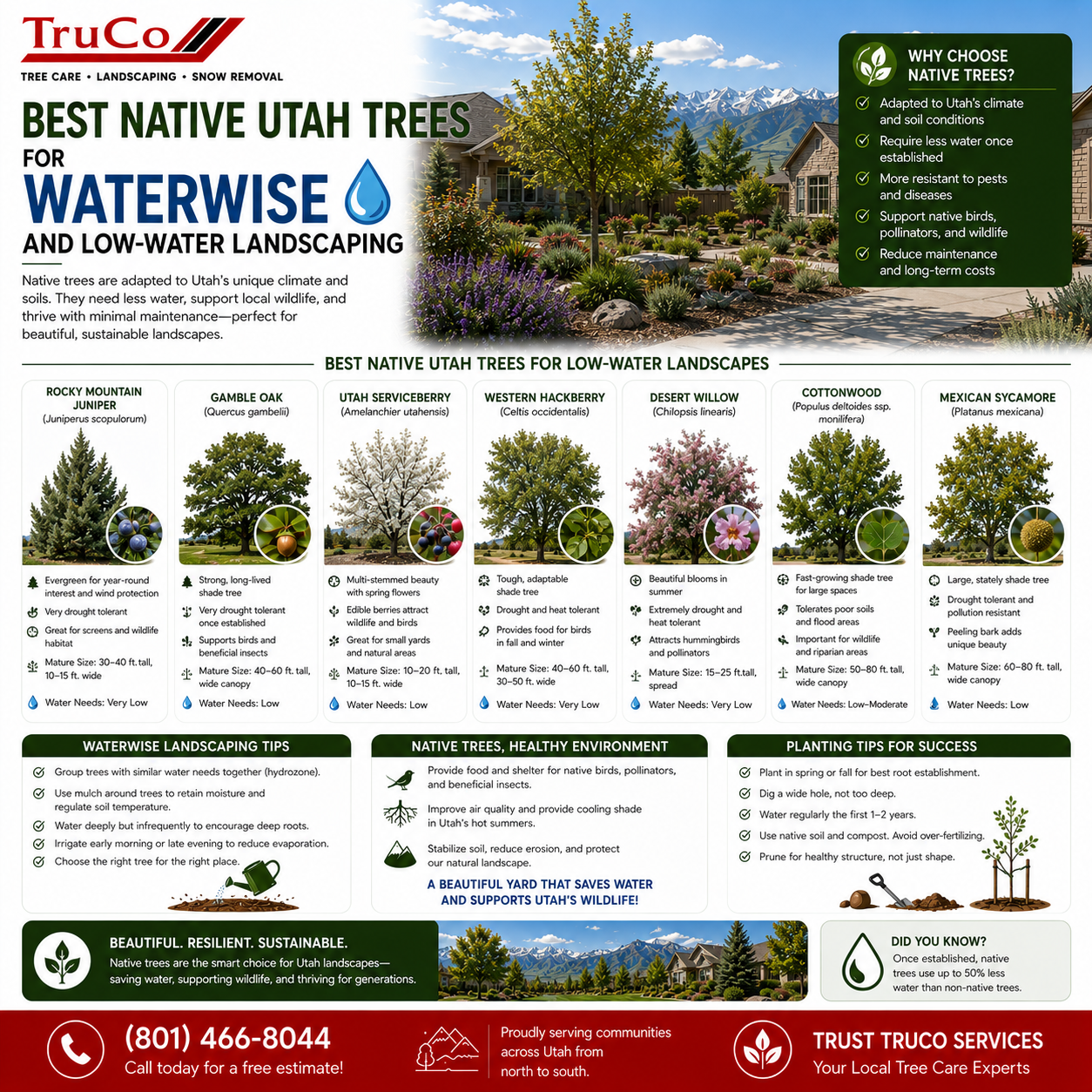
Xeriscaping with Trees
Xeriscaping uses water wisely without eliminating it. Group plants by water needs (hydrozoning), place trees for natural cooling (south and west sides), use drip irrigation. Native trees, once established, need deep watering only every 2-4 weeks during Utah summers vs every 3-7 days for non-natives.
Pinyon Pine
Utah's state tree. Perfectly adapted to semi-arid climate. Height 15-30 ft, slow growing. Needs excellent drainage — plant on slight mound with sand or gravel amendment. Once established, no supplemental irrigation needed in most years. Berries feed birds and small mammals.
Rocky Mountain Juniper
One of the most drought-tolerant native trees. 20-40 ft tall. Exceptional adaptability to alkaline clay soils up to pH 8.5. Needs no fertilizer, minimal pruning, virtually no irrigation after establishment. Excellent windbreak. Caution: host for cedar-apple rust, avoid near apple trees.
Gambel Oak
Utah's most common oak in mountain foothills. 10-30 ft. Extremely drought-tolerant once established. Thrives in alkaline rocky soils. Brilliant golden fall color. Excellent wildlife value. Purchase nursery-grown specimens (long taproot makes wild transplanting difficult).
Quaking Aspen
Iconic but needs more water. Best above 5,500 ft in Park City or Heber Valley. Struggles at lower elevations with heat stress. Fast growing (2-4 ft/year). Spectacular golden fall color. Plant in groves of 3+ for best effect. Needs regular deep watering every 5-7 days in summer.
Rocky Mountain Maple
Underutilized native. 10-25 ft. Adapted to dry climate and alkaline soils. Brilliant red/orange fall color rivals any maple. Ideal for smaller properties. Needs far less irrigation than Norway or silver maple. Tolerates partial shade.
Serviceberry
True four-season tree: spring white blossoms, summer edible berries, fall orange/red foliage, smooth gray bark in winter. 8-20 ft. Resistant to pests and diseases. Fruits best with occasional deep watering. Excellent specimen tree.
Utah Juniper
Most drought-tolerant tree on this list. Thrives on 8-12 inches annual precipitation. No supplemental irrigation once established. Very slow growing (4-8 in/year). 10-25 ft. Excellent for erosion control on slopes. Unbeatable for low-water landscapes.
Water Conservation Programs
Utah Water Savers offers rebates up to $1.50/sq ft for converting turf to waterwise landscaping in Salt Lake City, Sandy, West Jordan, Draper. Salt Lake City Localscapes offers free design consultations. Provo WaterWise and Central Utah Water Conservancy District also offer programs.
Frequently Asked Questions
Do natives really save water? Yes. A non-native maple needs 30-50 gallons/week in summer. Native juniper or oak needs none after establishment, or 10-20 gallons/month in extreme drought. Savings of 500-1,500 gallons per tree per season.
Can I plant in clay soil? Most natives evolved in these conditions. Plant on a slight mound. Do not amend with rich organic matter (creates bathtub effect).
How long to establish? 2-3 years for most species. Slow-growing pinyon and juniper may take 3-4 years.
Where to buy? Cactus & Tropicals, Glover Nursery in West Jordan, Millcreek Gardens, Utah Native Plant Society sales.
Drawbacks? Slow growth rate. More natural appearance rather than formal. Some species sucker and spread. Benefits far outweigh considerations for most Utah homeowners.